Pack five things: a rigid case for the handheld, full-size grips for long sessions, a wired controller for hotel TVs, a wired 3.5mm headset, and a cartridge box. The five picks below total about $171 at current catalog prices. A Steam Deck's 40 Whr battery sits far under the FAA's 100 Wh carry-on limit (FAA PackSafe).
Why travel kits fail
Travel breaks gaming gear in ways a desk never does, and the failure modes are boringly consistent.
A handheld goes into a backpack in a neoprene sleeve, the bag goes into an overhead bin, and something heavy goes on top of it. The sleeve stops scratches; it does nothing about crush load. What arrives at the hotel is a cracked bezel or a thumbstick with a new grinding noise.
The second failure is audio. Bluetooth earbuds that are fine for podcasts introduce enough delay to make rhythm and competitive games unplayable, and hotel rooms are shared spaces where speaker audio is not an option. The third is the hotel TV: a handheld with a USB-C dock is useless without a controller, and a wireless pad means a pairing dance in an unfamiliar room plus a battery you forgot to charge.
The fourth is cartridges. Switch game cards and microSD cards loose in a bag migrate into corners, and a microSD card is small enough to vanish permanently.
The fifth is not a hardware failure at all. It is arriving at 35,000 feet and discovering a game needs a licence check before it will launch.
Every pick below addresses one of those. The winner is the case, because crush protection is the only failure on the list that ends in a repair bill.
Comparison
| Pick | Best For | Key Spec | Price | Verdict |
|---|---|---|---|---|
| JSAUX PC0104 ModCase | Best overall | Rigid shell, integrated kickstand | $26.99 | Crush protection that a sleeve cannot give |
| Turtle Beach Recon 50 | Best value | 40mm drivers, 3.5mm, removable mic | $27.88 | One cable, works on every device in the bag |
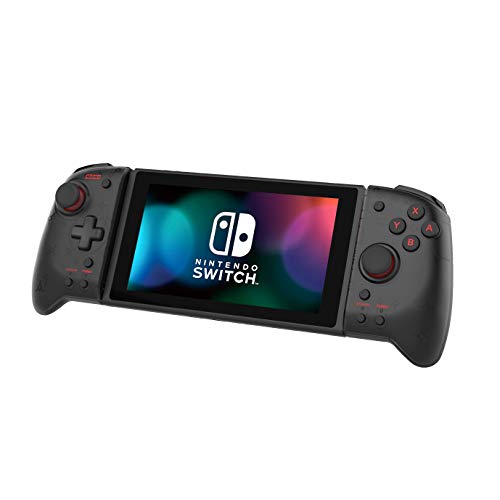
| Hori Split Pad Pro | Switch handheld | Full-size grips, no battery | $49.88 | Fixes Joy-Con cramp on long flights |
| GameSir G7 SE | Best performance | Hall-effect sticks, wired USB | $44.99 | No pairing, no battery, no drift |
| sisma 64-slot case | Budget pick | 64 cartridge slots | $20.96 | Cartridges stop migrating |
Prices are from the SpecPicks catalog and were current on 3 September 2026; they move frequently, so verify before buying.
Top picks
#1: JSAUX PC0104 ModCase for Steam Deck
Verdict: Best overall, $26.99. Rigid crush protection with an integrated kickstand.
The JSAUX PC0104 ModCase is the pick because it solves the only travel failure that costs real money. A Steam Deck is 298mm x 117mm x 49mm and roughly 669 grams (Steam Deck tech specs) — a large, heavy, awkwardly shaped object with exposed thumbsticks and a glass panel. In a packed bin it takes point loads through whatever is stacked on it.
A rigid shell spreads that load. The ModCase wraps the body rather than sleeving it, leaves the ports and the 3.5mm jack accessible, and folds out a kickstand — genuinely useful on a tray table or a hotel desk, where the alternative is propping the handheld against a water bottle.
Pros: Rigid shell rather than a soft sleeve; integrated kickstand for tray-table use; port and jack cutouts stay accessible; textured grips improve hold during long sessions.
Cons: Adds bulk and weight to an already large handheld; a wrap-style case does not protect the screen from a direct strike the way a hard clamshell does.
At $26.99 this is the cheapest insurance in the kit. Everything else on this list is a convenience; this one is the difference between a scuffed case and a repair. If you buy exactly one item from this guide, buy this one.
#2: Turtle Beach Recon 50
Verdict: Best value, $27.88. Wired 3.5mm audio that works on every device you packed.
The Turtle Beach Recon 50 earns its place through universality. Turtle Beach specifies 40mm drivers, a 20Hz-20kHz response, a removable omni-directional microphone and in-line volume and mute controls, with compatibility across Xbox Series X|S, Xbox One, PS4, PS5, PC and mobile over 3.5mm (Turtle Beach). The Steam Deck has the same 3.5mm stereo headset jack (Steam Deck tech specs).
That means one headset covers the handheld, the laptop, the controller jack and a phone with an adapter. No pairing, no charging, no codec negotiation, and no latency penalty during video playback — which matters when the same headset is doing double duty on an in-flight movie.
Pros: Works on every device in a typical travel bag; no battery to charge; removable mic converts it to plain headphones for a flight; in-line mute needs no software.
Cons: Fixed cable that cannot be replaced if it fails; synthetic-leather cups get warm over long sessions; not a content-creation microphone.
The removable mic is the underrated travel feature. Pull the boom and it is a normal pair of headphones for the flight, then put it back for hotel-room co-op.
#3: Hori Nintendo Switch Split Pad Pro
Verdict: Best for Switch handheld sessions, $49.88. Full-size grips with no battery to manage.
Joy-Cons are small because they detach. On a two-hour flight that compact form becomes hand cramp, particularly for adult hands. The Hori Split Pad Pro replaces both with full-size controller grips that keep the Switch in handheld mode while giving you a proper D-pad, larger sticks and real shoulder buttons.
The travel-relevant detail is that it has no battery. It draws power from the rails, so there is nothing extra to charge in a hotel room and nothing to go flat halfway through a flight.
Pros: Full-size grips eliminate handheld cramp; proper D-pad; assignable rear buttons; no battery to charge or manage.
Cons: No HD rumble, no gyro and no NFC, so it will not work for amiibo or motion controls; cannot be used detached for tabletop multiplayer; adds noticeable width to the console in a bag.
The gyro omission is the honest catch. If your travel games use motion aiming, keep the Joy-Cons in the bag as well. For everything else the ergonomic gain over a long flight is substantial.
#4: GameSir G7 SE Wired Controller
Verdict: Best performance, $44.99. Hall-effect sticks and a wired connection that just works.
Hotel TVs are the reason to pack a controller, and wired is the correct choice for that job. The GameSir G7 SE plugs into a laptop, a docked handheld or an Xbox with no pairing menu, no battery and no interference in a conference hotel saturated with radios.
Its Hall-effect thumbsticks use magnetic position sensing rather than potentiometers, which removes the wear mechanism behind stick drift. For a controller that gets tossed into a bag repeatedly, a stick design without a physical wiper is a meaningful durability advantage.
It also carries a 3.5mm headset passthrough jack, so the Recon 50 hangs off the controller instead of running a second cable to the TV.
Pros: Hall-effect sticks resist drift; zero pairing and zero battery; headset passthrough keeps audio on one cable; standard Xbox layout works with almost everything.
Cons: Wired only, so couch play across a room is out; the cable is one more thing to coil; no wireless fallback if the port is awkwardly placed.
A wired controller is the right travel default. Wireless is for the living room where you control the environment.
#5: sisma 64-slot Game Case
Verdict: Budget pick, $20.96. Cartridges and microSD cards stop migrating.
The sisma 64-slot case is unglamorous and solves a real problem. Switch game cards are small, microSD cards are smaller, and both disappear into bag linings. The Steam Deck takes microSD UHS-I cards (Steam Deck tech specs), so a card wallet serves both ecosystems.
Sixty-four slots is more than most people need, and that is fine — the case also becomes the fixed home for the things that otherwise float loose.
Pros: Fixed home for cartridges and microSD cards; rigid shell protects contacts; the extra slots absorb adapters and spare cards.
Cons: Overkill for a two-game trip; takes bag volume that a small sleeve would not; no room for cables.
At $20.96 it is the cheapest item here and the one most likely to be skipped. Skipping it is how a $60 game card ends up under a car seat.
What to look for in a travel gaming kit
Crush protection and shell rigidity
The load in an overhead bin is compressive and concentrated. Rigidity is what matters, not padding thickness — a thick soft sleeve deforms and transmits the load to whatever is underneath it, while a thin rigid shell spreads it. Prioritise a shell that holds its shape when you squeeze it.
Cable topology: one connector standard beats four
Every distinct connector is a cable you must remember and a failure point. A kit built around USB-C for power and 3.5mm for audio needs two cable types total. This is the single biggest reason wired audio belongs in a travel bag: 3.5mm is on the Steam Deck (Steam Deck tech specs), on controllers, and on laptops, and it needs no driver, no pairing and no power.
Charging budget and what you can leave behind
The Steam Deck ships with a 45W PD3.0 USB-C supply (Steam Deck tech specs). A single multi-port USB-C charger rated at or above that wattage covers the handheld, a phone and a laptop, which lets you leave two bricks at home. Verify the charger delivers full wattage on the port you plan to use — many multi-port units split power once a second device is attached.
Note also that seat-back USB ports rarely deliver enough current to charge a handheld while you play. Treat in-flight power as a trickle, not a charge.
Weight and carry-on volume
The Steam Deck alone is about 669 grams (Steam Deck tech specs), and a rigid case adds to that. Every item here should earn its volume. The five picks are chosen to be complementary rather than redundant: nothing on this list duplicates another item's job.
Hotel-TV and airline-seat compatibility
Hotel TVs increasingly lock their HDMI inputs, so confirm you can switch inputs before planning an evening around it. On a plane, a tray table is small — a kickstand that props the handheld at a viewing angle is worth more than it sounds, which is part of the ModCase's case.
What you will need checklist
- One USB-C charger rated at 45W or higher, with enough ports for the handheld and a phone (Steam Deck tech specs).
- One 3.5mm-to-USB-C adapter for phones that dropped the headphone jack.
- A labelled cable pouch. Two USB-C cables and the headset are the whole kit; label them once and stop untangling.
- Games downloaded and verified offline before you leave. Launch each title once in airplane mode at home to confirm it does not need a licence check.
- Spare batteries and power banks in your carry-on. The FAA requires spare and uninstalled lithium-ion batteries and power banks to travel in carry-on baggage only, with terminals protected against short circuit (FAA PackSafe).
International travel note
Flying outside the US does not change the practical answer, but the governing rules differ. IATA's Dangerous Goods Regulations set the international framework for lithium batteries carried by passengers (IATA), and individual carriers apply their own limits on top. The 100 Wh threshold is broadly consistent across carriers, so a handheld remains uncontroversial — but check your specific airline for power-bank rules, which vary more than device rules do.
Bottom line
Buy the JSAUX ModCase first. Crush protection is the only item on this list whose absence produces a repair bill rather than an inconvenience, and at $26.99 it is the cheapest thing here after the cartridge case.
The complete five-item kit runs about $171 at current catalog pricing, and every piece is chosen to avoid a battery or a pairing menu. That is the organising principle of a good travel kit: the fewer things that need charging, the fewer things fail in a hotel room at 11pm.
Related guides
- Best Steam Deck Accessories in 2026
- Best Nintendo Switch Accessories for Handheld and Docked Play
- 8BitDo Pro 2 vs GameSir G7 SE vs DualSense: Best PC Controller
- Best Dorm Room Gaming Setup in 2026
Citations and sources
- Steam Deck — Tech specs — the 40 Whr battery, 298mm x 117mm x 49mm dimensions, approximately 669 gram weight, 3.5mm stereo headphone/headset jack, microSD UHS-I slot and the 45W PD3.0 USB-C power supply.
- FAA PackSafe — Lithium batteries — the 100 Wh per-battery limit, the 101-160 Wh airline-approval band, and the requirement that spare batteries and power banks travel in carry-on baggage with terminals protected.
- Turtle Beach — Recon 50 Headset — 40mm drivers, 20Hz-20kHz response, removable omni-directional microphone, in-line controls and the platform compatibility list.
- IATA — Lithium batteries — the international Dangerous Goods framework referenced in the international travel section.
Prices are drawn from the SpecPicks catalog and were current as of 3 September 2026. Retail pricing changes frequently; verify before buying. Battery and baggage rules are summarised here for convenience and are not a substitute for your airline's current published policy.
This piece is editorial synthesis based on publicly available information. No independent first-party benchmarking is reported.