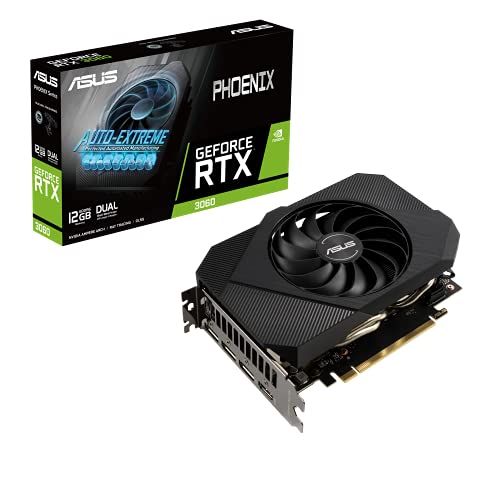
An RTX 3090 generates 95.7 tokens per second on Llama 3.1 8B at q4_K_M, per LocalScore's accelerator database, against 52.2 tok/s for an RTX 3060 12GB on the same model and quantization in the same database. That is a 1.8× throughput gap between a 24GB card and a 12GB card — and on the 8B class, both figures are far past the speed anyone reads at. The decision between these two cards is therefore almost never about 8B models. It is about the model sizes the 12GB card cannot hold at all, and whether you need them.
Those two figures are single matched runs from one database. The Quick answer and the Hardware at a Glance table above give pooled medians across every Q4 run SpecPicks tracks in the 7–9B class — 93.9 tok/s for the 3090 (6 runs, 4 sources) and 59.5 tok/s for the 3060 (37 runs, 19 sources) as of 2026-09-30 — which is why they differ slightly from the LocalScore pair.
Where the 3060's 12GB tops out: the 12–14B class (two rows from the RTX 3060 12GB model-by-model table):
| Model | Quant | Runtime | tok/s | VRAM used | Source |
|---|---|---|---|---|---|
| Mistral NeMo 12B | q4_K_M | Ollama | 29.0 | 8.1GB | llmrun.dev |
| Phi-4 14B | q4_K_M | Ollama | 24.6 | 9.5GB | llmrun.dev |
Every model that fits in 12GB, with VRAM occupancy and what context length costs, is in RTX 3060 12GB Local LLM Guide: Which Models Actually Fit.
This synthesis collects the published runs SpecPicks tracks for both cards, sets them beside the VRAM arithmetic that decides which models load, and states plainly where the extra 12GB is worth roughly four times the money and where it is not.
The short version
- 7–8B models at q4: both cards are fast. Public runs put the 3060 at 52–65 tok/s and the 3090 at 87–96 tok/s. Either is comfortable for chat.
- 13–14B models at q4: the 3060's practical ceiling, at 22–36 tok/s. The 3090 runs the same class at 52–56 tok/s with VRAM to spare for context.
- 32B dense models at q4: the 3090's tier, at 28–30 tok/s. They do not fit in 12GB at a useful quantization.
- Sparse MoE models (35B-A3B class): the 3090's most lopsided win — 112–136 tok/s, because only a fraction of the parameters activate per token.
- 70B at q4: neither card holds it. The 3090 can run it by spilling to system RAM at roughly 5 tok/s.
- Price: at the Amazon listings SpecPicks tracked on 2026-09-03, $359.99 for a new RTX 3060 12GB against $1,549.99 for a renewed RTX 3090 Founders Edition.
Measured throughput, model by model
Every figure below is a published run held in the SpecPicks benchmark database with its original source attached. Where several sources report the same model class, the range is shown rather than an average, because the spread between runtimes and context lengths is larger than the spread between the cards on some rows.
| Model class (q4) | RTX 3060 12GB | RTX 3090 24GB | Sources |
|---|---|---|---|
| Llama 3.1 8B | 52.2–64.5 tok/s | 87.5–95.7 tok/s | LocalScore 3060, tyolab; LocalScore 3090, Hardware Corner |
| Qwen3 8B, 16K context | 42.0 tok/s | 87.5 tok/s | Hardware Corner 3060; Hardware Corner 3090 |
| 12–14B dense | 22.7–35.8 tok/s | 52.1–55.8 tok/s | singhajit, llmrun.dev; kunalganglani, LocalScore 3090 |
| Qwen3 32B dense | does not fit at q4 | 28.0–30.3 tok/s | — ; Hardware Corner, kunalganglani |
| Qwen3 35B-A3B (sparse MoE) | expert offload required | 112–135.7 tok/s | — ; thc1006 on GitHub, Code Pulse |
| Llama 3 70B q4 | no | 5.2 tok/s at 23GB | — ; GigaGPU |
Two rows deserve a note. The 16K-context row is the same model on both cards at the same quantization from the same publication, which makes it the cleanest single comparison available: 42.0 against 87.5 tok/s, a 2.1× gap. And the 35B-A3B row is not a like-for-like speed win — it is an architecture win. A sparse mixture-of-experts model activates roughly 3B parameters per token while holding all 35B in VRAM, which is exactly the shape of workload 24GB unlocks and 12GB does not.
The 12GB wall, and what 24GB actually buys
VRAM decides which models load; clock speed only decides how fast the ones that fit run. The arithmetic below is the standard weights-plus-overhead estimate at q4_K_M, not a measurement:
- 8B at q4: roughly 5GB of weights. Hardware Corner's 3060 table records 6.0GB in use at 4K context for Qwen3 8B — comfortable on either card.
- 14B at q4: llmrun.dev records Phi-4 14B occupying 9.5GB on the 3060. That leaves roughly 2.5GB for context and activations, which is the real reason 14B is the 12GB card's ceiling rather than its comfort zone.
- 32B at q4: roughly 19–20GB of weights. Hardware Corner's 3090 measurements show Qwen3 32B running at 30.3 tok/s with 16K context on the 24GB card. There is no quantization that makes this fit in 12GB without offloading most of the model to system RAM, at which point throughput collapses to system-memory bandwidth.
- 70B at q4: roughly 40GB. GigaGPU's run reports 5.2 tok/s on a single 3090 with 23GB resident and the rest offloaded — technically possible, practically slower than reading.
So the honest framing of the upgrade is not "1.8× faster." It is: the 3090 moves your ceiling from the 14B class to the 32B class, and adds the sparse-MoE tier on top.
Context length costs VRAM on both cards, and it costs the 3060 more
The KV cache grows with context and competes with weights for the same VRAM. Hardware Corner's 3060 table shows Qwen3 8B moving from 6.0GB at 4K context to 7.5GB at 16K, with generation dropping from 55.2 to 42.0 tok/s — 1.5GB and roughly a quarter of the throughput for four times the window. On a 12GB card that increment is a meaningful fraction of what is left after the weights; on a 24GB card it is not. Code Pulse's 3090 run reports a 35B-A3B model held at a full 262K context in 22.4GB, which is a window the 12GB card cannot approach at any model size worth using.
If your work is long-document summarisation, repository-scale coding context, or agent loops that accumulate history, the context tax is the argument for 24GB — more than the raw tok/s figure is.
Power, the rest of the build, and the used market
SpecPicks' hardware records list the RTX 3090 at a 350W board power against 170W for the RTX 3060 — see the RTX 3090 benchmark page and the RTX 3060 benchmark page, where every spec and benchmark row carries the source it came from. That difference is not only an electricity-bill line: it changes the power supply, the case airflow, and in a 24/7 inference box, the noise floor. A 3060 build tolerates a modest SFF case and a 550W supply; a 3090 build does not.
The other practical difference is the market. The 3060 is still sold new. The 3090 has been out of production since the 40-series launch, so most 3090 purchases are used or refurbished — which is why the tracked listings below span a wide range and why the condition of the card matters as much as the sticker.
Price per token per second
The figures below divide the lowest Amazon listing SpecPicks tracked on 2026-09-03 by the mid-point of each card's published 8B q4 range. It is arithmetic on two cited inputs, not a benchmark:
| Tracked listing | 8B q4 mid-point | Dollars per tok/s | |
|---|---|---|---|
| RTX 3060 12GB (ASUS Phoenix V2) | $359.99 | 58.4 tok/s | ~$6.16 |
| RTX 3090 Founders Edition (renewed) | $1,549.99 | 91.6 tok/s | ~$16.92 |
Prices move daily and the 3090 is a used-market part, so treat the ratio rather than the absolute numbers as the takeaway: on throughput alone, the 3060 is roughly 2.7× the value. The 3090 is not bought for throughput per dollar. It is bought for the models the 3060 cannot load.
Which one should you buy
- Chat, summarisation, and 8B-class assistants: the RTX 3060 12GB. Both cards clear reading speed on this workload and one of them costs a quarter as much.
- A 14B daily driver with modest context: still the 3060, with the caveat that llmrun.dev's 9.5GB figure leaves little room, so expect to keep the context window short.
- 32B dense models, long context, or sparse MoE models: the RTX 3090. This is the only reason to pay the difference, and it is a good one.
- Fine-tuning anything beyond a small LoRA: the RTX 3090, for the same VRAM reason.
- A quiet, low-power, always-on box: the RTX 3060, at 170W against 350W.
- 70B ambitions: neither. A single 3090 manages 5.2 tok/s by offloading, per GigaGPU; the honest answer at that model size is two 24GB cards or a unified-memory machine.
Side-by-side specifications, synthetic scores and current listings for both cards are on the RTX 3060 vs RTX 3090 comparison page. The full card-level guide, with per-model-size medians across every run on file, is RTX 3060 12GB for Local LLMs: The Complete 2026 Guide. If the 3090 tier is where you are landing, the next comparison up is RTX 3090 vs RTX 4090 for LLM inference, which holds VRAM constant and changes only the generation.
Citations and sources
- LocalScore — RTX 3060 accelerator page
- LocalScore — RTX 3090 accelerator page
- tyolab — 64GB RAM, 12GB VRAM: the honest local LLM benchmark
- Hardware Corner — RTX 3060 12GB LLM benchmarks
- Hardware Corner — RTX 3090 LLM benchmarks
- llmrun.dev — RTX 3060 12GB model and VRAM measurements
- Ajit Singh — LLM inference speed comparison
- Kunal Ganglani — LLM benchmarks
- thc1006 — Qwen3.6 speculative decoding on an RTX 3090
- Code Pulse — one RTX 3090, 112 tokens per second, full 262K context
- GigaGPU — Llama 3 70B on an RTX 3090
- PassMark — GeForce RTX 3060
- PassMark — GeForce RTX 3090
This piece is editorial synthesis based on publicly available information. No independent first-party benchmarking is reported.