Prices shown are indicative and may vary. See our editorial methodology.
A home game server needs far less hardware than most builds assume: 8 cores with a strong single-thread score covers almost every title, because Minecraft, Valheim, and the source-engine family pin one or two threads for the main tick loop. The AMD Ryzen 7 5800X is the overall pick at a 3,448 PassMark single-thread rating (PassMark), paired with 32GB of RAM and a SATA SSD for world saves.
Who this guide is for
You want to host for a group of friends rather than rent a box from a provider that charges monthly and throttles your mod list. Maybe it is a Minecraft world that has survived three years and four versions. Maybe it is a Valheim server that four people log into on weeknights, or a Palworld world that spikes to a dozen players when someone posts in the group chat. Maybe it is period-correct — a Quake 3 Arena and UT99 pair running 24/7 so a LAN-party crowd has somewhere to warm up between events.
These are not the same workload, but they share a shape. Almost all of them are latency-sensitive rather than throughput-sensitive: what players experience as "lag" is the server missing its tick deadline, not the server running out of raw compute. That single fact reorders the entire parts list. Single-thread clock speed matters more than core count. RAM headroom matters more than RAM speed. Storage write behavior matters more than sequential read speed. And the thing that ruins more home servers than any hardware choice — no backups, no remote access — costs nothing to fix and gets skipped anyway.
The other shared constraint is that this box runs all the time. It sits in a closet or under a desk, it is on when you are asleep, and it needs to be quiet enough that you forget it exists. That pushes toward parts with good idle behavior and a cooler that never has a reason to spin up, rather than toward the highest-performing option in each category.
The overall winner below is the Ryzen 7 5800X, and the reason is boring and correct: it has the single-thread performance the tick loop wants, sixteen threads for hosting several instances side by side, and it sits on AM4, a platform where boards and DDR4 are cheap in 2026 in a way that current-generation sockets are not.
Step 0 — diagnose the bottleneck before you buy
Game servers fall into three buckets, and they want different things.
Single-thread-bound. Minecraft (vanilla and most modpacks), Valheim, Terraria, and the source-engine descendants run their world simulation on one main thread. Extra cores do nothing for a single world's tick rate. What raises the player ceiling is clock speed and IPC. If you host one world, buy single-thread performance and stop.
RAM-bound. Modded Minecraft is the standard example. A heavy modpack can want several gigabytes of JVM heap before a single player connects, and chunk loading grows it from there. Here the constraint is capacity and garbage-collection behavior, not CPU. Under-provision RAM and you get periodic multi-second stalls that read to players as lag spikes.
Barely CPU-bound at all. Classic id-engine dedicated servers — Quake 3, OpenArena, UT99 — were written for hardware two decades slower than a Raspberry Pi. A Pi 4 hosts several of these simultaneously without noticing. If this is your workload, buying a desktop CPU is money set on fire.
Multi-instance. The common case once friends ask for a second world. Now core count matters, because each instance pins its own main thread. This is where sixteen threads earns its keep.
Work out which bucket you are in first. The picks below are ordered so that each one is the right answer for a specific bucket, not a linear ranking.
Comparison table
| Pick | Best for | Key spec | Price range | Verdict |
|---|---|---|---|---|
| AMD Ryzen 7 5800X | Best overall — multi-instance hosting | 8C/16T, 3,448 single-thread | ~$250 | The default answer for a serious home server |
| Intel Core i7-9700K | Best value — single high-tick world | 8C/8T, 4.9 GHz turbo | ~$260 new, far less used | Cheap used LGA1151 platforms make this a bargain |
| Raspberry Pi 4 Model B 8GB | Lightweight and retro servers | 2.7 W idle, 6.4 W load | ~$175 | Unbeatable on wattage for classic engines |
| Samsung 870 EVO | Best performance storage | DRAM-cached SATA | ~$168 | Write endurance and consistency for world saves |
| Crucial BX500 1TB | Budget pick — bulk capacity | Up to 540 MB/s read | ~$180 | Cheap capacity for backups and extra instances |
Top picks
🏆 Best Overall: AMD Ryzen 7 5800X
Key specs: 8 cores / 16 threads · 3.8 GHz base, 4.7 GHz boost · 32MB L3 · 105 W TDP · AM4 socket (PassMark)
Pros
- 3,448 PassMark single-thread rating — the number that decides how many players a Minecraft or Valheim world holds before tick times sag (PassMark).
- Sixteen threads for running four or five game instances plus a backup job plus whatever else the box does.
- AM4 is cheap in 2026. Boards, DDR4, and coolers are all mature and inexpensive, which is where the real savings versus a current-generation build sit.
- 27,661 PassMark CPU Mark multithreaded, which is roughly 92% higher than the i7-9700K below (PassMark).
Cons
- 105 W TDP is real, and this is a 24/7 box. It idles low, but it is not a low-power part.
- Zen 3 is not a current architecture; there is no upgrade path on the socket beyond AM4's final parts.
- It is overkill for a single lightweight world, where the pick below saves money for identical player experience.
For a box hosting several worlds at once, this is the correct chip. CGDirector's Cinebench R23 results put it at 15,228 multi-core and 1,596 single-core, which lines up with the PassMark picture: strong per-thread performance with enough parallel headroom that a second and third server instance do not contend. AMD's product page documents the full specifications.
The practical build around it is 32GB of dual-channel DDR4, a B550 board, and a quiet air cooler. That configuration hosts a heavily modded Minecraft world, a Valheim server, and a couple of classic dedicated servers concurrently without any of them noticing the others.
Price may vary — check current pricing before ordering.
💰 Best Value: Intel Core i7-9700K
Key specs: 8 cores / 8 threads · 3.6 GHz base, 4.9 GHz turbo · 12MB L3 · 95 W TDP · LGA1151 (PassMark)
Pros
- 4.9 GHz turbo — the highest single-core clock in this guide, and clock is what the tick loop consumes.
- Used LGA1151 platforms are genuinely cheap. Board, chip, and DDR4 as a bundle frequently costs less than the 5800X alone.
- 95 W TDP, ten watts below the 5800X, which compounds over a year of continuous operation.
- 2,857 PassMark single-thread — 17% behind the 5800X, but far ahead of anything in the low-power tier (PassMark).
Cons
- Eight cores with no hyperthreading — eight threads total. Multi-instance hosting hits the wall much sooner.
- 14,400 PassMark CPU Mark, about 48% below the 5800X (PassMark).
- A dead-end socket bought used, usually without warranty.
This is the right pick when you host one world and want it to hold as many players as possible. The 17% single-thread deficit against the 5800X is smaller than the platform price gap, and for a tick-rate-bound workload nothing else on the spec sheet matters. Where it falls down is the second and third instance: eight threads with no SMT run out of room fast once you are hosting three servers plus a backup job.
If you already have an LGA1151 board sitting idle, this is close to free performance and the obvious move.
Price may vary — check current pricing before ordering.
🎯 Best for Lightweight and Retro Servers: Raspberry Pi 4 Model B 8GB
Key specs: Quad-core Cortex-A72 · 8GB LPDDR4 · Gigabit Ethernet · 2× USB 3.0 (Raspberry Pi Foundation)
Pros
- 2.7 W idle and 6.4 W at full load, measured by Pi Dramble. A desktop host idles at roughly ten times that.
- Classic engines do not care. Quake 3, OpenArena, and UT99 dedicated servers were built for late-1990s hardware; a Pi 4 hosts several concurrently.
- 8GB of RAM is enough for a small vanilla Minecraft world or a handful of lightweight instances.
- Genuinely silent with a passive case, which matters for a box living in a bedroom or living room.
Cons
- Struggles with modded worlds. A heavy modpack wants more heap and more single-thread performance than the Cortex-A72 provides.
- USB-attached storage rather than native SATA, which adds a layer between the world save and the disk.
- ARM builds of some game servers are unofficial or absent; expect more setup work than on x86.
This is the pick when your player count is small and your engines are old. The wattage argument is decisive: at 2.7 W idle, the annual electricity cost of running this box is a rounding error, and it will happily hold a period-correct Quake 3 and UT99 pair online permanently. Start here if that describes your use, and move to a desktop host only when tick times actually start climbing.
Price may vary — check current pricing before ordering.
⚡ Best Performance Storage: Samsung 870 EVO
Key specs: SATA 6 Gb/s · 2.5-inch · DRAM-cached controller (Samsung)
Pros
- DRAM cache gives consistent small-write latency, which is exactly the access pattern a world save produces.
- SATA saturating sequential reads, so chunk loads and server restarts are fast.
- Strong endurance rating for the capacity class — relevant because a busy Minecraft world writes continuously.
- Wide compatibility: any board with a SATA port takes it, including cheap used platforms.
Cons
- More expensive per gigabyte than the budget pick below.
- SATA, not NVMe, so it is capped at roughly 550 MB/s regardless of the drive's quality.
- The smaller capacities fill up quickly once you keep several world backups.
World saves are the workload that kills cheap storage. A busy server flushes chunks constantly — many small writes, continuously, forever. That pattern punishes DRAM-less controllers and destroys mechanical drives, which turn every autosave into a visible stutter for connected players. A DRAM-cached SATA drive removes the problem entirely, and there is very little reason to spend more: NVMe sequential speed does nothing for a workload made of 4K writes.
Price may vary — check current pricing before ordering.
🧪 Budget Pick: Crucial BX500 1TB
Key specs: SATA 6 Gb/s · up to 540 MB/s sequential read · 3D NAND (Crucial)
Pros
- Up to 540 MB/s sequential read, effectively the SATA ceiling, per Crucial's specifications.
- 1TB for backup duty — enough to hold rolling world snapshots for several servers without pruning.
- Cheapest reliable path to getting the world save off a mechanical drive.
- Fine as a second drive dedicated to backups, which is where most of its weaknesses do not apply.
Cons
- DRAM-less controller, so sustained-write performance degrades under prolonged heavy writes.
- Lower endurance rating than the 870 EVO, which matters if this is the primary world-save drive.
- Not the drive to pick if a single busy server writes to it continuously.
Use this as the backup and bulk-capacity drive rather than the primary. The right two-drive layout for a home game server is a DRAM-cached SSD holding the live world saves and a cheap 1TB drive holding the snapshot history — that costs less than one large premium drive and is more resilient, because a controller failure on either drive leaves the other intact.
Price may vary — check current pricing before ordering.
What to look for in home game server hardware
Single-thread clock versus core count
This is the decision that everything else follows from. A game server's world simulation runs on one thread, ticking at a fixed rate — 20 ticks per second for Minecraft. If the simulation for a tick takes longer than the tick budget, the server falls behind, and players see rubber-banding and delayed block updates. More cores do not help a single world hit its deadline; a faster core does.
The numbers that matter are the single-thread ratings: 3,448 for the 5800X against 2,857 for the i7-9700K (PassMark 5800X, PassMark i7-9700K). That 21% gap is roughly the difference in player headroom on a single world.
Core count becomes the binding constraint at the second instance, not the first. Each server process pins its own main thread, so hosting three worlds wants at least four to six real threads with room to spare for the OS and backup jobs. This is where the 5800X's 16 threads against the 9700K's 8 stops being an abstract benchmark difference.
RAM sizing per player slot
Modded Minecraft is the demanding case, and it is demanding before anyone connects: a heavy modpack allocates several gigabytes of JVM heap at startup, then grows as chunks load around each player. The Minecraft wiki's server setup guide covers the heap-allocation flags in detail.
Lighter titles and older engines are dramatically cheaper. A Quake 3 dedicated server's memory footprint is measured in megabytes.
The rule that avoids trouble: size for peak concurrent load plus the operating system, then leave headroom rather than tuning the heap to the edge. A garbage-collection stall in a heap running at 95% capacity produces a multi-second freeze that every connected player feels. 32GB on a desktop host is the comfortable number for multi-instance modded hosting; 16GB is fine for one vanilla world.
SSD endurance and save-write patterns
Covered above in the storage picks, but the mechanism is worth restating: world saves are small, frequent, and never stop. A mechanical drive handles them badly enough that players notice, because a seek-bound autosave blocks the main thread. Any SSD fixes the stutter. A DRAM-cached SSD fixes it and survives the write volume.
Prioritize endurance and controller quality over sequential speed. The workload never touches the sequential path.
24/7 noise and cooling
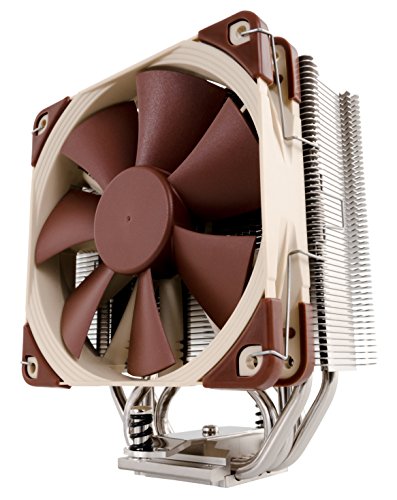
A server that lives in a closet needs to be inaudible, and the good news is that a game server is a light continuous load rather than a heavy one — exactly the profile air cooling handles best. The Noctua NH-U12S is the standard quiet answer for a 105 W-class part: a 120 mm single-tower design that clears tall RAM and fits under most side panels, and that never has a reason to spin up on this workload.
Set a flat, conservative fan curve rather than an aggressive one. A server at 25% CPU load does not need the fan profile a gaming build uses, and a curve that oscillates is more annoying than one that runs slightly faster and holds steady.
For the Pi tier, none of this applies — a passive aluminium case handles a 6.4 W part with no fan at all (Pi Dramble).
Network, NAT, and UPnP realities
The hardware is the easy part; your router is where home hosting actually breaks. Three things to check before you invite anyone.
Port forwarding must survive a reboot. Many consumer routers reassign DHCP leases on restart, pointing the forwarded port at a device that is no longer your server. Set a static DHCP reservation for the server's MAC address, then forward to that.
UPnP is convenient and unreliable. Leaving the game server to negotiate its own port mapping works until the router's UPnP table is cleared, which happens on firmware updates and sometimes for no visible reason. Configure the forward manually.
CGNAT may make this impossible. If your ISP puts you behind carrier-grade NAT, no amount of port forwarding will expose your server to the internet. Check whether your WAN IP matches your public IP. If it does not, you need a tunnel service or a static-IP plan.
Upstream bandwidth matters less than people expect — game server traffic is small and frequent, not bulk. Latency and jitter on your uplink matter far more than raw megabits.
The most-missed step: backups, systemd units, and rcon
Nobody skips this because they think it is unimportant. They skip it because the server works, friends are already playing, and it is 1 a.m. Then a mod update corrupts a region file three weeks later and a year of building is gone.
Do these three things before you open the port.
1. Automated save-directory backups to a second drive. A cron job that stops the server, copies the world directory, and restarts it is twenty lines of shell. Run it nightly, keep rolling snapshots, and put them on a different physical drive than the live world — that is what the Crucial BX500 1TB is for in this build. A backup on the same drive protects you from software corruption and not from hardware failure.
2. A systemd unit with Restart=on-failure. A game server that crashes at 3 a.m. and stays down until you notice is a worse outage than one that restarts itself in five seconds. Write the unit, enable it, and confirm it survives a full host reboot before you rely on it.
3. Rcon or SSH access from outside the room. You will need to restart a hung server, kick a griefer, or roll back a save from somewhere other than in front of the machine. Set up rcon with a strong password bound to localhost plus an SSH tunnel, or just SSH. Configure it before you need it, not during the incident.
None of this costs money and all of it is the difference between a server that lasts years and one that lasts until the first bad night.
Common pitfalls
- Buying core count for a single world. Sixteen threads do nothing for one Minecraft server's tick rate. Buy clock speed, or buy the cheaper chip.
- Running the world save on a mechanical drive. Every autosave becomes a visible stutter for connected players.
- Tuning the JVM heap to the edge. A heap sized exactly to peak usage produces GC stalls that players read as lag. Leave headroom.
- Relying on UPnP for port forwarding. It works until it silently stops, usually after a router firmware update.
- Putting backups on the same drive as the live world. That protects against software corruption and nothing else.
- Buying a desktop for a Quake 3 server. A Raspberry Pi 4 at 6.4 W does the job identically.
When NOT to build this
If your group plays sporadically — a few sessions a month, no persistent world anyone cares about — a rented server is cheaper than the electricity plus the hardware plus your time. The economics of self-hosting turn on persistence and duty cycle: a world that is up 24/7 for years amortizes the build easily, while a world that runs six evenings a month does not.
Skip it also if you are behind CGNAT with no path around it, or if the only place the box can live is a room where someone sleeps and you are unwilling to spend on quiet cooling. Both are solvable, but they are the constraints that turn a fun project into an ongoing annoyance.
Bottom line
For most people hosting for friends in 2026: an AMD Ryzen 7 5800X on a cheap B550 board with 32GB of DDR4, world saves on a Samsung 870 EVO, rolling backups on a Crucial BX500 1TB, and a Noctua NH-U12S keeping it silent. That handles several concurrent worlds and will not be the bottleneck for years.
Hosting one world on a budget? The Intel Core i7-9700K on a used LGA1151 platform gives up 17% of single-thread performance for a large platform-price saving. Hosting classic engines only? The Raspberry Pi 4 Model B 8GB at 2.7 W idle is the correct answer and everything above it is waste.
Whichever tier you pick, set up backups and remote access before you invite anyone.
Related guides
- Ryzen 7 5800X vs Core i7-9700K for a 24/7 Game Server
- Build a Budget Self-Hosted Game Server on a Ryzen 5 5600G in 2026
- Raspberry Pi 4 8GB as a Low-Power Quake 3 / OpenArena / UT99 Dedicated Server
- How to Host a Quake 3 Arena Server in 2026
- Best SSD for a Homelab NAS in 2026
- How to Backup a NAS on a Budget in 2026
Citations and sources
- PassMark — AMD Ryzen 7 5800X — CPU Mark of 27,661, single-thread rating of 3,448, core/thread count, clocks, TDP and socket. Accessed September 3, 2026.
- PassMark — Intel Core i7-9700K — CPU Mark of 14,400, single-thread rating of 2,857, 8 cores / 8 threads, 4.9 GHz turbo, 95 W TDP. Accessed September 3, 2026.
- AMD — Ryzen 7 5800X product page — manufacturer specifications for the overall pick. Accessed September 3, 2026.
- Pi Dramble — Raspberry Pi power consumption benchmarks — measured 2.7 W idle and 6.4 W full load for the Raspberry Pi 4 Model B. Accessed September 3, 2026.
- Raspberry Pi Foundation — Raspberry Pi 4 Model B — official specifications for the SBC pick. Accessed September 3, 2026.
- CGDirector — Cinebench R23 score database — Ryzen 7 5800X at 15,228 multi-core and 1,596 single-core. Accessed September 3, 2026.
- Minecraft Wiki — Setting up a server — JVM heap allocation and server configuration reference. Accessed September 3, 2026.
- Samsung — 870 EVO SATA SSD — manufacturer specifications for the performance storage pick. Accessed September 3, 2026.
- Crucial — BX500 SSD — up to 540 MB/s sequential read specification for the budget storage pick. Accessed September 3, 2026.
This piece is editorial synthesis based on publicly available information. No independent first-party benchmarking is reported.
— Mike Perry