Best Retro Gaming Gifts in 2026: 5 Picks for Console and PC Collectors
Match the gift to the person, not the spec sheet — the plug-and-play player and the bench tinkerer want opposite things.
By Mike Perry, Founder & Editor-in-Chief · Published 2026-09-04 · Updated 2026-09-04 · 14 min read
Five retro gifts matched to the recipient: plug-and-play consoles, an arcade stick, a Raspberry Pi build, and the drive adapter PC restorers never buy.
By Mike Perry · Published September 4, 2026 · 11 min read
There are two kinds of retro gaming fan, and buying for the wrong one is how a well-meant gift ends up in a closet. The first kind wants to sit down on a Saturday and play Super Mario World on a television, with no setup, no ROM sourcing, and no controller mapping. The second kind considers the setup to be the hobby — they are the person with a Windows 98 box on the bench, a drawer of IDE cables, and strong opinions about CRT geometry.
The plug-and-play consoles serve the first person very well and bore the second one within a week. The Raspberry Pi and the drive adapters serve the second person and frustrate the first one before a single game runs. Nearly every disappointing retro gift is a mismatch on this axis rather than a bad product.
So this guide is organized by recipient, not by price. Five picks, each with a specific person in mind, plus a companion buy for the one that needs it. Where the two categories overlap — the arcade stick, which works on modern platforms and vintage-style setups alike — that gets called out.
One structural note about buying retro in 2026: the two best plug-and-play consoles here are both discontinued, which means secondary-market pricing. That is not a reason to avoid them, but it is a reason to check the current asking price against what the unit originally sold for before you commit. If the drift is large, one of the other picks gets better value fast.
The winner, for what it is worth, is the SNES Classic — but only for the recipient it is aimed at.
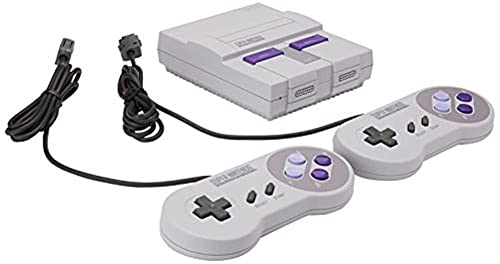
🏆 Best Overall: Nintendo Super NES Classic Edition
Spec chips: 21 built-in games · HDMI output · two controllers included · save states · no internet connection required
Pros: Zero setup — plug in HDMI and power and it works. The bundled library is curated rather than padded, and it includes Star Fox 2, which was finished in the 1990s and never commercially released until this console shipped (Wikipedia). Two controllers in the box means it is playable with someone else on the day it is opened. The save-state feature quietly removes the single biggest barrier to actually finishing these games as an adult with limited evenings.
Cons: Discontinued, so you are buying on the secondary market at whatever the current asking price is. The library is fixed — what ships is what you get, officially. The controller cables are famously short, which matters more in a modern living room than it did in 1991.
The Nintendo Super NES Classic Edition is the pick because it optimizes for the moment the box is opened. Every other option on this list has a step between unwrapping and playing — a card to image, a controller to pair, a drive to connect. This one does not, and for a gift that difference is worth more than raw game count.
The curation is the other half of the argument. Twenty-one titles sounds thin next to a Pi that can hold thousands, but the SNES library's high points are unusually dense, and the selection here leans on them rather than filling space. Star Fox 2 in particular is a genuine artifact: a completed game from the 16-bit era that sat unreleased for over two decades before appearing on this hardware (Wikipedia). That is a thing you can point at while handing the box over, which is not nothing for a gift.
On a modern television it connects over HDMI without adapters, which is its main practical advantage over original hardware. What it will not do is reproduce a CRT — see the section on displays below.
Price may vary; check the current listing before purchase.See full details →
💰 Best Value: Sega Genesis Mini
Spec chips: 42 built-in games · HDMI output · emulation by M2 · two controllers included
Pros: Twice the game count of the SNES Classic, in the same plug-and-play format. The emulation work was handled by M2, a studio with a long track record on Sega re-releases and a reputation for accuracy rather than approximation (Wikipedia). The library includes several titles that were not obvious inclusions, which makes it a better browse for someone who already knows the Genesis catalog.
Cons: Also discontinued, with the same secondary-market pricing caveat. The bundled controllers are three-button pads in some regional configurations, and a meaningful slice of the Genesis library — the fighting games in particular — was designed around six buttons. If the recipient cares about Street Fighter or Mortal Kombat specifically, budget for a six-button pad on top.
The Sega Genesis Mini is the value pick on straightforward arithmetic: 42 games against 21, at a comparable tier. But the emulation-quality point is what makes it a recommendation rather than a spec-sheet win. Plug-and-play consoles live or die on whether the games feel right, and M2's involvement is the reason this one is discussed in the same sentence as the SNES Classic instead of alongside the generic all-in-one units (Wikipedia).
The two-controller question is worth settling before you buy. Check which pad configuration the listing includes; if it is the three-button version and the recipient is a fighting-game person, either add a six-button pad or move them to the arcade stick below.
Price may vary; check the current listing before purchase.See full details →
🎯 Best for Fighting-Game Fans: MAYFLASH Universal Arcade Fighting Stick F500
Spec chips: multi-platform compatibility · arcade-layout buttons · full-size housing · standard replaceable parts
Pros: It works across multiple platforms rather than locking to one, which for a gift is the single most useful property — you do not need to know what the recipient plays on. The housing is full-size and heavy enough to sit in a lap without sliding, which is the difference between an arcade stick and a toy. The internals use standard-format parts, so the stick and buttons can be swapped later by anyone who cares to.
Cons: It is large and heavy, which is a feature during play and an annoyance in storage. The stock stick and buttons are serviceable rather than premium — enthusiasts replace them, and the fact that this is easy is part of the value proposition rather than a defect. It is also a single-genre purchase: it makes fighting and arcade games dramatically better and does approximately nothing for anything else.
The MAYFLASH Universal Arcade Fighting Stick F500 is on this list because the genre it serves is the one where the controller is not a preference but a requirement. Executing motion inputs on a d-pad is a different physical skill than executing them on a lever, and someone who grew up in an arcade is trying to do the second thing on a gamepad that cannot support it.
It also spans both halves of this guide's audience. It works with emulation setups on a PC or a Pi, and it works with modern console re-releases of the same games, which makes it the safest pick here for a recipient whose setup you have not seen. If you know they play fighting games and you do not know what they play them on, this is the answer.
Price may vary; check the current listing before purchase.See full details →
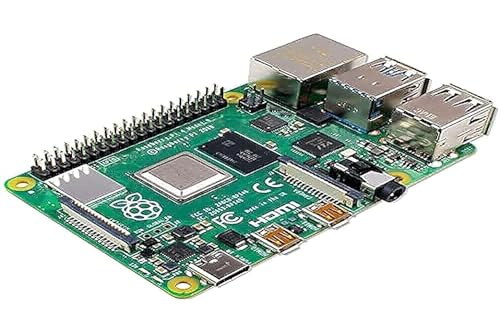
⚡ Best Performance (DIY emulation): Raspberry Pi 4 Model B
Spec chips: quad-core 64-bit ARM Cortex-A72 at 1.5 GHz · 2/4/8 GB LPDDR4 options · dual micro-HDMI up to 4Kp60 · Gigabit Ethernet · two USB 3.0 ports (Raspberry Pi)
Pros: Vastly more coverage than any fixed-library console — the Pi 4's quad-core Cortex-A72 comfortably handles the 8-bit and 16-bit generations and reaches into the 32-bit era, and RetroPie's installation documentation covers the whole setup path in one place (RetroPie). Dual micro-HDMI and Gigabit Ethernet make it useful for things other than games, so it does not become e-waste when the novelty passes. The 8 GB variant in particular has a long second life as a home server.
Cons: It is not a complete gift. Out of the box it is a board — no storage, no power supply, no case, no controller. Setup means writing an OS image, configuring an emulation front-end, and sourcing games, and none of that happens on Christmas morning. For a recipient who wants to play rather than build, this is the wrong choice no matter how good the spec sheet is.
Where the Raspberry Pi 4 Model B wins is breadth and longevity. The plug-and-play consoles are a closed library; the Pi grows. RetroPie's documentation is mature enough that a technically-inclined recipient can go from bare board to a working front-end in an afternoon without guessing (RetroPie), and the platform's coverage of the earlier console generations is well-established in the enthusiast press (Tom's Hardware).
Budget for the bundle, not the board. Storage, a power supply, a case with some thermal mass, and at least one controller are all required before a single game runs. If you are buying this as a gift, buying it complete is what separates a good present from a project someone never starts. Controller recommendations for exactly this setup are in Best Controller for Raspberry Pi Retro Emulation.
Price may vary; check the current listing before purchase.See full details →
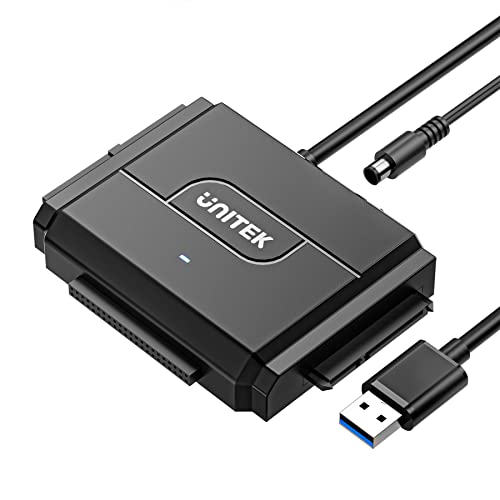
🧪 Budget Pick: Unitek SATA/IDE USB 3.0 Adapter
Spec chips: IDE and SATA support · 2.5-inch and 3.5-inch drives · USB 3.0 host interface · external power for 3.5-inch drives
Pros: Inexpensive, immediately useful, and it solves a problem that is genuinely time-sensitive. It handles both IDE and SATA and both drive form factors, which covers essentially the entire span of hardware a retro PC person will encounter. It requires no software and no configuration — connect the drive, plug in USB, and the disk appears.
Cons: It is a tool, not a toy, so it makes a poor sole gift for someone who wanted a game. 3.5-inch IDE drives need the external power brick, which is one more thing to keep track of. And it will not resurrect a drive that has already failed — it only helps if you get to the drive first.
The Unitek SATA/IDE USB 3.0 Adapter is here because a large share of the retro hobby is PC-side, and the person restoring a period-correct Windows 98 or XP machine has a deadline they may not have thought about. IDE drives from that era are decades past their design life and fail without warning. Imaging them — pulling a full copy to a modern machine while they still spin — is the work that preserves a build, and it is exactly the kind of task hobbyists keep meaning to do and never get to.
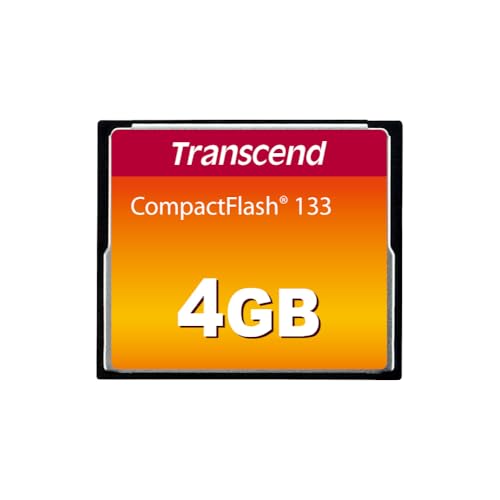
That is what makes it a good gift specifically: it is cheap, it is the thing they would not buy for themselves, and it turns an abstract "I should back that up" into an afternoon's work. Pair it with a Transcend 4GB CompactFlash card rated to 50 MB/s, which is the companion buy for anyone running a CF-to-IDE setup as a silent, solid-state replacement for a failing period drive. The two approaches are compared in USB-to-IDE Adapter vs CF-to-IDE for Imaging Retro PC Drives.
Price may vary; check the current listing before purchase.See full details →
What to look for in a retro gaming gift
Plug-and-play vs. build-it-yourself
This is the decision that determines whether the gift gets used. Plug-and-play means HDMI, power, and a controller in the box — the SNES Classic and Genesis Mini both qualify. Build-it-yourself means a board, an OS image, and configuration time, which the Raspberry Pi requires even with RetroPie's well-documented installation path (RetroPie). Neither is better. They are for different people, and the recipient's tolerance for setup is the only variable that matters.
Controller compatibility and port types
Retro controllers are a compatibility minefield. The plug-and-play consoles use proprietary connectors and ship with their own pads. The Pi and PC setups take USB or Bluetooth controllers, which is more flexible but means the controller is a separate purchase. And genre matters: a three-button Genesis pad is wrong for six-button fighting games, which is why the arcade stick exists as its own category on this list.
Display output and what happens on a modern 4K TV
Everything here outputs HDMI, so it will connect. What you lose is the CRT presentation these games were designed for — modern panels scale the image, and the TV's processing pipeline can add input lag that is invisible in a film and very visible in a platformer. Turning on the television's game or low-latency mode is the free fix and usually the sufficient one. Serious collectors eventually move to a CRT or a dedicated scaler, but that is a later upgrade and a poor first gift. The tradeoffs are worked through in Genesis Mini and SNES Classic on a 4K Gaming Monitor.
Storage and media for PC-side gifts
For the retro PC half of the hobby, storage is where the interesting gifts are. Period-correct machines want period-correct interfaces, which is why CompactFlash-to-IDE adapters are popular — a CF card is silent, has no moving parts, and presents as an IDE drive to a machine from 1998. On the modern side, a USB adapter that reads those old drives is how the data gets off before the drive dies.
Budget tiers and secondary-market pricing risk
The two plug-and-play consoles are discontinued, so their prices float. Check the current listing against the original retail price; if it has drifted substantially, the Pi route delivers more games for the money even after you add the accessories. The adapter and CompactFlash card are genuinely inexpensive and work well as a secondary gift stacked alongside a larger one.
As an Amazon Associate, SpecPicks earns from qualifying purchases; we also earn on qualifying eBay purchases via the eBay Partner Network. Prices shown were last tracked at crawl time and may vary — check the listing for the current price.
🕹️ Find this retro hardware on eBay
Pre-2012 hardware isn't sold new on Amazon. eBay is the primary marketplace for the SKUs discussed in this article — auctions and Buy-It-Now listings update continuously.
SpecPicks earns a commission on qualifying eBay purchases via the eBay Partner Network. Prices and availability change frequently.
Frequently asked questions
Are the Super NES Classic and Genesis Mini still worth buying now that both are discontinued?
Yes, with a caveat about price. Both are fixed-library, plug-and-play machines that need no setup, which is exactly what makes them good gifts for someone who wants to play rather than tinker. Because production ended, you are buying on the secondary market, so check the current listing price against what the unit sold for at retail before committing. If the asking price has drifted well above that, a Raspberry Pi build often delivers more games for the money.
Is a Raspberry Pi a good gift, or does it require too much setup?
It depends entirely on the recipient. For someone who enjoys the building as much as the playing, a Pi is the most flexible retro gift on this list — it emulates several console generations, runs on a TV, and grows with them. For someone who wants to press a button and play, it is the wrong gift, because it needs an OS image, a storage card, controllers, and configuration before a single game runs. Match the gift to the person, not the spec sheet.
Will these plug-and-play consoles look right on a modern 4K TV?
They output over HDMI, so they will connect and display without adapters, which is their main advantage over original hardware. What you lose is the CRT look that the original games were designed around — modern panels scale the image and can introduce input lag depending on the TV's processing. Enabling the TV's game or low-latency mode helps noticeably. Purists eventually move to a CRT or a dedicated scaler, but that is a later upgrade, not a first gift.
Why is a drive adapter on a list of retro gaming gifts?
Because a large part of the retro hobby is PC-side, and anyone restoring a period-correct Windows 98 or XP machine eventually needs to read a decades-old IDE drive from a modern computer. Those drives are well past their design life and fail without warning, so imaging them is time-sensitive work. A SATA/IDE-to-USB adapter is inexpensive, immediately useful, and the kind of thing hobbyists keep meaning to buy and never do — which is what makes it a good gift.
What should I budget for a retro gaming gift that actually gets used?
The plug-and-play consoles and the arcade stick sit in the mid-range and are complete experiences on their own. The Raspberry Pi looks cheaper on the listing page but is not a complete gift until you add storage, a power supply, a case, and at least one controller, so budget for the full bundle rather than the board alone. The adapter and a CompactFlash card are genuinely low-cost and pair well as a secondary gift alongside a larger one.