

Sintech
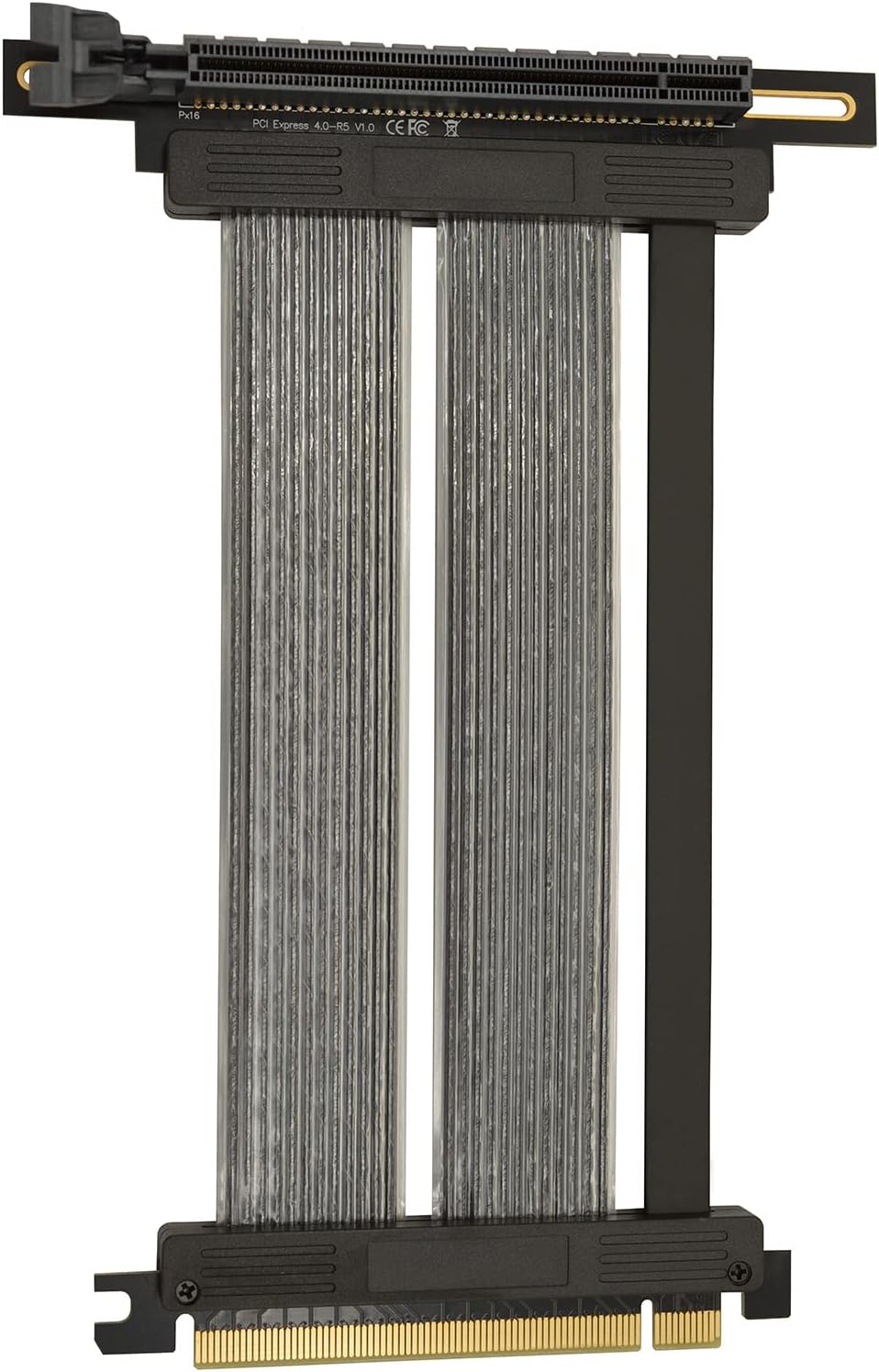
Sintech PCI-E Express X16 Riser Extend Card with High Speed Flex Cable(10cm 180Degree)
Bottom line: The Sintech PCI-E Express X16 Riser Extend Card with High Speed Flex Cable: Silver-covered flex cable mounts a PCIe x16 card in any orientation; main trade-off: only 10cm of reach, too short for most full-tower routing.
As an Amazon Associate, SpecPicks earns from qualifying purchases. Full disclosure →
Pros & Cons
Pros
- ✓ Silver-covered flex cable mounts a PCIe x16 card in any orientation
- ✓ 10cm 180-degree ribbon fits tight IPC and small-form-factor chassis
- ✓ Foiled shielding targets high-frequency impedance and EMI control
- ✓ Gold-plated contacts for durable, low-resistance card seating
Cons
- ✗ Only 10cm of reach, too short for most full-tower routing
- ✗ 180-degree fixed bend limits mounting angles versus 90-degree risers
- ✗ Listing states no PCIe generation rating, so signal ceiling is unclear
- ✗ Flat flex ribbon is stiffer to route than round riser cable
SpecPicks Verdict
SpecPicks scored Sintech PCI-E Express X16 Riser Extend Card with High Speed Flex Cable using a rating × review-volume × price-fit model applied to published specs and reviews across the expansion cards category. Sintech's expansion cards lineup sits within the broader category mid-tier; price and specs are the deciding factors over brand loyalty here. Judge it on the specification table and the price rather than on sentiment: check the figures that decide your use case, then put it side-by-side with two or three close alternatives in the Compare tool before clicking through.
Common buyer scenarios for expansion cards of this kind: matching it to an existing build, replacing a failing part, or upgrading from a previous-generation equivalent. Check the spec table below against your current setup — particularly socket / form-factor / power-rating fields — and confirm compatibility on the retailer's listing before purchase. Prices and stock are set by the retailer and may have moved since this page was last updated.
Key Features
- Extremly High speed silver-covered cable alow PCI express video card in any direction on suitable position
- small dimension is suitalbe for IPC case
- Foiled cable for High-frequency impedance and EMI design
- Golden plated contacts for best connectivity and long life
- Cable length: 100mms
Full Specifications
| Brand | Sintech |
|---|---|
| Style | 180Degree |
| Style Name | 180Degree |
| Cable length | 100mms |
| Model Number | ST731C-10CM |
| Mfr Part Number | ST731C-10CM |
| Compatible Devices | Desktop, Laptop |
| Hardware Interface | PCI, PCI Express x16 |
| Warranty Description | 6 Months |
Ready to buy?
Sintech PCI-E Express X16 Riser Extend Card with High Speed Flex Cable(10cm 180Degree) is listed on Amazon. Price, availability, shipping and returns are set by Amazon and its sellers — check the listing for current terms. SpecPicks earns a small commission on qualifying purchases — thank you for supporting independent review work.
Related Expansion Cards



More guides & deep dives from the SpecPicks archive
Browse all articles & guides →- Emulation Hardware in 2026: FPGA, Software, and Cart-Reader Ecosystems
- RTX 4070 Super vs RX 7800 XT — Which to Buy in 2026
- Best Budget Gaming PC Build 2026 — ~$1,000 ($800 on Sale)
- The Complete Voodoo5 5500 AGP Driver Guide (2026 Edition)
- Best 1440p Gaming GPUs in 2026
- Best Retro Handhelds in 2026 — From $35 to $500
- How to Build a Windows 98 Retro PC in 2026
More reviews from the SpecPicks archive
Browse all reviews →- Best CPU Cooler for AM5 Ryzen 9 Overclocking (2026)
- Gemma 4 31B Creative-Writing Finetunes on RTX 3060 12GB
- pxpipe: Hide Text in PNGs to Cut Claude Code Token Costs up to 70%
- GLM-5.2 on 12GB VRAM: Quantization and Speed on the RTX 3060
- Best Budget Gaming SSDs Under $100 in 2026
- Coding Agents Can Run Hidden Malware: Why a Sandboxed Local Rig Matters
- Xbox Cloud Gaming in 2025: How It Works & What You Need
- Ollama vs llama.cpp vs vLLM — which local LLM runtime wins in 2026?
- OpenAI Just Beat Every Human at AtCoder — Can You Run a Coding LLM Locally?
- Open-Source Linux Driver Lands for the ASUS ZenVision Lid OLED
- AI-Driven Sound Blaster Driver Recovery on Win98 in 2026
- Best Budget Streaming Setup in 2026: 5 Picks Under Budget
- Best SSD to Upgrade Your PS4 Pro in 2026: SATA Drives That Actually Speed It Up
- Best Parts for a ComfyUI + Local LLM Workstation in 2026
- Noctua NH-U12S vs Cooler Master ML240L: Which Cools a 5800X?
- Can a Ryzen AI Max+ 395 Mini-PC With 128GB Run Big LLMs? The r/LocalLLaMA Question
- Best Mouse Pad for FPS and MOBA Esports Players (2026)
- Anthropic Tightens Claude Fable 5 Limits — Why Builders Are Eyeing Local Rigs
- Best Raspberry Pi 4 8GB Retro Emulation Setup in 2026
- Pi Pico Puts Bluetooth Keyboards on the I2C Bus
- GLM-5.2 With CPU Offload: Ryzen 7 5800X + RTX 3060 12GB Tested
- Flux.2-Klein Pipeline: Real-Time Webcam AI at 30 FPS
- Shared ChatGPT & Claude Chats Are Spreading Malware — Run a Local LLM on a 12GB GPU Instead
- 180Hz 1440p Monitors Hit Entry Pricing — Here's How the 4K Tier Compares
Earliest SpecPicks reviews
Browse full archive →- Best GPU for Llama 3.1 8B (2026)
- Best GPU for Qwen 3 14B (2026)
- Best GPU for Qwen 3 32B (2026)
- Best GPU for Llama 3.1 70B (2026)
- Best GPU for DeepSeek-R1 32B (2026)
- Best GPU for Llama 3.1 405B (2026)
- How to run Llama 3.1 8B on NVIDIA GeForce RTX 5090
- How to run Qwen 3 14B on NVIDIA GeForce RTX 5090
- How to run Qwen 3 32B on NVIDIA GeForce RTX 5090
- How to run Llama 3.1 70B on NVIDIA GeForce RTX 5090
- How to run DeepSeek-R1 32B on NVIDIA GeForce RTX 5090
- How to run Llama 3.1 8B on NVIDIA GeForce RTX 4090