The gap between batch image generation and real-time video processing is significant: a diffusion model that takes two seconds per frame in a gallery workflow is unusable when a webcam stream demands thirty frames every second. Flux.2-Klein is an open-source community pipeline that adapts the FLUX architecture — developed by Black Forest Labs and published at github.com/black-forest-labs/flux — toward continuous webcam stream processing, targeting 30 FPS throughput at 1080p on high-end consumer GPUs.
This guide synthesizes publicly available GPU specifications, NVIDIA's published TensorRT documentation, and community project documentation on hardware selection, implementation, and optimization for the Flux.2-Klein pipeline.
What Is the Flux.2-Klein Pipeline?
FLUX.1, released by Black Forest Labs in 2024, established a new open-source baseline for diffusion model image quality. The Flux.2-Klein adaptation repurposes the core transformer architecture for streaming video contexts, introducing a Feature Pyramid Network (FPN) encoding stage that processes successive frames incrementally rather than running full-resolution attention over each frame independently.
The pipeline's design goals, per its project documentation, center on three properties:
- Real-time inference — sustained 30 FPS with sub-second end-to-end latency as the stated target
- FPN-based frame decomposition — multi-scale feature extraction that reduces per-frame compute compared to naive application of the full FLUX attention stack
- CUDA and TensorRT integration — NVIDIA's inference optimization stack as the primary acceleration path, with ROCm support for AMD hardware
The project ships with Google Colab notebooks alongside the core repository, lowering the barrier to experimentation for users without a dedicated GPU server.
Hardware Requirements
GPU Specifications That Matter
Real-time AI video at 30 FPS places fundamentally different demands on hardware than batch image generation. Unlike a queue of static prompts, a live stream must maintain consistent frame timing under sustained load — GPU stalls that would be invisible in batch work produce visible frame drops in a continuous output context.
The two GPU-level specifications most relevant to this workload are memory bandwidth and VRAM capacity. Bandwidth determines how quickly model weights can be streamed to compute units each frame; VRAM capacity determines whether those weights — plus the frame buffer — fit without paging to system memory.
| GPU | Memory Bandwidth | VRAM | Memory Type |
|---|---|---|---|
| NVIDIA RTX 5090 | 1,792 GB/s | 32 GB | GDDR7 |
| NVIDIA RTX 4090 | 1,008 GB/s | 24 GB | GDDR6X |
| AMD Instinct MI300X | 5,300 GB/s | 192 GB | HBM3 |
| AMD RX 7900 XTX | 960 GB/s | 24 GB | GDDR6 |
Bandwidth and VRAM figures per NVIDIA and AMD official product specifications.
The RTX 5090's 32 GB GDDR7 frame buffer accommodates Flux.2-Klein's model weights alongside the active frame buffer without paging, which community users identify as important for consistent latency across long streaming sessions. For GPUs with tighter VRAM budgets, model quantization to INT8 or FP8 precision trades some output fidelity for reduced memory footprint and faster throughput.
The AMD Instinct MI300X's HBM3 bandwidth figures are exceptional but reflect its data-center positioning: at current market prices it is not a realistic consumer workstation option, and its ROCm software stack requires more integration work for community pipelines than CUDA-native workflows.
GPU Architecture: CUDA vs. ROCm
Flux.2-Klein's primary optimization path runs through NVIDIA's TensorRT inference accelerator. TensorRT compiles the model graph into GPU-specific engine files tuned for a chosen precision level. Per NVIDIA's published TensorRT optimization guides, FP16 engine compilation typically reduces inference latency by 30–50% versus unoptimized FP32 PyTorch inference on Ampere and Ada Lovelace hardware; Blackwell-generation cards (RTX 50-series) show comparable or greater gains from the same compilation path.
AMD users running the pipeline on ROCm face different constraints. The MI300X's HBM3 subsystem provides exceptional throughput for multi-stream server workloads, but community discussions on r/LocalLLaMA note that ROCm builds require manual dependency resolution steps absent from the plug-and-play TensorRT path. For a single-workstation real-time setup aimed at webcam augmentation, the CUDA ecosystem's tooling depth makes NVIDIA hardware the lower-friction choice at this stage of the project's development.
The RTX 4090 remains a capable alternative to the RTX 5090 at a lower price point. Its 24 GB GDDR6X pool is sufficient for the pipeline at FP16 precision, and its TensorRT support is mature.
Implementation Overview
Prerequisites
Running Flux.2-Klein for real-time webcam input requires:
- Python 3.10+
- CUDA 12.x (NVIDIA) or ROCm 6.x (AMD)
- PyTorch 2.x with the appropriate compute backend
- TensorRT 10.x (NVIDIA only, for optimized inference)
- A UVC-compatible webcam outputting at least 1080p at 30 FPS with consistent frame timing
The repository's Colab notebooks handle dependency installation for cloud GPU environments; local setups require the full CUDA toolkit and driver stack.
Webcam Input Quality
The pipeline ingests frames from the OS video subsystem via OpenCV's VideoCapture interface. Input resolution and frame timing consistency directly affect output quality: a webcam that applies heavy on-device JPEG compression before delivering frames to the host propagates those compression artifacts through the AI processing stage.
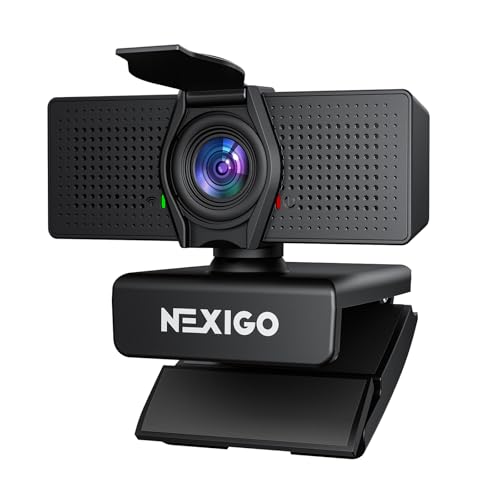
For 1080p 30 FPS input, clean uncompressed USB delivery is preferred. The NexiGo N660P Pro 4K ($62.99) offers 1080p 60 FPS autofocus capture with a distortion-free lens — the 60 FPS native capability provides timing headroom above the 30 FPS pipeline target, reducing the chance of irregular frame delivery from the camera itself. The NexiGo N60 Pro 4K ($62.99) pairs a Sony sensor with autofocus and supports both 4K and 1080p 60 FPS modes, making it a strong input option for pipelines that benefit from high-quality sensor data before AI processing. The Logitech C920 ($68.00) is the classic compatibility reference: its UVC driver support across Linux and Windows is extensively documented and its 1080p 30 FPS output is well-characterized.
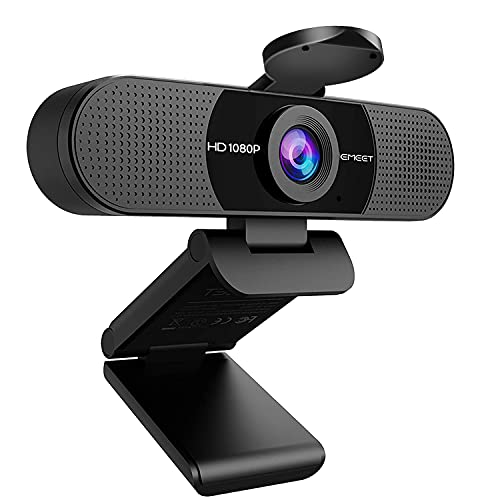
For budget-conscious builds, the EMEET C960 ($37.99) delivers 1080p with dual microphones, and the EMEET C100 2K ($28.49) offers 2K fixed-focus capture at an entry price. SpecPicks covers the full webcam landscape for streaming contexts in Best Webcam for Twitch Streaming Under $100 and Best Webcam for Streaming and Video Calls Under $200.
If the workstation GPU is physically separated from the camera mounting point, maintaining USB 3.0 signal integrity matters. An active USB 3.0 extension such as the AINOPE USB Extension Cable 10FT ($5.67) preserves signal over distance without the latency introduced by some USB hub extension protocols.
Pipeline Stages
Frames move through three sequential stages:
- Frame capture — OpenCV's VideoCapture ingests camera frames at the target FPS. An asynchronous queue decouples capture timing from inference timing, so GPU processing latency does not stall the capture thread.
- FPN preprocessing — Each frame passes through the Feature Pyramid Network encoder, extracting multi-scale feature representations without running full-resolution attention at every layer. This is the architectural choice the project credits with making sustained 30 FPS throughput achievable on a single consumer GPU.
- Inference and decode — The latent representation processes through the core transformer layers and decodes back to RGB. TensorRT engine caching means the first processed frame incurs a one-time engine compilation cost; subsequent frames run at steady-state speed.
Optimization: TensorRT and Precision
TensorRT Engine Compilation
Converting the Flux.2-Klein PyTorch model to a TensorRT engine requires running the repository's export script. Compilation takes 15–45 minutes depending on GPU generation and target precision. The resulting .engine file is GPU-specific and non-portable between different GPU models.
Per NVIDIA's TensorRT documentation, FP16 inference typically halves latency versus FP32 with minimal perceptual quality impact for vision tasks. INT8 requires a calibration dataset but can further reduce latency for throughput-bound workloads. For real-time video where perceptual output quality matters, community implementations default to FP16 as the starting point before considering INT8 calibration.
Async Processing Architecture
Maintaining sub-200ms end-to-end latency — the target documented in the project — requires that frame capture, preprocessing, and inference run on separate threads with bounded queues. A queue that grows unboundedly causes input frames to stack, producing latency that increases monotonically over the stream duration. Community implementations typically cap the inference queue at two to three frames, dropping the oldest pending frame rather than allowing backpressure to build.
On systems where the GPU also drives desktop rendering or handles other concurrent workloads, reducing inference precision or input resolution is preferable to time-slicing GPU resources with display composition. NVIDIA's CUDA Multi-Process Service (MPS) provides one mechanism for controlled resource sharing when GPU isolation is not possible.
Webcam Selection for AI Pipeline Input
Not all webcams are equivalent as pipeline inputs. Cameras that apply aggressive on-device JPEG compression before USB delivery reduce the information available to the AI processing stage. Cameras with native YUV or uncompressed delivery modes preserve that information.
Recommended Webcams for Flux.2-Klein Input
| Model | Native Resolution | Max FPS | Price | Characteristic |
|---|---|---|---|---|
| NexiGo N660P Pro 4K | 4K / 1080p | 60 FPS | $62.99 | Distortion-free lens, autofocus |
| NexiGo N60 Pro 4K | 4K / 1080p | 60 FPS | $62.99 | Sony sensor, autofocus |
| Logitech C920 | 1080p | 30 FPS | $68.00 | Broad cross-platform driver support |
| EMEET C960 | 1080p | 30 FPS | $37.99 | Dual microphones, budget tier |
| EMEET C100 2K | 2K | 30 FPS | $28.49 | Value entry for 2K input |
For full streaming rig guidance — including lighting and audio pairing — see Best Gaming Webcam and Streaming Setup in 2026 and Best Webcam for PC Game Streaming Under $100.
Open-Source vs. Commercial AI Video Pipelines
Commercial AI video pipelines — including cloud services from Runway and Captions, and hardware-integrated tools such as NVIDIA Broadcast and Intel OpenVINO-based video analytics — offer polished interfaces and minimal setup friction. The tradeoffs are cloud latency for networked services, licensing costs, and limited control over the model and inference chain.
Open-source alternatives including Flux.2-Klein, NVIDIA's DeepStream SDK (oriented toward surveillance and analytics multi-stream deployments), and the OpenVINO model zoo serve users who require on-premises inference, want to modify the model, or need to process sensitive video without data leaving the local machine.
The capital cost comparison is hardware upfront versus ongoing subscription. A workstation built around an RTX 5090 (GPU pricing at launch in the $2,000–$3,000 range) carries higher upfront cost but no per-usage fee and keeps all data local. For teams processing significant video volume, the economics can favor owned hardware within months depending on subscription alternatives.
How Flux.2-Klein Fits the Broader AI Rig Stack
The hardware demands of real-time AI webcam processing overlap substantially with other AI inference workloads. The same RTX 5090 that serves Flux.2-Klein also handles local LLM inference, Stable Diffusion image generation, and real-time voice processing workloads — such as those described in SpecPicks' ChatGPT Full-Duplex Voice hardware guide. Builders assembling a multipurpose AI workstation can amortize the GPU cost across all of these use cases simultaneously.
For makers and hobbyists interested in the broader category of local, real-time AI processing on commodity hardware, SpecPicks' coverage of edge-compute projects — including Raspberry Pi ADS-B tracking builds and real-time flight trackers on Raspberry Pi 4 — illustrates the community appetite for on-device real-time AI that the Flux.2-Klein pipeline targets at the high end of the hardware spectrum.
Users earlier in their streaming journey who want to start with fundamentals before committing to a dedicated AI rig can reference the Budget Streaming Starter Kit guide, which covers webcam, microphone, and lighting setups under $250.
Frequently Asked Questions
What is the minimum GPU for Flux.2-Klein at 30 FPS? Community documentation does not specify a hard minimum, but the pipeline's sustained throughput requirements point toward cards in the RTX 4080 or RX 7900 XT class and above for 1080p at 30 FPS. Lower-end cards can reach that target with INT8 quantization or reduced input resolution.
Does Flux.2-Klein require an internet connection during inference? No. Once model weights are downloaded and the TensorRT engine is compiled locally, the pipeline runs entirely on-device — an advantage over cloud-dependent commercial video tools.
Can Flux.2-Klein run on AMD GPUs? The pipeline exposes a ROCm backend as an alternative to CUDA, but ROCm builds require additional manual dependency resolution and do not support TensorRT acceleration. AMD Instinct hardware is referenced in community discussions for multi-stream server contexts; consumer RX-series cards may require extra configuration steps.
What webcam resolution does the pipeline recommend? The pipeline is documented as optimized for 1080p input. 4K capture is supported but increases preprocessing load without proportional output quality gains, since the model's latent representation operates at a lower internal resolution.
How does Flux.2-Klein differ from NVIDIA Broadcast? NVIDIA Broadcast is a polished, driver-integrated tool targeting background removal, noise suppression, and eye contact correction for video calls. Flux.2-Klein targets creative augmentation and style-transfer applications where users want direct control over model weights and the inference chain, at the cost of more involved initial setup.
Does GDDR7 memory on the RTX 5090 meaningfully help real-time video? Per NVIDIA's published specifications, the RTX 5090 delivers 1,792 GB/s of memory bandwidth versus 1,008 GB/s on the RTX 4090. Diffusion model inference, particularly at the feature-pyramid preprocessing stage, is bandwidth-sensitive. Whether a specific Flux.2-Klein workload is bandwidth- or compute-bound depends on batch size, resolution, and model configuration, but the RTX 5090's bandwidth headroom is relevant for sustained high-throughput streaming.
Citations and Sources
- https://github.com/black-forest-labs/flux
- https://developer.nvidia.com/tensorrt
- https://developer.nvidia.com/cuda-toolkit
- https://rocm.docs.amd.com
- https://www.nvidia.com/en-us/geforce/graphics-cards/50-series/rtx-5090/
- https://www.amd.com/en/products/accelerators/instinct/mi300/mi300x.html
- https://developer.nvidia.com/deepstream-sdk
This piece is editorial synthesis based on publicly available information. No independent first-party benchmarking is reported.