pxpipe encodes text payloads into PNG images so that portions of your prompt travel as an image reference rather than as billed text tokens — the open-source project claims up to 70% token savings for Claude Code and Fable 5 users, per coverage on The Decoder. That headline number depends on workload; the durable savings for heavy users usually come from a hybrid pattern where routine work runs on a modest local rig — an RTX 3060 12GB paired with a Ryzen 7 5800X is a common target — and only the hard problems hit the frontier cloud API.
Who this is for
You use Claude Code (or Fable 5) daily for real engineering work — refactors, code review, exploratory queries against a codebase — and your API bill is starting to look like a substantive line item. You've read Anthropic's pricing page enough times that the input-per-million and output-per-million numbers are in your head. You want to know whether pxpipe is worth wiring into your workflow, and whether adding a local rig on the side actually saves money at your usage level.
This article is not a deep technical explainer of pxpipe's PNG encoding scheme — the The Decoder writeup covers that. It's a practical cost analysis: where the "up to 70%" number actually applies, when a local RTX 3060 12GB build undercuts a token bill, and what hardware you actually need.
Key takeaways
- pxpipe reduces billed tokens by encoding text as PNG payloads that the model consumes as an image reference — savings up to 70% in best cases, less in typical workloads.
- The pattern generalizes: offload cheap tasks somewhere else and only pay per-token for the hard ones. Local inference is the most reliable offload path.
- The RTX 3060 12GB is the entry ticket for a serious local rig; 12 GB of VRAM runs 7-14B code specialists comfortably.
- Break-even against cloud pricing for a moderate user (~$50-100/month API spend) shows up in the second year; heavy users (multiple hundreds per month) break even inside a year.
- The Ryzen 7 5800X and a Crucial BX500 1TB SATA SSD round out a sensible sub-$700 total build.
What does pxpipe actually do, and how does hiding text in PNGs save tokens?
Large language models bill by token — roughly, sub-word chunks of your input and output. A 4 MB stack trace pasted into a Claude prompt is a lot of tokens. If that same text can be packed into an image, the model consumes it as an image reference, which is priced very differently. That is the core of pxpipe: encode text into a PNG structure, ship the image with the prompt, and the model reads it back.
The gain depends on three factors:
- Ratio of raw text to actual model work. Big context windows with small effective questions favor pxpipe. If the model needs to reason over every character of a huge input, image encoding may hurt output quality.
- Model support for the encoded format. Whether the model accurately decodes the image content matters. Tools that ingest arbitrary images without treating the encoded text as first-class content will lose fidelity.
- The workload's tolerance for slight fidelity loss. Some tasks (regex refactor) are OK with a bit of noise; some (formal proofs, security audits) are not.
The 70% figure quoted in the coverage is a best-case benchmark, not a promise. Treat it as an upper bound.
Where do the 70% savings actually come from?
Three places:
Context reuse. If you feed the same 100-line file to Claude for a dozen different questions across a session, encoding it once as a PNG and reusing the reference saves token cost per query. This is where the biggest savings live.
Log and stack-trace dumps. These are exactly the kind of "many tokens, few reasoning steps" inputs pxpipe was designed for. Encoding a 200-line log dump as a PNG can compress the token count by a lot; the model just needs to know the content, not iterate over every character.
Diff review. Sending a whole file plus a change diff is heavy in tokens. Sending the file as an image reference plus just the diff as text can be dramatically cheaper.
Where pxpipe does not help:
- Short, high-value prompts (small input, high output).
- Prompts where the model must generate output character-by-character against the input (e.g. exact-match refactors).
- Model calls that are already bounded by output token count.
When to offload work to a local model instead
A cost-conscious workflow in 2026 has both pxpipe-style compression on cloud calls and a local rig for offload targets. The RTX 3060 12GB with the llama.cpp runtime handles 7B-14B code specialists at 30-50 tokens per second, per community benchmark reports and the card's spec on TechPowerUp.
Tasks that fit a local model:
- Boilerplate generation (repetitive code patterns)
- Code explanation and documentation
- Local-file refactor suggestions
- Simple test-case generation
- Semantic search over your codebase
- Filtering, summarizing, and pre-processing before a cloud call
Tasks that need frontier cloud models:
- Novel design work
- Multi-file architectural reasoning
- Complex debugging where you need the model's full reasoning capability
- Long-horizon agentic loops with hard correctness requirements
The pragmatic pattern: use pxpipe to shrink cloud calls, use a local model to eliminate whole classes of calls that don't need frontier reasoning. The savings compound.
Spec-delta: cloud tokens vs local inference cost
The below is illustrative, using Anthropic's published pricing as the reference for cloud costs and typical community numbers for local throughput on the RTX 3060 12GB.
| Metric | Cloud (Claude, ~2025 pricing) | Local (RTX 3060 12GB, 7B q4) |
|---|---|---|
| Marginal cost per 1M output tokens | Dollars (varies by model tier) | ~Zero after hardware paid off |
| Latency (first token) | 200-800 ms typical | Sub-second local |
| Throughput (tok/s) | Hundreds cloud-side | 30-50 tok/s local generation |
| Quality on frontier tasks | Best-in-class | 7B specialist tier |
| Privacy | Third-party service | Local, air-gappable |
The local rig is not a replacement for frontier cloud models; it's a filter that stops routine work from generating cloud calls at all.
How to set it up (concrete steps and hardware notes)
Pipeline sketch, assuming you already use Claude Code:
- Install Ollama (or run llama.cpp directly) on a local box with an RTX 3060 12GB.
- Pull a 7-14B code specialist model.
- Wire your editor / CLI to route boilerplate and code-explanation queries to the local endpoint by default.
- Add pxpipe (or a similar compression layer) in front of your remaining cloud calls to strip the token cost of large context blocks.
- Fall back to the frontier cloud model when the local answer is uncertain or the problem is hard.
Hardware notes:
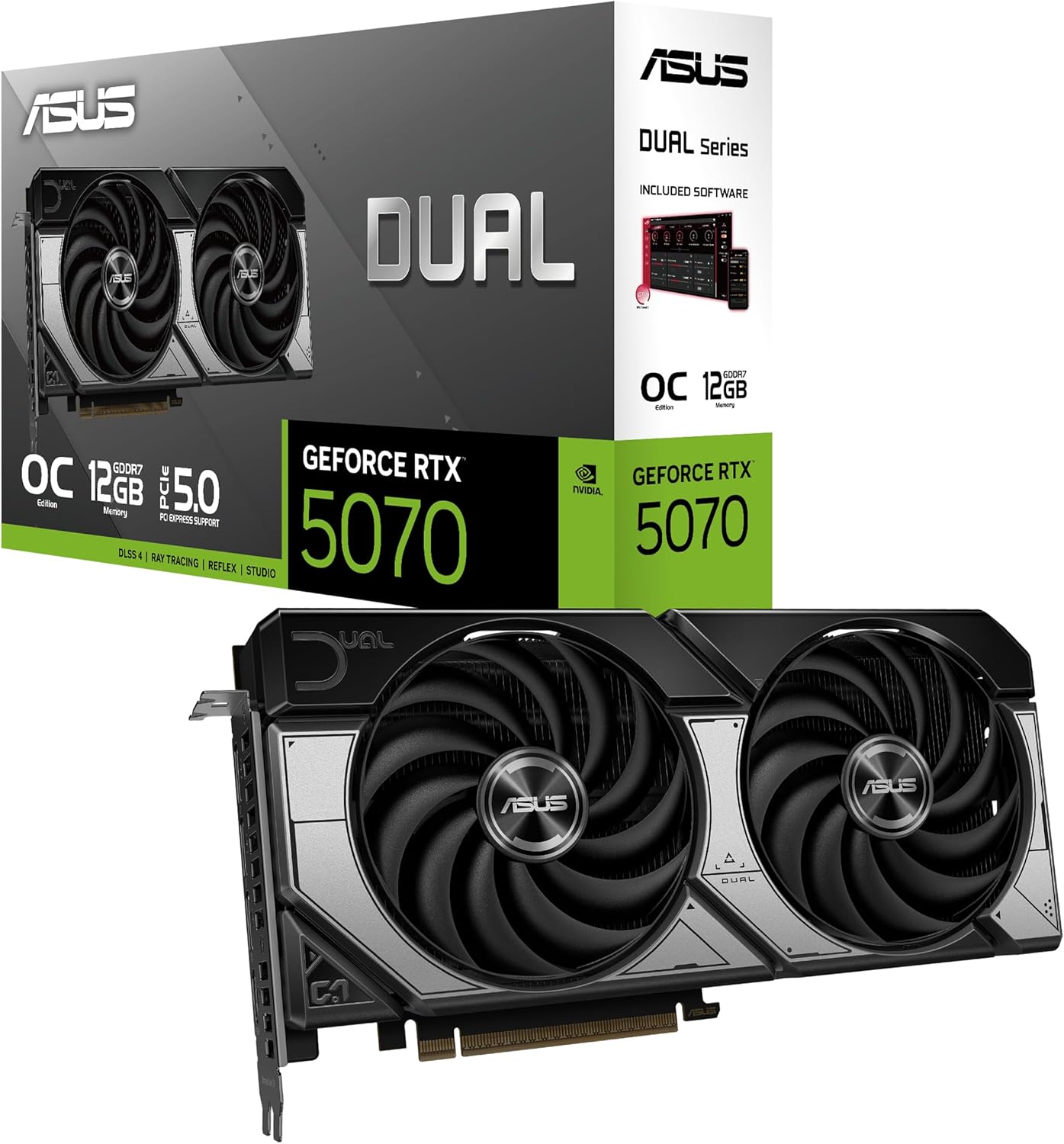
- The RTX 3060 12GB or ZOTAC RTX 3060 Twin Edge is the price/performance sweet spot for 7B code models.
- The Ryzen 7 5800X keeps your build/test/lint cycles fast in parallel to the model host.
- A Crucial BX500 1TB SATA SSD is plenty; model weights load once and stay resident in VRAM.
- 32 GB DDR4 RAM is enough for most workloads.
Perf-per-dollar: when local beats paying per token
The break-even calculation depends on your usage. For a rough rule:
- Under ~$30/month API spend → local rig doesn't pay off; use pxpipe on the cloud calls and stop.
- $50-150/month API spend → local rig pays off inside 1-2 years, freeing that budget for frontier calls.
- $200+/month API spend → local rig pays off inside a year; the ROI on offloading routine work to local hardware is significant.
Prices vary by retailer and model tier; check current listings.
The other durable savings pattern: privacy. If your workload includes any sensitive code (security, regulated data, proprietary business logic), local inference isn't just about dollars — it's about not sending that content off-site to begin with.
Bottom line: who benefits and who shouldn't bother?
Who benefits:
- Heavy Claude Code and Fable 5 users who see routine workflows in their session history
- Teams building agentic workflows with hundreds of cloud calls per project
- Developers working on sensitive codebases that can't leave the environment
- Anyone doing repetitive log analysis or high-token pre-processing
Who shouldn't bother:
- Occasional cloud API users (sub-$30 monthly spend)
- Users whose queries are always short and high-value (no big context blocks to compress)
- Anyone who doesn't want to run a local box for uptime or maintenance reasons
For heavy users, the pattern in 2026 is hybrid, not either/or: pxpipe on the cloud calls you still make, a modest RTX 3060 12GB rig for the routine work, and frontier API budget saved for the hard problems where it actually matters.
Sources and citations
- The Decoder — original pxpipe coverage and the 70% claim framing
- Anthropic pricing documentation — canonical token-pricing reference
- TechPowerUp — RTX 3060 specs — VRAM, bandwidth, throughput characteristics
- Ollama — the standard local-inference runtime for a 3060 build
- llama.cpp — reference inference runtime used across the industry
This piece is editorial synthesis based on publicly available information. No independent first-party benchmarking is reported.




