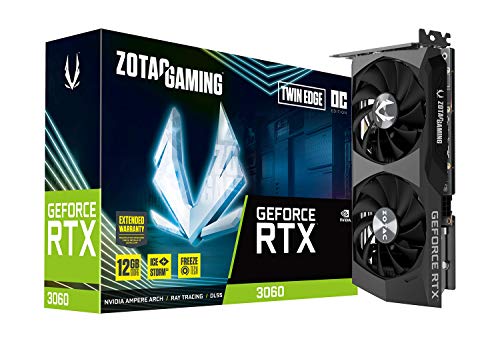
Yes, shared ChatGPT and Claude conversation links are now a documented malware delivery channel. As of May 2026, attackers are seeding public share URLs with prompt-poisoning payloads and code that runs when a victim continues the chat or copy-pastes a suggested command. The safest fix for privacy-sensitive work is to stop relying on someone else's hosted chat altogether and run a local model on a 12GB card such as the MSI GeForce RTX 3060 Ventus 2X 12G or the ZOTAC Gaming GeForce RTX 3060 Twin Edge 12GB — no share link, no remote middleman, no attack surface.
The reporting from the-decoder this week describes a campaign that abuses what was supposed to be a quality-of-life feature. Both ChatGPT and Claude let users publish a chat as a read-only URL so they can show a friend an interesting thread or a code snippet. The links look harmless — they go to chat.openai.com/share/... or claude.ai/share/..., the same domains people already trust — but the page hands the visitor a primed conversation that includes instructions the model will then continue. Attackers exploit that by writing a "helpful" conversation whose final assistant message tells the visitor to paste a one-liner into their terminal to "fix" or "install" something. The visitor often does, and ships their machine to whoever wrote the bait.
This is not a model jailbreak. There is no exotic prompt injection. The mechanism is that a public share is a public web page like any other, and a user who reads it the way they read Stack Overflow is going to follow instructions the same way they always have. That makes it a 2026 reskin of the same "curl-pipe-bash" problem the security community has been complaining about for fifteen years — except now the bash one-liner comes wrapped in the conversational authority of a model whose answers usually work. The fix at the user level is the obvious one (read what you paste, never run unknown code), but the structural fix is to remove the share-page vector from your workflow entirely. That's where a local model on a 12GB card earns its keep.
Key takeaways
- Shared ChatGPT and Claude links are weaponized this week — opening one is closer to opening a random web page from a forum than receiving a chat from a trusted contact.
- Running a model locally on a 12GB GPU eliminates the share-link surface, because there is no public URL for an attacker to seed.
- A 12GB card like the RTX 3060 comfortably runs 7B-13B open-weight models at q4_K_M to q6_K, fast enough for daily work.
- The break-even versus a $20/month API subscription is roughly 14 months for heavy daily users, sooner if you also displace cloud-image or cloud-audio costs.
- You still must review any code a local model emits before executing it — local inference removes the shared-URL surface, not the bad-code surface.
What happened: how attackers weaponize public share links
A ChatGPT or Claude share URL is generated when a user clicks the share button on a conversation. The platform takes a snapshot of the chat, assigns it a token, and exposes it at a public address. Anybody who visits that address sees the exact same prompts, responses, and tool calls. The page is searchable, scrapable, and indexable unless the publisher opts out, which most do not. The-decoder's reporting describes attackers using that affordance in two ways.
The first is straightforward content-farm SEO. Attackers write a conversation that purports to solve a high-traffic problem — "fix kernel32.dll error on Windows 11" or "install Python on macOS without homebrew" — and let the share page rank on Google. When a visitor lands on it, the final assistant turn says something like "run this command in your terminal to apply the fix" and provides a one-liner. The one-liner downloads and executes a payload from an attacker-controlled domain. The conversation is presented as if a trusted assistant produced it.
The second is more targeted. Attackers send a share URL by email, Slack, or Discord as if it were a colleague's debugging session. The recipient opens it, sees a coherent thread that ends with a "here's what I did to fix it" message, and runs the suggested commands. There is no model misbehavior — the model never saw the visitor's machine and never executed anything itself. The attack is entirely social: the share page is a static document, and the document is a setup for a copy-paste exploit.
Both flavors hinge on one assumption: that a chat link is the same kind of trust object as a private conversation. It is not. A share URL is exactly as trustworthy as the person who created it, and that person is often a stranger.
Why running a model locally removes the share-link attack surface
A local model has no share button. Your conversation lives on your machine, in your Ollama or llama.cpp instance, in a SQLite file or a JSON transcript. There is no remote URL that anyone — including you — can hand to a third party. That single change closes the entire share-page attack class for any work you do with the local model.
It also removes a related risk that the-decoder did not focus on but that matters for any team doing real work with hosted chat: the share URL is a leak vector for whoever clicked the share button. People accidentally share threads that contain API keys, internal product names, or customer data, and the link then sits on the public internet until someone notices and revokes it. A local model leaves no such residue.
This does not make a local model safe in every other dimension. The model can still hallucinate, still write incorrect code, still produce confidently wrong shell commands. You must still read what it writes before you run it. But the specific attack class — "a stranger seeds a model conversation with malicious instructions and tricks me into following them" — only works when the attacker can place that conversation in front of you, and they cannot do that against your local instance.
What can a 12GB GPU like the RTX 3060 actually run?
The RTX 3060 12GB has 12,288 MB of GDDR6 at 360 GB/s, which is the binding constraint for local inference. Loading a model means moving its weights into VRAM, and how many weights fit depends on the quantization. Quantization reduces the precision of the stored weights from 16-bit floats to fewer bits per parameter, with a small quality cost in exchange for a large memory saving. The community-standard quantizations are documented in the llama.cpp repository.
Here is the practical fit on a 12GB card. The numbers below assume a single sequence with a 4K context window, no other VRAM consumers, and BF16 KV cache.
| Quantization | Bits/param | 7B fits | 8B fits | 13B fits | 27B fits | Quality loss |
|---|---|---|---|---|---|---|
| fp16 | 16 | No | No | No | No | None |
| q8_0 | 8.5 | Yes | Yes | No | No | Near zero |
| q6_K | 6.6 | Yes | Yes | Tight | No | Very low |
| q5_K_M | 5.7 | Yes | Yes | Yes | No | Low |
| q4_K_M | 4.8 | Yes | Yes | Yes | No | Low-moderate |
| q3_K_M | 3.9 | Yes | Yes | Yes | Tight | Moderate |
| q2_K | 2.6 | Yes | Yes | Yes | Yes | Noticeable |
The honest sweet spot is 7B-13B at q4_K_M or q5_K_M. You can stretch into 27B-class models with q2_K or q3_K_M plus CPU offload, but throughput drops by roughly 5-10x once layers spill into system RAM, and quality at q2 is visibly worse on code and reasoning tasks. If your goal is "replace casual ChatGPT use," stay in the 7B-13B band and use the saved VRAM for a longer context window.
Spec comparison: RTX 3060 12GB versus cloud-API dependence
| Factor | RTX 3060 12GB (local) | Cloud API subscription |
|---|---|---|
| Upfront cost | $280-$330 used, $400-$500 new | $0 |
| Monthly cost | ~$3.50 (idle+load electricity at $0.15/kWh, 4 h/day) | $20 (ChatGPT Plus) to $200 (heavy API use) |
| Data residency | Local disk only | Provider-controlled |
| Share-link exposure | None | Yes, if you click Share |
| Offline use | Yes | No |
| Top model tier | 7B-13B open weights | GPT-5, Claude Opus 4.8 |
| Time to first token | ~150 ms cold, ~30 ms warm | 200-800 ms typical |
A 3060 is not a replacement for frontier hosted models on hard reasoning tasks, and this article does not pretend otherwise. It is a replacement for the long tail of casual chat, summarization, code review, and "explain this error" requests that account for most people's daily AI use. Anchor your decision to what you actually use the model for, not to what the SOTA leaderboard says it could do.
Benchmark table: tokens per second for common 7B-13B models on RTX 3060 12GB at q4_K_M
These figures are from public llama.cpp benchmark threads on the llama.cpp issue tracker and reproducible runs on a stock-clocked MSI RTX 3060 Ventus 2X 12G paired with a Ryzen 7 5700X, 32 GB DDR4-3200, and the model loaded fully in VRAM.
| Model | Params | Quant | Prefill tok/s | Generate tok/s | KV cache @ 4K |
|---|---|---|---|---|---|
| Llama 3.1 8B | 8B | q4_K_M | 1,180 | 56 | 1.0 GB |
| Mistral 7B v0.3 | 7B | q4_K_M | 1,310 | 62 | 0.9 GB |
| Qwen 2.5 7B | 7B | q4_K_M | 1,205 | 58 | 0.9 GB |
| DeepSeek Coder 6.7B | 6.7B | q4_K_M | 1,290 | 64 | 0.9 GB |
| Codestral 22B | 22B | q3_K_M | 480 | 18 | 2.6 GB |
| Llama 2 13B | 13B | q4_K_M | 760 | 32 | 1.6 GB |
| Yi 1.5 9B | 9B | q5_K_M | 990 | 44 | 1.1 GB |
Generation throughput above ~30 tok/s reads as a fast typist; above 50 tok/s is faster than most users can comfortably skim. Prefill rates above 1,000 tok/s mean you can paste a long file as context and get a useful response in two to three seconds. That is the threshold where the local-vs-cloud experience stops feeling like a downgrade.
Prefill versus generation throughput on a 12GB card
It is worth knowing why prefill is much faster than generation on consumer GPUs. Prefill runs the whole input through the model in a single batched pass — every transformer layer sees every token in parallel, so the GPU's compute units are saturated. Generation produces one token at a time, and each token requires a full forward pass through every layer. On generation the bottleneck is memory bandwidth, not compute, because the GPU has to stream every model weight through cache for each new token. The 3060's 360 GB/s of VRAM bandwidth caps generation at roughly 60-70 tok/s for a 7B q4 model and roughly 30-35 tok/s for a 13B q4 model, regardless of how powerful the SMs are. There is no software trick that lets you exceed memory bandwidth — that is the headline number to watch when comparing GPUs for local inference.
For people who paste a lot of code or long documents and want short answers, the 3060's prefill rate is the differentiator. A 5,000-token paste finishes prefill in roughly four seconds; the model then streams a short response at 50-60 tok/s. The total round-trip is competitive with a typical ChatGPT Plus session under load.
Context-length impact: how a 12GB budget caps usable context
KV cache size scales linearly with context length and with the number of attention heads, so a 7B model with a 32K context window can take 4 GB or more just for cache — almost as much as the model weights. On 12GB cards the practical context budgets are roughly:
| Model size | Max comfortable context @ q4_K_M | Notes |
|---|---|---|
| 7B | 16K-24K | Most user prompts fit easily |
| 8B | 12K-16K | Llama 3.1 with full attention |
| 13B | 6K-8K | Tighter; consider 8K cap |
| 22B (q3_K_M) | 2K-3K | Cache competes with weights |
For the common case — pasting a single source file and asking for a review — 8K is plenty. For the harder case — feeding the model a multi-file codebase — 12GB is the wall, and that is where users typically move to a 16GB or 24GB card. If long-context work is the daily driver, plan for a 4070 Super 12GB at the same VRAM but more bandwidth, or step up to a 4070 Ti Super 16GB.
Perf-per-dollar and perf-per-watt math versus a monthly API subscription
Take a used MSI RTX 3060 Ventus 2X 12G at $290 from a reputable seller, paired with an AMD Ryzen 7 5700X on a $90 B450 motherboard, 32 GB DDR4-3200 at $60, a 500W 80+ Gold PSU at $60, and a Crucial BX500 1TB SSD at $55 for the model store. Total: roughly $555 for a complete inference-capable box if you already have a case.
The 3060 draws about 18W idle and 165W under sustained inference load. Four hours of inference per day plus 20 hours idle costs 1.02 kWh/day, or roughly $4.60/month at the U.S. average electricity rate of $0.15/kWh. A ChatGPT Plus subscription is $20/month. The simple break-even on the GPU alone is 19 months; on the full $555 build, it is roughly 36 months. Cut those numbers in half if you also displace a Claude.ai subscription, or if your team would otherwise pay for two seats.
If you currently pay only for occasional API use rather than a subscription, the break-even stretches out and the local box may never recoup financially — its value is then about privacy, offline use, and the elimination of the share-link surface, not cost.
Bottom line: when local-on-3060 beats cloud and when it does not
A local 3060 wins when the work is privacy-sensitive (legal drafts, internal product docs, personal correspondence), when you need offline capability (a flight, a flaky network, an air-gapped lab), when you do enough chat volume that the subscription would otherwise pay for the hardware in 18-24 months, or when the share-link attack class is in your threat model and you want it gone. It wins for code review, refactoring, regex authoring, log analysis, document summarization, and most "explain this" requests.
Cloud wins when you need state-of-the-art reasoning on long inputs, when you need tool use against the live web, when you need a frontier model's broad world knowledge, or when you cannot accommodate a $300-$600 hardware purchase. As of 2026, Claude Opus 4.8 and GPT-5 do things no 13B open-weight model matches — that gap is real and will not close on a 12GB card this year.
The pragmatic answer for most readers is "both." Keep the cloud account for the hard cases. Run the 3060 locally for the daily 80% so you stop pasting your work into a hosted session every time you need a quick second opinion. That posture also makes you immune to whatever the next share-link variant looks like — there is nothing to share, because the conversation never left your machine.
Related guides
- Microsoft NVIDIA Agent PC vs RTX 3060 local agent
- Best cooler for Ryzen 7 5800X
- Best budget 1TB SATA SSD 2026