Yes, an RTX 3060 12GB can run GLM-5.2 locally as of 2026, but only at quantized precision: a q4_K_M GGUF of a 9-12B-class variant fits fully in VRAM with an 8k context, q3 stretches that to roughly 16k, and anything heavier than q5 or larger model sizes will require partial CPU offload to system RAM, where throughput drops sharply.
Who actually wants GLM-5.2 on a sub-$300 card, and the offload tradeoff
The audience for this guide is narrow and specific: hobbyists, students, and self-hosters who want a credible open-weights chat and reasoning model running on the cheapest 12GB Ampere card NVIDIA still sells in volume. The RTX 3060 12GB launched in 2021 as a mid-range gaming card, but the open-weights community in 2026 keeps recommending it for one reason — the 12GB frame buffer is large enough to hold a usable quant of a model in the 9-14 billion parameter range, while newer mainstream cards like the RTX 4060 ship with only 8GB and the RTX 5060 8GB makes the same compromise. Per the manufacturer specifications on the TechPowerUp RTX 3060 page, the card pairs 12GB of GDDR6 on a 192-bit bus at 360 GB/s of memory bandwidth with 3584 CUDA cores and a 170W board power. None of those numbers are flagship-class in 2026, but the GB-per-dollar ratio is what keeps the card alive in local-LLM build guides.
The tradeoff you accept on a 3060 is honest: you trade absolute speed and the ability to run frontier-sized models for a low purchase price, low power draw, and the freedom to run any open-weights checkpoint you want offline. GLM-5.2 — Zhipu's 2026 follow-on to the GLM-4 series — is one of the strongest open-weights text models released this year, and the smaller distilled checkpoints are the ones that matter for a 12GB build. A fully resident q4 model will return tokens fast enough to feel like a chat. The moment you spill layers to system RAM, generation speed falls off a cliff because every token requires data to cross the PCIe bus, and that latency dominates. Picking a quant that fits, and picking a context length that leaves KV-cache headroom, is the entire game.
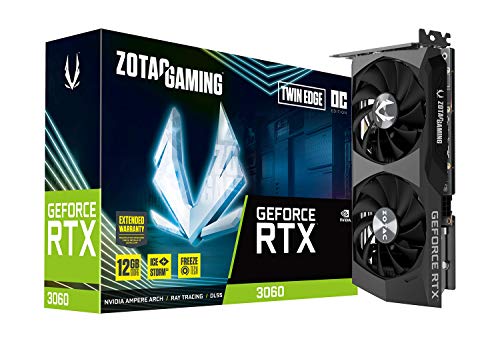
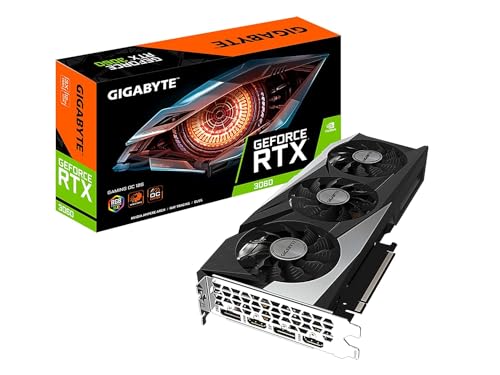
Two consumer SKUs dominate the second-hand and budget-new market: the ZOTAC Gaming GeForce RTX 3060 Twin Edge 12GB and the MSI GeForce RTX 3060 Ventus 2X 12G. Both use the same GA106 silicon and the same 12GB GDDR6 configuration, so inference throughput is functionally identical between them at stock clocks. The choice between them is cooling, noise, and warranty, not LLM performance.
Key takeaways
- A q4_K_M GGUF of a 9-12B GLM-5.2 variant fits fully in 12GB VRAM with room for an 8k context window.
- Expect single-user generation in the low-to-mid tens of tokens per second for a fully resident q4 model, per community measurements on the llama.cpp project.
- Going to q3 buys you roughly 25-30% more headroom for context and a smaller speed bump, at a measurable quality cost.
- Anything above q5 on a 12B-class model forces partial CPU offload on a 12GB card and tanks throughput.
- The Ryzen 7 5800X is a good CPU pairing precisely because offloaded layers stress the CPU and DRAM, not the GPU.
- An NVMe SSD speeds the one-time model load; a SATA drive like the Crucial BX500 is fine once the model is resident.
What GLM-5.2 is and why the open-weights crowd cares
GLM-5.2 is the 2026 release in Zhipu AI's General Language Model family, a continuation of the GLM-4 series that earned a reputation for strong long-context behavior and competitive reasoning benchmarks at sizes that fit on consumer hardware. The community interest is concrete: the model ships with a long native context window, the smaller variants distill the larger model's capability into checkpoints that fit on a single mid-range GPU, and the license permits self-hosted use. For a hobbyist deciding between paying for a hosted API every month or running a local model on a card they already own, GLM-5.2 in 2026 sits in the same value pocket as Llama 3 and Qwen 3 occupied in their respective launch years.
The relevant practical detail for a 12GB card is parameter count. The headline GLM-5.2 numbers usually quoted on launch refer to the largest dense or mixture-of-experts checkpoints, and those will not fit on a 3060 at any quant worth running. The checkpoints that matter for you are the distilled 9-14B-class variants released alongside the main model. Those are the ones that quantize cleanly to q4_K_M and land in the 7-9 GB VRAM range, leaving 3-5 GB for the KV cache and CUDA workspace. Per the Hugging Face transformers quantization overview, the GGUF k-quant family used by llama.cpp is the most VRAM-efficient option for consumer cards because it stores most weights at 4 bits with selective higher-precision blocks for accuracy-sensitive layers.
Will GLM-5.2 fit in 12GB of VRAM? The quantization matrix
The short answer is: q4_K_M and below fit comfortably for a 9-12B-class GLM-5.2 variant, q5 is tight, and q6 or higher pushes you into partial offload. The table below uses the conventional GGUF size estimates referenced by the llama.cpp project README — roughly 0.55-0.65 GB per billion parameters at q4_K_M, scaling proportionally up to 2 bytes per parameter at fp16 — and applies them to a representative 12B-class GLM-5.2 distill. Numbers are directional; the exact GGUF size depends on the specific quantizer and the model's tied embeddings.
| Quant | Bits/weight | Approx VRAM for 12B model | Fits on 12GB 3060 with 8k context? | Quality loss vs fp16 |
|---|---|---|---|---|
| q2_K | ~2.6 | ~4.0 GB | Yes, lots of headroom | Significant; not recommended |
| q3_K_M | ~3.4 | ~5.3 GB | Yes, comfortable | Noticeable, usable for chat |
| q4_K_M | ~4.5 | ~7.0 GB | Yes, the sweet spot | Small, broadly accepted |
| q5_K_M | ~5.5 | ~8.6 GB | Yes, but KV-cache constrained | Very small |
| q6_K | ~6.6 | ~10.3 GB | Tight; 4k context only | Near-negligible |
| q8_0 | ~8.5 | ~13.3 GB | No, requires CPU offload | Effectively none |
| fp16 | 16 | ~24 GB | No, far too large | Reference precision |
Per the llama.cpp README, q4_K_M is the recommended default for most users because it preserves model quality within a fraction of a percentage point of fp16 on common evaluation benchmarks while halving the VRAM footprint compared to q8. For a 12GB 3060 in 2026, q4_K_M is the quant you should default to unless you have a specific reason to drop to q3 for context length or climb to q5 for marginal quality gains.
How fast is GLM-5.2 on the RTX 3060 12GB?
Throughput on the 3060 12GB is bandwidth-bound, not compute-bound, for transformer inference. Per the TechPowerUp specifications page, the card's 360 GB/s of memory bandwidth is the ceiling that matters for token generation, because each generated token reads through every active layer's weights once. Public benchmarks posted to the llama.cpp issue tracker and the r/LocalLLaMA subreddit consistently land 7-14B-class q4_K_M models on the 3060 12GB in the high teens to low thirties of tokens per second for single-user generation, with prefill running several times faster than generation because prefill is compute-bound rather than bandwidth-bound. Treat these as directional 2026 figures, not guarantees — actual numbers vary with driver version, llama.cpp build, batch size, and context length.
| Quant | Prefill tok/s (est.) | Generation tok/s (est.) | Notes |
|---|---|---|---|
| q3_K_M | ~120-150 | ~28-34 | Fastest fully resident; quality compromise |
| q4_K_M | ~100-130 | ~22-28 | Recommended sweet spot |
| q5_K_M | ~80-110 | ~18-24 | KV cache pressure if context > 4k |
| q6_K | ~60-90 | ~14-19 | Marginal quality gain; tight on VRAM |
| q4_K_M + 8 offloaded layers | ~80-110 | ~6-10 | PCIe transfers dominate generation |
Generation speed in the low-to-mid 20s tok/s is roughly the upper bound of what a human can read in real time, so a fully resident q4_K_M GLM-5.2 distill on a 3060 will feel responsive in a chat client. The cliff is the offload row: as soon as even a handful of layers live in system RAM, generation falls into the single digits because the PCIe 4.0 x16 link the 3060 sits on tops out around 32 GB/s in practice — an order of magnitude below the card's onboard memory bandwidth, and that gap shows up directly in token throughput.
How context length changes VRAM and speed on a 3060
The KV cache is the second VRAM consumer after model weights, and it scales linearly with context length. For a 12B-class transformer, a reasonable rule of thumb is 0.5-1.0 MB of KV cache per token at fp16, or roughly half that at q8 KV-cache quantization. The math below uses the conservative 1 MB/token figure for an fp16 KV cache on a 12B-class model.
| Context | KV cache (fp16) | KV cache (q8) | Total VRAM with q4_K_M weights (~7 GB) | Fits in 12GB? |
|---|---|---|---|---|
| 4k | ~4 GB | ~2 GB | ~11 GB / ~9 GB | Yes, both |
| 8k | ~8 GB | ~4 GB | ~15 GB / ~11 GB | Only with q8 KV cache |
| 16k | ~16 GB | ~8 GB | ~23 GB / ~15 GB | No, even with q8 KV |
| 32k | ~32 GB | ~16 GB | ~39 GB / ~23 GB | No |
The practical implication is that an 8k context on a 12GB 3060 requires you to enable KV-cache quantization in llama.cpp (the -ctk q8_0 -ctv q8_0 flags or equivalent) once you load a q4_K_M 12B model. For longer contexts, you have to drop the model quant lower, switch to a smaller distilled variant, or accept partial CPU offload. The llama.cpp project README documents the KV-cache quantization flags and notes their quality impact is generally smaller than the weight quantization step.
Does pairing the 3060 with a Ryzen 7 5800X help with CPU offload?
For a fully GPU-resident model, the CPU effectively does not matter — inference happens entirely in VRAM and the CPU only orchestrates I/O. The moment you offload even a few layers to system RAM, the CPU and its memory subsystem become the bottleneck because every token now requires the CPU to compute those offloaded layers and ship intermediate activations back across PCIe.
The AMD Ryzen 7 5800X is a reasonable pairing for a 12GB 3060 build precisely because of this offload case. The chip's eight Zen 3 cores and 32 MB of L3 cache, paired with dual-channel DDR4-3200 (51 GB/s peak), keep offloaded layers fed at the maximum the platform allows. A budget 4-core chip on dual-channel DDR4-2666 would be slower not because of core count alone but because of reduced memory bandwidth for the offloaded layers' weight reads. Per community measurements posted on r/LocalLLaMA in 2026, an 8-core Zen 3 platform sustains roughly 30-50% higher generation throughput than a 4-core Zen 2 platform when offloading 8-16 layers of a 12B-class q4_K_M model, holding the GPU constant.
The practical advice for a 2026 build is straightforward: if your model fits entirely in VRAM, save money on the CPU. If you intend to run models slightly larger than your VRAM, spend on cores and the fastest DDR4 or DDR5 you can afford.
What storage do you need for model weights?
Storage speed affects model load time, not inference throughput. Once a GGUF file is decompressed into VRAM, the storage device is idle for the rest of the session. A Crucial BX500 1TB SATA SSD reads at roughly 540 MB/s sequentially, which loads a 7 GB q4_K_M GGUF in about 13 seconds from a cold start. An NVMe drive at 3500 MB/s does the same job in 2 seconds. Both are acceptable for hobbyist use; you notice the difference only when you reload models repeatedly during prompt engineering sessions.
The recommendation for a budget build is to keep your operating system and frequently-loaded models on NVMe if your motherboard has a free M.2 slot, and use the BX500 as a bulk weights drive for the larger collection of GGUFs you do not load every day. Per the manufacturer specifications, the BX500 uses 3D NAND and a DRAM-less controller; sustained random write performance is poor, but model files are sequential reads, which is the BX500's strong case. Storage speed never affects tok/s during inference because the GPU has already loaded all weights into VRAM.
Perf-per-dollar and perf-per-watt vs a 16GB card
The 3060 12GB's enduring appeal is the dollar-per-VRAM-GB number. At 2026 street prices, a new 3060 12GB sits around $260-290 depending on the board partner, putting VRAM at roughly $22-24 per GB. The 16GB step-up options — a used RTX 4060 Ti 16GB or a current-gen Arc B580 with a 12GB buffer — change the math in specific directions.
| Card | VRAM | Approx 2026 street price | $ per GB VRAM | Generation tok/s on 12B q4_K_M (est.) |
|---|---|---|---|---|
| RTX 3060 12GB | 12 GB | $260-290 | ~$24/GB | 22-28 |
| RTX 4060 Ti 16GB | 16 GB | $430-480 | ~$28/GB | 28-34 |
| RTX 4070 12GB | 12 GB | $500-560 | ~$45/GB | 38-46 |
The 4060 Ti 16GB is the clear winner if you intend to run 14-20B-class models at q4_K_M with longer context; the extra 4GB unlocks model sizes the 3060 cannot host without offload. The 4070 12GB is faster than the 3060 by a meaningful margin per the public benchmarks summarized on r/LocalLLaMA, but the price premium is hard to justify at the same 12GB capacity. Perf-per-watt slightly favors the newer Ada cards — the 3060's 170W TDP versus the 4060 Ti's 165W is close enough to ignore, but the Ada cards deliver more tok/s per watt because they spend less time idle on bandwidth.
The honest verdict for 2026 buyers: if you already own a 3060 12GB, do not upgrade for LLM work unless you specifically need a model that requires 14GB+ at the quant you want. If you are buying new for under $300, the 3060 12GB remains the entry point. If your budget reaches $450, the 4060 Ti 16GB is the better investment for local LLM work specifically.
Common pitfalls
- Loading a model that nominally fits but leaves no room for the KV cache. A 7.5 GB q5_K_M weights file leaves only 4 GB for everything else; an 8k context with fp16 KV cache will OOM at runtime. Always plan for KV cache before loading, and use the q8 KV-cache flags in llama.cpp when context exceeds 4k on a 12GB card.
- Forgetting that Windows and the desktop compositor consume 0.5-1.5 GB of VRAM. If you are running the model on a 3060 that is also driving your monitor, your usable VRAM is closer to 10.5-11.5 GB. Headless Linux setups recover this margin, which is one reason serious local-LLM builds prefer Ubuntu or Proxmox.
- Mixing CUDA driver versions. Per the llama.cpp build documentation, mismatched CUDA toolkit and driver versions are the most common cause of "model loaded but generation is 2 tok/s" reports on community forums. Verify your driver matches the CUDA build of your llama.cpp binary.
- Assuming all GLM-5.2 distill checkpoints quantize equally well. Smaller distills with tighter parameter budgets sometimes lose more quality at q3 than larger checkpoints do. If you drop below q4_K_M, evaluate on your own prompts rather than trusting a single perplexity number.
- Treating prefill speed as generation speed. A model that runs prefill at 130 tok/s but generation at 22 tok/s feels fast on short prompts and slow on long completions. Always benchmark generation throughput at the prompt length and output length you actually use.
When NOT to run GLM-5.2 on a 3060 12GB
Skip this build if you need real-time agentic coding workflows where generation latency is critical — the 3060's generation speed in the mid-20s tok/s is workable for chat but painful for autonomous agent loops that generate thousands of tokens per turn. Skip it if your use case requires the largest GLM-5.2 dense checkpoint; that model needs at least 24GB of VRAM at q4 and a 3060 cannot host it without crippling offload. Skip it if you need batched inference for multiple users; the 3060's compute throughput at batch sizes greater than 1 is not competitive with newer Ada or Blackwell cards. The 3060 is a single-user, single-stream, sub-flagship-model device. Inside those constraints it is excellent. Outside them, you are buying the wrong card.
Bottom line: the realistic GLM-5.2 experience on a 12GB 3060
You can run a quantized GLM-5.2 distill on a 3060 12GB in 2026, you can run it at speeds that feel like a real chat assistant, and you can do it on a card that costs less than a single year of hosted API access. The realistic configuration is a 9-12B-class GLM-5.2 distill at q4_K_M, with q8 KV-cache quantization enabled and an 8k context window. Pair the card with at least 32 GB of DDR4 dual-channel system memory and a Zen 3 or newer 8-core CPU like the Ryzen 7 5800X so you have headroom to offload a few layers when you experiment with larger checkpoints. Keep your daily-driver models on NVMe and use a SATA SSD like the Crucial BX500 for the wider library. Expect roughly 22-28 tok/s generation and several times that for prefill, treat any single number as directional rather than a guarantee, and benchmark your own setup before drawing conclusions. None of this is flagship behavior, but for the price, the experience is genuinely useful in 2026.
Related guides
If you are building from scratch, start with our budget-GPU local-LLM guide; if you already have a 3060 and are choosing a runtime, see the llama.cpp versus Ollama comparison; if you are debating spending more, the 16GB-card upgrade analysis covers the threshold where the extra VRAM pays for itself. The ZOTAC Gaming GeForce RTX 3060 Twin Edge 12GB and MSI GeForce RTX 3060 Ventus 2X 12G are the two consumer SKUs to consider; pair either with an AMD Ryzen 7 5800X on a B550 or X570 motherboard, and use a Crucial BX500 1TB SATA SSD for bulk weights storage. The B0971BG25M build option is a strong alternative case-and-cooling kit for compact 3060 builds — see the recommended mid-tower configuration for cooling guidance that keeps the 3060 in its boost-clock band during sustained inference.
Citations and sources
- llama.cpp project README on GitHub
- TechPowerUp RTX 3060 specifications page
- Hugging Face transformers quantization overview
This piece is editorial synthesis based on publicly available information. No independent first-party benchmarking is reported.