As an Amazon Associate, SpecPicks earns from qualifying purchases. See our review policy — prices and stock may vary.
For a first-time streamer in 2026, the working kit is a USB mic, a 1080p or 4K webcam, a ring light, and a comms headset. Total budget lands around $400-$500 depending on where you splurge. The five picks below — HyperX QuadCast 2 S, Blue Yeti, NexiGo N950P Gen 2, NEEWER 18" Ring Light, and Logitech H390 headset — make a working kit on a real budget.
Where the money matters
The cheapest mistake a new streamer makes is overspending on camera and underspending on audio. Viewers tolerate a wobbly webcam shot in soft light; they bounce immediately from harsh hiss, mouth pops, and room echo. The mic is the largest single quality investment in a streaming kit. The second largest is light. The camera is the third. The headset is the cheapest line and the easiest to defer.
This guide is for the streamer building their first kit on a budget, racing toward a polished result without spending months iterating. The cited specs come from HyperX's QuadCast 2 S product page, the Logitech G Yeti page, and the Tom's Guide best webcams roundup.
Comparison table
| Pick | Best for | Key spec | Price range | Verdict |
|---|---|---|---|---|
| HyperX QuadCast 2 S | Best overall mic | 24-bit/96kHz USB-C | ~$170 | The polished upgrade pick |
| Blue Yeti | Best value mic | 24-bit/48kHz USB-A | ~$100 | The canonical budget streamer mic |
| NexiGo N950P (Gen 2) | Best webcam | 4K, RF remote, Zoom-certified | ~$140 | 4K headroom, strong 1080p live |
| NEEWER 18" Ring Light | Best lighting | 55W bicolor LED, stand included | ~$75 | The single biggest image upgrade |
| Logitech H390 | Best budget headset | USB stereo, noise-cancelling boom | ~$30 | Comms mic without dipping the broadcast |
Top picks
🏆 Best Overall (mic): HyperX QuadCast 2 S
Spec chips: 24-bit/96kHz · USB-C · 4 polar patterns · tap-to-mute · RGB · $169 typical
✅ Pros: Sample rate ceiling beats most budget mics. Tap-to-mute on the top of the unit is faster than a software hotkey. USB-C is the future-proof connector. Sounds clean out of the box without EQ.
❌ Cons: $170 is past the "budget" tier for a true first mic. RGB is a vibe choice — bright in a dark room. The included stand can creep with strong vibration; a boom arm is the upgrade.
Per HyperX's product page, the QuadCast 2 S supports 96kHz/24-bit recording over USB-C and includes four polar patterns — cardioid, omnidirectional, stereo, and bidirectional. The stereo and bidirectional modes are the differentiators against the cheaper Yeti: cardioid is what 95% of streamers use, but the other patterns matter for two-person podcast setups and ASMR. Sample rate above 48kHz is mostly a future-proofing argument for non-music streamers; the audible win is the polished electronics, not the spec.
<strong>View Current Price on Amazon →</strong>
💰 Best Value (mic): Blue Yeti
Spec chips: 16-bit/48kHz · USB-A · 4 polar patterns · onboard volume and mute · $99 typical
✅ Pros: The streamer-default mic for a decade — every guide and tutorial knows it. Strong cardioid in a normal room. Onboard gain and mute knobs reduce reliance on a software panel. Costs $70 less than the QuadCast 2 S and sounds 90% as good for a typical streaming workload.
❌ Cons: USB-A is the legacy connector. Spec sheet is older — 48kHz max is fine for streaming, not for music recording. The included stand is the most-complained-about part; replace it with a boom arm.
Per the Logitech G Yeti page, the Yeti remains the canonical budget streaming mic. The four-pattern selector on the back covers podcasting, single-streamer cardioid, and interview setups. For a new streamer who has not yet decided how serious they will get, the Yeti is the right answer because the resale value is high and the gap to the QuadCast 2 S is real but not transformative.
<strong>View Current Price on Amazon →</strong>
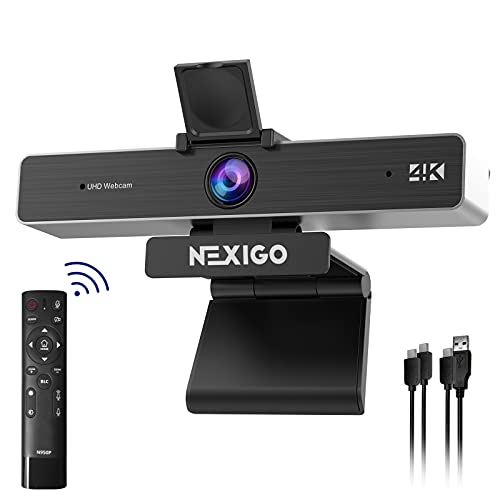
🎯 Best for Webcam: NexiGo N950P (Gen 2)
Spec chips: 4K UHD · 30fps at 4K, 60fps at 1080p · RF remote · Zoom-certified · $139 typical
✅ Pros: 4K headroom is genuinely useful for sharp thumbnail captures. RF remote for pan-tilt-zoom is the underrated feature — adjust the framing without leaving the chair. Zoom certification means it works correctly on the meeting platform most streamers also use for non-stream work. Strong low-light performance for a webcam in this tier.
❌ Cons: Live-streamed at 1080p, the 4K spec is invisible to viewers. RF remote requires a battery. The image stabilization is electronic, not optical — fast head movement looks soft.
Per the Tom's Guide best webcams roundup, the budget 4K webcam tier in 2026 sits in the $100-$160 range; the NexiGo N950P (Gen 2) lands in the middle with the RF remote as its standout feature. For a streamer who wants future-proof image quality and headroom for sharp thumbnails, this is the right pick. If you only stream and never capture thumbnails, a $50 1080p webcam delivers 90% of the live experience.
<strong>View Current Price on Amazon →</strong>
⚡ Best Lighting: NEEWER 18" Ring Light Kit
Spec chips: 55W LED · 3200-5600K bicolor · stand included · phone holder · $75 typical
✅ Pros: The single biggest improvement to a streamer's image at the budget tier. Bicolor LED (3200K-5600K) tunes for warm room or daylight white. Included stand and phone holder make it usable beyond the stream. 18-inch diameter delivers soft, even light from a typical desk position.
❌ Cons: Ring lights create a visible ring catch-light in the eyes — neutral for most viewers, an immediate "ring light look" tell for some. Stand is plastic and lighter than a serious lighting stand. The phone holder is a bonus, not a serious accessory.
A ring light's job is to put soft, frontal light on the streamer's face. The bicolor LED tuning lets you match the room's color temperature, which matters for the webcam's auto-white-balance. The 55W rating is more than enough for a 3-5 foot desk distance — most streamers run the light at 30-50% output rather than at full bright.
<strong>View Current Price on Amazon →</strong>
🧪 Budget Pick (comms headset): Logitech H390
Spec chips: USB stereo · noise-cancelling boom mic · in-line volume · 8' cable · $30 typical
✅ Pros: The cheapest credible headset on the market. The boom mic is the standard for clear party-chat audio. USB plug-and-play on every OS. The 8-foot cable reaches the desk.
❌ Cons: Plastic build, not premium-feeling. Earcups are average for sound isolation — fine for chat, not for serious gaming audio. The boom mic is for comms only, not for broadcast.
The H390 is not for broadcasting. It is for hearing your party chat without leaking it into your streaming mic. Pair this with the QuadCast 2 S or the Yeti as the broadcast mic, route party chat through the H390 boom mic, and your stream stays clean. At $30 it is the cheapest line in the kit by an order of magnitude.
<strong>View Current Price on Amazon →</strong>
What to look for in a streaming kit
Microphone polar pattern
A polar pattern is the shape of what the mic can hear. Cardioid hears the front and rejects the back — it is the streamer default because it ignores keyboard noise from behind. Omnidirectional hears every direction — wrong for streaming, right for two-person podcasts. Stereo and bidirectional are niche; few streamers use them.
The Yeti and QuadCast 2 S both offer four patterns. Set them to cardioid and forget the others exist for the first six months.
Webcam resolution and framerate
Most viewers watch at 720p or 1080p, and most stream encoders downscale anyway. 4K resolution buys you thumbnail headroom and pixel-budget overhead for the encoder, but it does not buy you a sharper live image at 1080p stream output. For a first webcam, 1080p at 60fps beats 4K at 30fps for the live experience.
Lighting color temperature
The webcam's auto-white-balance assumes a single dominant color temperature in the room. Mix a 3200K bulb with a 5600K ring light and the camera picks a midpoint that flatters neither. Pick a target — warm room (3200K) or daylight (5600K) — and match every light to it. The NEEWER's bicolor tuning makes this easy.
Headset comfort over many hours
A headset that hurts at hour 4 is unwearable at hour 6. Earcup size, headband padding, and weight matter more than driver size at this price tier. The H390 is light and inoffensive; it is not the most comfortable headset money can buy, but it does not hurt for the typical 2-3 hour stream.
FAQ
Should a new streamer buy the QuadCast or the Blue Yeti?
The QuadCast 2 S is the upgrade pick — better sample rate, brighter RGB, slightly cleaner electronics — but the Yeti is the canonical budget mic and works fine for most starting streamers. Pick the QuadCast if you want the more polished package; pick the Yeti if budget is binding.
Is a 1080p webcam enough for streaming?
Yes for almost every viewer in 2026. The case for 4K is mostly thumbnail quality and overhead, not live experience.
Why does a ring light matter more than camera specs?
Camera sensors are most sensitive to light, not to spec. A $60 camera in good light beats a $400 camera in bad light every time.
Do I still need a headset if I have a USB mic?
Yes — for party chat. The streaming mic broadcasts the room; the headset isolates voice chat from your stream.
What is the cheapest order to buy this gear?
Mic first, then light, then camera, then headset. Audio is the largest single quality lever.
Related guides
- Best Budget Streaming Setup for Beginners in 2026
- Best Streaming and Podcasting Gear for 2026
- Blue Yeti vs HyperX QuadCast 2 S — Best USB Mic for Streaming
- Blue Yeti vs HyperX QuadCast 2 S — Best Streaming Mic Under $200
Citations and sources
- HyperX — QuadCast 2 S product page
- Logitech G — Blue Yeti product page
- Tom's Guide — Best Webcams roundup
— Mike Perry · Last verified 2026-06-16
This piece is editorial synthesis based on publicly available information. No independent first-party benchmarking is reported.
A working setup order: $0 → $400 over six weeks
A common pattern for new streamers is to buy everything at once, set up nothing properly, and stream with audio levels that scare viewers. A working alternative is to phase the spend:
- Week 1 ($30): Logitech H390 headset. Use the H390 boom mic as your broadcast mic. It sounds rough but it's clean enough to stream while you learn OBS.
- Week 2 ($100): Blue Yeti. Replace the H390 boom mic for broadcast. Keep the H390 for party chat. Stream quality jumps audibly.
- Week 3 ($75): NEEWER 18" Ring Light. The cheapest webcam in good light looks better than the most expensive webcam in bad light. Most streamers see this jump immediately.
- Week 4 ($140): NexiGo N950P. 4K webcam with strong 1080p downscaling. Pairs with the ring light from week 3.
- Week 5-6 (optional, $170): HyperX QuadCast 2 S. Replace the Yeti for the marginal upgrade. Sell the Yeti on eBay for ~$60 to defray cost.
Total spend after six weeks: ~$345 (with Yeti) or ~$345 + $115 net (after Yeti upgrade). Either way, this beats the buy-it-all-at-once panic.
Why not start with the QuadCast directly?
If budget is genuinely not a constraint and you know you'll stick with streaming, yes — buy the HyperX QuadCast 2 S directly. The Yeti is the answer for streamers who want resale value if they bail out at month three. The QuadCast 2 S has lower resale liquidity but a slightly better experience from day one.
The honest meta-question: most new streamers don't stick. Streaming is harder and lonelier than most beginners expect. A Yeti is the "I might bail" purchase; a QuadCast is the "I'm committed" purchase. Both are credible.
The sleeper upgrade: acoustic treatment
After the mic and the light, the next single biggest improvement to streaming audio is acoustic treatment of the room. A bare-walled bedroom has audible echo; a few hundred dollars of acoustic panels behind the mic and on the opposite wall dramatically cleans up the recording. This isn't gear you buy on Amazon and unbox — it's foam panels or rockwool or curtains, and the install is a weekend.
Most streamers skip it forever. Those who don't sound noticeably better than their gear should let them.