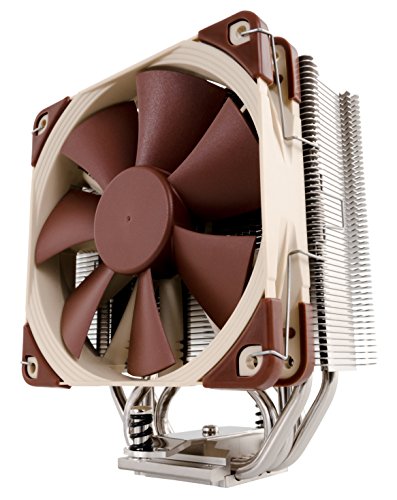
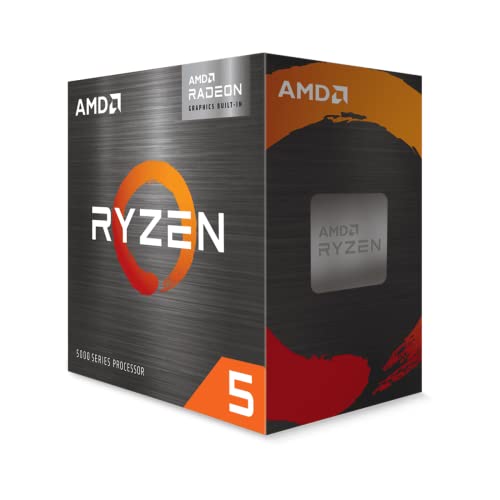
For a Ryzen 7 5800X at stock settings, a slim single-tower cooler like the Noctua NH-U12S is enough — the chip runs hot but stays inside its thermal window. Turn Precision Boost Overdrive on, run sustained all-core workloads, or push into a warm case, and a 240mm AIO like the Cooler Master MasterLiquid ML240L RGB earns its price. Below is how to decide which of those you actually are.
Why the 5800X's cooling reputation is complicated, and who this comparison is for
The Ryzen 7 5800X has a reputation for running hot. That reputation is partly true and partly a story about how AMD tuned Zen 3's boost algorithm rather than a fault of the cooler you paired it with. The chip's eight cores are packed into a single Core Complex Die on a small piece of silicon, which concentrates heat in a small area even at moderate package power. That shows up as high Tctl readings — 80 °C under boost is normal and not a fault — while total heat output stays inside what a quality mid-range cooler can shift.
Two audiences land on this comparison. The first is the AM4 upgrader coming from an older Ryzen chip or a locked Intel part, wondering if the stock cooler that shipped with their previous CPU is enough. It is not — the 5800X ships without a bundled cooler, and it was never designed around one. The second is the enthusiast weighing "should my quiet-focused build go 240mm AIO for headroom, or is a $70 air cooler going to be indistinguishable?" That is the harder question, and the one this comparison answers.
Reference product pages are the Noctua NH-U12S product listing, the Cooler Master MasterLiquid ML240L RGB page, and Gamers Nexus's ongoing CPU cooler test hub for third-party thermal data.
Key takeaways
- The Noctua NH-U12S holds a stock Ryzen 7 5800X inside its operating window under sustained all-core load, with headroom that shrinks the moment PBO is enabled.
- The Cooler Master MasterLiquid ML240L RGB delivers the sustained-load headroom PBO wants, at a slightly higher noise-normalised floor than premium air coolers per data catalogued by Gamers Nexus.
- The NZXT Kraken M22 120mm is a small-form-factor option, not a value AIO — it is functionally close to a good single-tower air cooler once you account for pump noise.
- Case airflow is the hidden variable. A five-pack of ARCTIC P12 PWM PST fans frequently improves either cooler's thermal result more than swapping between them does.
- On a Ryzen 5 5600G or an Intel Core i7-9700K, a mid-range single-tower cooler is not the limit — the CPU is. Both AIOs and premium air are overkill.
- Neither cooler is worth buying if the case bottleneck is unresolved. Diagnose first, then upgrade.
Step 0 — diagnose before you buy
Before you spend $70–$130 on a new cooler, spend fifteen minutes finding out what your current cooler is actually doing. The AMD Ryzen 7 5800X product page lists a 105 W TDP and a 90 °C Tjmax, but the useful numbers under load are package power and Tctl offset.
Install HWiNFO64, run Cinebench R23's ten-minute multi-core loop, and log three values:
- Package power in watts. For a stock 5800X, expect roughly 130–142 W under sustained all-core load — chips vary. PBO can push this above 180 W depending on your motherboard's PPT/TDC/EDC limits.
- Tctl in °C — the "CPU temperature" sensor most tools show. Under 90 °C at sustained all-core load is inside spec. Sitting at 90 °C for the whole run means the chip is thermal-throttling, and clock speed is being reduced to protect the die.
- Effective clock across all cores. If it drops during the run, thermal throttling is limiting your performance and cooling is the fix.
Only after those three numbers show a problem should you buy a new cooler. Frequently the fix is a case fan, a properly reseated existing cooler, or turning PBO off — none of which cost $130.
Spec delta table
| Cooler | Size | Rated airflow / flow | Rated noise | Socket support | Street price (2026) |
|---|---|---|---|---|---|
| Noctua NH-U12S | 158 mm height, 125 mm width single-tower | NF-F12 PWM, 93 m³/h | 22.4 dB(A) max | AM4, AM5, LGA115x, 1200, 1700 (with bracket) | $75–$85 |
| Cooler Master MasterLiquid ML240L RGB | 240 mm radiator, 27 mm thick | Two SickleFlow 120 fans, 62 CFM each | 27 dB(A) max | AM4, AM5, LGA1700, LGA1200 | $75–$95 |
| NZXT Kraken M22 120mm | 120 mm radiator | Single Aer P 120 fan, 73 CFM | 21–36 dB(A) | AM4, AM5, LGA1200, LGA1700 | $100–$130 |
Height and clearance are the numbers that decide fit before performance does. A 158 mm cooler fits nearly every mid-tower on the market but excludes most small-form-factor cases. A 240 mm radiator needs a compatible top or front mount — measure your case before ordering.
How much cooling does a Ryzen 7 5800X actually need?
Per the AMD Ryzen 7 5800X product page, the chip is rated at a 105 W TDP. In practice, sustained all-core Cinebench loads have the CPU drawing 130–142 W at stock, and 170–190 W with PBO enabled and a motherboard configured for its full PPT/TDC/EDC envelope. That gap is the entire cooler discussion: stock is a manageable air-cooling workload, PBO is a load that punishes anything less than a premium tower or a 240mm loop.
A single-tower cooler with a good 120 mm fan is comfortable dissipating 130–140 W of heat at reasonable noise levels. Above 160 W, the fan curve gets aggressive, noise climbs, and the die-to-heatsink thermal delta starts eating into the boost algorithm's headroom.
Thermal and acoustic results — noise-normalised comparison
Third-party measurements catalogued in the Gamers Nexus CPU-cooler hub consistently show three patterns for AM4 105 W chips:
- At stock load, the NH-U12S and the ML240L RGB land within about 3 °C of each other under the CPU package sensor once noise is equalised at around 35 dB(A). That is small, and it is inside the run-to-run variance of most home test setups.
- At PBO load, the gap opens up. The 240 mm loop sustains lower package temperatures because the radiator has more surface area to dissipate the higher sustained load. Expect roughly 6–10 °C in the AIO's favour at matched noise.
- The NZXT Kraken M22 120mm sits closer to the NH-U12S than to the ML240L RGB — a 120 mm radiator does not carry a meaningful thermal advantage over a good 120 mm tower, and it adds pump-noise complexity.
Rated noise from the Noctua NH-U12S product page and the Cooler Master ML240L RGB product page is a manufacturer figure; real-world reviews at noise-normalised RPM are the useful signal.
Does the NH-U12S fit your RAM and your case?
Physical fit is the NH-U12S's strongest argument. At 125 mm wide, the cooler is designed as a slim single-tower that does not overhang the first DIMM slot, so standard-height memory clears it without any fan adjustment. Very tall RGB memory with decorative heat spreaders can still force the front fan upward, which raises the total 158 mm height further — measure your case's CPU-cooler height limit before ordering.
Two case categories to check specifically:
- Compact ATX and mATX towers with 160 mm CPU-cooler height limits — the NH-U12S is one of the few premium 120 mm-class towers that fits.
- Mid-towers with cable-management cutouts near the CPU — check the cutout does not fall in the airflow path from the front fan.
If you cannot fit the NH-U12S, the choice moves to the ML240L (radiator in the top or front) or a shorter cooler that will not perform as well.
Is a 120mm AIO a compromise?
The NZXT Kraken M22 120mm exists because some builders need a CPU cooler that will fit a small-form-factor case where a tall tower will not. That is a real use case, and the M22 is the right tool for it. What it is not is a value pick — a 120 mm radiator delivers roughly the thermal capacity of a good air cooler with the added downsides of a pump and coolant tubing.
If your case has room for a 240 mm radiator or a 158 mm tower, the M22 is the wrong tool. Buy the ML240L RGB or the NH-U12S instead.
Case airflow is the hidden variable
The single most under-appreciated fix for high 5800X temperatures is case fans. A cooler moves heat from the CPU die into the air inside the case — if that air is stagnant or already warm from the graphics card, the CPU cooler has less delta-T to work with, and its measured performance drops.
A set of five ARCTIC P12 PWM PST fans at about $30 will usually deliver a bigger improvement to sustained CPU temperatures than the difference between a mid-range air cooler and a mid-range 240 mm AIO. Position: three intake at the front, one exhaust at the rear, one exhaust at the top. Positive pressure keeps dust out and keeps the intake path fed with cool ambient air.
When the cooler is not the fix
Two CPU cases where either cooler is overkill:
- The Ryzen 5 5600G is a 65 W part with an integrated GPU. Package power under sustained load rarely exceeds 90 W. A quality tower cooler in the $30–$45 range is enough — the NH-U12S and ML240L RGB are money you do not need to spend for this CPU.
- The Intel Core i7-9700K is an 8-core, 8-thread part on an older node without SMT. Its heat output under all-core load is closer to the 5600G than to the 5800X. A mid-range air cooler runs it well; a premium cooler improves overclocking headroom, not day-to-day thermal margins.
Match the cooler to the CPU. Buying a 240 mm AIO for a 5600G is not future-proofing, it is spending money that would do more work as case fans or an SSD upgrade.
Perf-per-dollar and noise-per-dollar
- NH-U12S — $75–$85 for a cooler that lasts across two or three CPU upgrades (bracket-swap only). Fan bearing is the only wear item. Best long-term value if you keep hardware across generations.
- ML240L RGB — $75–$95 for pump-and-radiator hardware with a five-to-seven-year functional life. Best value per watt of dissipation for a PBO-enabled 5800X.
- NZXT Kraken M22 — $100–$130 for a niche fit. Best noise floor only if the pump is on your fan curve, not otherwise.
Verdict matrix
- Get the NH-U12S if… you run your 5800X at stock, you value silence and long-term reuse, and your case can accept a 158 mm cooler.
- Get the ML240L RGB if… you run PBO permanently, you push sustained all-core loads for hours (Blender, rendering, compilation), or you specifically want the AIO look.
- Get the Kraken M22 if… your case does not fit either of the above and you need a 120 mm radiator to make the build work.
- Buy neither, fix case airflow instead, if… your current cooler is a competent air cooler and your case has two fans or fewer. Spend $30 on a five-pack of ARCTIC P12 PWM PST fans first.
Bottom line
For most 5800X builds, the Noctua NH-U12S is the pragmatic recommendation — it clears the CPU's stock thermal envelope, delivers a quiet noise floor, and outlives the platform. Enable PBO or run sustained render workloads, and the Cooler Master MasterLiquid ML240L RGB becomes the correct answer for the extra sustained-load headroom. The NZXT Kraken M22 120mm is only the right tool for small-form-factor builds. And before you swap a cooler at all, spend fifteen minutes with HWiNFO64 confirming the cooler is actually the bottleneck — often it is not.
Related guides
- Best AM4 motherboards for the Ryzen 7 5800X
- Best budget PC gaming build under $800
- Best case fans for airflow-first PC builds
- Ryzen 5 5600G vs 5800X: which fits your build
Citations and sources
- Noctua NH-U12S product page — Noctua, accessed 2026-08-05
- Cooler Master MasterLiquid ML240L RGB product page — Cooler Master, accessed 2026-08-05
- Gamers Nexus CPU-cooler test hub — Gamers Nexus, accessed 2026-08-05
- AMD Ryzen 7 5800X product page — AMD, accessed 2026-08-05
This piece is editorial synthesis based on publicly available information. No independent first-party benchmarking is reported.