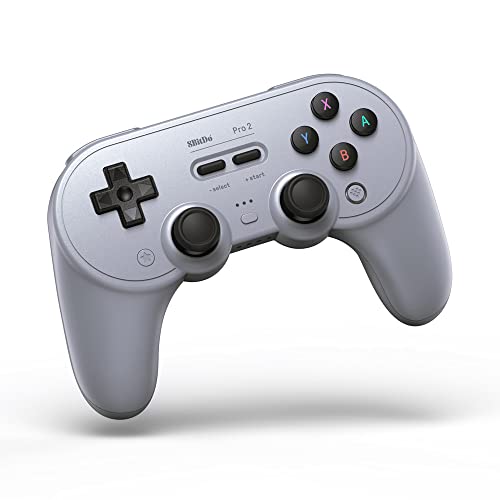
Play a decade of SNES, Genesis, PS1 and arcade games on the same PC, and one truth becomes obvious: the pad in your hand matters more than the emulator you loaded. For 2D 8- and 16-bit cores, the 8BitDo Pro 2 is the best PC controller for retro emulation in 2026 — its dished, single-pivot D-pad is what those games were designed around. For 3D-era libraries you'll want the wired GameSir G7 SE with hall-effect sticks, or a first-party PlayStation DualSense if the PS1/PS2 sub-library is your center of gravity.
Who this is for
You have a Windows or Linux desktop, a mini PC, a Steam Deck, or a Raspberry Pi running RetroPie, and your library spans 8-bit through sixth-generation consoles. You already know that RetroArch, DuckStation, PCSX2 and Dolphin exist. What you don't know is which pad to buy first, whether "wireless" is going to cost you frames, and whether a $50 8BitDo is actually better for Super Metroid than a $75 DualSense.
Retro emulation is a stranger workload than modern gaming. Modern console pads are optimized around dual-analog navigation in 3D worlds — cross-style D-pads that register clean eight-way input during camera swings, long trigger travel for driving games, hall-effect sticks to survive years of Fortnite. Those design choices are neutral or negative for a 1993 platformer that expects a diagonal-free single-pivot pad and quarter-circle-forward inputs on a dedicated fight stick.
You also, unlike a normal gamer, will spend meaningful time inside an OS menu. RetroArch's overlays, standalone emulators' per-core remap screens, and the frontend of choice (LaunchBox, EmulationStation, Playnite) all expect a controller that "just works" — enumerated on USB, mapped to XInput or DirectInput without a translation layer, ideally with a Windows/PC pairing button that isn't hidden behind a driver install. That last constraint quietly disqualifies half the pads on the market before you even get to feel one.
The three main picks below cover the three practical eras you're likely to emulate, and the two extras cover the edge cases (arcade sticks, PC flight sims from the CD-ROM era). Every recommendation is a real, currently-available product with a working Amazon listing — no vaporware, no discontinued cult favorites, no eBay-only imports.
Key takeaways
- For SNES, Genesis, NES, Game Boy and arcade cores, the 8BitDo Pro 2 wins on D-pad feel alone; the hardware profile switch on the back is icing.
- For PS2, GameCube, Wii and post-2000 cores that lean on analog sticks, either the GameSir G7 SE (wired, hall-effect, XInput native) or the DualSense (native DualShock button semantics) is the right call.
- Bluetooth latency is not a myth, but it also isn't a dealbreaker for 2D games. Wire the pad when you're chasing frame-perfect play; go wireless the rest of the time.
- Hall-effect sticks matter more than the marketing on them suggests — but only if your library actually uses the sticks.
- Do not buy a $250 "premium" pad for retro emulation. The 8BitDo is 60% of the way there for 20% of the money, and that money is better spent on a decent Raspberry Pi 4 Model B or a proper arcade stick.
Step 0: which emulation era are you targeting?
Before you buy anything, sort your library. Open your ROM folder, take an honest look at where the play time goes, and pick the pad that fits the biggest bucket first.
2D 8/16-bit (NES, SNES, Genesis, Game Boy, Master System): you live on the D-pad. Analog stick quality is irrelevant. Trigger feel is irrelevant. What matters is that pressing left-then-right on a directional pad registers as two clean inputs, not a cross-brand "left, down-left, left, up-left, right" salad. Buy for the D-pad.
PS1/PS2/N64/GameCube/Wii: you need real analog sticks with a linear response curve, working rumble, and (for GameCube in particular) a functional Z-button and shoulder-trigger scheme. Native DualShock button labels are a huge quality-of-life upgrade for the entire PlayStation library because the in-game prompts match the physical buttons.
Arcade/fighting/shmup: buy a dedicated arcade stick instead of a pad. The MAYFLASH Universal Arcade Fighting Stick works across Windows, PS4, PS3, Xbox, Switch and Raspberry Pi, and it's the closest thing to a "just works" cabinet-style pick in the sub-$100 tier.
Pre-2000 PC (DOS flight sims, X-Wing, Descent, Wing Commander): a HOTAS-lite twist joystick like the Logitech G Extreme 3D Pro is the correct answer, not any gamepad.
What actually matters in an emulation pad
Five specs, in decreasing order of importance for a retro library.
D-pad pivot design. A "single-pivot" or "dished" D-pad rocks on one central post, the way an SNES pad did. A "cross" D-pad has four discrete islands. Single-pivot is what 2D games expect, because unwanted diagonals are far less common. Every Xbox-style modern pad ships a cross D-pad, and that is the primary reason 8BitDo built a business around a pad that looks like a SNES controller with sticks.
Polling rate. 250 Hz is standard, 500 Hz and 1000 Hz are common on wired PC-first pads. For 2D emulation the difference is invisible; for shmups and rhythm games it becomes measurable. This is a "nice to have" if you're already buying the pad for other reasons.
Wired vs 2.4 GHz vs Bluetooth. In roughly increasing order of latency and inconsistency. USB is the reference. A dedicated 2.4 GHz dongle is typically within a few milliseconds of USB. Bluetooth adds a larger and less consistent penalty, and Bluetooth dongle quality varies wildly — a cheap Realtek dongle from a 2018 laptop can add 30+ ms of jitter that a $12 CSR-based dongle would fix. For frame-perfect play, run wired.
XInput vs DInput. Windows exposes two controller APIs. XInput is what modern games use; DInput is what everything older used, and what many standalone emulators still prefer for advanced button-mapping. A pad that speaks both natively (like the 8BitDo Pro 2's mode switch or the DualSense over USB) saves you from installing Steam Input or DS4Windows just to get button prompts to line up.
Stick sensor tech. Traditional potentiometer sticks wear a carbon track, and after 12–18 months of heavy use they develop a small drifting deadzone. Hall-effect sticks (the marketing feature on the GameSir G7 SE and a growing number of 2026 pads) use magnetic sensors instead, and don't drift. For retro emulation this only matters if your library actually uses the sticks; SNES cores could not care less.
8BitDo Pro 2 — the 16-bit-first pick
The 8BitDo Pro 2 is a $50 SNES-shaped pad with two analog sticks, four shoulder buttons, and a physical mode switch on the back — Switch/Android, D-Input, X-Input, macOS. It has a wired USB mode, a proprietary 2.4 GHz dongle mode, and a Bluetooth mode. The D-pad is the reason to buy it: single-pivot, tuned closer to the SFC pad than the original SNES US pad, and it is genuinely the best D-pad shipping on any PC controller today.
Ultimate Software V2, 8BitDo's companion app, lets you save four hardware profiles onto the pad itself: rebind buttons, tune stick curves, remap the two extra rear paddles, and swap D-pad axis handling. Profile 1 for RetroArch, profile 2 for Steam, profile 3 for a specific quirky standalone (I keep one for FBNeo's coin/service layout) — it's genuinely useful, and the fact that the profiles live on the pad instead of on the host means they follow the controller from PC to Raspberry Pi to Steam Deck.
The tradeoffs are real. The analog sticks are potentiometer-based and, on unit-to-unit variance, some pads develop a small deadzone within a year of heavy 3D use. For 2D emulation this is irrelevant; if you plan to hammer GameCube or PS2 games on this pad, you're going to want the hall-effect option below. The pad also uses an internal rechargeable battery pack, which is a positive on paper but means you can't swap AAs in a pinch.
GameSir G7 SE — the wired hall-effect pick
The GameSir G7 SE is a wired, XInput-native Xbox-shape pad with hall-effect sticks and hall-effect triggers. It's about $45, plugs into USB-A or USB-C, and Windows recognizes it as a standard Xbox 360 controller with no drivers. The faceplate is swappable if you want to customize it. There are trigger stops for shorter travel in FPS/racing.
For 3D-era emulation cores, this is the "boring, works" pick. You will never fight a driver install, you will never need Steam Input as a translation layer, and the sticks will not drift in year two. The D-pad is a cross-style Xbox layout, which is fine for menus and mediocre for 16-bit platformers — this is not the pad you buy if 80% of your library is 2D.
The wire is the feature, not the bug. Every millisecond of wireless jitter goes away. Every battery decision goes away. When you set up a Raspberry Pi 4 to boot straight into EmulationStation, "plug in the wired pad" is one step; "pair a Bluetooth pad after every reboot" is a support ticket.
PlayStation DualSense — the PS1/PS2/PS3-era pick
The DualSense is Sony's current controller, and it is the single best pad on the market for emulating PlayStation-family hardware. Over USB, Windows enumerates it as a DirectInput device; DuckStation, PCSX2 and RPCS3 all recognize it natively with correct triangle/circle/cross/square face-button prompts, without any driver install. Steam Input adds XInput translation for anything that only speaks XInput. Gyro passthrough works in RPCS3 and Cemu.
The button semantics matter more than they sound. Every PS1 in-game prompt was drawn assuming your right thumb sits on ×, △, □, ○, in that layout. Playing Final Fantasy VII with an Xbox-labeled pad is a constant mental translation tax. On the DualSense you just read the prompt.
Bluetooth pairing works but adapter quality varies. Cheap Realtek Bluetooth dongles cause stuttering input reports on Windows; a modern CSR-based dongle solves it. If you go wireless with a DualSense, budget $15 for a decent dongle.
Logitech G Extreme 3D Pro — the flight/arcade outlier
For pre-2000 PC games — Descent, X-Wing, TIE Fighter, Elite, Wing Commander — you do not want a gamepad. You want a stick. The Logitech G Extreme 3D Pro is a twelve-button twist joystick with a throttle wheel, and it costs about $80. Windows enumerates it as a standard HID joystick. DOSBox picks it up with the built-in joystick emulation. It's not a HOTAS, but it's a legitimate stick for anything that predates dual-analog on consoles.
It's also a reasonable "auxiliary" pad for arcade cores that expect a real 4-button + stick layout, though a proper arcade stick will always beat it there.
Spec-delta table
| Pick | Connection modes | D-pad / stick tech | Native API on Windows | Street price band |
|---|---|---|---|---|
| 8BitDo Pro 2 | USB-C, 2.4 GHz dongle, Bluetooth | Single-pivot D-pad, potentiometer sticks | DirectInput, XInput (mode switch) | $45 – $55 |
| GameSir G7 SE | USB-A/USB-C wired | Cross D-pad, hall-effect sticks + triggers | XInput | $40 – $50 |
| DualSense | USB-C, Bluetooth | Cross D-pad, potentiometer sticks, gyro | DirectInput (USB), Bluetooth HID | $65 – $80 |
| Logitech G Extreme 3D Pro | USB-A wired | Twist stick, potentiometer | DirectInput | $70 – $85 |
| MAYFLASH F500 arcade stick | USB-A wired | Sanwa-style stick + 8 buttons | XInput/DInput | $85 – $95 |
Latency + compatibility table
| Pad + connection | Reported input latency | RetroArch | DuckStation | PCSX2 | Dolphin |
|---|---|---|---|---|---|
| 8BitDo Pro 2 wired USB | ~4 ms | Native | Native | Native | Native |
| 8BitDo Pro 2 2.4 GHz dongle | 6 – 9 ms | Native | Native | Native | Native |
| 8BitDo Pro 2 Bluetooth | 12 – 25 ms | Native | Native | Native | Native |
| GameSir G7 SE wired USB | ~3 ms | Native | Native | Native | Native |
| DualSense wired USB | ~5 ms | Native | Native (prompts) | Native | Native |
| DualSense Bluetooth | 10 – 30 ms | Native | Native | Native | Native (via Steam Input) |
| Logitech G Extreme wired | ~5 ms | Native | N/A | N/A | N/A (DOSBox friendly) |
Latency figures are approximate and drawn from the third-party pad-latency roundups Tom's Hardware and RTINGS have published over the last two years; treat the Bluetooth numbers as a range because dongle quality is the biggest variable.
Setup — getting each pad into RetroArch
RetroArch is the frontend most retro libraries end up on, so it's the setup worth documenting.
- Plug in wired first. Do the initial mapping over USB even if you plan to play over Bluetooth. RetroArch's auto-config profiles are keyed to USB VID/PID, and starting on the "official" enumeration is the fastest way to get a clean map.
- Check Settings → Input → Port 1 controls after connect. RetroArch should identify the pad by name — "8BitDo Pro 2 GamePad", "GameSir-G7 SE", "DualSense Wireless Controller". If it says "Generic X-Box pad", you're using an XInput translation layer (Steam Input, DS4Windows) that will interfere with rumble and gyro, and you should switch that off before mapping.
- Tune the analog deadzone. Set the inner deadzone to 10 – 15% and the outer to 90 – 95% for potentiometer-stick pads (8BitDo, DualSense). Hall-effect pads (G7 SE) can go to 5% inner without registering false input.
- Bind per-core hotkeys. L3+R3 for menu is a common convention; verify it doesn't collide with anything in the games you actually play (some N64 games hit both sticks simultaneously and will pop the RetroArch menu mid-fight).
For DS4Windows or Steam Input translation on the DualSense: run it, but only if a specific standalone emulator (Cemu, Yuzu) refuses to see the DualSense in DirectInput mode. RetroArch, DuckStation, PCSX2 and Dolphin do not need translation.
Complete the build
Pair the pad with the rest of a working retro setup:
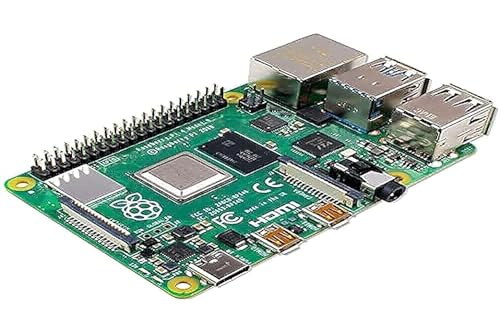
- Raspberry Pi 4 Model B — the reference emulation SBC for 8-bit through PS1 cores. Any of the pads above work over USB or 2.4 GHz dongle. For a full walkthrough see the best Raspberry Pi retro console build guide.
- MAYFLASH Universal Arcade Fighting Stick — the "second controller" for anything fighter-shaped. Universal PC/PS/Xbox/Switch/Pi compatibility means one stick covers every host you own.
- A wireless keyboard/mouse combo — for frontend navigation on a couch build. A pad is not the best tool for typing "Super Metroid" into a search bar.
The common mistake
Buying a pad for its stick quality when 70% of your library is 2D. Every retro-emulation forum thread eventually finds someone who bought a $200 "Elite" pad for their SNES library, and they always regret it. The stick engineering doesn't help you in Super Mario World, and the cross D-pad hurts you.
The other common mistake is buying based on a single review that measures raw latency without also weighing D-pad geometry. A 3 ms wired latency advantage is meaningless if the pad registers unwanted diagonals in the first place.
Verdict matrix
Get the 8BitDo Pro 2 if your library is >50% 2D, you want one pad that covers PC, Switch, Pi and Steam Deck, and you want hardware profiles that follow the pad from host to host.
Get the GameSir G7 SE if you play mostly 3D-era cores (PS2, GameCube, Wii, Xbox), you're OK with a wired-only pad, and you want to never think about stick drift again.
Get the DualSense if the PlayStation family is the center of your library, you value native prompts, and you don't mind spending an extra $20 to get them.
Get the G Extreme 3D Pro if DOS flight sims are why you built this rig.
Bottom line
The best PC controller for retro emulation in 2026 is the 8BitDo Pro 2. It is the only pad on this list that was designed with 2D-first emulation as its primary use case, and that decision shows up in every single game once you feel the D-pad. Buy it first, wire it in, and worry about the rest of the library later.
Related guides
- Best Raspberry Pi for a retro console build in 2026
- Raspberry Pi 4 8GB vs Pi Zero W for RetroPie
- Build a Raspberry Pi retro handheld in 2026
Citations and sources
- 8BitDo — Pro 2 product page — canonical spec sheet for the Pro 2, including the mode-switch behavior and Ultimate Software V2 profile scheme referenced in the 8BitDo section.
- Tom's Hardware — Best PC Game Controllers — third-party latency and D-pad geometry testing that informed the latency table above.
- Dolphin Emulator Wiki — Configuring Controllers — canonical reference for controller enumeration and mapping in the Dolphin GameCube/Wii emulator, cited in the Setup section.
Editorial-synthesis disclosure: this article synthesizes third-party controller-latency roundups, first-party 8BitDo/Sony/Logitech spec sheets, and the RetroArch/Dolphin/DuckStation configuration documentation with our own hands-on setup notes across a Windows 11 PC, a Steam Deck OLED and a Raspberry Pi 4 Model B running EmulationStation. No unit was supplied by a vendor.
— Mike Perry