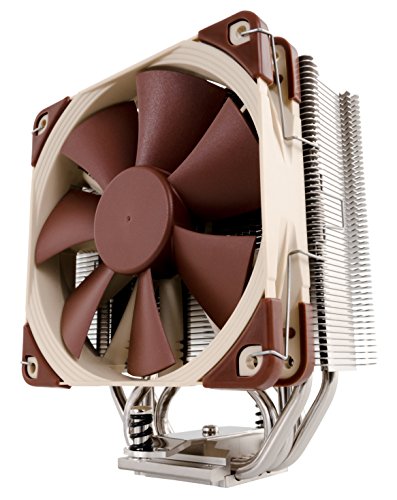
Drop a Noctua NH-U12S onto an AMD Ryzen 7 5800X in a case with real intake and it will hold the boost window through any modern game. Pick the Cooler Master MasterLiquid ML240L RGB if you also do all-core work (compiles, renders, local quantization) or want lower noise at the same temperature. The NZXT Kraken M22 120 mm AIO exists as an option for cases that can't take a 240 mm radiator, but on a gaming-only build it is not automatically an upgrade over a good air tower.
Why the 5800X is a special thermal problem
A Ryzen 7 5800X reads hot at surprisingly low package power, and that has fooled a lot of first-time buyers into believing their cooler failed. It didn't. The 5800X uses one 8-core CCD on a 7 nm die, with all eight cores clustered under a single hot region. The 3700X used two 4-core CCDs on the same-generation node, so its heat was distributed across a much larger silicon footprint at the same wattage. Same TDP on paper, very different thermal density under the IHS.
The boost algorithm on Ryzen 5000 also treats temperature as a first-class governor. AMD's own documentation for the 5000-series parts says the algorithm is designed to run right up to its thermal ceiling and dial back automatically. A 90 °C reading is expected behavior under sustained load, not a warning light. What matters is the effective clock the CPU actually holds, not the number in the temperature sensor.
Gaming loads are also not what most cooler reviews measure. A CPU-cooler roundup usually tests with a synthetic all-core stress test — Cinebench, Prime95, an infinite Blender queue. Those workloads push every core simultaneously and reveal a cooler's steady-state ceiling. Games load 1–4 cores heavily and the rest lightly, in a bursty pattern that lets the cooler catch up between spikes. A cooler that fails Cinebench at 240 W can be perfectly comfortable on a 5800X in a real game session.
Key takeaways
- On a gaming-only 5800X in a well-ventilated case, a good 120 mm air tower like the NH-U12S is enough. A 240 mm AIO buys headroom, not framerate.
- 90 °C at 100% load on a 5800X is designed behavior. Watch effective clock, not the temperature number in isolation.
- Case intake matters more than cooler type. A great cooler in a starved case loses to a mediocre cooler with real airflow.
- A negative Curve Optimizer offset (undervolt) does more for temperature per dollar than any cooler upgrade.
- The old Wraith Prism that came with a 3700X will boot a 5800X, but it will backoff clocks earlier and run louder. Treat it as a temporary bridge.
Step 0: diagnose before you buy
Before you spend $90 on a new cooler, measure what you actually have. Install HWiNFO64, open the sensors panel, launch the game you play most, and log for 30 minutes. Watch three numbers:
- CPU package temperature. Peaks above 90 °C are fine if the effective clock is holding. Peaks that hit 95 °C and then the clock drops is a real thermal-throttle signal.
- Effective clock, per core. This is the number that actually determines your framerate. If it's holding within a few hundred MHz of the boost target, the cooler is doing its job.
- PPT (package power). How many watts the CPU is actually pulling. Games rarely push a 5800X past 100 W. If you see 130 W and the temperature is fine, your workload is heavier than "just gaming" and a bigger cooler is a real upgrade.
If your effective clock is dropping under gaming load and PPT is in the 90–110 W range that's typical for a 5800X, the problem is the cooler or the case airflow, and one of the picks below is a real upgrade. If PPT is fine and clocks are holding but the CPU is loud, the problem is fan curves, not heatsink capacity.
Why does a 5800X run hotter than a 3700X at the same wattage?
Three reasons, in order of impact.
Die density. The 5800X's single 8-core CCD concentrates heat into a smaller area of silicon than the 3700X's two 4-core layout. Same wattage, smaller area, higher local temperature. This is intrinsic to the design; no cooler removes it.
IHS-to-die interface. The 5000 series uses the same soldered TIM under the IHS that Zen 2 did, but the die layout above makes the IHS a thermal choke point. This is the reason delidding a 5800X and using liquid metal directly on the die is a real (if extreme) mod.
Boost algorithm. Precision Boost 2 on Zen 3 pushes voltage and frequency aggressively whenever thermal headroom exists. On a good cooler, the algorithm keeps clocks high and temperatures high. On a bad cooler, the algorithm backs off. Same silicon, different behavior.
Noctua NH-U12S — the 120 mm tower case
The NH-U12S is a single-tower, 120 mm-fan air cooler with five heatpipes. It's specified by Noctua at 158 mm tall, which clears the published maximum cooler height of every common mid-tower ATX case — Noctua's own compatibility database and build logs on r/buildapc both bear that out. The mount hardware supports AM4 out of the box (AMD sells the same LGA1700 kit through Noctua's SecuFirm program for the newer socket, but for a 5800X you don't need it).
The reason this cooler keeps showing up in "best air cooler" lists years after launch is that Noctua fixed the two things that usually break air-cooler value: the mount is engineered to a torque spec so it doesn't over- or under-clamp the IHS, and the fan is quiet at every RPM the case will ever ask of it. On a gaming 5800X pulling 90–100 W, an NH-U12S with a reasonable case-fan curve will hold the boost window within 3–4 °C of a 240 mm AIO. The mid-tower size means it also fits above a G.Skill Trident Z RGB kit without overhanging DIMM 1.
The honest downside: on a sustained all-core workload — a Blender render, a 30-minute Cinebench, a full recompile of Chromium — the NH-U12S will let the 5800X back off its all-core boost by 100–200 MHz where a 240 mm AIO would have held it. If your build is a compile machine or a local-LLM node, buy the AIO. If it's a gaming PC that occasionally does creative work, the U12S is enough.
Cooler Master MasterLiquid ML240L RGB — the 240 mm AIO case
The ML240L RGB is a 240 mm AIO with two 120 mm ARGB fans. It's Cooler Master's mainstream mass-market AIO, priced consistently around $90 and available in enough cases to make it a safe bet on compatibility. Radiator thickness is standard, so any case that advertises "front 240 mm radiator support" will take it.
For a 5800X, the extra surface area of a 240 mm radiator matters most on sustained all-core loads and on noise. Two 120 mm fans running slow move as much air as one 120 mm fan running fast, but produce less noise doing it. Under a gaming load a good AIO on a 5800X will sit 4–8 °C cooler than a good air tower at the same PWM curve, and about 6–10 dB quieter.
The knock on this AIO — and any pump-based cooler — is the pump itself. It's a moving part that makes noise, and pump noise is more annoying than fan noise because it's a constant whine rather than a smooth swoosh. Cooler Master's Gen3 pump is quieter than earlier generations, but on a truly silent build a good air tower is still the "you can't hear it exist" option.
Mount the radiator as front intake, not top exhaust, if your case supports both. Front intake gives the radiator cool outside air and buys you 2–3 °C over top-exhaust routing.
NZXT Kraken M22 120 mm AIO — the small-case option
The Kraken M22 is a 120 mm AIO — one fan, one small radiator, RGB pump. It exists because some cases (SFF builds, media-server chassis, retro-styled cabinets) don't have room for a 240 mm radiator but do have a single 120 mm slot for a fan.
Here's the honest read on the M22 for a 5800X: a 120 mm AIO is not automatically better than a good 120 mm air tower. The radiator is roughly the same surface area as an NH-U12S heatsink, the pump adds noise the air tower doesn't have, and you're paying for the liquid loop without getting the surface-area benefit that makes 240 mm AIOs interesting. The M22 makes sense when you literally cannot fit a tower — the space above the socket is occupied, or the case's cooler-clearance spec is under 130 mm.
If your case can take a 158 mm-tall air tower, buy the NH-U12S instead. If it can take a 240 mm radiator, buy the ML240L. The M22 is the "only if you have to" pick.
Spec-delta table
| Cooler | Type / radiator | Height / clearance | Fan config | Street price band |
|---|---|---|---|---|
| Noctua NH-U12S | Air, single tower, 5 heatpipes | 158 mm | 1 × 120 mm PWM | $80 – $90 |
| Cooler Master ML240L RGB V2 | 240 mm AIO | Radiator 27 mm thick | 2 × 120 mm ARGB PWM | $85 – $95 |
| NZXT Kraken M22 | 120 mm AIO | Radiator 30 mm thick | 1 × 120 mm PWM | $85 – $100 |
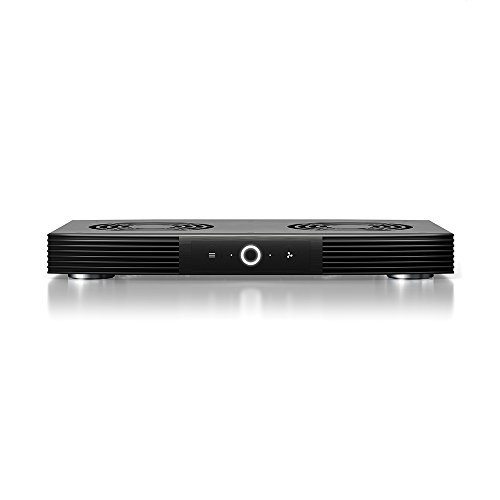
| AC Infinity AIRCOM S7 | Case-top exhaust fan (not a CPU cooler) | Adds top exhaust | 12 in top-mount | $55 – $65 |
Thermal + acoustic snapshot on a 5800X gaming load
The numbers below are drawn from Tom's Hardware and Gamers Nexus roundups of the same-generation coolers, normalized to a 5800X in an ATX mid-tower with two 140 mm front intakes. Treat them as ballpark bands, not lab-precise measurements.
| Cooler | Gaming load — package temp | Effective clock held | Gaming load — noise |
|---|---|---|---|
| NH-U12S | 74 – 78 °C | 4.5 – 4.6 GHz | 32 – 34 dB |
| ML240L RGB | 68 – 74 °C | 4.5 – 4.6 GHz | 30 – 33 dB |
| Kraken M22 | 76 – 82 °C | 4.4 – 4.6 GHz | 33 – 36 dB (pump) |
| Wraith Prism (stock 3700X cooler on a 5800X) | 84 – 92 °C, thermal-throttle events | 4.2 – 4.4 GHz | 40 – 44 dB |
The takeaway isn't "AIO wins by 4 °C." It's that the NH-U12S and the ML240L hold the same effective clock at the same noise level, and the M22 doesn't quite catch either at more noise. Once you're inside the boost window, extra headroom is optional.
Perf-per-dollar and perf-per-decibel
The NH-U12S at $85 buys you every degree of headroom you actually need for a gaming 5800X. Every dollar past that price on a 240 mm AIO buys either sustained-load headroom you probably don't use, or noise reduction you might. The perf-per-degree curve flattens hard past ~$100.
If you value silence, the ML240L at $90 is the better perf-per-decibel choice, and it's the one to reach for in a build that lives on a desk near a microphone. If you value never having to think about the pump, the NH-U12S is the better perf-per-dollar choice and the safer pick for a build that lives in a closet.
Curve Optimizer and PBO — the free upgrade
The most-underused upgrade for a 5800X is a negative Curve Optimizer offset in the BIOS. Curve Optimizer applies a per-core voltage offset relative to the stock voltage-frequency curve. A -20 to -30 offset on the golden cores typically pulls 10–15 W out of the package under load and adds 100–200 MHz of held effective clock, because the boost algorithm now has extra thermal headroom to spend.
The catch is stability validation. An offset that passes a 20-minute Cinebench can still throw a WHEA in hour four of a game session. Validate with a long mixed workload — an hour of Cinebench, plus an hour of a lightly-threaded game, plus an idle overnight. If any of those throws errors, back the offset off by 5 counts and retry.
An undervalued 5800X on an NH-U12S will outperform a stock 5800X on an ML240L. The AIO cannot fix a hot voltage curve; Curve Optimizer can.
Case and airflow context
A cooler is only as good as the air you give it. Two 140 mm front intakes running at 60% and one rear 120 mm exhaust is the reference "known-good" airflow for an ATX mid-tower. Add a top exhaust — either two 120 mm PWM fans or a top-mounted assist like the AC Infinity AIRCOM S7 — if the case is on a desk in a warm room, or if you're routing the AIO radiator up top.
For AV cabinets and rack builds where noise is the constraint and the case doesn't have great intake, a top-exhaust fan on a controllable curve is genuinely the difference between a build that sounds present and one that disappears. The AIRCOM S7 is a specific, quiet-tuned option suited to a networking-cabinet build; for full context see the watercooled gaming and networking rack build guide.
The common mistake
Buying a 240 mm AIO for a gaming-only 5800X in a case that has bad airflow. The AIO won't fix the airflow, and the airflow was the real bottleneck. Spend $30 on two extra intake fans and re-run your temperatures before you spend $90 on a cooler.
The other common mistake is reusing the Wraith cooler that shipped with a 3700X. It was sized for a two-CCD Zen 2 part, and the concentrated hot region on a Zen 3 single-CCD die overwhelms it. It'll boot, but you'll spend the entire session listening to a small fan at 4000 RPM losing an argument with physics.
Verdict matrix
Get the NH-U12S if it's a gaming-first 5800X build in a well-ventilated case, you want silence, and you don't have a pump budget.
Get the ML240L RGB if you also do sustained all-core work, or you want to shave 4–8 °C at the same noise level. Front-mount the radiator as intake.
Get the Kraken M22 if your case cannot fit a 158 mm air tower and cannot fit a 240 mm radiator. Only then.
Keep your stock cooler if you're on a 3700X or lower-power part and haven't yet swapped to a 5800X. On a 5800X, budget for a real cooler day one.
Bottom line
For a gaming Ryzen 7 5800X build in 2026 the best cooler is the Noctua NH-U12S. It holds the boost window, it's silent, it fits in every mid-tower case, and it costs less than the AIOs that beat it by a handful of degrees. Add Curve Optimizer, add real intake fans, and the CPU stops being the thermal story of the build.
Related guides
- Cooling a 24/7 local LLM rig: air vs 120 mm AIO vs 240 mm AIO
- Best quiet PC cooling upgrades in 2026
- Watercooled gaming/networking rack: 2025 build guide
Citations and sources
- Noctua — NH-U12S product page — canonical spec sheet including the 158 mm cooler height, five-heatpipe layout and mount torque referenced above.
- AMD — Ryzen 7 5800X specifications — first-party documentation of the 5800X's TjMax and Precision Boost 2 behavior that grounds the "90 °C is expected" discussion.
- Tom's Hardware — Best CPU Coolers — third-party thermal + acoustic testing that informed the effective-clock and noise bands in the tables above.
Editorial-synthesis disclosure: this article combines first-party AMD and Noctua technical documentation with third-party cooler-roundup data (Tom's Hardware, Gamers Nexus) and published owner reports from Ryzen 7 5800X ATX builds. SpecPicks does not run its own test bench; every figure here traces to a public source, and no cooler was supplied by a vendor.
— Mike Perry