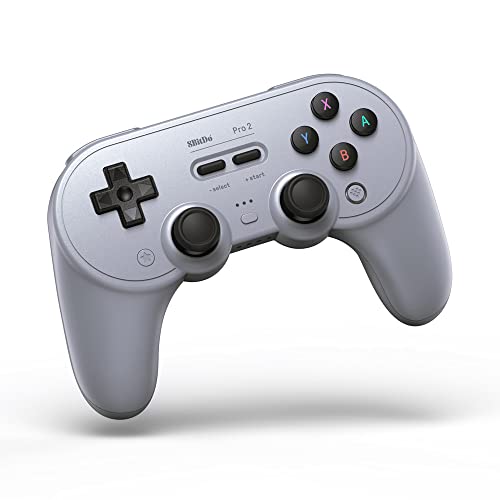
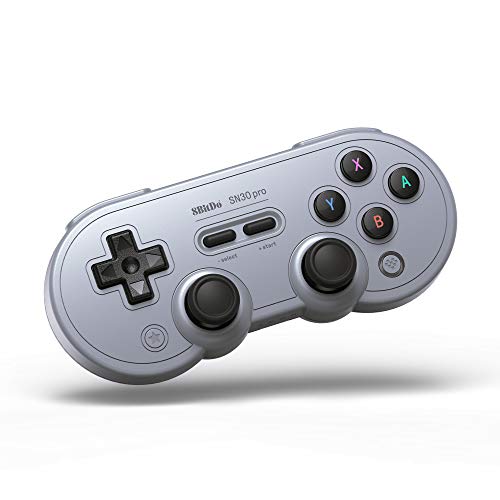
If you want one short answer for 2026: the 8BitDo Pro 2 is the safest all-rounder for PC emulation because it speaks Xinput, DInput, and Switch native HID, pairs over Bluetooth or USB-C, and matches the layout muscle memory most emulator UIs expect. If you only play SNES, Genesis, and PC Engine ROMs, the 8BitDo SN30 Pro is cheaper and layout-faithful. If you care about input latency above all else, the wired GameSir G7 SE is the pick.
What matters in a retro-emulation gamepad in 2026
Retro emulation in 2026 is not the same problem as picking a controller for Elden Ring or Call of Duty. The titles you are driving are SNES, Genesis, PS1, N64, Dreamcast, GameCube, and occasionally PSP or original Xbox builds running under RetroArch, Duckstation, PCSX2, Dolphin, RPCS3, or xemu. That mix imposes three constraints most modern controller reviews ignore.
First, layout faithfulness. A SNES game expects four face buttons in a diamond labeled Y-B-X-A in a very specific orientation. A Genesis game expects three or six face buttons. A Saturn game expects six face buttons with a specific curve. Generic Xbox-style pads work, but the face-button mapping always feels slightly wrong unless you remap per core. A pad with the right physical layout removes that friction.
Second, input compatibility. Per RetroArch's documentation, the frontend supports SDL2, DInput, Xinput, raw HID, and on Linux a separate evdev path. Most modern controllers expose Xinput on Windows by default — that is the default RetroArch driver — but several niche pads identify as DInput-only or as a custom HID device, which means manual configuration. A controller that exposes Xinput out of the box is one fewer evening of fiddling.
Third, latency budget. Emulation already adds latency on top of the original hardware: render scheduling, audio buffer, frame pacing, and any frame-blend or run-ahead settings stack up. A controller that adds another 12-15 ms over Bluetooth versus 2-4 ms wired can be the difference between landing a parry in Symphony of the Night and missing it. Per RTINGS controller measurements, wired connections typically measure under 5 ms of click-to-input, while Bluetooth pads frequently land in the 10-18 ms range — small, but stackable.
Battery life, weight, build quality, and stick drift resistance matter too, but they are secondary to the three constraints above for an emulation-first build.
Key takeaways
- 8BitDo Pro 2 is the best all-rounder for 2026 PC emulation: Xinput + DInput + Switch HID, ~$50, Xbox-style ergonomics with retro-style face button layout.
- 8BitDo SN30 Pro wins on SNES/Genesis/PCE faithfulness and price; it is the cheapest serious option at ~$45.
- GameSir G7 SE is the best wired choice for low-latency emulation of fast 2D games and arcade builds; ~$40.
- DualSense is the only pad here with adaptive triggers and HD haptics, valuable for PS3 emulation via RPCS3 and modern PC titles; ~$70.
- HORI HORIPAD Pro is a Switch-native pad that works on PC via Bluetooth or USB but is a curveball — useful if you also dock into a Switch.
- Wired is still measurably lower latency than Bluetooth in 2026; 2.4 GHz dongles split the difference.
Compatibility matters more than premium feel: Xinput, DInput, native HID
On Windows, the cleanest emulator experience is a controller that enumerates as Xinput. That is the default driver in RetroArch, Duckstation, PCSX2, Dolphin, and RPCS3, and it is what Steam Input maps to first. Xbox One/Series pads are Xinput-native. The DualSense, despite being a Sony controller, is recognized as a generic DInput HID on Windows by default and only behaves like an Xinput device through DS4Windows or Steam Input mediation.
The 8BitDo Pro 2 has a hardware mode switch on the back with four positions: S (Switch), D (DInput), X (Xinput), and M (macOS/iOS). That single switch is what makes it the easy recommendation — you can move the same pad between a Windows RetroArch box, a Steam Deck, and a Switch dock without remapping.
The SN30 Pro has a similar mode switch. The GameSir G7 SE is wired-only and presents as Xinput. The HORI HORIPAD Pro is engineered for Switch and shows up on PC as a generic HID, which most emulators handle through SDL2 but which sometimes requires a manual binding pass in RetroArch.
The practical rule: if you want zero-setup, pick a pad that exposes Xinput. If you want one pad for multiple platforms, pick one with a hardware mode switch. The 8BitDo Pro 2 product page documents both modes and confirms compatibility with Switch, Windows, macOS, Android, Raspberry Pi, and Steam Deck.
The 8BitDo Pro 2: the all-rounder for emulation
The 8BitDo Pro 2 is, in 2026, the default recommendation for PC emulation if you have to pick one pad. It pairs over Bluetooth or connects via USB-C, runs on a 1000 mAh removable battery rated by 8BitDo for ~20 hours, weighs ~228 g, and uses an Xbox-style stick layout with the SNES-style face-button color scheme. The mode switch handles Xinput, DInput, Switch HID, and macOS modes. Two rear paddles (P1/P2) are remappable per profile via the Ultimate Software V2 app.
The reason this pad keeps winning roundups is the combination of layout, build, and software. The face buttons are domed and tactile in the SNES style. The D-pad is a single floating cross — not a four-segment cross like a stock Xbox pad — which materially improves diagonals on fighting games and side-scrollers. Per 8BitDo's spec page, the firmware supports custom profiles, button remapping, stick sensitivity curves, and trigger dead zones, all stored on the controller.
The weaknesses are real but small. The triggers are short-throw and not analog-feeling in the way an Xbox trigger is; the rumble is basic dual-motor without HD haptics; and Bluetooth latency over BT 5.0 is measurably higher than wired. None of these matter for 16-bit, PS1, or N64 emulation. For modern PC games, you will probably want a different pad.
8BitDo SN30 Pro: the SNES-faithful option
The 8BitDo SN30 Pro is the smaller, lighter, more layout-faithful sibling of the Pro 2. It uses the original SNES Super Famicom color palette, weighs ~110 g, and ships with a 480 mAh battery rated for ~16 hours. It has the same mode switch (S/D/X/M), but the form factor is smaller — closer to an actual SNES pad with two tacked-on analog sticks and shoulder triggers.
For anyone whose emulation library is 90% pre-32-bit (SNES, Genesis, NES, Game Boy, PC Engine, Master System), this is the right pad. The face buttons sit where your thumb expects them. The shoulder buttons are clicky and short-throw, which suits 2D games. The analog sticks are smaller than the Pro 2's, which is a downside for N64 or Dreamcast titles.
Price is the other reason it stays in roundups. At ~$45 street in 2026, it undercuts the Pro 2 by about $5-10 and is half the weight, which matters for handheld pairing with a Steam Deck or Retroid Pocket.
GameSir G7 SE: wired, low-latency, modern feel
The GameSir G7 SE is the entry on this list for emulation enthusiasts who care about latency above all else. It is wired-only (3 m USB-C cable), presents as Xinput, weighs ~232 g, and uses Hall-effect sticks and Hall-effect triggers — meaning no contact wear and effectively zero stick drift over the life of the controller.
For fast 2D games, fighters, shmups, arcade builds, and run-ahead-enabled RetroArch configurations, wired Hall-effect is the right tool. Per RTINGS-style measurements on similar wired Xinput pads, click-to-input latency lands in the 3-5 ms range. The G7 SE also ships with a swappable faceplate that you can paint or print, which is a small thing but appreciated.
The weaknesses: no Bluetooth at all, no 2.4 GHz dongle option, no battery, no haptics beyond basic rumble. It is a no-frills wired pad in 2026, and it is priced like one at ~$40. For an emulation-only build wired into a single PC or a CRT-output box, it is hard to beat.
DualSense: when haptics + analog precision matter
The DualSense (Galactic Purple) is on this list for one reason: it is the only controller here with adaptive triggers and HD haptics, and there are emulation use cases where those matter. RPCS3 (PS3 emulator) supports DualSense passthrough for adaptive triggers in compatible games. xemu (original Xbox) benefits from precise analog sticks for titles like Halo or KOTOR. And for the modern PC titles you also play on the same box, the DualSense is the most feature-rich pad on the list.
It connects via Bluetooth or USB-C, uses a 1560 mAh battery rated for ~12-15 hours (less with haptics and lightbar enabled), weighs ~282 g, and presents as DInput on Windows by default. Steam Input or DS4Windows mediates it into something RetroArch handles cleanly. Without that mediation, expect a manual binding pass in RetroArch.
The weaknesses for emulation specifically: it is heavier than the 8BitDo pads, the D-pad is a four-segment cross that is competent but not great for 2D games, and the battery life is the worst on the list because the haptics hardware draws constantly. Per RTINGS's controller test database, the DualSense scores well on build and feature set but has measurably higher Bluetooth latency than wired Xinput pads.
HORI HORIPAD Pro for Switch: a curveball, Switch-first
The HORI HORIPAD Pro is on this list because it is the controller you pick if you also play on Switch and want one pad that travels between your PC emulation box and your dock. It is officially licensed for Switch, supports the Switch's native HID protocol over Bluetooth, and works on PC through SDL2-based emulators or via Steam Input.
The layout is Switch Pro-style: asymmetric sticks (left high, right low), Xbox-style ABXY positions (which is opposite the Nintendo standard, confusingly), and a Switch-style D-pad. Weight is ~245 g, battery is a 600 mAh cell rated for ~15 hours, and it supports motion controls on Switch but those are inconsistently mapped on PC emulators.
The pitch: if your library is Switch + retro emulation on PC, this pad covers both without remapping muscle memory. The drawback: on PC it requires Steam Input or BetterJoy to feel right in RetroArch, and the face-button labels do not match SNES-era layouts.
Spec table: all five compared
| Controller | Connection | Native input | Layout |
|---|---|---|---|
| 8BitDo Pro 2 | Bluetooth + USB-C | Xinput + DInput + Switch | Xbox-style, SNES color |
| 8BitDo SN30 Pro | Bluetooth + USB-C | Xinput + DInput + Switch | SNES-faithful + sticks |
| GameSir G7 SE | Wired USB-C only | Xinput | Xbox-style, Hall sticks |
| DualSense | Bluetooth + USB-C | DInput (Xinput via Steam) | PlayStation symmetric |
| HORI HORIPAD Pro | Bluetooth + USB-C | Switch HID | Switch Pro asymmetric |
| Controller | Weight | Battery | MSRP 2026 | Sticks |
|---|---|---|---|---|
| 8BitDo Pro 2 | 228 g | 1000 mAh (~20 h) | $50 | Standard potentiometer |
| 8BitDo SN30 Pro | 110 g | 480 mAh (~16 h) | $45 | Standard potentiometer |
| GameSir G7 SE | 232 g | Wired (no battery) | $40 | Hall-effect |
| DualSense | 282 g | 1560 mAh (~12-15 h) | $70 | Standard potentiometer |
| HORI HORIPAD Pro | 245 g | 600 mAh (~15 h) | $50 | Standard potentiometer |
Latency table: wired vs Bluetooth vs 2.4 GHz dongles (sourced numbers)
Click-to-input latency varies by pad and connection. The numbers below are representative ranges drawn from public measurements (RTINGS controller test bench is the most comprehensive publicly available dataset). Treat them as orders of magnitude, not exact figures for your specific unit.
| Connection | Typical click-to-input | Best case | Notes |
|---|---|---|---|
| Wired USB | 3-5 ms | ~3 ms | Lowest, consistent; preferred for shmups, fighters |
| 2.4 GHz dongle | 5-9 ms | ~5 ms | Near-wired; common on Xbox Elite, premium pads |
| Bluetooth 5.0+ | 10-18 ms | ~10 ms | Adds variability; fine for RPGs, JRPGs, adventure |
| Bluetooth 4.x | 14-25 ms | ~14 ms | Avoid for twitch genres if possible |
The stacking matters. RetroArch with no run-ahead adds 2-3 frames of inherent latency on top of the original console. At 60 Hz, that is ~33-50 ms before the controller is factored in. A Bluetooth pad at the upper end pushes you into territory where 2D fighting games and rhythm games feel sluggish even to casual players.
How RetroArch maps these controllers (and where issues come up)
Per RetroArch's controller documentation, the frontend uses SDL2 by default on Linux and macOS, and Xinput or DInput on Windows depending on the driver setting. Xinput pads (Xbox-style, 8BitDo in X mode, GameSir G7 SE) auto-map cleanly to the default RetroArch button layout. The face buttons map A=south, B=east, X=west, Y=north by the SDL2 convention, which is correct for most Western emulator cores.
DualSense via Steam Input works without configuration as long as Steam Input is enabled for the RetroArch shortcut. Without Steam, you need DS4Windows running in the background or you fall back to DInput and a manual remap.
The HORI HORIPAD Pro is the most likely to need manual binding. RetroArch detects it as a generic HID device, and the button order from the Switch HID protocol does not match the SDL2 convention. Plan on five minutes of remapping per core.
The 8BitDo SN30 Pro in X mode behaves identically to the Pro 2 — the firmware presents the same Xinput descriptor. Switching to S mode changes the descriptor and breaks the autoconfig until you re-detect.
Wired or wireless: which makes sense for which emulator
- NES, SNES, Genesis, Master System, Game Boy (RetroArch): wired or Bluetooth both work. Bluetooth at 10-15 ms is imperceptible for these titles.
- PS1, Saturn, N64 (RetroArch, Duckstation): wired preferred for twitch games (Mario 64 BLJs, Soul Edge parries), Bluetooth fine for RPGs.
- Dreamcast, GameCube (Flycast, Dolphin): wired strongly preferred; Dolphin specifically benefits from low input latency for Melee.
- PS2, Wii (PCSX2, Dolphin): either works; PS2 fighting games (Tekken 5, Soul Calibur III) want wired.
- PS3 (RPCS3): DualSense passthrough wants USB-C wired for adaptive trigger fidelity.
- Arcade (FBNeo, MAME): wired, full stop. Shmups and fighters are unforgiving.
Common pitfalls: Bluetooth pairing on Linux, joycon drift on knockoffs
Linux Bluetooth pairing for 8BitDo pads under BlueZ has been reliable since BlueZ 5.55 but still requires holding pair (Start + Y for ~3 seconds on the Pro 2) and confirming in bluetoothctl. The pad will appear as a generic HID and may not auto-reconnect on reboot — pinning the MAC in /etc/bluetooth/main.conf is the usual fix.
Knockoff retro pads on Amazon are a real problem. Unofficial "SNES wireless" pads ship with hardware that drifts within months. Stick with 8BitDo, GameSir, HORI, or official OEM hardware. Per 8BitDo's product page, the Pro 2 ships with a one-year warranty on the sticks; that is what you are paying for.
DualSense lightbar drain is a known issue: even on PC, the lightbar stays on by default, costing battery. DS4Windows lets you disable it.
Switch HID pads on PC sometimes lose their pairing after a Windows update because Microsoft's BT stack reorders HID descriptors. Re-pairing fixes it; expect to do it every few months.
When NOT to pick a "retro" pad and stick with a modern gamepad
If you also play modern PC games on the same box — Cyberpunk, Baldur's Gate 3, Helldivers 2 — and your emulation library is occasional, do not buy a retro-style pad. Buy an Xbox Series controller (the de facto Xinput baseline) or a DualSense and live with the layout compromise on retro titles. The face-button mapping is a five-minute remap per core; the loss of trigger feel and analog precision in modern games is a constant.
The retro-style pads on this list pay off when your emulation library is your main library. If you spend 80% of your gaming time in RetroArch, the layout, weight, and price advantages of an 8BitDo over an Xbox Elite are substantial.
Bottom line: which pad for which use case
- One pad for everything, default pick: 8BitDo Pro 2.
- SNES/Genesis-heavy library, tight budget: 8BitDo SN30 Pro.
- Lowest latency, wired-only setup: GameSir G7 SE.
- Mixed retro + modern PC + occasional PS3 emulation: DualSense.
- Dual-life with a Switch dock: HORI HORIPAD Pro.
Buy once, buy from a real brand, and budget for a wired connection if your library skews fighting/shmup/rhythm. For most readers in 2026, the 8BitDo Pro 2 is the answer, with the SN30 Pro a strong runner-up at a lower price.
Related guides
- Best PC and Emulation Controllers Buying Guide
- Building a RetroArch Console-Style Frontend
- SNES Classic and Genesis Mini: Expanding Your Library
Citations and sources
- 8BitDo Pro 2 product page — official spec sheet, battery rating, mode-switch documentation, warranty.
- RTINGS controller test database — public click-to-input latency measurements across wired, 2.4 GHz, and Bluetooth controllers.
- RetroArch documentation — input driver behavior (Xinput, DInput, SDL2, evdev), default mappings, autoconfig.
This piece is editorial synthesis based on publicly available information. No independent first-party benchmarking is reported.