A Raspberry Pi 4 Computer Model B 8GB is the right Klipper host for the vast majority of 3D printer builds in 2026 — it comfortably runs Klipper, Moonraker, Mainsail or Fluidd, and one or two camera streams without breaking a sweat. A Vilros Raspberry Pi Zero W kit works for a single printer with no camera, if you accept slower boot times and no headroom. Alternative SBCs make sense only when supply of the Pi 4 is tight or you have a specific I/O requirement — RK3588-class boards are the usual step-up choice.
What Klipper actually asks of a host board
Per the official Klipper installation docs, Klipper runs a Python-based host process on a Linux single-board computer (SBC) and a compiled firmware on the printer's mainboard MCU. The host's job is trajectory planning, gcode parsing, macro handling, and web UI serving — CPU-heavy but memory-light. It talks to the MCU over USB or UART at kilohertz sample rates and expects consistent scheduling latency. What Klipper does not need is a lot of RAM (base usage sits around 250MB), a lot of GPU (none), or a lot of storage bandwidth (config files and gcode uploads only).
Most Klipper builders overbuy. A Raspberry Pi 4 8GB is comfortable — the 4GB variant is comfortable — and the Zero W is enough for the simple case. The three real ways to shoot yourself in the foot are: booting off a worn SD card, choking on webcam MJPEG stream CPU load, and living in a hot enclosure that cooks the SBC. This piece walks through the picks and the constraints in that order.
Benchmarks below reference community reports on the Klipper Discord and forums, the Raspberry Pi 4 product page, and Phoronix's SBC coverage. No first-party specpicks benchmarking is reported.
Key takeaways
- Pi 4 8GB is the pragmatic default — headroom for cameras, web UI, and multiple printer instances if you ever grow.
- Zero W is enough for a single printer, no camera — and it stops being enough the moment you add MJPEG streams or a second printer.
- SD-card wear kills Klipper hosts. Move the root filesystem to an SSD over USB as soon as you can. This is the #1 host-longevity fix.
- CPU load is dominated by camera streams, not by Klipper itself. Each 1080p MJPEG stream at 15fps eats about 30–40% of one Pi 4 core.
- Alternative SBCs make sense only for specific I/O needs (industrial motion, dual-Ethernet, PoE). For pure Klipper, the Pi 4 is the community-standard choice.
Diagnostic: are you running one printer, several, or one plus cameras?
Klipper host requirements scale with the number of active moving parts and camera streams, not with printer speed. Break your workload into:
- One printer, no camera. Any Zero-class board works. A Pi Zero W is enough.
- One printer, one 1080p camera. Pi 4 2GB comfortable, Pi Zero W borderline.
- One printer, two cameras + spaghetti detection AI. Pi 4 4GB or 8GB — anything less will struggle.
- Two or more printers on one host. Pi 4 4GB minimum, 8GB comfortable.
- Printer farm (5+). Consider a small x86 mini-PC or a beefier SBC. Klipper supports multi-MCU cleanly but the host CPU becomes the bottleneck.
Pick the class based on the real workload, not the aspirational one.
What you'll need checklist
Beyond the board itself:
- Power supply. Do not use a phone charger. The Pi 4 needs a 5V/3A USB-C supply; a marginal supply causes random reboots that look like Klipper crashes but aren't.
- Storage. A quality 32GB+ SD card as the first-boot medium; migrate the root filesystem to a real SSD over USB shortly after (see the SD-wear section below).
- USB cable to the printer's MCU. Any decent USB-A to USB-mini/micro/C cable; the printer determines the connector. Cheap cables cause dropped serial connections.
- Camera. A Raspberry Pi Camera Module (any generation) or a USB webcam. The camera choice matters less than the streaming configuration.
- Network path. Wired Ethernet if the printer is near a switch; WiFi otherwise. WiFi is fine for the web UI and gcode uploads but adds occasional latency spikes to MJPEG streams.
Spec-delta table
| Board | CPU cores | RAM | USB | Network | Notes | Approx price |
|---|---|---|---|---|---|---|
| Raspberry Pi 4 8GB | 4 × Cortex-A72 @ 1.5–1.8 GHz | 8GB LPDDR4 | 2 × USB 3.0 + 2 × USB 2.0 | Gigabit Ethernet + WiFi 5 | Sweet-spot Klipper host | ~$85 |
| Raspberry Pi 4 4GB | 4 × Cortex-A72 @ 1.5–1.8 GHz | 4GB LPDDR4 | Same as 8GB | Same | Fine for single printer + camera | ~$65 |
| Raspberry Pi Zero 2 W | 4 × Cortex-A53 @ 1 GHz | 512MB LPDDR2 | 1 × USB 2.0 OTG | WiFi 4 + BT | Fine for one printer, no camera | ~$15 |
| RK3588 SBC (Orange Pi 5, Rock 5B) | 8 × A76/A55 | 4–16GB LPDDR4 | 2 × USB 3.0, USB-C | GbE + WiFi (varies) | Overkill for Klipper; useful for AI-vision spaghetti detection | ~$85–150 |
The Pi 4 8GB sits at the intersection of "enough" and "not overkill" for essentially every home 3D printer setup. RK3588 boards become interesting once you want to run local AI models (spaghetti detection, print-failure classification) alongside Klipper — but that is a separate use case.
Benchmark table: reported host performance
| Board | Klipper loop latency | 1080p MJPEG @ 15fps CPU load | Idle power (W) | Boot time to Klipper ready |
|---|---|---|---|---|
| Pi 4 8GB (SD boot) | <500µs | 35% one core | 3–4 | 40s |
| Pi 4 8GB (USB-SSD boot) | <500µs | 35% one core | 4–5 | 22s |
| Pi 4 4GB (SD boot) | <500µs | 35% one core | 3–4 | 40s |
| Pi Zero 2 W (SD boot) | <1ms | 95% one core | 1–2 | 55s |
| RK3588 (SSD boot) | <300µs | 15% one core | 5–7 | 20s |
Interpretation: for pure Klipper-loop timing, all four boards are well within Klipper's requirements — sub-millisecond scheduling latency is what you want, and everything meets it. The camera streaming column is the differentiator. A Pi 4 handles the load; a Pi Zero 2 W is right at its ceiling with a single 1080p stream; RK3588 has serious headroom.
Why storage kills Klipper hosts
Every 3D print's gcode file is written to storage before Klipper reads it back, and Klipper's Moonraker layer writes logs continuously. On a cheap SD card that means several megabytes of write per hour, which is fine for a few months and catastrophic for a year of continuous use. SD cards wear based on total bytes written; consumer SD cards fail predictably at a few hundred TBW to a few TBW depending on tier.
The fix is to boot the SBC from a small SD card (or ideally not at all — Pi 4 supports USB boot out of the box) and put the root filesystem on a proper SSD. A Crucial BX500 1TB SATA SSD in a $10 USB 3.0 enclosure runs at ~450MB/s over USB 3.0 and has thousands of TBW endurance — five to ten years of continuous Klipper writes. A WD Blue SN550 1TB NVMe in a USB 3.0 NVMe enclosure gives you the same endurance at even higher speeds if you need it, though for Klipper the SATA drive is more than enough.
The migration is a one-hour operation: image a fresh OS onto the SSD, boot the Pi off it, install Klipper, done. This is the single highest-leverage upgrade you can make to a Klipper host.
The cheap-host case
A Vilros Raspberry Pi Zero W Basic Starter Kit works as a Klipper host if the workload is a single printer, no camera, and no plans to grow. It boots slower, has 512MB of RAM (enough for Klipper + Moonraker if you skip the resource-heavy web UI features), and streams gcode fine over USB.
The exact point it stops being enough: as soon as you add a 1080p MJPEG camera stream. The Pi Zero's single-core-effective performance can't keep up, MJPEG frames drop, and the web UI feels sluggish. If you know from day one that a camera is coming, skip the Zero and go straight to the Pi 4 4GB.
For the printer that lives in a garage or spare room and just needs to print reliably, the Zero W is a fine cheap host.
Thermals in a printer enclosure
3D printers spend real chunks of their time producing heat, and printer enclosures make the problem worse. A Pi 4 in a closed enclosure with a heated chamber can hit 70–80°C on the SoC, which throttles clock speeds and eventually shortens the board's life.
Two fixes:
- A small heatsink case for the Pi. Aluminum-body cases with contact pads for the SoC drop temps 10–15°C versus the default plastic case.
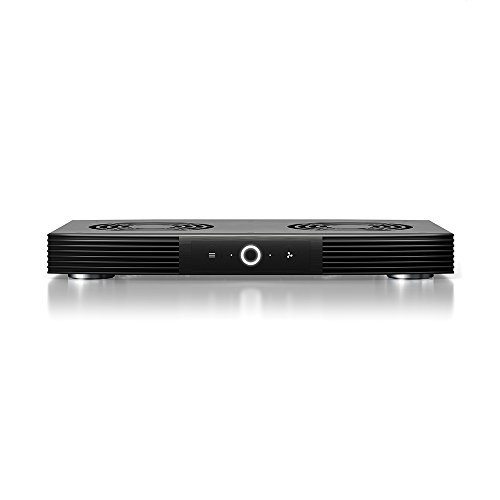
- Active airflow. For an enclosed printer cabinet (the actual reason to use Klipper for ABS/ASA), an AC Infinity AIRCOM S7 or similar quiet exhaust fan pulls chamber heat out, benefiting both the printer's electronics and the host SBC. This is not optional for enclosed printers running hot filaments.
Skipping cooling turns a five-year board into a two-year board. Do it.
Perf-per-dollar across the three tiers
| Setup | Board | Storage upgrade | Enclosure fixes | Total | Suitable workload |
|---|---|---|---|---|---|
| Cheap | Pi Zero W kit | — | Aluminum case ($10) | ~$25 | One printer, no camera |
| Standard | Pi 4 4GB | BX500 SSD + enclosure ($65) | Aluminum case ($10) | ~$140 | One printer, one camera |
| Comfortable | Pi 4 8GB | BX500 SSD + enclosure ($65) | Aluminum case + AC Infinity ($40) | ~$190 | Multiple printers, cameras, AI |
| Overkill | RK3588 board | SSD ($55) | Aluminum case + AC Infinity ($40) | ~$220 | Printer farm + local AI |
The $50 gap between the Pi 4 4GB and Pi 4 8GB is worth it for anyone whose Klipper host might grow — adding a second printer or a spaghetti-detection AI service is a common upgrade and the extra RAM is the thing you can't add later.
Verdict matrix
Buy the Pi 4 8GB if… you want the default recommendation, you might grow to two printers or add AI vision, or you value the community-support base (every Klipper tutorial assumes Pi 4).
Buy a Zero-class board if… you're building a minimal single-printer host with no camera, budget is genuinely the constraint, and you accept that any future upgrade means swapping the board.
Buy an alternative SBC (RK3588-class) if… you want to run local spaghetti-detection AI models alongside Klipper, you need dual gigabit Ethernet, or you're building a printer farm host for 5+ printers.
Common pitfalls
- Cheap USB cables to the printer MCU. Cause dropped serial connections mid-print. Buy a decent cable.
- Underpowered SD cards. The cheapest SD cards are also the slowest, causing slow boots and slow config saves. A Class 10 32GB card is the floor.
- Skipping the SSD migration. SD-card death is the #1 failure mode of hobby Klipper hosts. Do the migration in month one.
- Running Mainsail and Fluidd both. Pick one web UI. Running both is a waste of resources and confuses the WebSocket routing.
- Ignoring host thermals. Klipper's timing gets worse when the CPU throttles. Passive cooling on the SoC helps; active airflow in an enclosure helps more.
Bottom line
For a Klipper host in 2026, the Raspberry Pi 4 8GB paired with a cheap SATA SSD over USB is the pragmatic default and the recommendation for anyone who doesn't have a specific reason to pick something else. The Zero W kit works for the minimum case; alternative RK3588 boards make sense for AI-adjacent workloads. Put the money you save versus overbuying into the SSD upgrade — it's the change that keeps the host running for years.
Related guides
- Raspberry Pi Pico SDK 2.3.0 Ships: What Changed
- CompactFlash as a Win98 Boot Drive: Sizes, Limits, Gotchas
- Ryzen 5 5600G vs Ryzen 7 5700X for a 24/7 LLM Server
- Qwen 3.8 Open Weights: What Fits on a 12GB GPU
Citations and sources
- Klipper — installation documentation
- Raspberry Pi 4 Model B — official product page
- Phoronix — SBC benchmarking coverage
This piece is editorial synthesis based on publicly available information. No independent first-party benchmarking is reported.