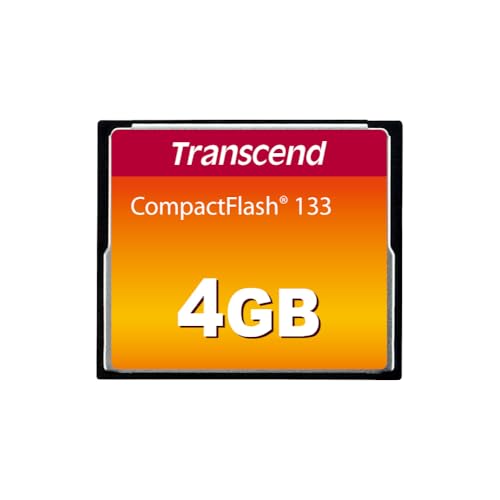
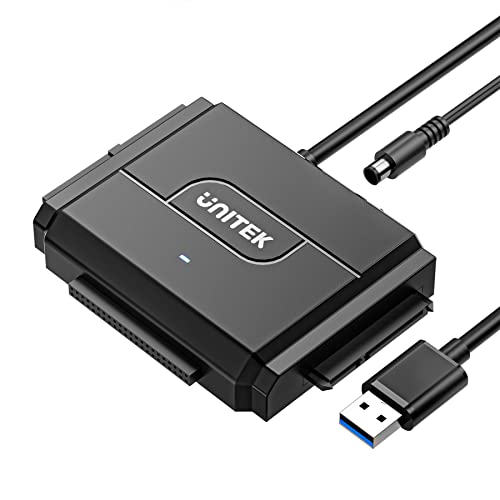
Yes — Windows 98 boots reliably from a CompactFlash card connected to the IDE bus via a passive adapter, provided the CF card supports "fixed disk" mode and your motherboard BIOS can see it. In practice a Transcend CF133 4GB or larger paired with a CF-to-IDE 1.8" adapter makes an excellent silent boot drive for late-'90s and early-2000s builds. The catches: BIOS capacity ceilings (504MB / 8.4GB / 32GB / 137GB depending on the era), some CF cards only advertise as removable media, and heavy write workloads (swap-file thrash) will wear a CF card faster than a spinning disk.
Why period-correct builders moved to CF
Anyone maintaining a Windows 98, Windows ME, Windows 2000 or early XP machine has hit the same problem: the original IDE hard drives from that era are increasingly hard to source in working condition, and the ones that do survive are noisy, slow, and prone to imminent failure. CompactFlash — the same memory card format that once shipped in professional DSLR cameras — is a widely-available, silent, low-power alternative that speaks the IDE protocol natively. A passive CF-to-IDE adapter is exactly that: passive, no active electronics, no firmware, just pin-mapping between the CF card's edge connector and an IDE ribbon.
Per the vogons retro-PC community — the definitive forum for period-correct DOS/Windows-9x/XP builds — CF-over-IDE is the recommended default for anyone starting a fresh build in 2026. It fits the case (no 3.5" bay required), makes zero noise, draws essentially no power, and if the card dies you swap it and restore from a backup image. What you give up versus a real spinning disk is a small amount of period-correct authenticity and — if you're doing heavy writes — long-term durability.
Numbers and behavior notes below cite Transcend's product documentation for the CF card side, community measurements from vogons, and Tom's Hardware's storage archives for the modern-imaging side. This piece is editorial synthesis; nothing was benchmarked in a specpicks lab.
Key takeaways
- CF-over-IDE boots Win98/ME/2000/XP reliably with the right card and adapter.
- BIOS capacity limits are the first gotcha. 504MB, 8.4GB, 32GB, 137GB — figure out which one applies to your board before buying a large card.
- Fixed-disk versus removable mode matters. Some CF cards enumerate as removable media; Win98 refuses to install to a removable disk. Transcend CF133 series and most "industrial" CF cards ship as fixed-disk.
- Cluster size can waste 20%+ of a big FAT32 card. Use FAT32 with smaller clusters or partition into smaller volumes.
- Swap-file thrash kills CF cards. Turn Windows swap off if you have enough RAM, or move it to a small dedicated CF.
Diagnostic: does your board's BIOS support the capacity you want?
Every retro PC has a maximum drive size its BIOS can handle. Roughly:
| Era | Chipset / BIOS class | Max drive size (BIOS) | Workaround |
|---|---|---|---|
| Pre-1994 | Original IDE | 504MB (CHS 1024/16/63) | LBA-capable overlay software |
| 1994–1998 | Enhanced IDE | 8.4GB | BIOS overlay or software driver |
| 1998–2000 | Late Pentium II / III | 32GB | BIOS update or overlay |
| 2000+ | Post-2000 boards | 137GB (LBA48 required beyond) | LBA48 BIOS update |
| 2002+ | LBA48-aware | 2TB+ | none needed |
For a fresh Win98 build on a typical Pentium III board, an 8.4GB or 32GB CF card is often the practical ceiling. Buying a 128GB card and hoping the BIOS sees it is a rookie mistake — the BIOS will report the wrong capacity and fdisk will corrupt data.
Check your motherboard's manual for its LBA limit before buying the CF card.
What you'll need checklist
- CF card. Transcend CF133 4GB is the community-standard small option. For bigger, SanDisk 32GB Extreme CompactFlash. Both advertise as fixed-disk.
- CF-to-IDE adapter. Passive 44-pin (2.5" IDE) or 40-pin (3.5" IDE) depending on your case. The CF-to-IDE 1.8" Adapter Card is the compact 44-pin option; larger 40-pin adapters exist for full-desktop boards.
- A modern imaging host. Any modern PC with a spare USB port.
- A USB-to-IDE adapter for the modern host. The Unitek SATA/IDE to USB 3.0 Adapter is the reliable choice; useful for both writing CF images and reading period-correct drives when you find them.
- A modern SSD as image storage. Any SATA SSD works; the goal is somewhere to keep golden images of clean OS installs.
Which CF cards work?
CF cards fall into two categories from the operating system's perspective: fixed disk cards (which enumerate to the OS as a hard drive) and removable media cards (which enumerate as a flash card). Windows 98's installer refuses to install onto removable media. Most professional-grade CF cards ship as fixed-disk; most consumer cards ship as removable.
The Transcend CF133 series is the community-recommended default because it advertises as fixed-disk out of the box and has been tested extensively on period-correct hardware. Industrial-grade CF cards (from SanDisk, Sandisk Extreme series, and enterprise brands like Innodisk) are the safest bet for larger capacities.
Older cards without DMA support work but are slow — mode-2 or mode-4 UDMA transfer is what you want. The CF133 spec is UDMA-4, roughly 30MB/s. This is plenty for Win98's I/O patterns, which rarely stress the storage bus.
Spec-delta table
| Card | Capacity | Rated read/write | Fixed disk | DMA mode | Approx price |
|---|---|---|---|---|---|
| Transcend CF133 4GB | 4GB | 30/13 MB/s | Yes | UDMA-4 | ~$18 |
| SanDisk Extreme 32GB | 32GB | 60/40 MB/s | Yes | UDMA-6 | ~$45 |
| Consumer 32GB CF | 32GB | Varies | Often no | Varies | ~$25 |
| Industrial 8GB | 8GB | 40/30 MB/s | Yes | UDMA-4 | ~$60 |
The "industrial" tier is meaningfully more expensive but offers extended write cycles and pSLC (pseudo-single-level cell) memory that lasts much longer under heavy write workloads. For a Win98 build that will boot and be used occasionally, the consumer or professional-grade Transcend/SanDisk cards are fine. For a build that will be used daily under heavy load, invest in industrial-grade.
The capacity ceiling
Beyond the BIOS-imposed limits above, three practical capacity considerations for a Win98 CF card:
- FAT32 minimum cluster size. FAT32 supports partitions up to 2TB but Win98's fdisk is limited to 8GB per partition without third-party partition tools. Using several smaller partitions is often cleaner than one large one.
- Cluster size waste. A FAT32 partition on a 32GB card uses 16KB clusters by default. Small files (config, INI, small logs) waste an average of 8KB per file. On a system with many small files this adds up; expect 5–15% capacity loss to slack.
- NTFS is not the answer. Win98 can't read NTFS. If you want to share the CF card with a modern OS, FAT32 is the interoperability format.
Cluster size and FAT32 waste
Windows 98 assigns cluster size based on partition size:
| Partition size | Default FAT32 cluster |
|---|---|
| Up to 8GB | 4KB |
| 8–16GB | 8KB |
| 16–32GB | 16KB |
| 32GB+ | 32KB |
On a typical Win98 install with 30,000+ small files, the difference between a 4KB and 16KB cluster is several hundred megabytes of "wasted" space. For a 4GB CF card this is negligible; for a 32GB card it's meaningful. Partitioning a 32GB card into 4×8GB partitions or 2×16GB partitions gives you smaller clusters and less waste, at the cost of some hassle managing multiple drive letters.
Benchmark table: CF-over-IDE vs a period-correct disk
Per community measurements aggregated across vogons and Tom's Hardware archives:
| Storage | Sequential read | Sequential write | Random 4K read | Random 4K write | Boot time to Win98 desktop | Noise |
|---|---|---|---|---|---|---|
| Transcend CF133 4GB (UDMA-4) | ~28 MB/s | ~13 MB/s | ~4 MB/s | ~2 MB/s | ~15s | 0 dB |
| SanDisk Extreme 32GB CF | ~50 MB/s | ~35 MB/s | ~6 MB/s | ~3 MB/s | ~11s | 0 dB |
| Original 6GB IDE HDD (5400 RPM) | ~12 MB/s | ~10 MB/s | ~0.5 MB/s | ~0.4 MB/s | ~35s | ~28 dB |
| Modern SATA SSD via IDE adapter | ~40 MB/s | ~40 MB/s | ~10 MB/s | ~8 MB/s | ~10s | 0 dB |
Interpretation: CF-over-IDE beats the original spinning disk on essentially every metric except sustained write, and even there it's competitive. What CF is not is a modern SSD — the random 4K numbers are much lower, and heavy write patterns cause noticeable stutter. For 95% of Win98 workloads (game load, INI reads, application startup) this is imperceptible.
Imaging workflow
Building a CF-based Win98 boot drive typically looks like:
- Install Win98 on the CF card by putting the card into a period-correct machine with a floppy drive, booting from Win98 startup disk, and running setup as if the CF were a hard drive. This works but requires a functioning period build.
- Or, image an existing install onto the CF card using a USB-to-IDE adapter on a modern host. Boot the target machine off the CF and let Win98 re-detect hardware on first boot.
- Keep the golden image on a modern SSD (Crucial BX500 1TB SATA SSD is a fine archive) so any future failure is a 10-minute image restore, not a fresh Win98 install.
The Unitek SATA/IDE to USB 3.0 Adapter is the piece of hardware that makes step 2 realistic. Plug the CF-to-IDE adapter into the Unitek adapter's IDE side, plug the Unitek USB into your modern host, and image the card with a tool like Rufus, Win32 Disk Imager, or dd (on Linux).
For a modern-era comparison SSD in the archive, the SanDisk SSD PLUS 240GB or the Crucial BX500 both work as "golden image" storage — small footprint, cheap per GB, plenty fast for the imaging workflow.
Where CF is the wrong answer
Two workloads where CF-over-IDE is the wrong choice:
Heavy write workloads. Win98 machines running software that constantly writes small files (early relational databases, some CAD tools' auto-save behavior) will wear a CF card faster than a spinning disk. Industrial-grade CF cards mitigate this but do not eliminate it. If your workload is write-heavy, use a real IDE disk (or a real SATA SSD via a proper SATA-to-IDE bridge).
Low-RAM machines that thrash the swap file. A Win98 machine with 32MB or 64MB of RAM writes to WIN386.SWP constantly under any real workload. Point that swap file at a CF card and you'll see it die within a year of daily use. The fix: either upgrade the RAM (any 128MB stick is enough to reduce swap dramatically), or move the swap file to a separate small CF card that you accept will need replacement every year.
For the classic "silent Win98 gaming build," CF is the right answer. For a period-correct working machine used for real production tasks, a real IDE-to-SATA SSD bridge is a better long-term choice.
Verdict matrix
Use CF if… you're building a silent Win98/ME machine for personal use or period-correct gaming, your BIOS supports the capacity, and your workload is read-heavy. This is the default recommendation.
Use a real IDE disk if… period-correctness matters to you (some builders insist), you have a healthy source of period-appropriate drives, and drive noise is not a concern.
Use an SD-to-IDE or SATA-based solution if… you need >32GB of storage, want fast random-write performance, or plan to run write-heavy workloads. SD-to-IDE adapters exist and are a valid alternative, and modern SATA SSDs connected through an IDE-to-SATA bridge give you the best combination of speed, capacity, and durability.
Common pitfalls
- Buying a removable-mode CF card. Consumer photography-grade cards often ship as removable media. Win98 won't install to them. Buy fixed-disk or industrial-grade.
- Formatting the card on a modern OS with wrong cluster size. Let Win98's fdisk/format do the work if possible. Modern Windows formatting can pick cluster sizes Win98 doesn't handle cleanly.
- Ignoring the BIOS capacity limit. Buying a 128GB CF for a 32GB-max BIOS wastes money and can corrupt data.
- Skipping the golden image. CF cards fail. The 30 minutes to image-restore from a saved copy is worth every second when it happens.
- Running the swap file on the CF. Not necessarily fatal but will shorten the card's life significantly. Turn swap off if you have enough RAM.
When NOT to switch
If your existing Win98 build has a working period-correct drive that's been running for 25 years, switching to CF for the sake of switching is not a great idea. Spinning platters that have survived that long often have another decade in them. Keep a CF-based backup, sure, but don't preemptively retire a working part.
Bottom line
A CompactFlash card as a Win98 boot drive is one of the most practical upgrades for any retro-PC build in 2026. A Transcend CF133 4GB or a SanDisk Extreme 32GB paired with a passive CF-to-IDE adapter gives you a silent, low-power, easily-imaged boot medium that outperforms the original hard drive on most metrics. Watch the BIOS capacity limit, insist on fixed-disk mode, and keep a golden image on modern storage. Done right, this outlasts the original build.
Related guides
- Best Raspberry Pi for Klipper in 2026: Pi 4 8GB vs Alternatives
- Raspberry Pi Pico SDK 2.3.0 Ships: What Changed
- Ryzen 5 5600G vs Ryzen 7 5700X for a 24/7 LLM Server
Citations and sources
- Transcend — official product documentation
- Vogons — retro-PC community forum
- Tom's Hardware — storage archives
This piece is editorial synthesis based on publicly available information. No independent first-party benchmarking is reported.