Best Black Friday Prebuilt Gaming PCs 2026: RTX 5060 to RX 9070 XT
Five prebuilts from RTX 5060 to RX 9070 XT, ranked by the spec that decides how long each one lasts: VRAM.
By Mike Perry, Founder & Editor-in-Chief · Published 2026-11-09 · Updated 2026-11-12 · 13 min read
Quick Answer
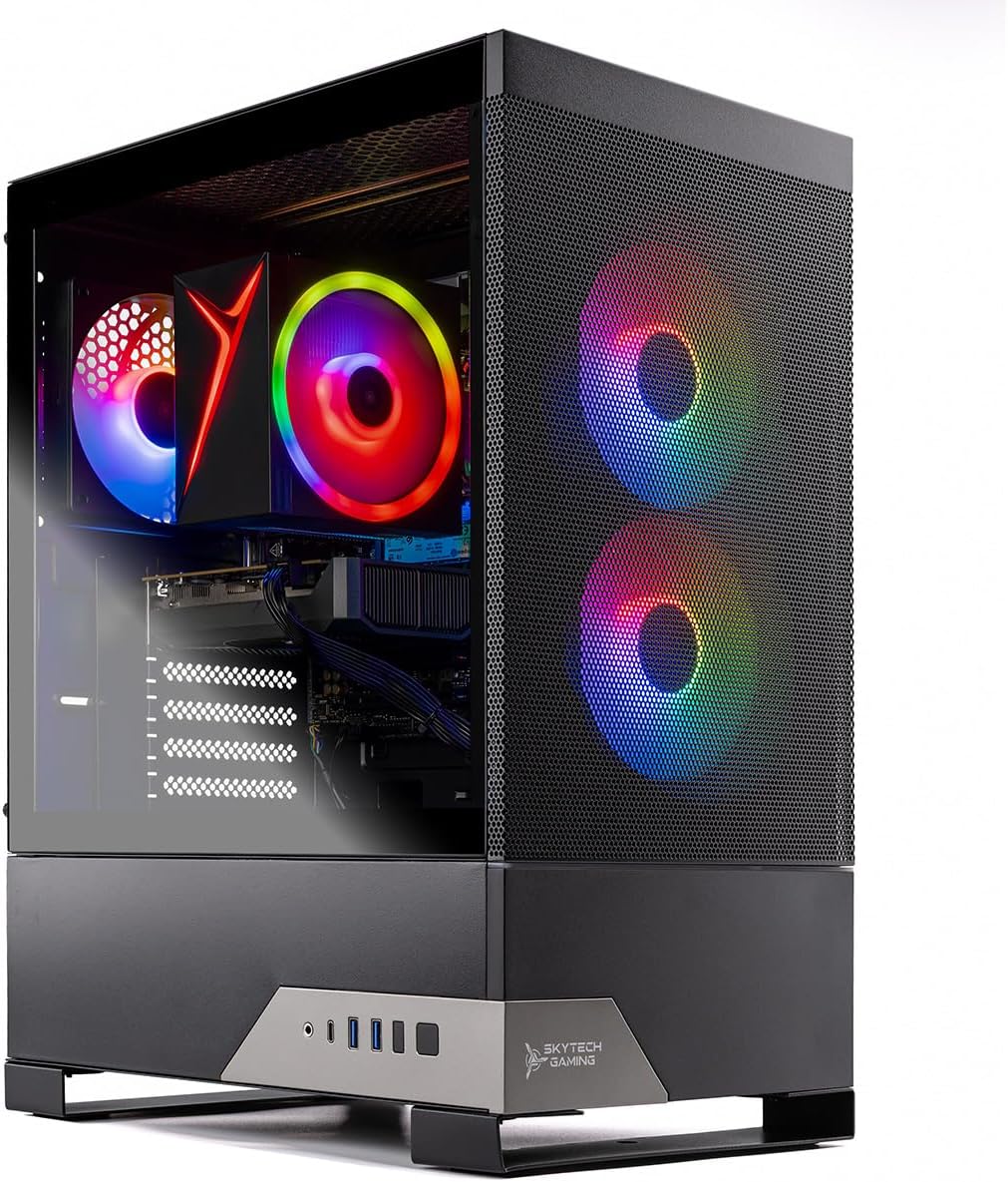
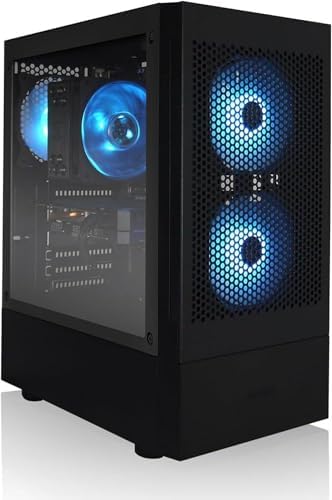
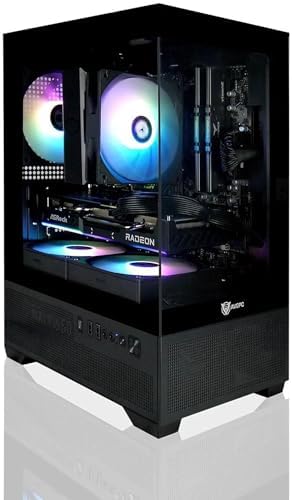
For Black Friday 2026, buy the Skytech Nebula 2 with an RTX 5060 Ti 16GB if you want one prebuilt that holds up at 1440p and runs 8-14B local AI models; its 16GB card launched at $429, only $50 above the 8GB version's $379, per NVIDIA. Step up to the STORMCRAFT Falcon (Ryzen 7 7800X3D + RX 9070 XT) for 1440p-4K. Drop to the Max Gaming PC (Ryzen 5 5600X + RTX 5060) to stay under $1,200.
What changed: we re-checked every pick on November 12, 2026, before Black Friday week, and two of the five this guide first ranked are no longer deals. The Nebula 2 carries the same 16GB card from the same builder as the Skytech Shadow 5, listed well below it: the Shadow 5 with the RTX 5060 Ti 16GB has risen about a quarter since September and now costs far more than the 8GB Shadow 5, though the two cards launched only $50 apart. The Skytech King 95 listing is up about a fifth since September. Both move to the wait list below.
As an Amazon Associate, SpecPicks earns from qualifying purchases. Prices on the buttons below are live and may vary; this guide names price tiers and launch MSRPs, never deal prices.
By Mike Perry · Updated November 12, 2026
Why a prebuilt makes sense this Black Friday
For most of the last decade, the standard advice was to build your own. That advice is weaker in late 2026. Tom's Hardware's best PC builds roundup, updated October 14, 2026, says prices for RAM, graphics cards and storage "have risen significantly over the past several months" and that it had to raise the budget of every build tier to compensate. The same roundup stopped adding RAM to its build totals because memory prices swing so much, and it lists a 32GB DDR5-6000 kit as one of the cheapest around at $479.
System integrators like Skytech, CyberPowerPC and smaller shops buy memory and SSDs in volume and on contract. When component prices spike, their finished PCs often lag the market. A prebuilt with 16GB of DDR5 and a 1TB NVMe drive can end up close to, or below, the cost of the same parts bought one at a time. Run your own numbers against our build-your-own gaming PC guide before you commit.
Step 0: decide what the PC is for
Pick one of three buckets before you look at any deal:
1080p high-refresh esports (Valorant, CS2, Fortnite, Overwatch 2). An 8GB card like the RTX 5060 is enough. CPU single-thread speed and a fast monitor matter more than VRAM.
1440p AAA gaming for 3+ years. Get 16GB of VRAM. New releases with high-resolution textures run into the 8GB limit first at 1440p, and you can't upgrade VRAM later.
Gaming plus local AI (Ollama, LM Studio, Stable Diffusion). 16GB is the floor. VRAM capacity decides which models load at all. On the RTX 5060 Ti 16GB benchmark page, the cited 7-9B model runs at 4-bit (Q4) under Ollama have a median of 71.0 tok/s (as of November 2026). That speed only holds while the model fits in VRAM.
If you are in bucket 2 or 3, skip the 8GB picks below even if the deal looks good.
GPU memory figures come from NVIDIA's RTX 5060 family page and AMD's RX 9070 XT page. They describe the graphics card, not the whole PC. Use each product's live price button for the current price of the complete system.
🏆 Best Overall: Skytech Nebula 2 (Ryzen 7 5700, RTX 5060 Ti 16GB)
The Skytech Nebula 2 (RTX 5060 Ti 16GB) is the one to buy if you don't want to think about VRAM again for three years. It replaces the Skytech Shadow 5 16GB this guide first ranked: same builder, same graphics card, and a listing that sits hundreds of dollars lower on November 12. The RTX 5060 Ti 16GB pairs 16GB of GDDR7 with a 128-bit bus, per NVIDIA. That is enough for 1440p at high texture settings and for local language models up to roughly 14B parameters at 4-bit quantization.
On the AI side, our RTX 5060 Ti 16GB benchmark page puts the card's median generation speed on 7-9B models at 4-bit (Q4) at 71.0 tok/s (as of November 2026), which reads faster than you can follow. The RTX 5060 Ti 8GB page shows 59.0 tok/s for the same class, from a different set of cited runs. The two cards share the same GPU and memory bus, so the gap mostly reflects which runs each page collected. The difference is how big a model, or how heavy a texture pack, you can load before you run out of memory.
The trade-off is the platform. The Ryzen 7 5700 is an 8-core AM4 chip with DDR4, and it runs PCIe 3.0 rather than 4.0, per TechPowerUp's CPU database. The RTX 5060 Ti uses eight PCIe lanes, so on this board it gets half the link bandwidth it would on a newer platform. That costs little while games and models fit in the card's 16GB, and that is the point of buying the 16GB card. It would matter much more on an 8GB card that spills into system memory.
Right when: you play at 1440p, keep a PC four or more years, or want to try local LLMs and image generation.
Not worth it when: you play only esports titles at 1080p. The Storm or the Gamer Xtreme VR gets you the same frame rates there for less. If you want AM5 and DDR5 with the 16GB card, wait for the Shadow 5 16GB (see the wait list).
Pros
16GB VRAM, the realistic 2026 floor for 1440p and local AI
8-core CPU, 650W Gold PSU and a 1TB NVMe SSD, per the listing
Lists well below the Shadow 5 16GB for the same graphics card
Cons
AM4, DDR4 and PCIe 3.0: no CPU upgrade path, and half the GPU link bandwidth of a PCIe 4.0 board
16GB of system RAM; plan on 32GB if you multitask while gaming or run models in system memory
💰 Best Value: Skytech Storm (Ryzen 5, RTX 5060 Ti 8GB)
The Skytech Storm (RTX 5060 Ti 8GB) uses the same GPU die as the Shadow 5 with half the memory. At 1080p, with textures set to high rather than ultra, 8GB still runs most current games well. The small-model AI median on the 8GB card matches the 16GB card, because generation speed on models that fit tracks memory bandwidth, which both cards share.
8GB stops being enough in three situations:
1440p with ultra textures. When a game's textures don't fit, data spills into system RAM over PCIe, and frame times spike long before the average frame rate looks bad.
Local models above about 8B parameters. A 14B model at Q4 needs roughly 9-10GB with context, so it won't load fully on 8GB.
Keeping the PC 4+ years. Game texture budgets only grow.
Right when: you play at 1080p, you're happy with high instead of ultra textures, and you want the RTX 50-series feature set (DLSS 4 frame generation) at a lower tier.
Not worth it when: the live price sits close to the Nebula 2's. In that case pay the difference for 16GB.
The Storm's listing is unchanged since September, and it is still the lowest-priced RTX 5060 Ti system we track.
🎯 Best for 1080p Esports: CyberPowerPC Gamer Xtreme VR (Core i5-13400F, RTX 5060)
The CyberPowerPC Gamer Xtreme VR pairs an Intel Core i5-13400F with an RTX 5060 8GB, 16GB of DDR5 and a 1TB PCIe 4.0 SSD, per its listing. The RTX 5060 has 8GB of GDDR7 on a 128-bit bus, per NVIDIA. That suits competitive shooters at 1080p, where you're chasing 240+ fps and the CPU often limits frame rate before the GPU does.
The reason to pick this over the budget AM4 option below is the platform. The 13400F sits on an LGA1700 board with DDR5. LGA1700 is no longer getting new CPUs either, but DDR5 carries over to whatever you upgrade to next, and the i5-13400F's 10 cores (6P + 4E) handle streaming or Discord in the background.
Right when: you play esports titles, own (or plan to buy) a 1080p 240Hz monitor, and want DDR5 from day one.
Not worth it when: you want to run local LLMs or play 1440p AAA games. 8GB is the limit there.
The STORMCRAFT Falcon is the pick for 1440p at high refresh rates and for playable 4K. It replaces the Skytech King 95, whose listing has climbed about a fifth since September. The Falcon carries the same core parts: a Ryzen 7 7800X3D, an RX 9070 XT, 32GB of DDR5 (6000 MT/s per the listing), a 1TB NVMe drive and an 850W Gold power supply. On November 12 it was the lowest-priced 7800X3D plus RX 9070 XT system we track.
AMD lists the RX 9070 XT with 16GB of GDDR6, 640 GB/s of memory bandwidth and a 304W board power on its RX 9070 XT spec page, and launched it at $599. The Ryzen 7 7800X3D's 3D V-Cache makes it one of the strongest gaming CPUs on AM5.
For local AI, the 9070 XT's bandwidth shows up directly. The 16 published 7-9B runs on our RX 9070 XT benchmark page (12 sources) have a median of about 82 tok/s at the time of writing, ahead of the RTX 5060 Ti tier. The catch is software: ROCm and Vulkan backends in llama.cpp and Ollama work, but CUDA-only tools don't run on AMD. If your AI workflow depends on a CUDA-only project, stay with NVIDIA.
The caveat: STORMCRAFT is a smaller builder, and this listing has no customer reviews yet. Confirm the warranty terms and the power supply brand on the listing before you buy, and stress-test in the first week. Skytech sells the same core parts as the Azure 3, at a higher price.
Right when: you game at 1440p 144Hz+ or 4K, want 32GB of RAM out of the box, and value the 7800X3D's gaming performance.
Not worth it when: you mostly play esports at 1080p. The extra GPU power mostly sits idle there.
🧪 Budget Pick: Max Gaming PC (Ryzen 5 5600X, RTX 5060, 16GB)
The Max Gaming PC is the cheapest of the five at its current tracked price, under $1,200 at the time of writing per its live button. It pairs a Ryzen 5 5600X with an RTX 5060 8GB, 16GB of RAM and a 1TB NVMe drive. The 5600X is a 6-core Zen 3 part. If you are pricing CPUs separately, it also stands alone as a Ryzen 5 5600X.
The caveat is the platform. The 5600X sits on AM4, which has no newer CPU generation to move to, and AM4 uses DDR4. Upgrading the CPU later means a new motherboard and new memory. Treat this as a complete machine you will keep as-is, adding at most a GPU swap.
Right when: you need a working 1080p gaming PC under $1,200 and won't upgrade the CPU.
Not worth it when: the Gamer Xtreme VR's live price is within reach. You get DDR5 and a more modern CPU for a small step up.
The wait list: picks that aren't deals on November 12
Systems don't have a launch MSRP the way graphics cards do, so we judge them two ways: against their own tracked price, and against the gap between the GPUs inside them.
Skytech Shadow 5 (RTX 5060 Ti 16GB). Still a good machine, with an AM5-class Ryzen 7 and DDR5. Its listing has risen about a quarter since September. NVIDIA launched the 16GB card at $429 and the 8GB card at $379, so a fair 16GB Shadow 5 costs about $50 more than the 8GB Shadow 5, not hundreds. Wait for: a live price within roughly that $50 MSRP gap of the 8GB model.
Skytech King 95 (Ryzen 7 7800X3D, RX 9070 XT). Same core parts as the Falcon, with a 360mm liquid cooler. Its listing is up about a fifth since September. Wait for: a price back at its September level or below the Falcon's live price.
Who should wait instead of buying on Black Friday
Black Friday rewards buyers who already know what they need. Skip it, or wait for a later sale, if:
You need 32GB of system RAM and 16GB of VRAM together, below Falcon money. None of the five picks ships with both. The one deal-ready system we track that pairs them is the AVGPC Mini-X with a Radeon RX 9060 XT 16GB (launched at $349, per AMD) and 32GB of DDR4. Its listing describes the CPU inconsistently, so confirm it with the seller before you buy.
The live price is at or above the listing's own price history. Every product page here shows a price-history chart. A prebuilt counts as a deal when it is below its own recent range. A "Black Friday" banner doesn't make it one.
You need more than 16GB of VRAM for local AI. Consumer prebuilts top out at 16GB in this range. Read our Black Friday GPU deals for local LLMs instead.
Use the GPU's launch MSRP, from NVIDIA or AMD, as a sanity check. A prebuilt whose total barely exceeds the GPU's launch price plus a reasonable allowance for the rest of the system is fairly priced. One priced far above that is not a deal, banner or not.
What to look for in a Black Friday prebuilt
VRAM: 8GB vs 16GB
This is the one spec you can't fix later without replacing the GPU. 8GB covers 1080p. 16GB covers 1440p, long-term ownership and local AI. NVIDIA sells the RTX 5060 Ti in both 8GB and 16GB versions, so a listing that just says "RTX 5060 Ti" can hide the cheaper one. Confirm "16GB" appears in the title or spec sheet.
The single-channel RAM trap
"16GB RAM" can mean two 8GB sticks (dual-channel) or one 16GB stick (single-channel). Single-channel memory cuts memory bandwidth in half, and CPU-bound games lose frames. Check the spec sheet or the first photo of the open case for two populated slots. If you find one stick, add a matching second one.
PSU brand and wattage
A good listing names the power supply's wattage and efficiency rating, as the Falcon does (850W Gold). A listing that says only "600W" with no brand leaves you guessing. For an RTX 5060 Ti system, 650W Gold is comfortable. For an RX 9070 XT at 304W board power, 750-850W leaves headroom.
SSD type
"1TB SSD" covers everything from a fast Gen4 NVMe drive with DRAM cache to a DRAM-less budget drive that slows down on large writes. Game load times barely differ. Big game installs and model downloads show the gap. Look for "Gen4 NVMe" at minimum.
Upgrade path
AM5 (Ryzen 7000/9000): the best path. AMD has said the socket will keep getting new CPUs.
LGA1700 (Intel 12th-14th gen): no new CPUs coming, but DDR5 boards carry the memory forward.
AM4 (Ryzen 5000): at the end of its line, with DDR4.
Returns and testing
Amazon's holiday return window usually covers purchases from November 1 and runs into January. Check the specific listing, because third-party sellers can set different terms. In the first week, run a GPU stress test (3DMark or FurMark) and a memory test, and confirm the RAM runs at its rated XMP or EXPO speed in the BIOS. Integrators sometimes ship with XMP off.
Common pitfalls
Buying the 8GB version of a 16GB-capable GPU by accident. Read the full title, not the headline.
Assuming a prebuilt includes a monitor, keyboard or mouse. Most don't. Budget for them.
Ignoring the CPU cooler. A stock cooler on a Ryzen 7 runs hot and loud. Look for a tower air cooler or AIO in the spec sheet.
Trusting "up to" frame-rate claims in listing images. They usually use DLSS frame generation at low settings. Check independent reviews of the GPU instead.
Skipping Windows activation checks. Confirm Windows 11 is activated on first boot.
As an Amazon Associate, SpecPicks earns from qualifying purchases; we also earn on qualifying eBay purchases via the eBay Partner Network. Prices shown were last tracked at crawl time and may vary — check the listing for the current price.
📹 Watch a review
The $1000 King of Price-to-Performance! - AVGPC Max Review — Just!N Tech on YouTube
Frequently asked questions
Is it cheaper to build or buy a gaming PC for Black Friday 2026?
In 2026 it is often closer than usual, or even in the prebuilt's favour. DRAM and SSD prices rose sharply this year, and system integrators buy those parts in volume, so a prebuilt can cost less than the same parts bought one at a time. Compare the prebuilt's live price with the parts-list total on /reviews/build-your-own-gaming-pc-2026 before you decide.
Is 8GB of VRAM enough in a 2026 prebuilt?
At 1080p with medium-to-high textures, 8GB still runs most current games. It is the first limit you hit at 1440p with high-resolution texture packs, and when running local AI models above roughly 8B parameters. If you plan to keep the PC three or more years, or want to experiment with local LLMs, the 16GB RTX 5060 Ti tier is the safer floor.
What should I check in a prebuilt's spec sheet before buying?
Check four things the headline usually leaves out. First, whether the 16GB of RAM is two sticks (dual-channel) or one. Second, the PSU's brand and wattage. Third, whether the SSD is a DRAM-less budget drive. Fourth, the motherboard chipset, which decides your CPU upgrade path. An AM4 board like the one in the Ryzen 5 5600X pick has no newer CPU generation to move to.
Can I return a Black Friday prebuilt if it arrives with problems?
Amazon's extended holiday return window applies to most items bought from November 1, and it usually runs into January. Check the window on the specific listing, because third-party sellers can set different terms. Test the PC within the first week: run a GPU stress test and a memory test, and confirm the RAM is running at its rated XMP or EXPO speed.
Who should skip Black Friday and wait?
Skip it if you need more than 16GB of VRAM for local AI work, if you want 32GB of system RAM and your target model ships with 16GB, or if the live price sits at or above the price history shown on the product page. A prebuilt only counts as a deal when the price is below its own recent range. A banner saying 'Black Friday' doesn't make it one.