Best Black Friday GPU Deals for Local LLMs in 2026: 12GB vs 16GB
Five GPUs worth watching on Black Friday 2026 for local LLMs, picked by VRAM tier and sourced gpt-oss 20B speed, not by discount badge.
By Mike Perry, Founder & Editor-in-Chief · Published 2026-11-08 · Updated 2026-11-08 · 11 min read
Quick Answer
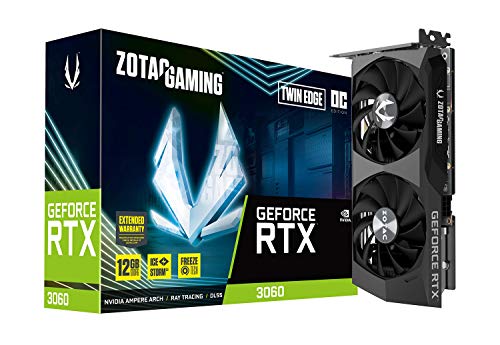
The best Black Friday GPU deal for running local LLMs is a 16GB card: the GIGABYTE RTX 4070 Ti Super Eagle OC 16G is best overall at 128.9 tok/s on gpt-oss 20B, per Hardware Corner. The ASUS Dual RTX 5060 Ti 16GB is best value (16GB GDDR7, 92.1 tok/s per Hardware Corner). The ZOTAC RTX 3060 Twin Edge 12GB is the budget pick.
Hardware at a Glance
Median generation throughput at 7–9B models (Llama 3.1 8B, Qwen 3 8B), Q4 quantization, from community-reported runs SpecPicks tracks. Each row pools runs from different sources, runtimes and models in that class, so the rows are not a matched head-to-head; where the article compares cards on the same rig, its own figures are the like-for-like result. Street price is the second-lowest listing priced within the last 24 hours at 0.5–2× launch MSRP, so no single listing sets it, and a street figure well above MSRP says so in its cell; where too few listings pass that check the cell shows a dash and the launch MSRP, which is not comparable with the street figures.
As an Amazon Associate, SpecPicks earns from qualifying purchases. Prices shown by the live price buttons may vary.
Step 0: diagnose before you shop
Black Friday and Cyber Monday fall on November 27 and November 30 in 2026, and GPU listings will be loud with percentage-off badges. None of them tell you whether a card runs the models you care about. So before price, answer one question: which model size do you actually run?
7-9B models (Llama 3.1 8B, Qwen3 8B, Gemma-class small models): any 12GB card runs these fully in VRAM with room for context. The budget pick is enough.
20B-class models (gpt-oss 20B, mixture-of-experts models with a few billion active parameters): the gpt-oss-20b model card sizes the model to run within 16GB of memory. A 16GB card holds it fully, with long context. A 12GB card runs it with short context or partial offload.
70B and up: no single consumer card on this list is the answer; look at multi-GPU or unified-memory machines.
Your answer sets the VRAM tier. Inside a tier, memory bandwidth sets the speed, and only then does the discount matter. Most readers who run local models in 2026 land in the 16GB tier, and that is where the best overall pick sits: a card that runs gpt-oss 20B at nearly 130 tokens per second and keeps more than half that speed at 64K context.
Comparison table
Launch MSRP only. The live price buttons on each pick show the current price.
💰 Best Value: ASUS Dual GeForce RTX 5060 Ti 16GB OC
Verdict: The cheapest CUDA card that holds gpt-oss 20B with its full 128K context in VRAM.
Spec chips: 16GB GDDR7 · 128-bit · 448 GB/s · 180 W board power · CUDA
The ASUS Dual GeForce RTX 5060 Ti 16GB OC runs gpt-oss 20B at 92.1 tok/s at MXFP4 and 4K context, per Hardware Corner's RTX 5060 Ti 16GB page, which also reports the full 128K context fits in VRAM at 43.8 tok/s. GDDR7 gives it more bandwidth than the older RTX 4060 Ti 16GB, and that shows up directly in token generation.
Pros
16GB at the lowest NVIDIA launch price in the tier.
180 W board power suits compact builds and modest PSUs.
Strong base for a later second card if you want 32GB across two GPUs.
Cons
Prefill (3,585 tok/s at 4K per Hardware Corner) is well behind the RTX 4070 Ti Super.
An 8GB RTX 5060 Ti shares the name; confirm "16GB" on the listing.
🎯 Best for AMD/ROCm Builders: GIGABYTE Radeon RX 9060 XT Gaming OC 16G
Verdict: Most gpt-oss 20B tok/s per launch-MSRP dollar, if your tools support AMD.
Spec chips: 16GB GDDR6 · 128-bit · 320 GB/s · 160 W board power · ROCm / Vulkan
The GIGABYTE Radeon RX 9060 XT Gaming OC 16G posted 105.8 tok/s generation on gpt-oss 20B with llama.cpp's Vulkan backend, and 92.8 tok/s on the HIP/ROCm backend, in the llama.cpp performance discussion #15021. That is a single community result using llama-bench's short tg128 test, so treat it as indicative rather than a controlled comparison against the NVIDIA numbers above.
Pros
At its $349 launch MSRP, the cited result works out to about 30 tok/s per $100, the best ratio on this list.
160 W board power, the lowest here.
Vulkan backend in llama.cpp and LM Studio needs no ROCm install.
Cons
vLLM, ExLlamaV2 and most fine-tuning tools assume CUDA.
Only one cited gpt-oss source, and no published long-context sweep.
What to look for in a Black Friday GPU for local LLMs
VRAM tier vs model size
VRAM decides what runs; everything else decides how fast. Match the tier to the Step 0 diagnosis above. Buying a faster 12GB card for 20B-class models gets you less than buying a slower 16GB card, because the 16GB card keeps the whole model and its context in VRAM.
Memory bandwidth
Token generation on local models is mostly a memory-read problem. In Hardware Corner's gpt-oss 20B results, the ordering of the NVIDIA cards follows bandwidth: 448 GB/s for the RTX 5060 Ti 16GB, 672 GB/s for the RTX 4070 Ti Super and 716.8 GB/s for the RTX 4080 line up with 92.1, 128.9 and 136.5 tok/s at 4K context. When two cards share a VRAM tier, compare bandwidth first.
8GB vs 16GB name collisions
The RTX 5060 Ti and RX 9060 XT each ship in 8GB and 16GB versions, and the RTX 3060 has an 8GB variant. Deal listings often lead with the chip name and bury the memory size. Read the full product title and spec table before you check out.
CUDA vs ROCm support
NVIDIA cards run every major local-inference runtime on CUDA. AMD's RDNA 4 cards work well in llama.cpp (Vulkan or HIP backends, per discussion #15021), but support in vLLM and training tools is narrower. If your workflow names a specific tool, check its AMD support page first.
PSU headroom
Rated board power runs from 160 W (RX 9060 XT) to 320 W (RTX 4080) on this list, per TechPowerUp. Check the card maker's recommended system power figure against your PSU's wattage and connectors; the RTX 4080 uses a 16-pin connector and TechPowerUp lists a suggested 700 W PSU for it.
Return window
Amazon's standard return window applies to most GPUs sold and shipped by Amazon, and holiday purchases can carry an extended return-by date. The exact date is shown in your order details; check it rather than assuming. Run a real inference load in the first days after delivery so any defect shows up well inside the window.
Common pitfalls on deal days
Chasing the percentage badge. A large "off" figure is calculated against the listing's own reference price, which may sit above launch MSRP. Compare against the launch MSRPs in the table above instead.
Buying a fast 8GB card for LLMs. An 8GB card at a great price still cannot hold gpt-oss 20B. VRAM tier comes first.
Ignoring the case and PSU. The RTX 4070 Ti Super and RTX 4080 are triple-fan cards with higher board power than the entry picks. Check card length against your case and connectors against your PSU before checkout.
Comparing benchmark numbers across runtimes. Ollama, llama.cpp CUDA, llama.cpp Vulkan and HIP report different results on the same card. The RX 9060 XT alone moves about 14% between Vulkan and HIP in the cited thread.
Mixing up sellers. Third-party marketplace listings can carry different return terms and warranty paths from items sold by Amazon. Check who ships and sells the card.
Who should wait
Black Friday is a good time to buy if the card you want drops below its launch MSRP and below its own 60-90-day price range. It is not automatically a good time. Wait if:
The card you want is still at or above launch MSRP during the sale, which means the "deal" is a list-price markdown.
You are on a 12GB card, mostly run 7-9B models, and have no specific 20B workload yet. Your current card already covers that tier.
You need more than 16GB. None of these cards changes that, and the answer is a different class of machine.
The live price buttons on this page show today's price. Compare them against the launch MSRPs in the table above before you decide.
Three worked examples
The 8B chat user. You run Llama 3.1 8B or Qwen3 8B in LM Studio for writing help and coding questions, with prompts under a few thousand tokens. The RTX 3060 12GB's median of 59.5 tok/s across 41 published 7-9B runs is several times faster than reading speed. Buy the budget pick only if it drops meaningfully below its usual range; otherwise the card you have may already be enough.
The gpt-oss 20B daily driver. You want gpt-oss 20B as your main local assistant, with long chat histories and pasted documents. That workload needs 16GB. The RTX 5060 Ti 16GB holds the full 128K context in VRAM and still generates 58.1 tok/s at 64K per Hardware Corner. The RTX 4070 Ti Super is the upgrade if you paste long inputs often, since its 4K-context prefill is about 57% faster.
The AMD-first tinkerer. You already use llama.cpp directly, you run Linux, and you do not need vLLM. The RX 9060 XT 16GB gives the best tok/s per launch-MSRP dollar on this list, provided its single cited result holds on your setup. Try both the Vulkan and HIP backends; the cited thread shows about a 14% generation gap between them on the same card.
As an Amazon Associate, SpecPicks earns from qualifying purchases; we also earn on qualifying eBay purchases via the eBay Partner Network. Prices shown were last tracked at crawl time and may vary — check the listing for the current price.
📹 Watch a review
NVIDIA GeForce RTX 4070 Ti Super GPU Review & Benchmarks: Power Efficiency & Gaming — Gamers Nexus on YouTube
Frequently asked questions
Is 12GB of VRAM enough for local LLMs in 2026?
For 7-9B models, yes. The RTX 3060 12GB posts a median of 59.5 tok/s across 41 published runs in that class, per the SpecPicks RTX 3060 12GB benchmark page. For 20B-class models like gpt-oss 20B with long context, or 27-32B models at 4-bit, 16GB gives meaningfully more room before you have to shorten context or offload layers to system RAM.
Should I buy an NVIDIA or AMD card for local inference?
NVIDIA cards run every major runtime (llama.cpp, Ollama, vLLM, ExLlamaV2) on CUDA without extra setup. The RX 9060 XT 16GB posts competitive gpt-oss 20B numbers in the llama.cpp ROCm discussion, but ROCm and Vulkan support varies by runtime. Check that your preferred tool supports AMD before you buy.
How can I tell a real Black Friday GPU discount?
Compare the sale price against the card's own 60-90-day price range, not only its launch MSRP, because a card that already sits under MSRP will always look discounted. Check the live price button on this page, and confirm the listing is the exact VRAM variant you want, since several cards ship in 8GB and 16GB versions under nearly identical names.
What power supply do these cards need?
Start from each card maker's recommended system power and check your PSU's connectors as well as its wattage. Rated board power on this list runs from 160 W for the RX 9060 XT to 320 W for the RTX 4080, per TechPowerUp, which also lists a suggested 700 W PSU for the RTX 4080. Cards with a 16-pin connector need a native cable or the bundled adapter.
What is the return window on a Black Friday GPU purchase?
Most GPUs sold and shipped by Amazon fall under its standard return policy, and holiday-season purchases can carry an extended return-by date. The exact date appears in your order details, so check it there rather than assuming. Third-party sellers can set different terms. Run a real inference load soon after the card arrives so any defect shows up well inside the window.