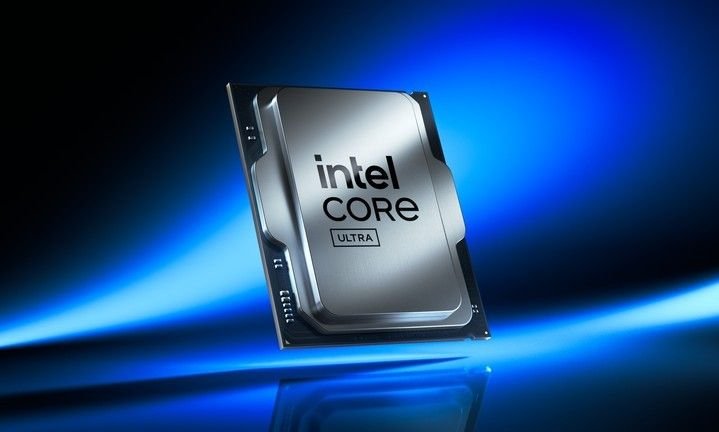
In brief — 2026-07-10 · Intel is reportedly adding two 22-core Nova Lake-S SKUs with extra last-level cache targeted at gaming, per coverage aggregated by Tom's Hardware. The extra cache mirrors the pattern AMD established with its X3D lineup — a direct answer to the cache-for-gaming playbook that AMD has ridden through Zen 4 and Zen 5.
Intel's rumored 22-core Nova Lake-S SKUs pair a large hybrid core count with additional last-level cache designed to lift 1% lows and average frame rates in modern engines. Per aggregation from Tom's Hardware and Intel's own Core processor page, it's the clearest sign yet Intel is treating gaming cache as a first-class product tier, not a footnote — the same category AMD X3D chips occupy today. For buyers looking at AM4 and AM5 today, that shifts the "wait or buy" question meaningfully.
What happened
Reports circulating in mid-2026 describe two Nova Lake-S SKUs at the top of Intel's next-generation desktop stack. Both carry 22 hybrid cores — the P-core / E-core split hasn't been fully confirmed in public reporting — and both ship with additional last-level cache aimed specifically at gaming. Coverage aggregated by Tom's Hardware describes the cache pool as sitting above the tier a standard Nova Lake-S SKU carries. Intel has not confirmed the SKUs directly on its Core processor product page as of writing.
For context: modern gaming performance is bottlenecked by memory subsystem latency far more often than by core count. AMD's Ryzen X3D chips (5800X3D, 7800X3D, 9800X3D) exploit that by stacking additional L3 cache directly on the CCD. Games love it — 1% lows in engine-heavy titles regularly improve 10–15% vs the non-X3D SKU at the same tier. Per AMD's own Ryzen product line, X3D has become the halo product for the gaming market. Intel adding a "gaming cache" SKU tier is the market saying that pattern works.
Why it matters
Two implications for anyone building or upgrading today.
For AM4 upgraders. If you own an AM4 board and a AMD Ryzen 7 5800X or Ryzen 7 5700X, the Nova Lake-S launch does not directly threaten your platform — you don't compare a next-gen Intel chip against your AM4 upgrade path. What it does affect is used-market pricing: if a lot of buyers jump to Nova Lake in H2 2026, the used AM5 and Zen 5 supply increases and X3D chip prices soften. The 5800X3D drop-in upgrade for AM4 owners has been the community's favorite move for two years; Nova Lake headlines don't change that.
For AM5 buyers. The AM5 platform's story has been "buy in, ride Zen 5 and Zen 6 without a new board." Nova Lake-S is Intel's counterargument. Whether it changes your calculus depends on whether the reported Nova Lake platform (chipset, DDR5 speeds, PCIe generation) is a real forward path. Intel's LGA sockets have historically been shorter-lived than AMD's, but Nova Lake is speculated to open a longer platform — worth watching the confirmed specs.
For "buy now vs wait" hobbyists. The best rule remains: buy the chip that fits your workload today. If you're building around a Ryzen 7 5800X or Ryzen 7 5700X, you're getting a mature Zen 3 platform, cheap AM4 boards, and a compatible upgrade path to a 5800X3D whenever prices drop. Waiting six months for Nova Lake benchmarks is fine if you can. Waiting a year and a half for supply, driver, and BIOS maturity is not fine if you actually want to game.
The cache-for-gaming pattern, briefly
L3 cache reduces memory-latency stalls during heavy asset streaming, level loads, and physics-heavy game frames. In practical terms:
| Scenario | Non-X3D chip | X3D chip |
|---|---|---|
| Average FPS at 1080p ultra | baseline | +5–8% |
| 1% low FPS | baseline | +10–20% |
| Frame time consistency | baseline | tighter |
| Multi-threaded productivity (Cinebench, Handbrake) | baseline | flat or slight regression |
That last row explains why X3D chips are gaming halos, not productivity halos. Adding cache doesn't help encode workloads. Intel's reported Nova Lake gaming SKU will likely follow the same pattern: gaming wins, productivity flat.
What to buy right now
For a buyer today who wants an AM4 platform:
- AMD Ryzen 7 5800X. 8C/16T, mature, cheap AM4 boards, drop-in upgrade to 5800X3D. Fine for gaming with a modern GPU like the MSI RTX 3060 12GB.
- AMD Ryzen 7 5700X. Same architecture, 65 W TDP instead of 105 W. Runs cooler on modest cooling, small performance concession vs the 5800X.
- A quality NVMe like the Samsung 970 EVO Plus 250GB for the boot drive and enough storage headroom for game installs.
If you're set on AM5, wait for Nova Lake reviews before committing to the top-tier Intel or Zen 5 X3D chip — the market usually adjusts in the weeks after a big launch.
Comparison table: current gaming-cache landscape
| Chip | Cores | Cache tier | Platform | Approx price | Notes |
|---|---|---|---|---|---|
| AMD Ryzen 7 5800X | 8C/16T | 32 MB L3 | AM4 | ~$220 | mature platform |
| AMD Ryzen 7 5700X | 8C/16T | 32 MB L3 | AM4 | ~$225 | cool-running Zen 3 |
| AMD Ryzen 7 5800X3D | 8C/16T | 96 MB L3 (V-Cache) | AM4 | ~$300 | AM4 gaming halo |
| AMD Ryzen 7 7800X3D | 8C/16T | 96 MB L3 (V-Cache) | AM5 | ~$400 | current AM5 gaming king |
| AMD Ryzen 7 9800X3D | 8C/16T | 96 MB L3 (V-Cache) | AM5 | ~$480 | Zen 5 X3D |
| Intel Nova Lake-S (rumored 22-core) | 22 hybrid | added LLC (reported) | LGA-next | TBD | H2 2026 window |
What "gaming cache" actually does inside the frame
To make the cache-for-gaming pitch concrete: a modern engine (Unreal 5, RE Engine, Frostbite, Snowdrop) frequently issues small draw calls that touch dozens of megabytes of scene data — mesh transforms, material lookups, culling structures, animation blends. Every one of those touches either hits cache (fast) or main memory (slow). Cache misses at 1080p on a well-cooled CPU are the single biggest contributor to jitter and 1% low drops.
A wider LLC lets more of the working set stay resident. That's why AMD's 96 MB L3 X3D chips deliver such a felt-different smoothness in engines that don't like DDR5's raw bandwidth story — bandwidth doesn't fix cache misses; capacity does. Intel's rumored Nova Lake gaming SKUs are chasing the same lever: reduce main-memory traffic during frame render, catch the tail-latency stalls that show up as microstutter.
Practical implication for buyers: cache-for-gaming SKUs help most at the settings where frame time consistency matters more than average FPS — competitive 1080p, high-refresh 1440p, VR. At 4K ultra where the GPU is the bottleneck, the cache-tier upgrade is often invisible.
The AM4 upgrader's checklist for late 2026
If you're on AM4 and reading Nova Lake headlines wondering what to do:
- Boot your board's current BIOS. Some B450 / X470 boards need a BIOS update to accept a 5000-series chip.
- Pick your target chip. The Ryzen 7 5800X is the "no compromise" 8-core pick; the Ryzen 7 5700X is the cooler-and-cheaper sibling; the 5800X3D is the drop-in gaming halo when you can find it under $300.
- Update BIOS to the latest AGESA release. Zen 3 + 3D V-Cache had ~4 quarters of maturation; the current firmware is stable.
- Reseat cooler with fresh thermal paste. If your existing cooler is 3+ years old, replace the paste (not the cooler) at minimum.
- Enable Precision Boost Overdrive with Curve Optimizer if you want the last 3–5% for free. Only after you've validated stock stability.
- Match RAM to the memory QVL. DDR4-3600 CL16–18 is the AM4 sweet spot; buy dual-rank if you can.
- Storage. Add or keep a Samsung 970 EVO Plus 250GB NVMe for OS, Crucial BX500 1TB or similar for library.
Common pitfalls upgrading around a launch cycle
- Buying a platform on rumor. A rumored chip is not a shipping chip. BIOS, driver, and RAM compatibility mature over months. Buy chips at their steady state, not their launch day.
- Assuming cache alone wins. X3D chips help gaming; they don't fix a GPU bottleneck. If you're paired with a MSI RTX 3060 12GB at 1080p ultra, the GPU is more likely your ceiling.
- Skipping RAM speed with X3D. Zen 4 X3D chips are especially sensitive to memory timing. Buy the RAM the memory-QVL says works.
- Under-cooling. Even at 65 W TDP the 5700X can spike briefly on boost; even a modest Noctua NH-U12S is enough, but stock coolers are marginal.
The source
Coverage on the Nova Lake-S SKUs is aggregated via Tom's Hardware CPU section, with primary product identification via Intel's Core processor page. AMD's own Ryzen desktop lineup is the direct competitive comparison for cache-for-gaming SKUs.
Worked example: 5800X on a B550 board today
Take a concrete build: 32 GB DDR4-3600 dual-rank, a B550 board with a recent BIOS, a Ryzen 7 5800X, a Noctua NH-U12S cooler, a MSI RTX 3060 12GB, a Samsung 970 EVO Plus 250GB system NVMe, and a Crucial BX500 1TB library drive. This machine turns in strong 1080p ultra results in every current AAA and every competitive title, sits in the ~$1,000 total range today, and will keep gaming happily through Nova Lake's launch cycle without touching a single component. The Nova Lake headline doesn't invalidate this build; it's the same build.
If a year later Intel's rumored gaming-cache SKU actually delivers, this system's owner can decide whether the delta is worth a full platform hop. In the meantime it plays games at settings that look great on a modern monitor, and the ownership cost is a fraction of a Nova Lake platform swap. The rational hobbyist strategy remains: buy for now, upgrade when there's a concrete win on the review benches you actually trust. Nova Lake is a headline until we can see 1% lows in Cyberpunk 2077 and Baldur's Gate 3 that hold up across independent reviewers, not just Intel's own slides. Wait for that data or buy the 5800X today and enjoy the games you already own.
Verdict for the "should I upgrade?" question
- AM4 owner, currently on a Ryzen 5 3600 or older. Yes, upgrade — the Ryzen 7 5800X is a meaningful step up and AM4 boards are cheap.
- AM4 owner on a Ryzen 5000 already. No move required based on Nova Lake news; consider the 5800X3D if gaming 1% lows bother you.
- AM5 owner on Zen 4 non-X3D. Wait; Nova Lake reviews are worth reading before spending on Zen 5 X3D.
- Fresh build with no platform loyalty. Wait for Nova Lake reviews if you have the time, or buy AM4 today for the best-value working system.
Bottom line
Intel adding a gaming-cache SKU tier is validation of the strategy AMD X3D chips have owned for two generations. It doesn't obsolete AM4 or AM5 today; it does mean the H2 2026 launch calendar will get louder about "which cache" a given chip carries. If you're a buyer today, the practical move is unchanged: build on AM4 with a Ryzen 7 5800X or Ryzen 7 5700X plus a MSI RTX 3060 12GB and a Samsung 970 EVO Plus 250GB for a system that runs everything at 1080p ultra without asking questions.
Related guides
- Air vs AIO for the Ryzen 7 5800X: is the Noctua NH-U12S enough?
- Best budget SSD for a gaming PC in 2026: BX500 vs 970 EVO Plus
- RTX 3060 12GB vs Intel Arc B580 for 1080p gaming: FPS per dollar (2026)
Citations and sources
- Tom's Hardware — PC components / CPU coverage
- Intel — Core processor lineup product page
- AMD — Ryzen desktop processor lineup
This piece is editorial synthesis based on publicly available information. No independent first-party benchmarking is reported.


