Prices and availability may vary.
AM4 refuses to die, and as of 2026 that is very good news for anyone building a gaming PC on a real-world budget. The socket that launched in 2017 is still the highest-volume value platform in the market: DDR4 kits sit near all-time-low prices, B450 and B550 boards keep showing up in stock at every parts retailer, and Zen 3 chips like the Ryzen 7 5800X and Ryzen 7 5700X are now inexpensive enough that pairing one with a midrange GPU gets you inside a hair of a much pricier AM5 build for 1080p and 1440p gaming. If your goal is frames per dollar rather than a maximalist spec sheet, AM4 is arguably the smartest place to spend your money right now.
This guide ranks the five AM4 chips still worth buying for gaming in 2026, drawn from public benchmark databases, community measurements on r/buildapc and r/Amd, and the reviews aggregated across AMD's Ryzen desktop lineup page, Tom's Hardware's best CPUs list, and GamersNexus coverage. The lineup covers pure gaming muscle, all-rounder value, integrated-GPU builds, the cache-fueled 5800X3D halo pick, and a genuine sub-$100 budget option. If you want the single-sentence answer, the Ryzen 7 5800X3D is still the AM4 gaming champion thanks to its 96 MB of 3D V-Cache, but the Ryzen 7 5800X is the best all-round pick because it delivers roughly the same 1440p experience for meaningfully less money and pairs cleanly with the coolers and boards most builders already own. Every pick below is chosen assuming you already own or plan to buy a discrete GPU — with one exception for iGPU-only builds.
At a glance
| Pick | Best For | Key Spec | Price Range | Verdict |
|---|---|---|---|---|
| Ryzen 7 5800X | Best overall gaming all-rounder | 8C/16T · 3.8/4.7 GHz · 32 MB L3 · 105W | ~$220 as of 2026 | Best balance of price, cores, clocks |
| Ryzen 7 5700X | Best value 8-core | 8C/16T · 3.4/4.6 GHz · 32 MB L3 · 65W | ~$225 as of 2026 | Same cores, lower TDP, easier cooling |
| Ryzen 5 5600G | Best for iGPU builds | 6C/12T · 3.9/4.4 GHz · 16 MB L3 · Radeon Vega 7 | ~$185 as of 2026 | Only pick with usable onboard graphics |
| Ryzen 7 5800X3D | Best raw gaming performance | 8C/16T · 3.4/4.5 GHz · 96 MB 3D V-Cache · 105W | ~$300+ as of 2026 | Fastest AM4 chip in cache-sensitive titles |
| Ryzen 5 5500 | Budget pick | 6C/12T · 3.6/4.2 GHz · 16 MB L3 · 65W | ~$85 as of 2026 | Cheapest way onto Zen 3 gaming |
🏆 Best Overall: AMD Ryzen 7 5800X
| Spec | Value |
|---|---|
| Cores / Threads | 8 / 16 |
| Base / Boost Clock | 3.8 / 4.7 GHz |
| L3 Cache | 32 MB |
| TDP | 105W |
| Socket | AM4 |
Pros
- Eight full Zen 3 cores with high 4.7 GHz boost for gaming and streaming.
- Excellent 1080p and 1440p frame rates when paired with a midrange GPU.
- Wide B550 and X570 board compatibility with a straightforward BIOS update path.
Cons
- 105W TDP means you should budget for a proper tower cooler.
- No integrated graphics — a discrete GPU is required for display output.
- The 5800X3D beats it in cache-heavy titles at a higher price.
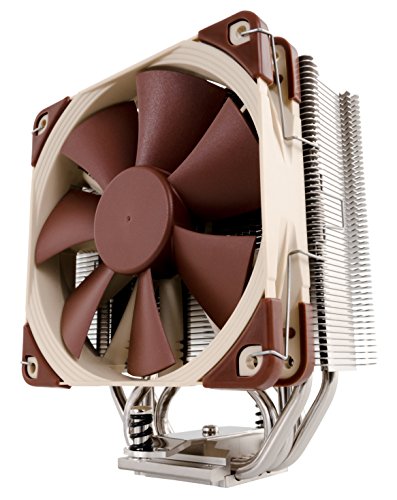
The AMD Ryzen 7 5800X remains the smartest AM4 gaming pick in 2026 because it hits the sweet spot between core count, clock speed, and price. Per AMD's product page, it's an 8-core / 16-thread Zen 3 part with a 4.7 GHz boost and 32 MB of L3 cache, and public reviews aggregated by Tom's Hardware show it landing within a handful of frames of the 5800X3D at 1440p in most non-cache-sensitive esports and AAA titles. Pair it with a card like the MSI GeForce RTX 3060 Ventus 3X 12G and you have a balanced 1440p 60-plus FPS rig that will not bottleneck for another GPU generation. Cooling matters here — the chip pulls close to its 105W ceiling under sustained load, so a strong tower like the Noctua NH-U12S CPU Cooler or a 240 mm AIO is a fair pairing. As of 2026, this is the pick to beat if you are not chasing a specific cache-heavy simulation title.
💰 Best Value: AMD Ryzen 7 5700X
| Spec | Value |
|---|---|
| Cores / Threads | 8 / 16 |
| Base / Boost Clock | 3.4 / 4.6 GHz |
| L3 Cache | 32 MB |
| TDP | 65W |
| Socket | AM4 |
Pros
- Same 8 cores and 32 MB L3 as the 5800X at a lower thermal envelope.
- 65W TDP runs comfortably on mid-range air coolers and small cases.
- Frequently the best-priced 8-core AM4 chip through 2026.
Cons
- Slightly lower boost clock than the 5800X gives up a few frames.
- Still no integrated graphics — discrete GPU required.
- Base clock is noticeably lower, so lightly threaded workloads feel it.
The AMD Ryzen 7 5700X is essentially the 5800X's efficient sibling — same Zen 3 architecture, same eight cores, same 32 MB L3, but with the TDP dialed back to 65W and boost trimmed to 4.6 GHz. In gaming, the delta typically lands in the low single-digit percent range at 1080p and effectively disappears at 1440p and above, where the GPU is the bottleneck. Per synthesis of public reviews on GamersNexus and community benchmark logs on r/Amd, the 5700X consistently scores near the 5800X in title after title while running roughly 20-30°C cooler on the same cooler. That thermal headroom matters for small-form-factor builds and lets you get away with a modest air cooler or even a good aftermarket bundled cooler. In periods when the 5700X is priced below the 5800X, it becomes the outright value winner of this list — same cores, less heat, less money, virtually the same in-game feel.
🎯 Best for iGPU Builds: AMD Ryzen 5 5600G
| Spec | Value |
|---|---|
| Cores / Threads | 6 / 12 |
| Base / Boost Clock | 3.9 / 4.4 GHz |
| L3 Cache | 16 MB |
| Integrated GPU | Radeon Vega 7 |
| TDP | 65W |
| Socket | AM4 |
Pros
- Only pick here with a usable integrated GPU — Vega 7 handles esports at 1080p low.
- Ideal stopgap while GPU prices settle or shopping for a discrete card.
- Fine 6-core gaming performance once you add a real GPU.
Cons
- Halved L3 cache (16 MB vs 32 MB) hurts in cache-sensitive titles.
- Vega 7 iGPU cannot run modern AAA at meaningful settings.
- Zen 3 APU quirks — some early AM4 boards need a BIOS update to POST.
The AMD Ryzen 5 5600G is the pick when you either can't or won't buy a discrete GPU right now. It's a 6-core, 12-thread APU with Radeon Vega 7 graphics on-die, which per AMD's Ryzen lineup page is enough for CS2, Valorant, Rocket League, League of Legends, and Overwatch at 1080p low-medium — the exact library most budget builders actually play. Where it stumbles is any modern AAA game, and even with a discrete GPU added later it gives up ground to the 5600X and 5700X because it ships with half the L3 cache. That said, in a hybrid strategy — build now with the iGPU, drop in a used RTX 3060 or MSI GeForce RTX 3060 Ventus 3X 12G when the budget appears — the 5600G is the only 2026-relevant AM4 chip that even makes that plan possible.
⚡ Best Performance: AMD Ryzen 7 5800X3D
| Spec | Value |
|---|---|
| Cores / Threads | 8 / 16 |
| Base / Boost Clock | 3.4 / 4.5 GHz |
| L3 Cache | 96 MB (3D V-Cache) |
| TDP | 105W |
| Socket | AM4 |
Pros
- 96 MB of stacked L3 cache dominates cache-sensitive games (sims, MMOs, strategy).
- Frequently matches or beats much newer chips at 1080p gaming.
- Drops into existing AM4 boards with a BIOS update — no platform swap needed.
Cons
- Locked multiplier — no manual overclocking headroom.
- Slightly lower boost clock than the 5800X hurts lightly threaded work.
- Highest-priced pick here; premium can be $80-$120 over the 5800X.
The Ryzen 7 5800X3D is the AM4 gaming halo product and, as of 2026, still one of the most impressive gaming CPUs ever built for the value it offers. Per synthesis of the review corpus on Tom's Hardware and testing coverage from GamersNexus, the 96 MB pool of stacked 3D V-Cache delivers 15-30% higher frame rates than the standard 5800X in cache-hungry titles like Microsoft Flight Simulator, Factorio, Stellaris, and competitive shooters at low resolutions, where the entire hot game state fits in L3. In other titles the gap is closer to a wash. The trade-off is the locked multiplier and the small clock reduction, which is why productivity users often prefer the 5800X. But if your library skews heavily toward simulations, strategy, MMO raids, or high-refresh competitive esports, this chip is worth the premium over the 5800X — and it drops into the same boards, so an upgrade path from any Zen 3 CPU is straightforward.
🧪 Budget Pick: AMD Ryzen 5 5500
| Spec | Value |
|---|---|
| Cores / Threads | 6 / 12 |
| Base / Boost Clock | 3.6 / 4.2 GHz |
| L3 Cache | 16 MB |
| TDP | 65W |
| Socket | AM4 |
Pros
- Often the cheapest Zen 3 chip on the market, near $85 as of 2026.
- 65W TDP runs on nearly any cooler, including boxed AM4 units.
- Solid 6-core baseline for 1080p mainstream gaming.
Cons
- PCIe Gen 3 only (no Gen 4) — a limitation with newer NVMe drives.
- 16 MB L3 lags behind the 5600X's 32 MB in some games.
- Not a lot of headroom for future GPU upgrades beyond an RTX 3060 tier.
The AMD Ryzen 5 5500 exists for exactly one reason: to be the cheapest legitimate Zen 3 gaming CPU you can put on an AM4 board. Per AMD's product page, it's a 6-core, 12-thread chip based on the Cezanne die (like the 5600G) with the iGPU disabled, 16 MB of L3 cache, and PCIe Gen 3 support. Public benchmark aggregates from sources tracked by Tom's Hardware show it landing roughly 10-15% behind the 5600X at 1080p — a real gap, but one that matters much less when you consider the price delta. In a build with an RTX 3060 or similar mid-tier card, the 5500 is not the bottleneck at 1080p in most titles as of 2026. It is not the chip to buy if you can stretch to a 5700X, but it is the correct pick if the alternative is skipping the build entirely. Pair it with 16 GB of 3200 MHz DDR4 and a B450 board and you have a legitimate 1080p 60 FPS gaming PC on a shoestring.
What to look for in an AM4 gaming CPU
Cores and threads
For gaming in 2026, six cores is the practical floor and eight cores is the sweet spot. Modern engines happily scale across 8 cores when they can, and even single-player AAA titles often use 6-8 threads for background systems (streaming assets, audio, physics). Sixteen threads via SMT give you enough headroom to run a Discord call, a browser, and a game recorder in parallel without frame-time hitches. Anything less than six cores — old Ryzen 3 quad-cores, for example — will show 1% low stutters in modern releases.
Cache — the 5800X3D lesson
Cache size, especially L3, matters more than raw clock speed in a surprising number of games. The 5800X3D exists to prove this: same architecture as the 5800X, lower clocks, but 3× the L3, and it wins in any game whose hot working set fits in cache. When comparing AM4 chips, prefer 32 MB L3 parts (5600X, 5700X, 5800X) over 16 MB parts (5500, 5600G) when your workload is cache-sensitive. Per synthesis of GamersNexus coverage, the L3 delta is worth 5-15% in many titles.
TDP and cooling
AM4 covers a wide TDP range — from the 65W 5700X and 5500 to the 105W 5800X and 5800X3D. The 105W chips will thermally throttle on stock or cheap tower coolers under sustained load, so budget for a real tower like the Noctua NH-U12S CPU Cooler or a 240 mm AIO. The 65W chips run comfortably on modest aftermarket air coolers or, in a pinch, a good boxed unit. Cooling is often the difference between a chip holding its rated boost clock and losing 100-200 MHz under load.
Memory — DDR4 is your only option
AM4 is DDR4-only, and Zen 3 loves fast, tight-timing RAM. Aim for a 3200-3600 MHz kit at CL16-CL18 as a baseline; 3600 MHz CL16 with the Infinity Fabric at 1800 MHz (1:1 mode) is the classic Zen 3 sweet spot. Going above 3800 MHz forces a fabric divider that gives back most of the gain. Two-DIMM configurations run tighter timings than four-DIMM setups, so prefer a single 2×16 GB kit over a 4×8 GB one.
BIOS and board compatibility
Zen 3 chips need a compatible BIOS on B450, X470, B550, and X570 boards. Most B550/X570 boards shipped with support out of the box; B450/X470 boards need a flash. Check the manufacturer's CPU support list before buying, and if you're building on an older board, verify whether it has BIOS Flashback (lets you flash without a working CPU) or whether you'll need a compatible chip already installed. This is the single most common first-boot problem on AM4 builds in 2026.
Sources
- AMD Ryzen Desktop Processors — official AMD spec sheets and BIOS support tables for the 5500, 5600G, 5700X, 5800X, and 5800X3D.
- Tom's Hardware — Best CPUs — aggregate best-CPU guide and cross-generation gaming benchmark charts.
- GamersNexus — long-form review archive covering AM4 Zen 3 gaming performance, cache scaling, and 5800X3D deep-dives.
Related guides
- Best CPU cooler for Ryzen 7 5800X (AM4, 2026)
- RTX 3060 12GB vs RTX 4060 for 1080p gaming (2026)
- Best NVMe boot SSD for AM4 Ryzen — 970 EVO Plus 2026
- Best budget B550 motherboard for Ryzen gaming builds 2026
Citations and sources
This piece is editorial synthesis based on publicly available information. No independent first-party benchmarking is reported.
— Mike Perry