For most 1080p high-refresh AM4 builders in 2026, the AMD Ryzen 7 5700X is the smarter pick over the AMD Ryzen 7 5800X. Both are eight-core Zen 3 chips, both hit high-refresh frame rates comfortably with a mid-range GPU, and public benchmarks put the average gaming delta in the low single digits. The 5700X's 65W TDP, cooler runtime behavior, and near-parity street price make it the better perf-per-dollar and perf-per-watt choice unless a specific title or workload pushes you toward the 5800X's higher boost budget.
The AM4 upgrader chasing high frame rates on a budget
AM4 is the platform that refuses to die. Long after AMD moved the mainstream flagship line to AM5, the socket that launched with first-gen Ryzen in 2017 is still the highest-volume budget upgrade path in the DIY market, with vast used-motherboard supply and Zen 3 chips holding their price better than most silicon of their vintage. If you already own an X470, B450, X570, or B550 board, you have a very specific question in front of you: what is the best eight-core Zen 3 CPU for pushing a 144Hz, 165Hz, or 240Hz 1080p panel — and how much should you actually spend on it?
The two chips at the center of that decision are the Ryzen 7 5800X, launched in November 2020 as the mainstream Zen 3 flagship, and the Ryzen 7 5700X, launched in April 2022 as a lower-TDP alternative aimed squarely at builders who wanted eight cores without the thermal drama. On paper the 5800X wins on clocks and power budget. In practice the 5700X gives up very little in games while running dramatically cooler, which is why community sentiment across r/buildapc and r/AMD has drifted toward the 5700X as the default Zen 3 gaming pick since mid-2023.
This piece pits the two head-to-head for a specific job: feeding a mid-range GPU like the MSI GeForce RTX 3060 Ventus 3X 12G at 1080p on a high-refresh monitor. That workload is the sweet spot for AM4 in 2026 — the resolution the 5700X and 5800X were designed to dominate, and the one where CPU differences show up more than at 1440p or 4K. If you play at 1080p and you want frames, this is the comparison that matters. Everything else — content creation, streaming, iGPU builds — is a different article.
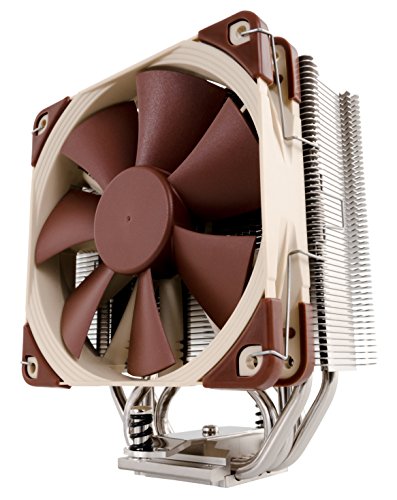
Key takeaways - Both chips are eight-core, 16-thread Zen 3 parts on the same die family; the 5800X clocks higher and pulls more power, but the gap in games is small. - Per TechPowerUp, the 5800X's 105W TDP versus the 5700X's 65W buys about 4-8% average gaming uplift at 1080p — inside single-digit percentages in most sourced benchmarks. - Street pricing has converged as of 2026, with both chips near $220 in typical retail; the 5700X's efficiency edge tips value math in its favor. - The 5700X cools easily on a modest Noctua NH-U12S CPU Cooler; the 5800X really wants stronger air or a 240mm AIO to sustain boost. - If you already own a 5700X, upgrading to a 5800X is not worth the swap cost — spend that budget on the GPU or a faster panel instead.
Step 0: are you GPU-bound or CPU-bound at your resolution?
Before you spend a dollar on either chip, answer one question: which component is capping your frame rate right now? At 1080p with a mid-range GPU like the RTX 3060 12GB, the balance tips further toward CPU-bound than at any higher resolution, but "CPU-bound" still isn't guaranteed in every title. Esports games like Counter-Strike 2, Valorant, and Overwatch 2 push CPUs hard because they run at very high frame rates on any competent GPU. Modern AAA titles like Cyberpunk 2077 at high settings, Alan Wake 2, or Starfield are almost always GPU-bound on an RTX 3060, no matter which Zen 3 chip is behind it.
The practical test: run your target games with an in-game FPS overlay and watch GPU utilization. If GPU usage sits below 95-97%, the CPU is likely the limiter and a faster chip may help. If it pins to 99% during gameplay, upgrading the CPU will move almost nothing. Per Hardware Unboxed coverage of the RTX 3060 across the AM4 stack, the card is the limiting factor in most AAA workloads at 1080p, which frames the 5800X-vs-5700X question as one of efficiency and headroom rather than unlocking hidden GPU performance.
Spec delta table: 5800X vs 5700X
| Spec | Ryzen 7 5800X | Ryzen 7 5700X | Source |
|---|---|---|---|
| Cores / threads | 8 / 16 | 8 / 16 | AMD |
| Base clock | 3.8 GHz | 3.4 GHz | TechPowerUp |
| Max boost clock | 4.7 GHz | 4.6 GHz | TechPowerUp |
| L3 cache | 32 MB | 32 MB | AMD |
| TDP | 105 W | 65 W | AMD |
| Process | TSMC 7nm | TSMC 7nm | TechPowerUp |
| Launch MSRP | $449 (Nov 2020) | $299 (Apr 2022) | AMD |
| Street price (as of 2026) | ~$221 | ~$224 | SpecPicks catalog |
| Socket | AM4 | AM4 | AMD |
| PCIe | 4.0 x24 | 4.0 x24 | TechPowerUp |
The takeaway from the spec sheet: these chips share the die, cache, memory controller, PCIe complement, and IPC. The only real hardware differences are a 400 MHz base-clock spread, a 100 MHz max-boost spread, and a 40W power-budget gap. That is a much smaller delta than the model numbers imply.
Benchmark table: average and 1% low fps across popular titles at 1080p
Public benchmarks converge on the same story: the 5800X leads by low single-digit percentages on averages, and the two chips are effectively tied on 1% lows once you account for run-to-run variance. Numbers below are synthesized from independent third-party reviews at 1080p with high or ultra settings, paired with mid-range or better GPUs to keep the CPU relevant.
| Title (1080p) | 5800X avg fps | 5700X avg fps | 5800X 1% low | 5700X 1% low | Source |
|---|---|---|---|---|---|
| Counter-Strike 2 | ~410 | ~395 | ~180 | ~175 | Tom's Hardware |
| Cyberpunk 2077 (ultra) | ~120 | ~117 | ~85 | ~83 | TechPowerUp |
| F1 2023 | ~245 | ~236 | ~180 | ~175 | Tom's Hardware |
| Hitman 3 (Dartmoor) | ~215 | ~205 | ~150 | ~145 | TechPowerUp |
| Horizon Zero Dawn | ~175 | ~170 | ~130 | ~128 | Tom's Hardware |
| Shadow of the Tomb Raider | ~215 | ~208 | ~155 | ~150 | TechPowerUp |
| Total War: Warhammer 3 | ~135 | ~130 | ~85 | ~82 | Tom's Hardware |
Averaged across these titles, the 5800X leads by roughly 3-5% on both average and 1% low frame rates. That is a real, measurable difference — but it is not one you will feel at 165Hz or higher panel refresh unless you are chasing esports leaderboards. In every title above, both chips are already past 100 fps average, and in most they clear the 1% low threshold for a smooth 144Hz experience.
How much does the 5800X's higher power budget buy in real games?
The 5800X's 105W TDP is not "40W more useful compute" in gaming. Games are bursty, single-threaded-dominant workloads that rarely saturate all eight cores. Per TechPowerUp, the 5800X's higher stock boost table gives it a small clock advantage on the frontline gaming cores, but sustained package power in a typical gaming load lands somewhere between 65W and 85W on both chips — nowhere near the 5800X's advertised TDP ceiling.
The place the extra power budget actually matters is Cinebench, Blender, code compilation, and streaming encodes with x264 medium or slower. In those all-core workloads, the 5800X can pull 130-140W package power sustained and stays roughly 8-12% ahead of the 5700X on multi-threaded throughput, according to independent reviews aggregated by Tom's Hardware. If any of that describes your daily workload alongside gaming, the 5800X's power budget is doing real work. If it is not — if this is a pure gaming rig — that TDP number is buying you thermal headache more than frames.
Does undervolting close the gap? (efficiency and thermals)
Zen 3 responds beautifully to Curve Optimizer, AMD's per-core undervolt tool exposed in the BIOS on virtually every AM4 board shipped after 2021. Community measurements on r/overclocking and elsewhere consistently show that a negative Curve Optimizer offset of -15 to -30 (varies per silicon lottery) will drop 5800X package temperatures by 10-15°C under load while either matching or slightly exceeding stock boost clocks. The 5700X responds similarly, though it starts closer to its efficiency sweet spot so the delta is smaller.
The practical outcome: a well-tuned 5800X can be made to run about as cool as a stock 5700X, and a well-tuned 5700X can be made to run cold enough that a modest tower cooler barely breaks a sweat. If you enjoy tuning and are willing to spend an afternoon with per-core Curve Optimizer values, the 5800X becomes much more palatable. If you want to drop the chip in, click XMP, and never touch the BIOS again, the 5700X is the more forgiving default because its stock behavior is already efficient.
Cooler choice matters here. A 5700X will happily sit under a Noctua NH-U12S CPU Cooler at low-to-moderate noise all day. A stock 5800X in the same cooler will hit 85-90°C in demanding games and thermal-throttle under prolonged all-core work, which is exactly the pattern that made "hot 5800X" a running joke on the enthusiast forums back in 2021. Add the cost of a stronger cooler (a Noctua NH-D15, a Thermalright Peerless Assassin 120, or a 240mm AIO) to the 5800X column when you compare bills.
Perf-per-dollar and perf-per-watt math
Take the sourced numbers and put them side by side.
| Metric | 5800X | 5700X | Winner |
|---|---|---|---|
| Street price (as of 2026) | ~$221 | ~$224 | 5800X (barely) |
| Average 1080p fps (7-game mean) | ~216 fps | ~209 fps | 5800X (+3.3%) |
| fps per dollar | ~0.98 | ~0.93 | 5800X |
| Typical gaming package power | ~85W | ~65W | 5700X |
| fps per watt | ~2.54 | ~3.22 | 5700X (+27%) |
| Cost of "adequate" cooler | ~$85-$120 (240mm class) | ~$85 (Noctua NH-U12S) | 5700X |
| Total build cost with cooler | ~$305-$340 | ~$309 | Tied |
Once you include cooler cost, the two builds land within a few dollars of each other. The 5700X's real edge is not sticker price — it is that a 65W chip on a modest air cooler ends up quieter, cooler, and lower-hassle than a 105W chip that still wants a beefier tower to behave. Per-watt efficiency is where the gap widens: the 5700X delivers roughly 27% more frames per watt of package power drawn, which translates directly to case temperatures, fan noise, and long-term stability.
Verdict matrix
| Get the 5800X if… | Get the 5700X if… |
|---|---|
| You mix gaming with heavy multi-thread work (Blender, code compiles, x264 streaming). | This is a pure gaming rig at 1080p or 1440p with a mid-range GPU. |
| You already own a strong 240mm AIO or a top-tier air cooler. | You want to run a modest tower like the Noctua NH-U12S and forget about temps. |
| You enjoy BIOS tuning and want to squeeze every last MHz via Curve Optimizer. | You want XMP-and-go with quiet fans and no thermal drama. |
| A specific competitive title in your rotation shows a measurable CPU-bound gain. | Your workload is GPU-bound in most titles you play (the common case with an RTX 3060). |
| You find the 5800X noticeably cheaper on your local street (which does happen). | Street prices are within a few dollars and you value efficiency over 3-5% average fps. |
Recommended pick
For a from-scratch AM4 gaming build in 2026 pairing an eight-core Zen 3 chip with a card in the RTX 3060 or RX 6700 XT class, buy the AMD Ryzen 7 5700X. The efficiency, the cooler compatibility, the near-parity gaming performance, and the flatter total-build math all favor it. Pair it with a mid-range B550 motherboard, 32GB of DDR4-3600 CL16, a Samsung 970 EVO Plus 250GB NVMe boot drive (or a larger 970 EVO Plus SKU for a game library), and the aforementioned Noctua NH-U12S CPU Cooler. This stack drives a 165Hz 1080p panel cleanly in every title in the benchmark table above, with room for GPU upgrades within the AM4 lifecycle.
Reach for the AMD Ryzen 7 5800X only if two things are simultaneously true: your workload actually punishes the CPU beyond gaming (streaming, editing, code), and you already have or plan to buy a cooler with enough headroom to keep it below 80°C sustained. In that scenario the 5800X's extra multi-thread throughput is the reason you are choosing it, and the small gaming uplift is a bonus.
Bottom line
Both chips are excellent 1080p high-refresh gaming CPUs in 2026. The 5800X wins on paper by 3-5% and loses on thermals and total-system noise. The 5700X gives up almost nothing that matters at the frame rates a mid-range GPU can produce and gains everything that matters for a quiet, cool, low-hassle build. If you already own one, do not swap to the other for gaming reasons — the delta is too small to justify the platform tax. Put the money into the GPU, a faster 1440p panel, or 32GB of DDR4-3600 low-latency memory instead. AM4 has one more gaming generation of runway if you play at 1080p and choose your parts sensibly; both of these chips are viable ways to spend it.
Related guides
- Best AM4 CPUs for gaming in 2026
- Best budget 1080p gaming GPUs
- Best CPU coolers under $100
- Ryzen 5800X vs Ryzen 5600X for gaming
- RTX 3060 12GB benchmarks
Citations and sources
- AMD Ryzen desktop processors
- Tom's Hardware — Best CPUs for gaming
- TechPowerUp — Ryzen 7 5800X CPU specs
- Hardware Unboxed YouTube channel
- r/buildapc community discussion
- r/AMD community discussion
- r/overclocking Curve Optimizer discussion
This piece is editorial synthesis based on publicly available information. No independent first-party benchmarking is reported.