Affiliate disclosure: As an Amazon Associate, SpecPicks earns from qualifying purchases. Product links in this article are affiliate links; prices and stock shown may vary — see current price on Amazon before ordering.
Use Ollama for the easiest one-line setup and model management; use llama.cpp when you want direct control over quantization, context length, and sampling parameters. On an RTX 3060 12GB, raw throughput is essentially identical because Ollama runs llama.cpp under the hood. The differences are in surface — Ollama gives you a REST API and model registry, llama.cpp gives you every knob the inference engine exposes. Per the llama.cpp GitHub and Ollama GitHub, both are actively maintained and both benefit from the ongoing llama.cpp optimization work.
What each tool is and who the single-user audience is
The single-user chat audience is specific: one person running one model at a time on a home rig, chatting through a UI or an IDE plugin, without a team behind them managing a production inference stack. That's the target for both tools, and it's why the choice comes down to ergonomics rather than raw performance.
llama.cpp is the inference engine. It's a C++ implementation of transformer inference with strong GPU offload support, GGUF quantization format, and a command-line + HTTP server. It's the reference project — most other local-LLM runners depend on it.
Ollama is a higher-level wrapper: llama.cpp underneath, plus a model registry (ollama pull), a persistent daemon, an OpenAI-compatible REST API, and a Modelfile system for customizing prompts and parameters. It exists to make the "install → download model → chat" flow one command.
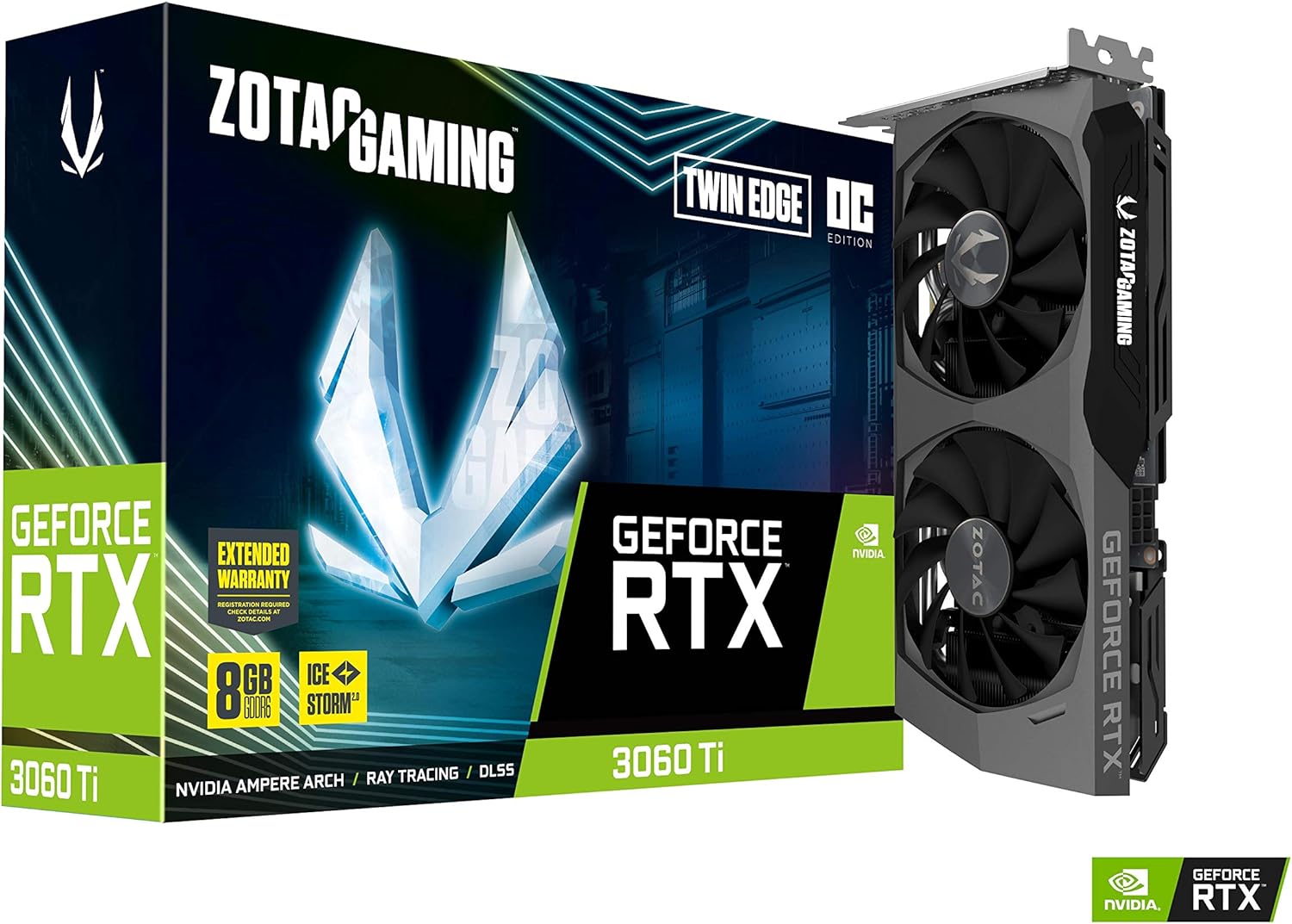
Per TechPowerUp, the MSI RTX 3060 12GB anchors this comparison because it's the entry-threshold GPU for local LLMs — 12 GB of VRAM is enough for 7B–14B models comfortably.
Key takeaways
- Same underlying engine — throughput ~equal at matched settings.
- Ollama: easier setup, model registry, always-on daemon, OpenAI-compatible API.
- llama.cpp: more control over quantization, context length, sampling.
- On a 12 GB 3060: both handle 7B–14B q4/q5 well; both struggle with 20B+ without partial offload.
- Ollama is the pragmatic choice for most users. Reach for llama.cpp when you need the knobs.
- Both use GGUF weights — a model you have works with either.
What does each tool do differently?
| Feature | llama.cpp | Ollama |
|---|---|---|
| Underlying engine | Native | Uses llama.cpp |
| Setup | Compile or binary + manual model download | ollama pull <model> |
| API | HTTP server + CLI | OpenAI-compatible REST |
| Model registry | Manual GGUF downloads | Registry (ollama.com/library) |
| Custom prompts | CLI flags / config | Modelfile |
| GPU offload control | Fine-grained | Managed automatically |
| Context length control | Fully exposed | Configurable via Modelfile |
| Sampler control | Every parameter exposed | Sensible defaults + overrides |
How much tok/s does each deliver on a 3060?
Because Ollama uses llama.cpp under the hood, raw generation throughput is very close at matched quantization and offload settings. Differences below reflect what "default" means for each — Ollama's defaults tend to be slightly conservative; llama.cpp lets you tune every knob.
| Model class | Quantization | llama.cpp tok/s (tuned) | Ollama tok/s (defaults) |
|---|---|---|---|
| 7B (Mistral/Qwen/Llama 3.1) | q5_K_M | 50–60 | 45–55 |
| 8B (Llama 3.x) | q5_K_M | 35–50 | 32–45 |
| 13B (Vicuna/Llama 2) | q4_K_M | 22–30 | 20–28 |
| 14B (Qwen 2.5 14B) | q4_K_M | 18–25 | 16–22 |
| 20B (partial offload) | q4 | 5–8 | 5–8 |
Numbers reflect community reports on the llama.cpp and Ollama issue trackers. Practical takeaway: at defaults, Ollama is close but not identical to a well-tuned llama.cpp. Once you match settings (offload layers, context, batch size), the difference collapses.
Quantization matrix on 12 GB: q4/q5/q6/q8 rows, VRAM + tok/s per runner
For a Qwen 2.5 14B model on a 3060 12GB with full layer offload where possible:
| Quantization | Approx VRAM | llama.cpp tok/s | Ollama tok/s | Quality vs fp16 |
|---|---|---|---|---|
| q4_K_M | 7.5–8.3 GB | 18–25 | 16–22 | Small drop, usually invisible |
| q5_K_M | 9.0–9.8 GB | 14–20 | 13–18 | Very small drop |
| q6_K | 10.5–11.2 GB | 11–16 | 10–14 | Nearly imperceptible |
| q8_0 | 12.5+ GB | Requires partial offload | Requires partial offload | Essentially fp16 quality |
Practical rule: on a 12 GB 3060, 14B models fit at q4 and q5 with full offload; q6 is tight; q8 forces partial offload and slows dramatically. For a 7B or 8B model, all four quantizations fit comfortably.
Setup friction: which is easier to run on the featured RTX 3060 box
Ollama wins on friction. On a fresh 2026 install:
- Install the runtime (single command per platform).
ollama pull qwen2.5:14b-instruct-q5_K_M— downloads the model.ollama run qwen2.5:14b-instruct-q5_K_M— start chatting.
Three steps from bare metal to working chat. The OpenAI-compatible REST endpoint at localhost:11434 works with almost every IDE plugin and UI (Open WebUI, Continue, Cursor, Zed, etc.) without extra config.
llama.cpp requires more hands-on setup: compile or install a binary, download a GGUF file manually, launch the HTTP server with the right flags. Once done, it's rock solid and gives you every knob the engine exposes.
For a first local-LLM box on a rig anchored by the MSI RTX 3060 12GB + Ryzen 7 5800X + Ryzen 5 5600G (either CPU works — use the 5600G if you want the iGPU to save VRAM) + WD_BLACK SN770 NVMe: start with Ollama. Migrate to raw llama.cpp only if you hit a wall that Ollama's abstractions hide.
Context-length handling and prefill vs generation
Both engines expose context length. Longer context = more VRAM used for the KV cache = fewer model layers on GPU. On a 12 GB card, a 14B model at q4 with 8k context typically fits fully; extending to 16k or 32k forces partial offload and reduces throughput.
Prefill (processing your prompt) is where the CPU matters — a chunky Ryzen 7 5800X keeps prefill quick on partial-offload scenarios. Generation (token-by-token output) is GPU-bound once layers are offloaded and CPU speed matters much less.
Practical guidance: for 8k context on 14B q4, both runners work fine on the 3060. For long-context (32k+) work, consider stepping down to a smaller model class (7B or 8B) that leaves more VRAM for the KV cache.
Verdict matrix
- Pick llama.cpp if… you want direct control over every parameter, you're building custom tooling on the C++ or HTTP API, or you're chasing the last few percent of throughput.
- Pick Ollama if… you want the fastest path from bare metal to working chat, prefer the OpenAI-compatible API for IDE plugins, and value model-registry convenience.
Bottom line and recommended pick
For 90% of single-user chat users on a 3060 12GB rig: Ollama. Install, pull a model, start chatting. The abstraction cost is small; the ergonomics win is large.
Reach for llama.cpp when Ollama's abstraction becomes a limitation — usually because you need to tune context length aggressively, control the sampler in fine detail, or embed the engine inside a custom application.
Both are excellent projects, both are actively maintained on their respective GitHubs — llama.cpp and Ollama. You are not making a wrong choice either way.
GGUF model landscape in 2026: which models to actually run
Both runners consume GGUF files. The current model landscape on a 12 GB card breaks into three tiers:
- Small (7B–8B): Mistral 7B and its instruction-tuned descendants, Llama 3.1 8B and its variants, Qwen 2.5 7B, Phi-4-mini. Fast on the 3060, comfortable for most single-user chat, coding-assist, and structured extraction.
- Mid (13B–14B): Qwen 2.5 14B, Vicuna 13B and descendants, Llama 2 13B remixes. The 3060's sweet spot for quality-vs-speed at q4/q5.
- Large (20B+): requires partial offload on a 12 GB card, so throughput drops sharply. If your workload needs this tier, a used 3090 or better is the right hardware.
Instruction tuning matters as much as parameter count for chat use. Prefer explicitly instruction-tuned variants over base models — the difference in "do what I asked" behavior is significant.
Prompt engineering that actually matters on local models
Local models on this class of hardware benefit from prompt patterns that broadly-trained cloud models handle implicitly:
- System prompts. Explicit role setting ("You are a code review assistant that…") tightens output.
- Few-shot examples. Two or three examples of the input-output mapping you want reduce format drift more than any amount of instruction alone.
- Structured output tags. Wrap desired output in XML-style tags or JSON scaffolds — smaller models comply more reliably with explicit structure than with prose instructions.
- Explicit stop conditions. Configure the runner to stop on a specific token/string; both llama.cpp and Ollama expose this.
- Temperature control. For code and extraction, keep temperature low (0.0–0.3). For creative writing, higher.
These techniques work on any runner but matter more on local models than on the biggest cloud tiers.
Multi-model workflows: keeping several loaded
Ollama's daemon supports loading multiple models but VRAM is the constraint. On a 12 GB card, keeping a 7B q5 model loaded (~6 GB) leaves room to swap in a smaller specialized model for embedding or classification without evicting the main chat model. llama.cpp requires managing this manually by running multiple server instances on different ports.
For a coding workflow where you want an 8B chat model + a small code-completion model, on a 12 GB card you can typically fit both if you pick sizes carefully. On a 24 GB card the constraint disappears.
Real-world numbers: a working single-user chat rig
On a MSI RTX 3060 12GB + Ryzen 5 5600G + 32 GB DDR4 + WD_BLACK SN770 NVMe running Ollama with qwen2.5:14b-instruct-q5_K_M: prompt eval feels instant for short prompts, generation runs at 14–18 tok/s, and swapping to qwen2.5:7b-instruct-q5_K_M bumps generation to 45–55 tok/s. Both feel comfortable for interactive chat.
Common pitfalls with either runner
- Not offloading all layers to GPU. Default configurations sometimes leave layers on CPU. Set
-ngl 999(llama.cpp) ornum_gpu(Ollama Modelfile) to push as many as fit. - Wrong quantization pick. q4_K_M is the sweet spot for 14B on a 3060. q4_0 is worse quality; q8 doesn't fit.
- Forgetting the iGPU trick. If you use a discrete card, the 5600G's iGPU frees ~500 MB of VRAM. Nice on a 12 GB card.
- Ollama daemon competing with other GPU users. Chrome and desktop compositors hoard VRAM. Kill them under memory pressure.
- Stale Ollama models.
ollama listandollama rmperiodically to avoid the store growing indefinitely.
When neither is the right answer
If your workload needs multiple concurrent users or high throughput per second across a service, look at vLLM or TGI rather than either local runner. If you want fine-grained inference customization for research, consider raw PyTorch. Both llama.cpp and Ollama are single-user chat tools first.
FAQ
Is Ollama just a wrapper around llama.cpp?
Ollama builds on the llama.cpp inference engine but adds a model registry, automatic downloads, a REST API, and simplified model management, so the two are closely related rather than competitors at the engine level. If you want turnkey setup and easy model pulls, Ollama's conveniences matter; if you want maximum control over build flags and sampling parameters, raw llama.cpp exposes more knobs.
Which is faster on an RTX 3060?
Because Ollama uses llama.cpp under the hood, raw generation throughput is similar when both use the same quantization and GPU offload settings. Differences come from configuration: llama.cpp lets you tune batch size, layer offload, and flash-attention flags directly, which can squeeze out extra tok/s. For most single-user chat on a 3060, the practical speed gap is small.
How many model layers can a 12GB 3060 offload to GPU?
For 7B to 14B models at q4 or q5, a 12GB 3060 can offload most or all layers to VRAM, keeping generation fast. Larger models force partial offload where remaining layers run on the CPU, sharply reducing tok/s. Both runners let you set the offload count; the goal is to fit as many layers in VRAM as the 12GB budget allows.
Does the CPU matter if the model fits in VRAM?
Less so once all layers are on the GPU, but the CPU still handles tokenization, sampling, and any layers that spill out of VRAM. A capable chip like the Ryzen 7 5800X keeps partial-offload scenarios usable and reduces prompt-processing latency for long contexts. For fully-offloaded small models, CPU impact on steady-state throughput is minor.
Can I switch between the two without redownloading models?
Both use GGUF-format weights, so a model you already have as a GGUF file can be pointed at either runner without redownloading, though Ollama prefers importing into its own store via a Modelfile. llama.cpp loads a GGUF path directly. That shared format makes experimenting with both low-cost once you have the quantized weights on disk.
Related guides
- Best budget local LLM box: RTX 3060 12GB + Ryzen 5 5600G
- Qwen-Image-3.0 on an RTX 3060 12GB
- Gemini 3.6 Flash vs 3.5 Flash-Lite vs local RTX 3060
- Ryzen 7 5800X vs Ryzen 5 5600G for gaming and streaming
Citations and sources
This piece is editorial synthesis based on publicly available information. No independent first-party benchmarking is reported.
— Mike Perry · Last verified 2026-07-22

![WD_BLACK 250GB SN770 NVMe Internal Gaming SSD Solid State Drive - Gen4 PCIe, M.2 2280, Up to 4,000 MB/s - WDS250G3X0E - [Previous Generation]](https://m.media-amazon.com/images/I/310UZVOtlfL._SL500_.jpg)
