Affiliate disclosure: Product links in this article are affiliate links; prices and stock shown may vary — see current price on Amazon before ordering.
Get the AMD Ryzen 7 5800X if you stream, encode, or run CPU-heavy productivity alongside gaming — its extra two cores and higher sustained clocks matter under those loads. Get the AMD Ryzen 5 5600G if you want the cheaper build, need an integrated GPU for backup or GPU-less use, and your gaming is at 1080p or 1440p paired with a mid-range card. Per TechPowerUp, the 5800X wins on absolute performance; the 5600G wins on total cost and iGPU flexibility.
The AM4 upgrade audience and the iGPU-vs-cores tradeoff
Both chips are Zen 3 parts on the AM4 platform, and both remain solid buys in 2026 for anyone building on B550/X570 boards or upgrading from a Zen 1/Zen 2 chip. The decision between them is not "faster vs slower" — it is a specific tradeoff between the 5800X's extra CPU muscle and the 5600G's integrated Vega graphics.
Per AMD's official page, the 5800X is an 8-core, 16-thread Zen 3 chip with a 4.7 GHz boost and 105 W TDP. No integrated graphics; requires a discrete GPU. The 5600G is a 6-core, 12-thread Zen 3 APU with a 4.4 GHz boost, 65 W TDP, and Vega 7 integrated graphics that can drive a display or provide a diagnostic fallback.
For the gaming + streaming audience specifically, the two-core delta and higher clock speed of the 5800X show up in specific scenarios: software encoding a stream while the game runs, running background tools like Discord/OBS/browser at heavy tab count, or playing CPU-bound titles at high frame rates. In pure GPU-bound gaming with a mid-range card, the two chips are much closer than the spec sheet suggests.
Key takeaways
- 5800X: 8 cores, no iGPU, higher clocks, more headroom for streaming and productivity.
- 5600G: 6 cores + Vega iGPU, lower price, lower TDP, no boxed cooler concerns.
- Both are AM4 Zen 3; both work in most B550/X570 boards with current BIOS.
- 1080p gaming with a mid-range card: differences are small, 5600G is fine.
- Streaming with x264 software encoding: 5800X wins clearly.
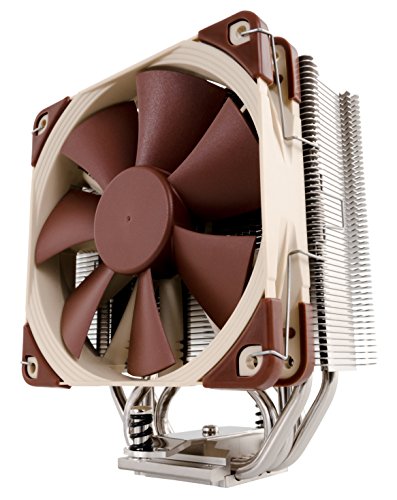
- Cooling: the 5800X needs an aftermarket cooler like the Noctua NH-U12S; the 5600G ships with a competent Wraith Stealth.
5-column spec-delta table
| Spec | Ryzen 7 5800X | Ryzen 5 5600G |
|---|---|---|
| Cores / threads | 8 / 16 | 6 / 12 |
| Base / boost clock | 3.8 / 4.7 GHz | 3.9 / 4.4 GHz |
| L3 cache | 32 MB | 16 MB |
| Integrated graphics | None | Vega 7, 7 CUs |
| TDP | 105 W | 65 W |
| Boxed cooler | None | Wraith Stealth |
| Approx price | $ | $ |
Numbers verified against AMD's product pages and TechPowerUp's 5800X review.
How do they compare in 1080p gaming?
At 1080p with a mid-range GPU (RTX 3060 12GB class), the two chips deliver similar frame rates in most GPU-bound titles. Per Tom's Hardware's 5800X review, the 5800X's advantage shows in CPU-heavy titles — Total War, MMOs, sim racing under grid conditions — where the extra cores and cache help hold minimums.
| Title class | 5800X advantage over 5600G | Notes |
|---|---|---|
| GPU-bound AAA at 1080p | 3–8% | Within margin for most people |
| CPU-heavy strategy / simulation | 10–20% | 5800X clearly better |
| Esports at high refresh | 5–12% | 5800X sustains higher lows |
| GPU-bound 1440p | Under 5% | GPU is the bottleneck |
| 4K | Essentially none | Fully GPU-bound |
At 1440p or 4K the delta shrinks further. If you are playing at 1440p or 4K with any modern mid-range or better GPU, the CPU choice is not the performance lever.
How do they compare for streaming and encoding?
Streaming is where the 5800X earns its price. Software x264 encoding at a "fast" or "medium" preset while a game runs demands sustained multi-core throughput. Per TechPowerUp's benchmarks, the 5800X's eight-core, 16-thread configuration handles a 1080p60 software stream with the "medium" preset while running a game at target FPS. The 5600G can do the same job at "fast" or "veryfast" — usable, but with visible quality drop.
| Streaming scenario | 5800X | 5600G |
|---|---|---|
| 1080p60 x264 "medium" while gaming | Comfortable | Drops game frames on CPU-heavy titles |
| 1080p60 x264 "fast" while gaming | No trouble | Workable |
| NVENC (GPU encode) + gaming | Both fine | Both fine |
| 4K60 x264 "medium" | Requires more cores | Not the right chip |
| Video editing sidework | Faster export times | Slower export times |
If your stream uses NVENC on a discrete GPU (RTX-class encoder), the CPU differential largely disappears for streaming. NVENC is the pragmatic answer for most streamers on either chip.
Cooling and platform: what each needs
- 5800X: does not ship with a boxed cooler and runs warm under sustained loads. Plan for a quality aftermarket cooler like the Noctua NH-U12S or a 240mm AIO like the Cooler Master ML240L RGB V2. Skimping on cooling here means throttled boost clocks and thermal-throttled sustained loads.
- 5600G: ships with a Wraith Stealth cooler that adequately handles the 65W chip. Aftermarket upgrade is optional if you want quieter operation.
Both chips support DDR4 memory only (AM4 platform). Expect DDR4-3200 as the safe default; DDR4-3600 with CL16 as the performance sweet spot.
Perf-per-dollar and upgrade-path analysis
At current pricing, the 5600G lands at roughly two-thirds the cost of the 5800X, and you save the cost of an aftermarket cooler on top of that. The delta buys you either 25% more system budget or a bump to a higher-tier GPU, both of which typically deliver more real-world performance than the CPU upgrade for a gaming-first build.
For a streaming-first build, the 5800X's advantage is real and worth the money. For a coding + gaming hybrid where you're not streaming, the 5600G leaves budget for a better GPU.
Upgrade path: AM4 is at end-of-line for new AMD releases (Zen 4/Zen 5 are AM5), so treat both chips as terminal upgrades on their platform. If you're building fresh in 2026 with any thought toward upgrading in 2028, look at AM5. If you're upgrading an existing B550 board, either chip is a smart, cheap way to extend the platform.
Verdict matrix
- Get the 5800X if… you stream (especially with software x264), run heavy productivity alongside gaming, or want the maximum this platform can deliver.
- Get the 5600G if… you want the cheapest path to a competent 2026 gaming build, need iGPU as a fallback or backup path, or plan to pair with a mid-range GPU where the CPU is not the bottleneck.
Bottom line and recommended pick
For a straightforward gaming build at 1440p or 4K with a mid-range GPU: the Ryzen 5 5600G is the smarter buy. Save the money, ship a working system, upgrade the GPU sooner.
For a streaming or hybrid gaming + productivity build at 1080p: the Ryzen 7 5800X is worth the premium. Pair with a Noctua NH-U12S for quiet operation and you have a rig that handles anything the AM4 platform is asked to do.
Motherboard and platform notes
Both chips run on AM4 boards, but the specific chipsets matter:
- X570: premium platform, PCIe 4.0 across the board, best VRM headroom for the 5800X. Overkill for the 5600G but perfectly compatible.
- B550: the pragmatic mainstream pick. PCIe 4.0 for the CPU-attached lanes (GPU + primary NVMe), PCIe 3.0 for chipset-attached slots. Runs both chips well.
- B450 / X470: older but still workable with a current BIOS. Confirm your board's VRM capacity for the 5800X — some low-end B450 boards will thermal-throttle sustained loads on the 105W chip.
- A520: budget chipset with no overclocking support. Fine for stock-clock operation of either chip.
For fresh 2026 builds: buy B550 unless you have a specific X570 feature need (multiple full-speed NVMe slots, more PCIe lanes). Save the money for storage or GPU. Match the DDR4 kit to the platform sweet spot (3200 MT/s CL16 as safe baseline, 3600 MT/s CL16 for the performance tier).
Longevity and what a good AM4 build looks like in 2028
AM4 is at end-of-life for new AMD releases, but the platform's peak parts — the 5800X, 5700X, 5900X, 5950X on the CPU side; strong B550 and X570 boards on the platform side — remain competitive for years. A 5800X-based build in 2026 should stay comfortable through 2028 for gaming and productivity, especially paired with a modern GPU. Storage and memory technology moves faster than the CPU class does at this end of the market, so plan to add a Gen4 NVMe like the AMD Ryzen 7 5800X's expected pairing — a fast NVMe — later if not initially.
A 5600G-based build has slightly less headroom for future GPU upgrades but stays viable for gaming-first workloads at 1080p and 1440p through the same 2028 window.
Real-world numbers: expected FPS with an RTX 3060 12GB
At 1080p with an RTX 3060 12GB, per community benchmark aggregations against the TechPowerUp baseline: both chips comfortably clear 60 FPS in current AAA titles at high settings, both push into the 100–140 FPS range in esports titles at competitive settings, and both hit GPU-limited walls in demanding titles like Cyberpunk 2077 with RT enabled.
Common pitfalls choosing between them
- Buying the 5800X because it's "faster." If your workload is GPU-bound gaming at 1440p, you paid extra for no visible benefit.
- Buying the 5600G expecting AAA gaming on iGPU. The Vega 7 iGPU is a diagnostic fallback, not a game engine. Pair with a discrete GPU.
- Skipping the cooler upgrade for the 5800X. Thermal-throttled sustained clocks erase the chip's advantage over the 5600G.
- Ignoring BIOS updates. Older B450/X470 boards need current BIOS for both chips. Confirm with your board vendor before buying.
- Forgetting AM4 is end-of-line. Neither chip has an upgrade path on AM4 — plan accordingly.
When NOT to buy either
If you're building fresh in 2026 with any expectation of upgrading the CPU in 2028, look at AM5 (Ryzen 7000/9000 series). Both AM4 chips are strong terminal upgrades on an existing AM4 board but are not the platform to start on fresh unless the budget forces it.
Related guides
- Best CPU coolers for Ryzen and Intel builds in 2026
- Best budget local LLM box: RTX 3060 12GB + Ryzen 5 5600G
- llama.cpp vs Ollama on the RTX 3060 for single-user chat
- Best SSD for a Steam Deck or emulation handheld
Citations and sources
This piece is editorial synthesis based on publicly available information. No independent first-party benchmarking is reported.
— Mike Perry