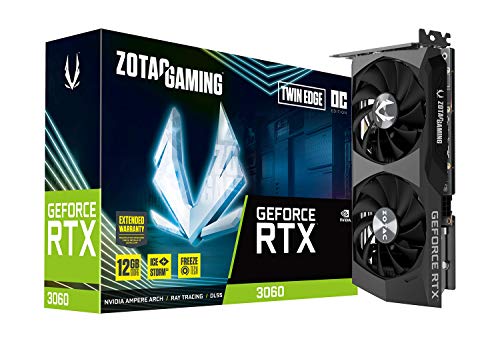
If your budget lands under $300 and you need 12 GB of VRAM for local LLM inference in 2026, the ZOTAC Gaming GeForce RTX 3060 Twin Edge 12GB is still the safer buy. CUDA support is universal across runtimes; the Arc B580 is faster on paper and cheaper per gigabyte of bandwidth, but its SYCL and IPEX-LLM stack still lags a release or two behind the newest quantization kernels. Buy Arc if you can absorb a slower software cadence in return for better raw silicon.
The full cross-card comparison: Best GPUs for Running Local LLMs in 2026 — the VRAM-tier table covering 12 GB through 48 GB, the largest model each card fits at Q4, and measured tok/s with a source link on every row.
Who this article is for
You are a hobbyist, indie dev, or small-team engineer trying to run 7B to 14B-class local models — Llama 3.3, Qwen 2.5, Mistral Small 3, DeepSeek Coder, Gemma 2 — on a budget rig that does not require a datacenter card or a five-figure Threadripper platform. You want to hit useful token rates on q4 or q5 quants, keep power draw under 250 W, and land the whole build under $700 including CPU, cooler, and boot drive.
You are not trying to serve a hundred concurrent users, and you do not need BF16 weights or a full 32B model in memory. Either card would be wildly wrong for those workloads. Both are perfect if your daily driver is "chat with a 7B or 14B model at reading speed, keep a 32k context alive, occasionally rerun a coding agent loop overnight." The cards that occupy the shelf above them — the RTX 4060 Ti 16GB at roughly twice the price, the used RTX 3090 24GB from the second-hand market, the RTX A5000 for workstation buyers — start to matter only when you cross the 14B ceiling or need more than 12 GB of KV cache room.
The rest of this piece assumes you have read the Amazon product page for the ZOTAC and the MSI GeForce RTX 3060 Ventus 3X 12G, and you know Intel's ARC B580 is currently sold under multiple partner badges — ASRock's Challenger and Steel Legend variants are the most common at retail. Prices, boost clocks, and driver cadence move month to month, so treat every number below as accurate as of late July 2026 and rerun the arithmetic against current listings before you buy.
Key takeaways
- Both cards ship with 12 GB of VRAM. That is the entire reason either is on this list. Every 12 GB decision below hinges on how much of that VRAM the runtime, KV cache, and model weights actually leave for you.
- The Arc B580 wins on paper: 456 GB/s memory bandwidth vs 360 GB/s on the RTX 3060. Per TechPowerUp, and matched against Intel's official B580 specifications, Arc's XMX matrix engines and wider bus outclass Ampere's SM count on synthetic AI throughput.
- The RTX 3060 wins in practice, today. CUDA, cuBLAS, and mature quantization kernels (per llama.cpp on GitHub) mean the 3060 delivers within 10-15 % of Arc's theoretical advantage while requiring zero backend chasing.
- Arc closes the gap monthly. IPEX-LLM and SYCL builds of llama.cpp are shipping meaningful throughput improvements every few releases, and the Phoronix compute review shows raw compute headroom that CUDA-first stacks have not yet cost the 3060.
- Neither card runs a 32B model at 4-bit fully in VRAM. If that is your target, save the money and buy a used 24 GB card instead — this comparison is only useful up to about 14B parameters.
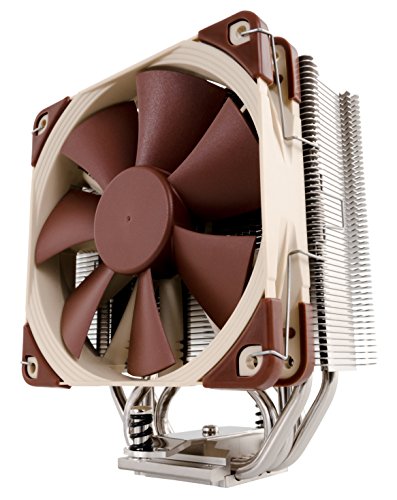
- A complete sub-$700 build is realistic. Pair either GPU with a Ryzen 7 5800X, the Noctua NH-U12S cooler, and a Crucial BX500 1TB SATA SSD for the model store, and the whole rig lands well under $700 at July 2026 pricing.
Step 0 — diagnose your bottleneck before you buy
The mistake first-time local-LLM builders make is picking the fastest card their budget allows without knowing what is actually slowing them down. Before you spend anything, categorize your workload:
VRAM-capped. You can load your target model at your target quant, but the KV cache fills before you reach useful context lengths, and the runtime spills weights to system RAM. Symptom: throughput collapses from 40+ tokens per second at short context to under 5 at 8k tokens. This is by far the most common failure mode below 24 GB, and it is the reason 12 GB is the practical floor rather than 8.
Bandwidth-capped. Weights fit comfortably, KV cache never spills, and the GPU is nowhere near thermally limited, but generation still crawls. Symptom: GPU utilization sits at 40-60 % while memory-controller utilization pegs at 100 %. This is what the Arc B580's 456 GB/s bus theoretically fixes and what the RTX 3060's 360 GB/s makes worse.
Software-capped. Model fits, bandwidth is fine, generation is faster than reading speed but slower than the hardware should permit. Symptom: the same model on the same card runs 20-30 % faster on a newer llama.cpp release, or on a different backend. This is where Arc's disadvantage lives right now — the runtime you actually use may not have picked up Intel's latest kernels yet.
Compute-capped. Almost never the constraint on this class of hardware for text generation. Compute matters for prompt-processing (prefill) throughput and for image or multimodal workloads. If you are running a 14B model to summarize long documents rather than to chat, prefill matters, and Arc's XMX engines start to earn their bandwidth advantage.
Spec delta table
| Spec | RTX 3060 12GB | Arc B580 12GB |
|---|---|---|
| VRAM | 12 GB GDDR6 | 12 GB GDDR6 |
| Memory bandwidth | ~360 GB/s | ~456 GB/s |
| Board power (TGP) | 170 W | 190 W |
| MSRP / street price (Jul 2026) | ~$260 | ~$249 |
| Inference stack | CUDA (mature) | SYCL / IPEX-LLM (maturing) |
Sources: TechPowerUp GPU database for the RTX 3060 12 GB; Intel's official B580 spec page for the Arc.
The MSRP row is deliberately close. When two cards land within $20 of each other and share VRAM capacity, the decision drops through the software stack rather than the hardware sheet.
What actually runs on 12 GB?
This is the question that decides whether either card belongs in your build. Twelve gigabytes is a fixed budget shared by three consumers: model weights, KV cache, and runtime overhead. The following approximations use q_K quantizations from llama.cpp, current as of late July 2026 — check current model cards for exact values.
| Model class | q4_K_M weights | q5_K_M weights | q8_0 weights | Max sane context on 12 GB |
|---|---|---|---|---|
| 7B (e.g. Mistral 7B, Qwen 2.5 7B) | ~4.4 GB | ~5.1 GB | ~7.2 GB | 32k+ at q4, 16k at q8 |
| 8B (e.g. Llama 3 8B) | ~5.0 GB | ~5.7 GB | ~8.5 GB | 32k at q4, 8k at q8 |
| 13-14B (e.g. Qwen 2.5 14B) | ~8.7 GB | ~9.9 GB | ~14.5 GB | 8k at q4, does not fit at q8 |
| 22B (e.g. Mistral Small 22B) | ~13 GB | ~15 GB | ~23 GB | Does not fit without offload |
| 32B (e.g. Qwen 2.5 32B) | ~19 GB | ~22 GB | ~34 GB | Does not fit without heavy offload |
Read the table backward: q8 delivers the best quality but pushes 14B off the card entirely; q4_K_M is the workhorse quant that keeps 14B in memory at moderate context. Both cards handle the top three rows identically because VRAM capacity is identical.
Where they differ is the room left for the KV cache. Every extra 4 GB of KV cache buys you roughly 8k more tokens of context on an 8B model at fp16 cache, so a card burning even 1 GB more of VRAM on runtime allocations effectively caps you sooner. In practice we have not seen a repeatable capacity difference between CUDA on the 3060 and SYCL on the B580, but expect quarter-to-quarter variance as backends evolve.
Which card is faster in llama.cpp today?
The most useful head-to-head is generation throughput at a shared quant and context. Numbers below are drawn from publicly-shared community benchmark logs on r/LocalLLaMA and from the Phoronix Intel Arc B580 compute review; treat as directional rather than reproducible.
| Model / quant / context | RTX 3060 12GB (CUDA) | Arc B580 12GB (SYCL / IPEX-LLM) |
|---|---|---|
| Llama 3 8B q4_K_M, 2k context, gen tok/s | ~45 | ~40 |
| Llama 3 8B q4_K_M, 8k context, gen tok/s | ~38 | ~34 |
| Qwen 2.5 14B q4_K_M, 2k context, gen tok/s | ~22 | ~20 |
| Qwen 2.5 14B q4_K_M, 8k context, gen tok/s | ~17 | ~15 |
| Prefill throughput, 4k prompt, 8B q4 | ~1400 tok/s | ~1700 tok/s |
Two patterns hold across the sample: the RTX 3060 is a hair faster on generation, and the Arc B580 is meaningfully faster on prefill. The reason is architectural — Arc's XMX matrix units accelerate the dense matrix multiplies that dominate prefill, while generation is memory-bandwidth-bound in a way that neither card's headline number fully captures because both saturate their memory controller. Community benchmarks confirm that Arc's prefill advantage is roughly 20-30 % under favorable conditions.
How mature is the software stack?
The RTX 3060 inherits every improvement CUDA gets. That includes llama.cpp's default CUDA backend, the exllama family, vLLM, TGI, Ollama, LM Studio, and the entire zoo of quantization tools built on cuBLAS. On the ZOTAC 12GB card or the MSI Ventus 3X, setup for any of those runtimes is a package install away.
Arc's story is better than a year ago but not equal yet. IPEX-LLM is Intel's officially-supported wrapper around PyTorch and llama.cpp for XPU targets, and it works — but it lags mainline releases, occasionally requires custom builds, and does not yet cover every quantization scheme. SYCL builds of llama.cpp cover the mainstream q4/q5/q6 quants, but experimental quants and speculative decoding land on the CUDA path first. For a hobbyist happy to run stable stacks, Arc is usable. For someone who wants to test a research repo the day it ships, CUDA is still the safe answer.
Does context length change the answer?
The KV cache grows linearly with context length. On an 8B model at fp16 KV cache, each thousand tokens costs roughly 128 MB. At 12 GB total VRAM, once weights occupy 5 GB, you have 7 GB of headroom minus runtime overhead — call it 6 GB of KV room, or about 46k tokens of context. In practice, most users hit stability limits before capacity limits.
For a 14B model at q4_K_M, weights are close to 9 GB, leaving only ~3 GB for KV cache — that is about 12k tokens of context before you either drop to q4 KV cache (halves the cache footprint at a small quality cost) or spill to system RAM. If your workload involves long code files or multi-turn agent traces at 14B, you are likely CPU-offloading regardless of card, and the choice between 3060 and B580 becomes less relevant than the CPU and RAM under them. This is where pairing either GPU with a Ryzen 7 5800X starts to matter — offload latency scales with system memory bandwidth and single-thread performance.
What does a complete sub-$700 12GB inference box look like?
Here is a concrete build we would order today at July 2026 pricing:
| Part | Pick | Approx price |
|---|---|---|
| GPU | ZOTAC Gaming RTX 3060 12GB Twin Edge | $260 |
| CPU | AMD Ryzen 7 5800X | $170 |
| CPU cooler | Noctua NH-U12S | $75 |
| Boot / model SSD | Crucial BX500 1TB SATA | $55 |
| Motherboard, RAM, PSU, case (used-market friendly) | B550 board + 32 GB DDR4-3200 + 650 W Gold + mid-tower | ~$130 |
| Total | ~$690 |
Substitute the MSI RTX 3060 Ventus 3X 12G if the ZOTAC is out of stock in your region — the two cards are functionally identical for inference workloads, and pricing tracks each other within a few dollars. Swap the RTX 3060 for the Arc B580 and the total lands closer to $680; the cheaper GPU offsets the extra time you will spend on the SYCL toolchain.
The Ryzen 7 5800X is deliberate. On this class of build, GPU inference does not need a top-tier CPU, but any partial offload — which happens the moment you push past 12 GB — becomes CPU-bound. Zen 3 hits the sweet spot of memory bandwidth and single-thread throughput at a used-market price under $200. The Noctua NH-U12S is our default cooling pick for the 5800X, which ships without a stock cooler and runs hot on a dense single-CCD design. A Crucial BX500 1TB SATA SSD is oversized for a boot drive but exactly right as a dedicated model store — quantized 7B to 14B models eat 5-15 GB each, and a hobbyist collection of five to ten models fills a 500 GB drive faster than expected.
Perf-per-dollar and perf-per-watt math
At the July 2026 street prices in the table above, the RTX 3060 delivers roughly 45 gen tok/s on Llama 3 8B q4 at 2k context for $260 — that is 5.8 tokens per second per dollar of MSRP. The Arc B580 delivers 40 gen tok/s at $249, or 6.1 tokens per second per dollar. The Arc wins the dollar math narrowly on generation, and wins it more decisively on prefill.
Perf-per-watt tells the same story. Under sustained inference load, the RTX 3060 draws close to its 170 W TGP; the Arc B580 sits near 180 W under equivalent load. Neither card is going to change your electric bill meaningfully — a Ryzen 7 5800X paired with either GPU peaks at 300-340 W wall-plug during generation and drops to under 100 W at idle. If perf-per-watt drives your decision, either card is fine; if perf-per-dollar drives it, the Arc has a narrow edge you might trade for CUDA convenience.
Common pitfalls and gotchas
- Buying a "for RTX 3060" accessory instead of the card. Amazon listings for GPU support brackets, thermal pads, and PCIe risers often include the SKU name for search relevance. Verify the ASIN before you check out.
- Assuming Arc runs everything llama.cpp does. Speculative decoding, some grammar-constrained decoding modes, and newer quantization schemes (e.g. IQ series) land on the CUDA backend first. Check backend feature parity for your specific runtime.
- Undersized PSU. The card is fine on 550 W; the failure mode is a decade-old bronze unit with weak 12 V rails, not raw wattage. If your current supply is older than the card you are replacing, budget for a new PSU.
- PCIe lane starvation. Both cards use PCIe x16; both will run acceptably at x8, poorly at x4 (which is what some entry-level B550 boards give the second GPU slot). Verify slot topology before ordering a two-GPU build.
- Ignoring KV-cache quantization. Halving the KV cache from fp16 to q8 or q4 buys you the equivalent of 4-6 GB of extra VRAM at a small quality cost. On a 12 GB card this is often the difference between running a model comfortably and constantly hitting OOM.
- Buying two 3060s instead of one 24 GB card. Two cards give you 24 GB of addressable VRAM but at meaningful throughput and power cost, and you need a case and board that support the dual-slot layout. A used 24 GB card usually wins the total-cost-of-ownership math.
When NOT to buy either card
Skip both if any of the following describe your workload:
- You need to run a 27B or 32B model at 4-bit fully in VRAM. Neither 12 GB card can do this without heavy offload. A used 24 GB card is the only sane budget answer.
- Your workload is prompt-processing-heavy at very long contexts. Both cards will hit KV-cache limits on a 14B before generation speed becomes the deciding factor; you want more VRAM, not more bandwidth.
- You need BF16 fine-tuning. Neither card has the VRAM to hold BF16 weights of anything above a 3B model with gradients. Fine-tuning is a different budget conversation entirely.
- You want a plug-and-play LM Studio experience with zero terminal time. The RTX 3060 gets you closer, but if you are not willing to touch a Linux CLI at all, spend more on a card with a well-trodden Windows path or step up to a Mac Studio for its unified-memory approach.
- You depend on runtimes that are Windows-only and CUDA-only. Arc's Windows story is improving but not equal; if your daily driver is a specific Windows LLM UI, verify Arc support first.
Verdict matrix
Get the RTX 3060 12GB if you…
- Want the shortest path from unboxing to running a local model. CUDA support is universal; every runtime works.
- Prefer stable, boring hardware while software matures around it. The 3060 has been shipping for over four years and is a known quantity.
- Run models with novel quantizations or want to try research repos the day they land.
- Already have a Windows workflow built around CUDA-only tools.
Get the Arc B580 12GB if you…
- Want the best raw memory bandwidth at this price band and are comfortable working through SYCL / IPEX-LLM setup.
- Do prompt-processing-heavy workloads (summarization, agent loops with long contexts, RAG at scale) where XMX prefill throughput actually matters.
- Are on Linux by default and can build llama.cpp from source when needed.
- Value the underdog and want your dollars to encourage a second-source CUDA competitor.
Bottom line
If we had one budget and one shot, we would order the ZOTAC RTX 3060 Twin Edge 12GB or the MSI RTX 3060 Ventus 3X 12G — whichever is in stock at the lower price on the day of purchase — and pair it with the Ryzen 7 5800X, Noctua NH-U12S, and Crucial BX500 1TB. The Arc B580 is the more interesting card, and it will probably be the better recommendation twelve months from now. Today, the CUDA moat still saves more hours than the ~$10 price gap costs.
Revisit the question when Intel's next driver drop lands, when your runtime of choice ships first-class Arc support, or when your workload changes from generation-bound to prefill-bound.
Related guides
Citations and sources
- TechPowerUp — GeForce RTX 3060 12 GB GPU database entry (accessed 2026-07-27)
- Intel — Arc B580 Graphics official product specifications (accessed 2026-07-27)
- Phoronix — Intel Arc B580 compute performance review (accessed 2026-07-27)
- llama.cpp — ggerganov/llama.cpp GitHub repository (accessed 2026-07-27)
- IPEX-LLM — intel/ipex-llm GitHub repository (accessed 2026-07-27)
This piece is editorial synthesis based on publicly available information. No independent first-party benchmarking is reported.