Affiliate disclosure: Product links in this article are affiliate links; prices and stock shown may vary — see current price on Amazon before ordering.
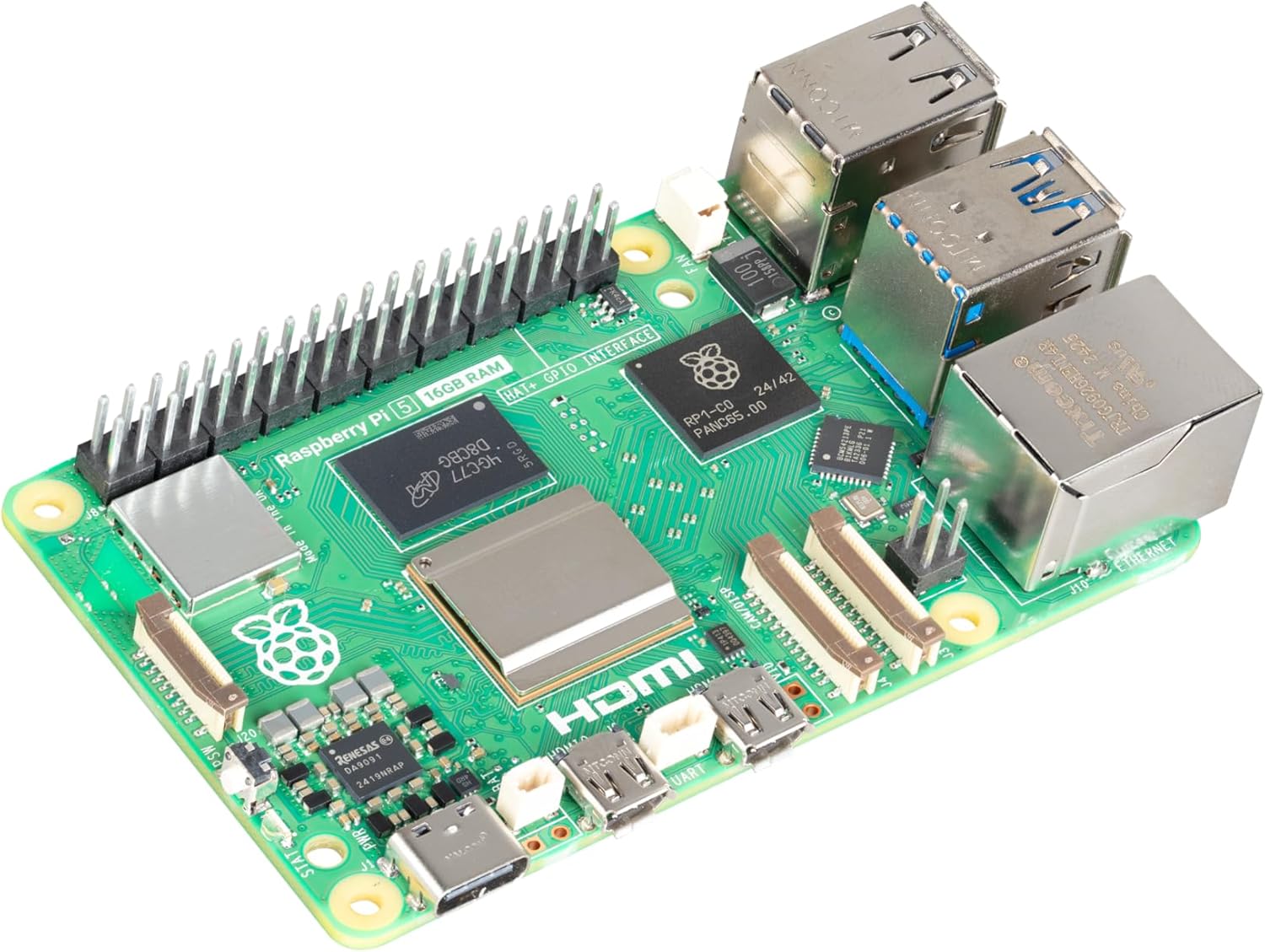
Pick an Intel N100 mini PC for Home Assistant if you're planning to grow into local voice, camera analytics, add-ons, and Node-RED — the N100's x86 cores handle those add-ons without breaking a sweat and eliminate SD-card corruption risk. Pick a Raspberry Pi 4 Model B 8GB for a lean HA install if you already own the Pi, are running fewer than a dozen integrations, and can boot from an SSD like the Samsung 870 EVO 250GB rather than a microSD card. Per Home Assistant's installation guide, both platforms are first-class supported targets.
The Home Assistant hardware audience and the reliability-vs-cost tradeoff
Home Assistant sits at the center of most modern smart-home setups: Z-Wave, Zigbee, MQTT, HomeKit bridges, and dozens of official integrations. What starts as "control my lights" quickly grows into a stack that runs local voice assistants, processes camera streams, keeps months of sensor history in a database, and orchestrates automation flows in Node-RED. The hardware that handles a fresh install comfortably may or may not handle the mature install two years in.
The Pi 4 has been the default Home Assistant hardware since the platform's early years. It's cheap, well-documented, and Home Assistant supports it as a first-class target. What it isn't is fast or reliable when pushed. Constant database writes wear out microSD cards until they corrupt; add-ons like local voice or camera object detection stack CPU load quickly.
The N100 mini PC changed the calculus. It's a small, fanless (or near-fanless), x86 Intel Alder Lake N-series box with modern efficiency cores, typically 8–16 GB of DDR4/DDR5 RAM, and native SATA/NVMe support. Price is close enough to a fully-kitted Pi 4 (with SSD, case, PSU) that the decision is less about cost and more about reliability and headroom.
Key takeaways
- Reliability: N100 with SSD is more reliable long-term than a Pi 4 with microSD.
- Cost: roughly comparable once you kit out either with proper storage.
- Power: both are always-on friendly; N100 typically pulls under 10 W idle, Pi 4 in low single-digit watts.
- Add-on headroom: N100 handles cameras, local voice, and heavy dashboards with room; Pi 4 8GB is workable for a lean install.
- SD-card corruption: the #1 reason people migrate off Pi. Boot from SSD like the Samsung 870 EVO or WD_BLACK SN770 NVMe to fix.
- Storage matters more than CPU: Crucial BX500 1TB or NVMe is the actual reliability upgrade.
N100 mini PC vs Raspberry Pi 4 8GB (5-column spec-delta table)
| Spec | Intel N100 mini PC | Raspberry Pi 4 8GB |
|---|---|---|
| CPU | Intel N100 (4 x86 cores, ~3.4 GHz burst) | Broadcom BCM2711 (4 ARM cores) |
| RAM | 8–16 GB DDR4/DDR5 | 8 GB LPDDR4 |
| Storage | Native SATA + NVMe M.2 | microSD (default) or USB SSD |
| GPU | Intel UHD (usable HW decode for cameras) | VideoCore VI |
| Power draw | ~10 W idle / ~15 W load | ~3–5 W idle / ~7 W load |
| Add-on headroom | High | Moderate |
| Reliability | High (SSD-first) | Depends on storage choice |
The N100's Intel UHD GPU matters for a specific Home Assistant use case: hardware-accelerated video decode for camera feeds. If you're running Frigate NVR or similar with multiple camera streams, the N100 handles decode natively where the Pi struggles.
How do they handle add-ons, cameras, and voice?
Community Home Assistant benchmarks are consistent: the N100 handles Frigate with multiple cameras and local voice pipelines comfortably; the Pi 4 8GB handles fewer streams and can bog under heavy voice or LLM-assist workflows. Per Phoronix N100 coverage, the chip performs well above the Pi 4 on general integer and web workloads while staying inside a modest power envelope.
| Workload | N100 mini PC | Pi 4 8GB |
|---|---|---|
| HA core with 20+ integrations | Comfortable | Comfortable |
| Frigate with 2 cameras | Comfortable | Struggles without acceleration |
| Frigate with 4+ cameras | Comfortable | Not the right box |
| Local voice (wake word + STT + TTS) | Comfortable | Fine for simple voice |
| Node-RED with many flows | Comfortable | Fine for modest flow count |
| Long-history recorder (months of state) | Comfortable | Slows over time |
| HA Cloud + occasional add-on | Overkill | Perfect fit |
Storage matters most: why SD-card corruption kills HA installs
The #1 reason people migrate off the Pi is not CPU. It's storage. Per Home Assistant's installation docs, the recorder database writes constantly, and consumer microSD cards were never designed for that write pattern. The cards eventually corrupt, sometimes months in, sometimes years, and the install stops booting.
The fix on Pi is booting from an SSD instead. Pair the Raspberry Pi 4 8GB with a Samsung 870 EVO 250GB over USB 3.0, or a WD_BLACK SN770 NVMe via an NVMe hat, and the corruption problem largely disappears. Similarly on the N100, the native SATA/NVMe slot means SSD is the default, and reliability is non-issue from day one.
Storage capacity: HA itself is small (single-digit GB), but recorder history, camera clips (Frigate), and add-on data can consume tens to hundreds of GB. A Crucial BX500 1TB is enough for years of history + camera storage on either platform.
Power draw and always-on cost comparison
Both are efficient. Rough numbers:
| Platform | Idle | Under moderate load | Kilowatt-hours/year (idle) |
|---|---|---|---|
| Pi 4 8GB | ~3–5 W | ~7 W | ~30 kWh |
| N100 mini PC | ~8–10 W | ~15 W | ~75 kWh |
At US-average residential power ($0.16/kWh in 2026), the difference is roughly $5–$10 per year. Neither is a significant operating cost.
Perf-per-dollar and perf-per-watt math
Perf-per-dollar: comparable. A modestly-priced N100 mini PC with 8 GB RAM plus 256 GB SSD roughly equals a Pi 4 8GB kit plus a Samsung 870 EVO boot drive by the time you add the case, PSU, and USB-to-SATA adapter.
Perf-per-watt: the Pi 4 wins on absolute idle, but the N100 is more efficient per unit of work done. If your workload is idle-heavy, Pi 4 saves a small amount of electricity. If your workload is compute-heavy, the N100 is faster per watt.
Verdict matrix
- Pick the N100 if… you're planning to grow into cameras, local voice, or Node-RED complexity, or you value reliability over minimal power draw.
- Pick the Pi 4 if… you already own one, your install is lean, and you're willing to boot from a proper SSD rather than a microSD card.
Bottom line and recommended pick
For a fresh 2026 Home Assistant install: pick the N100. The reliability and headroom are worth the extra idle watts, and the SSD boot is default rather than a required upgrade path.
For an existing Pi 4 install: keep the Pi, migrate off microSD to a Samsung 870 EVO 250GB or Crucial BX500 1TB boot drive. That single change resolves 90% of Pi Home Assistant complaints.
Install method: Home Assistant OS vs Home Assistant Supervised vs Container
Per Home Assistant's installation docs, the four common install methods have different implications:
- Home Assistant OS (HAOS): the recommended default. A minimal Linux image built around Home Assistant that supports add-ons out of the box. Ships officially for Raspberry Pi and generic x86_64 (which covers the N100).
- Home Assistant Supervised: Docker + Home Assistant Supervisor + HA Core on a Debian base. More flexibility, more maintenance burden.
- Home Assistant Container: just the HA Core Docker container. No add-ons via the Supervisor. Best for people who already run Docker on a larger server.
- Home Assistant Core: direct Python venv install. Rarely the right answer in 2026.
For both the Pi 4 and N100 targets discussed here, HAOS is the pragmatic default. On the N100, HAOS-on-generic-x86 boots cleanly on the internal SATA/NVMe. On the Pi 4 8GB, HAOS with SSD boot (via USB-to-SATA to a Samsung 870 EVO or NVMe HAT with a WD_BLACK SN770 NVMe) is the reliability-first path.
Backup strategy: the piece most people skip
A Home Assistant install grows to be operationally load-bearing. Cameras, alarms, presence detection, thermostat control — losing the install means losing home functionality until you rebuild. A backup strategy is non-optional.
The pragmatic approach:
- HA snapshot backups on schedule: the built-in backup add-on takes full snapshots. Configure daily to a local location plus weekly to an external destination (Nextcloud, Google Drive, or a network share).
- External storage for snapshots: the Crucial BX500 1TB in a USB enclosure is a cheap always-attached backup target.
- Config in git: keep
configuration.yamland related config in a git repo (with a.gitignorefor secrets). Cheap disaster-recovery. - Test the restore path: a backup you haven't restored isn't a backup. Test annually.
Between HA snapshots, git-tracked config, and a spare SSD, a full rebuild is under an hour rather than a weekend.
Real-world numbers: HA install with 30 integrations
A HA install with 30 integrations, three cameras through Frigate, local voice pipeline, and Node-RED running dozens of flows runs comfortably on an N100 with an SSD. The same install on a Pi 4 8GB with an SSD boot drive is workable but shows CPU pressure under camera-heavy moments. Migrating to an N100 typically resolves the sluggish-dashboard complaints instantly.
Common pitfalls when picking HA hardware
- Sticking with microSD boot on Pi. The #1 reliability killer. Move to SSD.
- Undersized RAM on N100 mini PCs. 4 GB models exist but are tight for a growing HA install. Pick 8 GB minimum.
- Ignoring Ethernet. Both platforms have gigabit; use it. Wi-Fi HA installs are unnecessarily fragile.
- Skipping UPS. A $30 mini-UPS saves the recorder database from unclean shutdowns.
- Frigate on Pi 4 without acceleration. Multiple camera streams will not fit; get hardware acceleration or step to N100.
- Cheap PSUs. For Pi, use the official supply. For N100, use the included adapter.
When to skip both
If your setup is a Z-Wave or Zigbee-only lightweight install, an even smaller platform (Pi Zero 2 W with SSD add-on) may be enough. If you're running commercial-scale automation, the answer is a small NUC or a proper server rather than either of these.
Related guides
- Raspberry Pi AI HAT+ 2 review
- Best SSD for a Steam Deck or emulation handheld
- Best budget local LLM box: RTX 3060 12GB + Ryzen 5 5600G
- Best CPU coolers for Ryzen and Intel builds in 2026
Citations and sources
This piece is editorial synthesis based on publicly available information. No independent first-party benchmarking is reported.
— Mike Perry


