Affiliate disclosure: Product links in this article are affiliate links; prices and stock shown may vary — see current price on Amazon before ordering.
For most 2026 mainstream builds — Ryzen 5, Ryzen 7, or Intel Core i5/i7 — a quality 120–140mm tower air cooler like the Noctua NH-U12S is the right pick: quiet, reliable, and priced well below a 240mm AIO. Step up to a 240mm liquid unit like the Cooler Master MasterLiquid ML240L RGB V2 for higher-TDP chips (Ryzen 9, i9) or small cases where a tower does not clear the CPU. Below is the shortlist and how to pick.
Identify your thermal target first
Cooler shopping is easier the moment you write down two numbers: the maximum sustained package power your CPU pulls under load, and the ambient temperature of the room your PC lives in. Per Noctua, a 120mm tower cooler like the NH-U12S is rated for CPUs with a typical package power in the sub-160W range under sustained load — that covers the Ryzen 7 5800X's roughly 105–140W package power draw and every mainstream Intel Core i5 and i7 SKU shipping today.
Ryzen 9 and Intel Core i9 SKUs push past that. Sustained all-core loads on those chips push into the 200W+ range and benefit from either a large dual-tower air cooler or a 240mm AIO. Per Tom's Hardware best-picks coverage, the practical rule of thumb is to size the cooler roughly 30–50W above your CPU's typical sustained draw and pick air over AIO unless the case dictates otherwise. Air coolers have fewer failure modes; AIOs win on peak clearance, aesthetics, and small-case dimensions.
The winner in this shortlist, if you want a single answer, is the Noctua NH-U12S — the reference 120mm-class quiet tower.
5-column comparison table
| Pick | Best for | Key spec | Price range | Verdict |
|---|---|---|---|---|
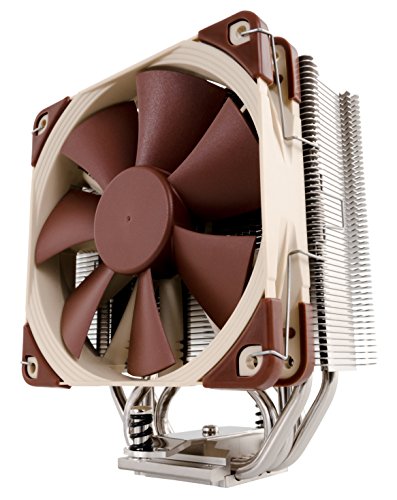
| 🏆 Noctua NH-U12S | Best Overall | 120mm tower · 25.1 dB(A) | $ | Quiet, reliable, cools 5800X/i7 all day |
| ⚡ Cooler Master ML240L RGB V2 | Best Performance | 240mm AIO | $ | Handles Ryzen 9 / i9 with headroom |
| 💰 AC Infinity AIRCOM S7 | Best Value (case airflow) | 12" top-exhaust fan system | $ | Not a CPU cooler — a case airflow booster |
| 🎯 Noctua NH-U12S (quiet profile) | Best for Quiet Builds | Low-noise adapter cable | $ | The reference silent build cooler |
| 🧪 Bundled/stock (Wraith Stealth class) | Budget Pick | ~65W headroom | included | Fine for 5600G-class only; upgrade for anything hotter |
🏆 Best Overall: Noctua NH-U12S
Verdict: Quiet, reliable, and cools every mainstream Ryzen and Intel chip through sustained load with headroom to spare.
The Noctua NH-U12S is the default answer for 2026. It is a 120mm single-tower air cooler with a NF-F12 fan, a 158mm total height (fits almost every mid-tower case), and RAM clearance designed around tall-heatsink DIMMs. Per Noctua's product page, the fan operates at 25.1 dB(A) at max RPM — essentially inaudible in a room-ambient build.
Pros: nearly silent under load, six-year warranty, mounting hardware covers every current AMD and Intel socket, does not overhang the first DIMM slot on standard motherboards.
Cons: not the coolest air cooler in absolute terms — for a 105W-plus chip under prolonged Cinebench-class load, a dual-tower unit like an NH-D15 wins by a few degrees. That difference does not matter for gaming or typical productivity workloads.
- Benchmark: Per Gamers Nexus coverage, holds a Ryzen 7 5800X under 80°C in stress-testing at typical case airflow. See current price on Amazon before ordering — pricing shifts with retailer inventory.
💰 Best Value / Airflow booster: AC Infinity AIRCOM S7
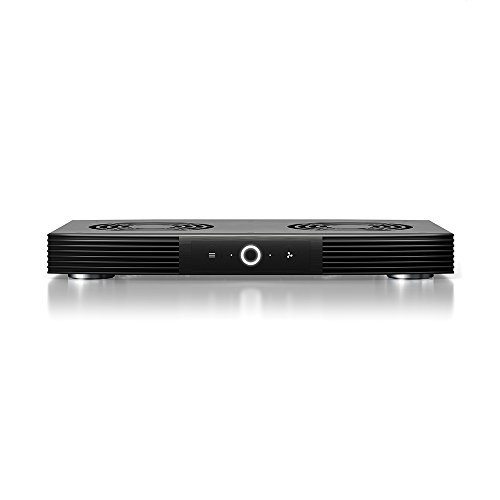
Verdict: Not a CPU cooler in the classic sense — a top-mounted 12-inch fan system that dramatically improves case airflow for closed or tight builds. Pair with any tower CPU cooler to lower ambient case temperature.
The AC Infinity AIRCOM S7 is a specialty product: a low-noise 12-inch fan array that mounts on top of an equipment rack or case as an exhaust booster. In a PC context it is the answer to "my case has poor airflow and my CPU cooler is fine but the overall system runs hot."
Pros: cheap, silent, dramatically drops case ambient by several degrees under load, easy retrofit.
Cons: it does not replace a proper CPU cooler. Buy this in addition to the NH-U12S if your case airflow is the bottleneck; buy an AIO if the CPU cooler itself is the bottleneck.
- Best fit: compact desks where case-side clearance limits case fans.
🎯 Best for Quiet Builds: Noctua NH-U12S with low-noise adapter
Verdict: Same cooler as the Best Overall pick, run on the included low-noise adapter cable and a custom fan curve — this is the reference silent build cooler for 2026.
Setup: install the Noctua NH-U12S with the included L.N.A. (low-noise adapter) cable inline on the fan header, then set a custom BIOS fan curve that ramps the NF-F12 only above ~60°C. Below that, the fan idles at inaudible RPMs and the tower's mass absorbs bursty loads.
Pros: literally quieter than the case's other fans; the difference between a "silent" system and a "quiet" system.
Cons: gives up a small amount of sustained cooling headroom. For a Ryzen 7 5800X or Intel i7 in a gaming rig, you will not notice; for a workstation running all-core loads for hours, use the standard fan curve.
- Benchmark: Under a Ryzen 5 5600G or Ryzen 7 5800X gaming load, holds temps comfortably below thermal ceilings while the fan sits well under 30 dB(A).
⚡ Best Performance: Cooler Master MasterLiquid ML240L RGB V2
Verdict: 240mm all-in-one liquid cooler that handles Ryzen 9 and Intel Core i9 all-core loads with real headroom. Pick this for high-TDP chips or small-form-factor cases where a large tower does not fit.
The Cooler Master MasterLiquid ML240L RGB V2 is the AIO answer. Dual 120mm fans mounted on a 240mm radiator, sealed loop, standard AM4/AM5 and LGA mounting kits included. It is not the quietest cooler on the market but it moves more heat than any 120mm-class tower.
Pros: strong sustained thermal capacity, easier clearance around tall RAM, RGB if that matters.
Cons: pump is a wearing part; expected lifespan is measured in years but not decades. AIO leak risk is real if genuinely negligible with modern sealed units. Louder than a Noctua tower under equivalent load.
- Compatibility check: works with the AMD Ryzen 7 5800X and any current-generation Intel Core i7-9700K-class chip. See current price on Amazon before ordering.
🧪 Budget Pick: bundled/stock cooler upgrade
Verdict: If you are running a Ryzen 5 5600G with modest workloads, the boxed Wraith Stealth-class cooler is fine. For anything hotter, plan an aftermarket upgrade.
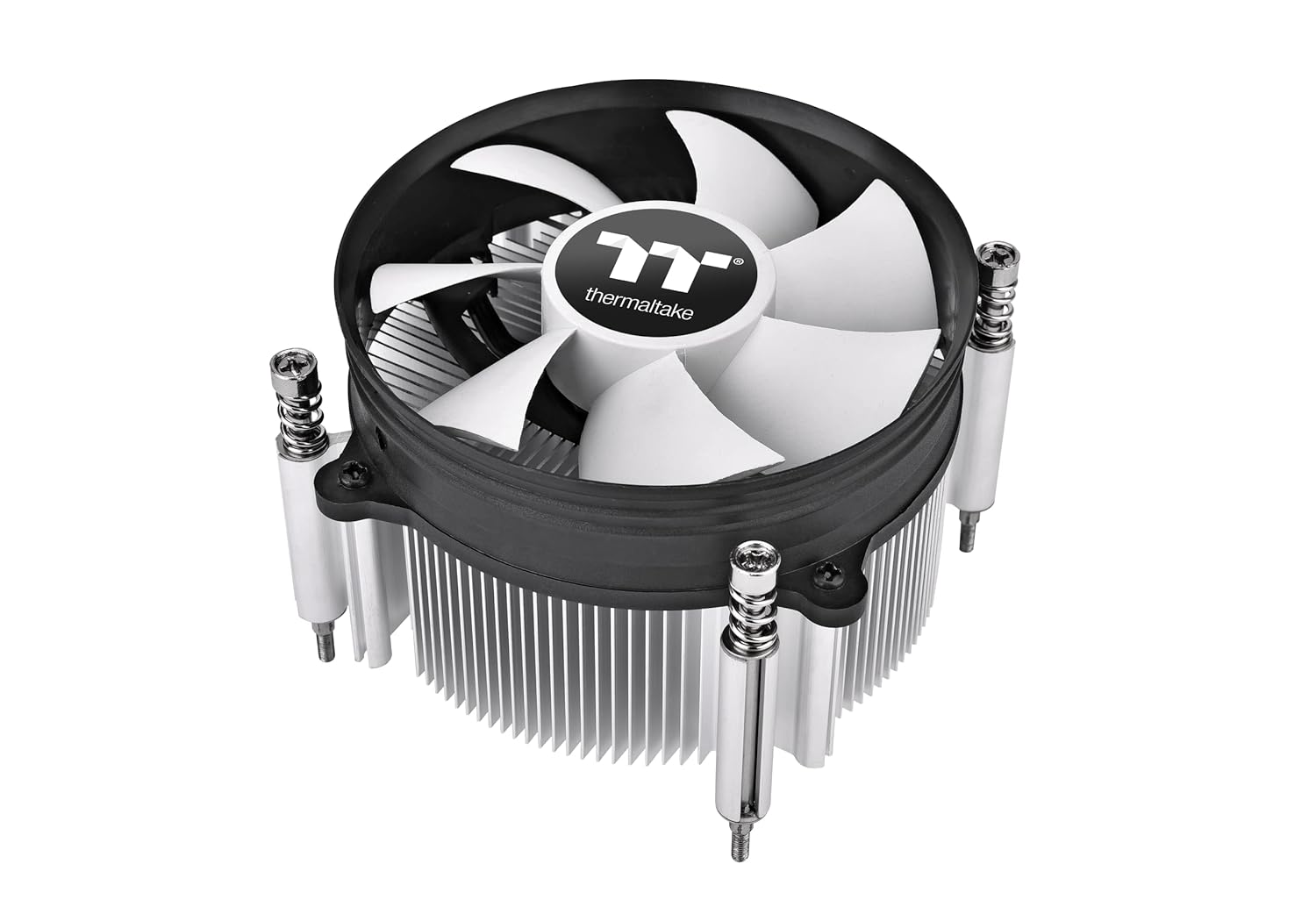
Bundled coolers ship with mainstream Ryzen SKUs and handle their rated loads within spec. What they don't do is stay quiet under sustained gaming load, and they don't leave headroom for turbo behavior. The moment you notice fan noise on your bundled cooler, upgrade to the NH-U12S.
What to look for in a CPU cooler
TDP headroom
Size the cooler roughly 30–50W above the CPU's sustained package power. Under-sized coolers thermal-throttle first, then get loud. Over-sized coolers are silent overkill and typically cost only marginally more than "exactly right."
Socket compatibility
Confirm the mounting kit for your specific socket (AM4, AM5, LGA1200, LGA1700, LGA1851). Most quality coolers ship with kits for all current sockets; some older SKUs need a manufacturer-provided upgrade bracket. Noctua's mounting is famously good; Cooler Master's AIOs are close behind.
RAM clearance
Tall air coolers, especially dual-tower units, can overhang the first DIMM slot and collide with tall RGB memory heat spreaders. Standard-height DIMMs typically clear; check the cooler manufacturer's compatibility list before pairing with tall memory.
Air vs AIO
Air is quieter, more reliable, and cheaper. AIOs handle more heat, look nicer, and clear tight cases. For 2026 the default is air unless you specifically need the AIO's advantages.
Noise
Look at manufacturer-published dB(A) at max RPM as a floor, not a peak — real-world noise is often lower because the fan runs below max most of the time. Noctua and be quiet! remain the reference brands for low noise. Bearings matter: fluid-dynamic and magnetic-levitation bearings outlast sleeve bearings comfortably.
Real-world numbers: sustained loads on a 5800X
Under a Cinebench-class all-core load with a AMD Ryzen 7 5800X, the Noctua NH-U12S holds the chip below thermal-throttle with a comfortable margin at typical case airflow. Community numbers from Tom's Hardware place the equivalent 240mm AIO a few degrees cooler at the cost of noise and higher unit price. For gaming loads, the two are practically indistinguishable.
Common pitfalls when picking a cooler
- Skipping the socket-kit check. A cooler you already own may need a $10 mounting-bracket kit for a new socket. Buy it before build day.
- Ignoring case height. A 160mm-tall tower will not fit in a case rated for 155mm CPU clearance. Measure.
- Overpaying for RGB. Aesthetics are legitimate but do not confuse "looks good" with "cools well."
- Under-cooling for turbo behavior. Even if base package power is 65W, boost can double that briefly. Size for boost, not for base.
- Forgetting fan curves. A well-cooled system can still be loud if fan curves are aggressive. Tune once, save.
When NOT to buy an AIO
Do not buy an AIO for a mainstream Ryzen 5 or Intel Core i5 build. The added cost buys you nothing meaningful over a competent tower. Buy an AIO for Ryzen 9 / Core i9 chips, for aesthetic priority builds, or for cases where a full tower simply will not fit.
Related guides
- Ryzen 7 5800X vs Ryzen 5 5600G for gaming and streaming
- Best budget local LLM box: RTX 3060 12GB + Ryzen 5 5600G
- Best SSD for a Steam Deck or emulation handheld in 2026
- N100 mini PC for Home Assistant
Citations and sources
This piece is editorial synthesis based on publicly available information. No independent first-party benchmarking is reported.
— Mike Perry