Affiliate disclosure: Product links in this article are affiliate links; prices and stock shown may vary — see current price on Amazon before ordering.
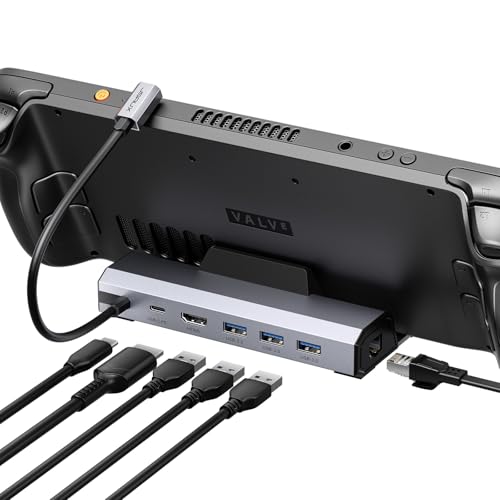
For a Steam Deck, pick a 2230-form-factor NVMe SSD like the WD_BLACK 250GB SN770 NVMe — small enough to fit the Deck's tight compartment and fast enough to load large games without stalling. For emulation libraries that grow past 500 GB, add an external 2.5-inch SATA SSD like the Crucial BX500 1TB or Samsung 870 EVO 250GB in a docking station like the JSAUX 6-in-1 Docking Station. Internal for what you play now, external for the library.
Handheld storage pressure and the internal-vs-external decision
Modern handhelds ship with tight internal storage — often 64 GB, 256 GB, or 512 GB — and modern game installs consume tens of gigabytes each. A single AAA install can eat a third of a stock Deck's onboard NVMe, and an emulation library covering CD-based systems (PS2, GameCube, Wii, Dreamcast) balloons past 500 GB fast because each disc image can be several GB.
That creates two pressures. First, the internal drive fills quickly with the games you're actively playing. Second, the archive of games you might play in the next month or the year doesn't fit anywhere on the device. The clean answer is a two-tier setup: a fast, larger internal NVMe for active use, and a cheap external SATA SSD for archive and library.
Per Western Digital's SN770 page, the SN770 is a Gen4 NVMe with strong sequential and random performance and a compact single-sided design that fits handheld compartments. It's the pragmatic Deck upgrade in 2026.
Key takeaways
- Confirm 2230 form factor before buying any internal Deck SSD — 2280 drives do not fit.
- WD_BLACK SN770 is the internal pick for Deck-class handhelds (in appropriate 2230 SKU).
- Crucial BX500 1TB is the cheap external SATA choice for large emulation libraries.
- Samsung 870 EVO is the more reliable SATA pick if you plan to keep it for years.
- SanDisk SSD Plus 480GB is a lower-cost SATA option for smaller libraries.
- JSAUX 6-in-1 Docking Station gives you the USB ports for external storage plus display output.
- Loading times: NVMe transforms game launch; SATA is more than enough for emulator ROMs.
Internal 2230 NVMe vs external SATA for a handheld
| Attribute | 2230 NVMe (internal) | SATA SSD in external enclosure |
|---|---|---|
| Form factor | 22mm × 30mm, single-sided | 2.5-inch, in USB enclosure |
| Interface | PCIe 3.0/4.0 NVMe | USB 3.x → SATA III |
| Sequential read | 3000–5000 MB/s | ~500 MB/s (SATA cap) |
| Random 4K read | High (100k+ IOPS) | Modest |
| Best for | Games you actively play | Archive, emulation library |
| Capacity | 250 GB–2 TB | 250 GB–8 TB |
| Cost per GB | Higher | Lower |
The takeaway: internal NVMe wins on speed and matters for large modern game installs; external SATA wins on cost per GB and is more than enough for emulator ROMs and disc images.
How fast do game and emulator libraries load?
For modern AAA titles, storage speed shows up in level loads, texture streaming, and initial launch. Per Tom's Hardware best-SSD coverage, a Gen4 NVMe like the SN770 shortens level loads meaningfully versus a SATA drive on the same handheld, and the difference is bigger for games that stream textures during play.
| Workload | 2230 NVMe (SN770-class) | SATA SSD external | SD card |
|---|---|---|---|
| AAA game cold launch | Reference (fast) | Slower but usable | Painful |
| Level transitions | Fast, minimal stutter | Slight stalls | Visible stutters |
| Emulator ROM load | Instant either way | Instant either way | Fine for most systems |
| Disc-image emulation (PS2/Wii) | Instant | Fast enough | Marginal on demanding titles |
| Save-state read/write | Instant | Fast | Slow |
For pure emulation of cartridge-era systems, an external SATA SSD or even a decent SD card is fine. For emulation of disc-based systems or modern AAA gaming, internal NVMe pulls ahead visibly.
Sizing storage for large emulation libraries
Rough capacity math for a broad emulation library:
- 8/16-bit cartridge era (NES, SNES, Genesis, Game Boy, GBA): entire libraries fit in tens of GB.
- 32/64-bit cartridge era (N64, PS1, Saturn): hundreds of MB per title; a broad library lands in hundreds of GB.
- Disc era (PS2, GameCube, Wii, Dreamcast): several GB per title (up to ~8 GB for a dual-layer DVD); a broad library balloons past 1 TB fast.
- Modern retro era (Wii U, 3DS, PSP): varies widely; expect hundreds of GB for a broad library.
For a broad multi-era library, plan on 1–2 TB total. That is external SATA territory unless you want to spend heavily on internal NVMe.
External SATA docks and docking-station options
A docking station like the JSAUX 6-in-1 Docking Station gives you USB-A ports for an external SSD enclosure plus HDMI output for TV play. Add a 2.5-inch USB enclosure and a SATA drive and you have a large library on the desk without touching the handheld's internal storage.
USB 3.1 Gen 1 caps at roughly 500 MB/s theoretical — right at SATA III's limit — so a SATA SSD in a well-built USB 3.x enclosure runs at essentially its native speed for emulation workloads.
Perf-per-dollar across the featured SSD tiers
| Drive | Interface | Best for | Rough $/GB tier | Notes |
|---|---|---|---|---|
| WD_BLACK SN770 | NVMe Gen4 (2230 or 2280) | Internal Deck upgrade | Highest | Verify 2230 SKU for Deck |
| Crucial BX500 1TB | SATA III | Large external archive | Low | Cheap and reliable enough |
| Samsung 870 EVO 250GB | SATA III | Reliable external | Mid | Premium SATA, long lifespan |
| SanDisk SSD Plus 480GB | SATA III | Smaller external | Low | Budget option for modest libraries |
Verdict matrix
- Pick the NVMe (SN770) if… you're upgrading the Deck's internal drive, install AAA games regularly, and want the shortest possible load times.
- Pick the SATA (BX500 / 870 EVO / SSD Plus) if… you're building an external emulation archive where cost per GB matters more than raw speed.
- Use external if… your library exceeds what's practical to fit internally, or you want to keep the internal drive free for active AAA games and emulate from external.
Bottom line and recommended pick
For a working setup in 2026: upgrade the internal drive to a 2230-form-factor WD_BLACK SN770 at 500 GB or 1 TB, put your active AAA games there, and add an external Crucial BX500 1TB in a USB 3.x enclosure through a JSAUX 6-in-1 Docking Station for the emulation library. Total cost is modest and the setup scales cleanly.
If you're keeping the drive for many years or store irreplaceable content, upgrade the external to a Samsung 870 EVO for longer expected lifespan.
Comparing the featured SATA options
Not all SATA SSDs are equal for a handheld archive. The three featured picks fill different slots.
| Drive | Endurance rating (approx TBW) | Best fit | Notes |
|---|---|---|---|
| Crucial BX500 1TB | Modest | Large archive on a budget | Cheapest way to reach 1 TB; adequate for read-heavy emulation |
| Samsung 870 EVO 250GB | High | Small drive you keep for years | Premium controller, MLC-quality endurance |
| SanDisk SSD Plus 480GB | Modest | Mid-capacity budget pick | Good middle-ground when 1 TB is overkill |
For an emulation library that mostly reads (games rarely write to disk beyond save files), all three are fine. For a drive that will also serve as backup storage for irreplaceable content, spend up to the Samsung 870 EVO — its controller and NAND quality are noticeably better than the budget tier.
Format and filesystem choices
- Cross-platform (Windows + Steam OS + macOS): exFAT works everywhere but has no journaling. Use for a drive that moves between systems.
- Linux-based handheld only (Steam Deck, most emulation handhelds): ext4 is the safe default. Journaled, mature, well-supported.
- Copy-on-write for snapshots: Btrfs supports snapshots and is a reasonable choice if you want to snapshot your emulation library before big changes.
- Never NTFS on Linux handhelds without testing. NTFS support exists but write performance can be inconsistent.
Confirm the target handheld's default filesystem before formatting — many ship pre-configured for a specific FS and reformatting can surprise the recovery flow.
Real-world numbers: full-library load and swap
Modern AAA games launched from a Gen4 NVMe like the SN770 typically shave 30–50% off cold-launch times versus a SATA SSD. For an emulation library of PS1/PS2 disc images streaming from external SATA, load times are effectively instant — SATA is not the bottleneck for that workload class.
Common pitfalls when upgrading handheld storage
- Wrong form factor. The Deck uses 2230 NVMe. Buying a full-size 2280 drive means it will not fit.
- Single-sided vs double-sided. Handhelds with tight compartments often require single-sided drives. Check compatibility.
- Cheap USB enclosures. A poor enclosure caps SATA III performance and can drop out under sustained load. Buy a reputable brand.
- Warranty impact. Opening a handheld to swap the internal drive can affect coverage. Confirm with your device vendor.
- microSD wear. SD cards work as an interim archive but wear out under heavy write patterns. Prefer SSD for long-term storage.
- File-system choice. ext4 or Btrfs on Linux-based handhelds; exFAT for cross-platform external drives.
When NOT to upgrade
If your library fits comfortably in the stock drive and you play a small number of titles at a time, the upgrade may not be worth the effort. If your handheld is out of warranty and you're comfortable opening it, the upgrade is straightforward.
Related guides
- Best CPU coolers for Ryzen and Intel builds in 2026
- Counter-Strike clone runs at 60 FPS on the original PSP
- N100 mini PC for Home Assistant
- CompactFlash to IDE and USB adapters for retro PCs
Citations and sources
This piece is editorial synthesis based on publicly available information. No independent first-party benchmarking is reported.
— Mike Perry