The always-on tiny-model host
A 0.6B-parameter model doesn't write your code or summarize a contract. What it does well is sit behind other software, awake around the clock, turning messy input into a small structured decision. Typical jobs include intent routing for a voice assistant ("turn off the kitchen lights" becomes {"intent":"light_off","room":"kitchen"}), parsing Home Assistant commands, triaging log lines into severity buckets, and fronting an offline voice pipeline that sends hard questions to a bigger model.
For those jobs, raw throughput isn't the interesting question. A 20-token JSON reply at 5 tok/s arrives in four seconds, and at 70 tok/s in a third of a second. Both "work". What separates the two boxes here is latency under a real system prompt, watts at the wall across 8,760 hours a year, physical footprint, and whether the box has anywhere to grow.
Qwen3 0.6B is a sensible model for this tier. The Hugging Face model index lists 751,632,384 parameters. The model card gives a 32,768-token context and 28 layers, and it describes switching between thinking and non-thinking modes within the one model. For routing work you'll want non-thinking mode, because thinking mode spends tokens reasoning before it answers, and on a Pi those tokens cost seconds.
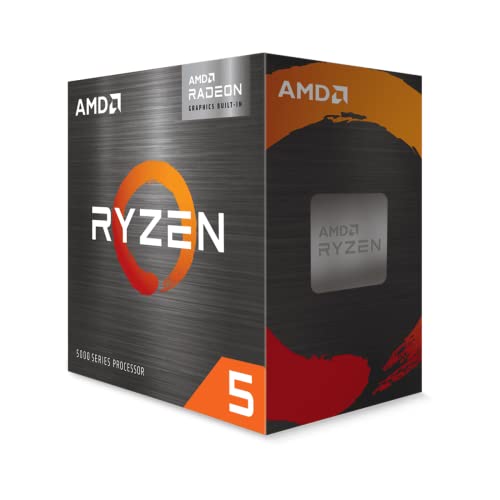
The two candidates are the Raspberry Pi 4 Model B 8GB, which many readers already own, and a small desktop built on the AMD Ryzen 5 5600G, an APU that boots without a graphics card.
This piece is editorial synthesis of public measurements: a published SBC benchmark study (arXiv 2511.07425) and its raw per-model results, Jeff Geerling's ai-benchmarks, a Zen 3 llama.cpp test by TechHara, vendor datasheets, and Qwen's own model files. No source has published Qwen3 0.6B on either machine specifically, so the headline figures are scaled from the closest measured model, with the arithmetic shown.
Key takeaways
- Qwen3 0.6B at Q4_K_M is a 0.40 GB file, and Q8_0 is 0.64 GB, per Unsloth and Qwen's official GGUF. Q4_K_M through Q8_0 need about 0.9-1.1 GB at 4K context, well within even a 2 GB Pi 4.
- At long context, the KV cache outweighs the model. At 16K tokens the FP16 cache is about 1.88 GB, 4.7 times the Q4_K_M weights (arithmetic below).
- A Pi 4 measured 6.44 tok/s on Qwen2 0.5B (Q4_0, 352 MB), and 2.04 tok/s on Llama 3.2 1B, in the lemonade-benchmark Pi 4 results. Scaled by file size, that's about 5.7 tok/s for Qwen3 0.6B.
- The Pi 4 peaked at 8 W during inference in the same study (arXiv 2511.07425).
- A 5600G is estimated at roughly 60-95 tok/s, from Zen 3 CPU data (TechHara) and a bandwidth ceiling near 129 tok/s.
- Energy per token ends up close: about 0.39 kWh per million tokens on the Pi against at least 0.26 kWh on the 5600G package.
What are Qwen3 0.6B's actual memory requirements?
File sizes are from Unsloth's Qwen3-0.6B-GGUF repository. The Q8_0 row matches Qwen's official GGUF at 0.64 GB. KV-cache size comes from the published config.json: 28 layers, 8 key-value heads and a head dimension of 128. At FP16 that's 2 × 28 × 8 × 128 × 2 bytes = 114,688 bytes per token, or 0.47 GB at 4,096 tokens and 1.88 GB at 16,384 tokens. Resident figures exclude the operating system and the runtime's own buffers.
| Quant | File size | Resident at 4K context | Resident at 16K context | Quality note |
|---|---|---|---|---|
| Q4_K_M | 0.40 GB | ~0.87 GB | ~2.28 GB | Common default; 4.89 bits/weight per llama.cpp |
| Q5_K_M | 0.44 GB | ~0.91 GB | ~2.32 GB | 5.70 bits/weight |
| Q6_K | 0.50 GB | ~0.97 GB | ~2.37 GB | 6.56 bits/weight |
| Q8_0 | 0.64 GB | ~1.11 GB | ~2.52 GB | Qwen's official quant; 8.50 bits/weight |
| BF16 | 1.20 GB | ~1.67 GB | ~3.08 GB | Unquantized; slowest on bandwidth-bound boards |
Two things stand out. First, for such a small model the quant choice barely changes the memory footprint: Q8_0 costs only 0.24 GB more than Q4_K_M. At that price, Q8_0 is cheap to try first if its speed is acceptable. Qwen doesn't publish per-quant accuracy for this model, so check it against your own prompts.
Second, context is the real budget. Q4_K_M weights cost 0.40 GB, and the cache passes that at roughly 3,460 tokens. A Home Assistant pipeline that stuffs a long device list into every prompt pays for it in cache, not weights. On the 8 GB Pi none of this matters. On a 1 GB or 2 GB board, it's the whole story.
Spec delta: Raspberry Pi 4 8GB vs Ryzen 5 5600G
| Spec | Raspberry Pi 4 Model B 8GB | AMD Ryzen 5 5600G | Why it matters at 0.6B | Source |
|---|---|---|---|---|
| Cores / arch | 4 × Cortex-A72 (Arm v8) @ 1.8 GHz | 6 Zen 3 cores / 12 threads, x86-64 | Prefill speed | Pi 4 product brief, AMD |
| Memory | 8 GB LPDDR4-3200, soldered | Dual-channel DDR4 up to 3200 MT/s (~51.2 GB/s) | Generation ceiling | arXiv 2511.07425, AMD |
| Graphics | VideoCore VI (not used by llama.cpp) | 7-core Radeon at 1,900 MHz | iGPU helps prefill only | AMD |
| Power under inference | 8 W peak (Pi 4, Ollama); 6 W peak (Pi 400, same SoC) | 65 W default TDP, package only | Running cost | arXiv 2511.07425, Geerling, AMD |
| Power input | 5 V / 3 A USB-C | ATX PSU | PSU choice | Pi 4 datasheet |
| Catalog price (2026-09-16, may vary) | $178.81 board | $199.99 CPU only | The APU still needs a board, RAM, PSU and case | Catalog listings |
Idle watts are deliberately missing from this table. Neither vendor publishes an idle figure that holds up for a whole system. A Pi's idle depends on attached USB storage, and a desktop's idle depends far more on the motherboard, PSU and fans than on the CPU. Measure both at the wall with a plug-in power meter before trusting any annual-cost figure, including the ones below.
How fast is Qwen3 0.6B on each board?
Measured data first:
| Platform | Model measured | Generation | Peak power | Source |
|---|---|---|---|---|
| Raspberry Pi 4 (4 GB), Ollama | SmolLM 135M | 24.09 tok/s | 8 W (study-wide Pi 4 peak) | lemonade-benchmark CSV, arXiv |
| Raspberry Pi 4 (4 GB), Ollama | SmolLM 360M | 11.23 tok/s | same | same |
| Raspberry Pi 4 (4 GB), Ollama | Qwen2 0.5B, Q4_0, 352 MB | 6.44 tok/s | same | same; size per Ollama |
| Raspberry Pi 4 (4 GB), Ollama | TinyLlama 1.1B | 4.76 tok/s | same | same |
| Raspberry Pi 4 (4 GB), Ollama | Llama 3.2 1B | 2.04 tok/s | same | same |
| Raspberry Pi 400 (same BCM2711) | Llama 3.2 3B | 1.60 tok/s | 6 W | Geerling |
| Ryzen 5 5600H CPU (Zen 3, 6 cores) | Llama 2 7B Q4_0, 3.56 GiB | ~10 tok/s gen, ~34 tok/s pp512 | not reported | TechHara |
The Pi 4 figures were measured on the 4 GB board. For a model this small, the 8 GB board uses the same SoC and memory speed, so generation should match.
Scaled estimates for Qwen3 0.6B:
| Qwen3 0.6B (estimates) | Generation, Q4_K_M | Generation, Q8_0 | Prefill | First token after a 300-token prompt |
|---|---|---|---|---|
| Raspberry Pi 4 8GB | ~5.7 tok/s | ~3.5 tok/s | ~15-25 tok/s | ~12-20 s |
| Ryzen 5 5600G CPU | ~70 tok/s (range 60-95) | ~40-60 tok/s | ~300 tok/s | ~1 s |
| Ryzen 5 5600G iGPU (Vulkan) | similar to CPU | similar to CPU | ~680 tok/s | ~0.5 s |
Here is how each estimate was built. The Pi generation figure scales the measured Qwen2 0.5B result by file size (6.44 × 352 MB ÷ 397 MB). The 5600G generation figure starts from TechHara's ~10 tok/s on a 3.56 GiB file, which scales naively to ~96 tok/s at Qwen3 0.6B's 0.37 GiB. Small models don't scale perfectly, because fixed per-token overhead starts to dominate. On the Pi, the measured 0.5B result reached about 71% of what naive scaling from Geerling's 3B figure predicts. Applying the same discount gives ~68 tok/s, and the bandwidth ceiling is 51.2 GB/s ÷ 0.397 GB ≈ 129 tok/s. The prefill figures scale TechHara's ~34 tok/s (CPU) and ~76 tok/s (iGPU) by parameter count (6.74B ÷ 0.75B). None of the sources publishes a Pi 4 prefill figure, so the Pi range assumes a prefill-to-generation ratio like the one TechHara measured on Zen 3 (about 3.4×) and should be treated as an order-of-magnitude estimate.
A second caveat: the Pi 4 figures come from Ollama. The same study reports that Llamafile generated tokens 3-4× faster than Ollama on the Pi 5 and Orange Pi 5 Pro (arXiv 2511.07425), but it couldn't run Llamafile on the Pi 4. So a leaner runtime might lift the Pi's number, but that's untested on this board.
Is LPDDR4 bandwidth the limit on the Pi, or is it the cores?
Both, and the balance shifts as models shrink. The measured Pi 4 data shows the pattern.
If bandwidth were the only limit, speed would rise in step with falling file size. It rises, but not in step. Going from Llama 3.2 3B (1.87 GiB, 1.60 tok/s on the Pi 400 per Geerling) to Qwen2 0.5B (352 MB, 6.44 tok/s on the Pi 4) shrinks the file about 5.7 times but raises speed only about 4 times. Going from SmolLM 360M to SmolLM 135M, the model shrinks about 2.7 times and speed rises about 2.1 times, from 11.23 to 24.09 tok/s (lemonade-benchmark CSV). Weight streaming still sets most of the pace. The shortfall is fixed per-token work that doesn't shrink with the transformer layers: runtime overhead, sampling, and, for Qwen, a 151,936-token vocabulary projection (config.json). All of that lands on four Cortex-A72 cores.
The same CSV also shows how noisy single-board results are. SmolLM2 360M measured 3.68 tok/s, a third of SmolLM 360M's figure at the same parameter count. Treat any one row as indicative rather than exact, including the Qwen2 0.5B row the estimate here is built on.
The practical upshot for the Pi: quantizing harder buys somewhat less speed than file size predicts. The table's ~3.5 tok/s for Q8_0 against ~5.7 tok/s for Q4_K_M is the file-size prediction, and the real gap is likely narrower. Measure both on your own board before giving up Q8_0's extra fidelity.
On the 5600G, the Zen 3 cores and AVX2 kernels clear the fixed per-token work much faster, and the dual-channel bus at ~51.2 GB/s is roughly an order of magnitude beyond what a 0.40 GB model needs. That headroom is why the estimate has such a wide range, and why the desktop's lead holds all the way up to 7B.
What can you actually build with 0.6B?
When this is the right size:
- Intent routing and slot filling. Short, constrained outputs, such as a fixed intent list or a JSON schema, suit a small model well, especially with grammar-constrained decoding in llama.cpp.
- Classification. Log severity, email category, "is this a question or a command". The output is a single token or word, so generation speed barely matters and prefill dominates.
- Structured extraction from short text. Dates, room names, quantities.
- A local front door. Answer the easy 80% locally, and forward anything the router isn't confident about to a larger model elsewhere.
When it isn't:
- Open-ended question answering. Small models state wrong facts fluently.
- Multi-turn conversation. The thread gets lost within a few exchanges.
- Long-document summarization. On the Pi, a 2,000-token input means minutes of prefill before the first word.
- Thinking mode on the Pi. Qwen3's reasoning mode (model card) can emit hundreds of tokens before answering. At ~5.7 tok/s, that's a minute of silence.
What you'll need
For the Pi path:
- The board. The Raspberry Pi 4 Model B 8GB. A 4 GB board also holds this model, but the 8 GB board leaves room for a speech-to-text model alongside it.
- Power. The Pi 4 datasheet calls for a "good quality USB-C power supply capable of delivering 5V at 3A". Undersized phone chargers cause brownouts that look like software crashes.
- Active cooling. The same datasheet says the firmware throttles "both the CPU speed and voltage to make sure the CPU temperature never exceeds 85 degrees C". An always-on inference host keeps all four cores busy for every request.
- Boot storage. The SD slot peaks at 50 MB/s (datasheet). For a 0.40 GB model that's only an 8-second load, so speed isn't the issue. Wear is: a 24/7 host writes logs constantly, and microSD cards fail under that. A USB 3.0 SSD fixes it.
The all-in-one route is the Vilros Raspberry Pi 4 8GB Basic Starter Kit, whose listing describes a "Fan Cooled Heavy Duty Aluminum Alloy Case". That covers the cooling line in one purchase. You'll still want an SSD for boot.
For the 5600G path, you need an AM4 motherboard, a matched dual-channel DDR4 kit (16 GB is plenty for this model), a small ATX or SFX supply, and a case. Single-stick memory halves the bandwidth ceiling, so don't skip the second DIMM.
When do you outgrow both boards?
The step up from 0.6B is usually 4B, and then 8B, once routing turns into real answering.
At 4B, the Pi 4 falls to about 1.3 tok/s and the 5600G to about 15 tok/s, as the Qwen3 4B comparison works through. The Pi is out at that size. The 5600G survives.
At 8B, the answer is a discrete GPU in the 5600G's PCIe slot. The MSI Gaming GeForce RTX 3060 12GB measures 55.2 tok/s on Qwen3 8B at 4K context per Hardware Corner, and 323.07 tok/s on the 1.1B TinyLlama per Geerling's issue #40. Per-card data is at /benchmarks/nvidia-geforce-rtx-3060-12-gb.
This is the structural difference between the two boxes. The Pi's 8 GB is soldered and it has no PCIe slot for a GPU. The 5600G box grows by adding a card.
Watts, idle draw, and annual running cost
Electricity is assumed at $0.15/kWh. The Pi figure uses the Pi 4's 8 W measured peak (arXiv 2511.07425). The 5600G figure uses its 65 W package TDP (AMD), which leaves out the rest of the desktop, so treat it as a floor on energy and a ceiling on the CPU's own share.
| Metric | Raspberry Pi 4 8GB | Ryzen 5 5600G |
|---|---|---|
| Generation, Qwen3 0.6B Q4_K_M (est.) | ~5.7 tok/s | ~70 tok/s |
| Power basis | 8 W peak, whole board | 65 W, package only |
| Energy per 1M tokens | ~0.39 kWh | ≥0.26 kWh |
| Electricity per 1M tokens | ~$0.06 | ≥$0.04 |
| Tokens per day at full load | ~490,000 | ~6 million |
| A full year at the load figure | ~70 kWh / ~$10.50 | ~569 kWh / ~$85 (package ceiling) |
At full load, the two are close on energy per token. The Pi draws about an eighth of the power and does about a twelfth of the work.
The full-year row is a ceiling for both, not a forecast. A router or classifier spends almost all its life idle, waiting for the next request. That makes idle draw the number that actually sets the bill. It's also where the Pi's small board and lack of a desktop power supply give it a structural advantage. Measure your specific desktop's idle at the wall before assuming the 5600G costs anywhere near $85 a year, or anywhere near as little as the Pi.
Verdict matrix
Get the Pi 4 8GB if you're building a voice front end for single-intent commands with a short system prompt, and a few seconds' latency is acceptable. Counter-case: a 300-token prompt adds an estimated 12-20 seconds of prefill before the first token, which is too slow for a kitchen voice assistant.
Get the Pi 4 8GB if it's a home-automation router handling queued, non-interactive events, such as "classify this doorbell event". About 490,000 tokens a day is far more than a household generates.
Get the Pi 4 8GB if it's log triage on a single host or a small homelab. Classification outputs are a word or two, and the Pi keeps up.
Get the 5600G box if the voice front end has a human waiting on every request and the prompt carries device context. Sub-second first tokens are the requirement, and only the desktop meets it.
Get the 5600G box if it doubles as a dev sandbox where you'll try 4B and 8B models next month. It can run them, and it can take a GPU.
Get the 5600G box if it's already running as a NAS head or media server. Adding a 0.6B model to a machine that's on anyway costs nothing extra.
Recommended pick
For a dedicated tiny-model host doing routing, classification or command parsing, where outputs are short, prompts are compact, and nobody stands waiting on a sub-second reply, get the Raspberry Pi 4 8GB with active cooling and a USB SSD. The measured Pi 4 data puts Qwen3 0.6B around 5.7 tok/s on an 8 W peak (lemonade-benchmark, arXiv), which is enough for that job in a box the size of a deck of cards. Two conditions flip the pick to the 5600G: long system prompts with a human waiting, or any plan to move past 1B. At that point, prefill latency and the missing upgrade path rule the Pi out.
Live price comparison
Current listings: the Raspberry Pi 4 Model B 8GB, the Vilros Raspberry Pi 4 8GB Basic Starter Kit, and the AMD Ryzen 5 5600G. CPU benchmark data for the APU is at /benchmarks/amd-ryzen-5-5600g. Prices reflect the retailer at the last refresh and may vary, so confirm at checkout.
As an Amazon Associate, SpecPicks earns from qualifying purchases.
Frequently asked questions
Does Qwen3 0.6B need a GPU or accelerator HAT at all?
No. At Q4_K_M the file is 0.40 GB and the whole model plus a 4K-token cache needs under 1 GB, so a Raspberry Pi 4 and any modern desktop CPU hold it entirely in RAM. llama.cpp-style GGUF inference runs on the CPU cores. Accelerator HATs sold for vision workloads generally don't plug into that path, so they add cost without speeding up text generation for this model.
Should the Pi boot from microSD or from a USB SSD?
A USB SSD, for reliability rather than speed. The Pi 4's SD slot peaks at 50 MB/s, which loads a 0.40 GB model in about eight seconds, so load time isn't the problem. The problem is wear: a 24/7 host writes logs and cache files constantly, and microSD cards fail under that duty cycle. A USB 3.0 SSD removes the failure mode and is the cheapest reliability upgrade for an always-on Pi.
How much does active cooling matter for a 24/7 Pi inference box?
A lot. The Raspberry Pi 4 datasheet says the firmware throttles CPU speed and voltage so the chip never exceeds 85°C, and token generation keeps all four cores at full load for every request. On a busy router, that load is close to continuous. A fan-cooled case keeps the board near its benchmark speed. Without one, throughput falls under sustained load, and the slowdown looks like a software problem.
What quality should I expect from a 0.6B model?
Treat it as a classifier and router, not a conversational assistant. Models this small handle intent detection, short structured extraction and constrained-format output reasonably well, especially with grammar-constrained decoding. They state wrong facts fluently on open-ended questions and lose the thread in multi-turn chat. Working systems pair the model with deterministic code and escalate ambiguous requests to a larger model. Use Qwen3's non-thinking mode for routing to keep outputs short.
Is the 5600G box worth the extra cost for such a small model?
Only if a person waits on each response with a real system prompt, if the box already earns its keep as a NAS or media server, or if you expect to move to 4B-8B models. For a dedicated single-purpose router, the Pi's 8 W inference peak and tiny footprint matter more than the desktop's estimated 70 tok/s. Short classification outputs barely use that speed, but long prompts do.
Can an older Raspberry Pi 3 or Zero 2 W run this model?
Memory is the constraint. Qwen3 0.6B at Q4_K_M plus a 4K-token FP16 cache needs about 0.87 GB before the operating system, which rules out the 512 MB Zero 2 W unless you cut context sharply. A 1 GB Pi 3 is marginal for the same reason. Both also have slower cores than the Pi 4's Cortex-A72. For a reliable tiny-model host, a Pi 4 with 2 GB or more is the practical floor.
Related guides
- Raspberry Pi 4 8GB for local LLMs
- Best Raspberry Pi for a local LLM home lab
- Ryzen 5 5600G for local LLM CPU inference
- Qwen3 4B: Raspberry Pi 4 8GB vs Ryzen 5 5600G
- Qwen3 8B: Raspberry Pi 4 8GB vs RTX 3060 12GB
Citations and sources
- Unsloth, Qwen3-0.6B-GGUF (accessed 2026-09-16)
- Qwen, Qwen3-0.6B-GGUF (accessed 2026-09-16)
- Hugging Face model index, Qwen/Qwen3-0.6B (accessed 2026-09-16)
- Qwen3-0.6B model card (accessed 2026-09-16)
- Qwen3-0.6B config.json (accessed 2026-09-16)
- Nguyen & Nguyen, "An Evaluation of LLMs Inference on Popular Single-board Computers", arXiv 2511.07425 (accessed 2026-09-16)
- lemonade-benchmark, Raspberry Pi 4 Ollama results CSV (accessed 2026-09-16)
- Ollama library, qwen2:0.5b (accessed 2026-09-16)
- Jeff Geerling, ai-benchmarks README (accessed 2026-09-16)
- Jeff Geerling, ai-benchmarks issue #40: RTX 3060 results (accessed 2026-09-16)
- TechHara, llama.cpp benchmark: CPU vs iGPU on Ryzen 5 5600H (accessed 2026-09-16)
- Hardware Corner, RTX 3060 12GB LLM benchmarks (accessed 2026-09-16)
- llama.cpp, llama-quantize README (accessed 2026-09-16)
- Raspberry Pi 4 Model B datasheet (accessed 2026-09-16)
- Raspberry Pi 4 Model B product brief (accessed 2026-09-16)
- AMD, Ryzen 5 5600G specifications (accessed 2026-09-16)
This piece is editorial synthesis based on publicly available information. No independent first-party benchmarking is reported.