Introduction
The homelab version of this question is specific: there is already a Pi 4 on a shelf doing DNS or Home Assistant, and the temptation is to give it one more job rather than buy a graphics card and the desktop to hold it.
The spec sheets answer it before any benchmark does. Per Raspberry Pi's published Pi 4 Model B specifications, the board is a Broadcom BCM2711 with a "Quad core Cortex-A72 (ARM v8) 64-bit SoC @ 1.8GHz" and "1GB, 2GB, 3GB, 4GB or 8GB LPDDR4-3200 SDRAM". Per NVIDIA, the RTX 3060 12GB carries 12 GB of GDDR6 on a 192-bit interface, which TechPowerUp lists at roughly 360 GB/s of bandwidth.
Dense-transformer token generation reads the entire active weight set from memory once per output token. That makes memory bandwidth the governing variable, and the gap between a single LPDDR4-3200 channel and a 192-bit GDDR6 bus is not a tuning problem. It is two orders of magnitude of hardware.
What follows is an editorial synthesis of published measurements — Qwen's own GGUF file sizes, Geerling's CPU-only Pi benchmarks, Hardware Corner's context-scaling curve for the card — plus KV-cache arithmetic derived from Qwen3 8B's released configuration.
Key Takeaways
- Qwen3 8B is 8,190,735,360 parameters in BF16 per the Hugging Face model index; the official Q4_K_M GGUF is 5.03 GB (Qwen3-8B-GGUF).
- Best case on Pi-class hardware is about 2 tok/s. The newer, faster Pi 5 hits 1.99 tok/s (8 GB) and 2.17 tok/s (16 GB) on an 8B Q4_K_M model (Geerling). The Pi 4 is a slower generation and cannot beat that.
- The RTX 3060 12GB runs Qwen3 8B Q4_K at 55.2 tok/s at 4K context, falling to 42.0 at 16K and 31.9 at 32K (Hardware Corner).
- Prompt processing is the real gap. The card prefills at 1,696.8 tok/s at 4K (Hardware Corner); on the Pi, a long paste is measured in minutes.
- The Pi's argument is watts, not speed. Geerling records 13.2 W peak for the 8 GB Pi 5 running an 8B model, against 170 W of board power for the card (NVIDIA).
- KV cache at Qwen3 8B's full 40,960-token window is about 5.6 GB in FP16, derived from its published 36-layer, 8-KV-head, 128-head-dim configuration — which is most of a Pi 4 8GB's entire memory.
Does Qwen3 8B even fit on 8 GB of system RAM?
The weights fit. The system does not have much left afterward. These file sizes come straight off Qwen's official GGUF repository:
| Quant | File size | Fits on Pi 4 8GB? | Fits in 12 GB VRAM? | Practical note |
|---|---|---|---|---|
| Q4_K_M | 5.03 GB | Technically, with swap configured | Yes, easily | The standard pick |
| Q5_0 | 5.72 GB | Very tight | Yes | Marginal gain over Q4_K_M |
| Q5_K_M | 5.85 GB | Very tight | Yes | Better quality retention than Q5_0 |
| Q6_K | 6.73 GB | No practical headroom | Yes | Near-lossless; wasteful on 8 GB |
| Q8_0 | 8.71 GB | No | Yes | Exceeds the board's total RAM |
| BF16 | ~16.4 GB | No | No | Needs a 24 GB card |
On an 8 GB board, Q4_K_M's 5.03 GB leaves roughly 3 GB for Raspberry Pi OS, the KV cache, and every other service the board was already running. That is not a comfortable budget — it is the budget where a moderately long prompt pushes the machine into swap, and swap on this workload is where a slow machine becomes a stopped one.
The Raspberry Pi 4 Model B 8GB is the only variant worth attempting this on. The 4 GB board cannot hold Q4_K_M weights and an OS simultaneously.
How fast is Qwen3 8B on a Raspberry Pi 4 8GB?
No first-party Pi 4 measurement for this exact model is published, so the honest approach is to bound it from above using the machine that replaced it.
Jeff Geerling's ai-benchmarks issue #7 records CPU-only Ollama results on the Pi 5 with active cooling and updated firmware:
| Board | Model | Quant | Generation | Peak power |
|---|---|---|---|---|
| Pi 5 16GB | llama3.2:3b | Q4_K_M | 4.88 tok/s | 11.9 W |
| Pi 5 16GB | llama3.1:8b | Q4_K_M | 2.17 tok/s | 11.6 W |
| Pi 5 16GB | llama2:13b | Q4_0 | 1.36 tok/s | 10.9 W |
| Pi 5 8GB | llama3.2:3b | Q4_K_M | 4.61 tok/s | 13.9 W |
| Pi 5 8GB | llama3.1:8b | Q4_K_M | 1.99 tok/s | 13.2 W |
| Pi 5 8GB | llama2:13b | Q4_0 | Did not finish | — |
Now put the two boards side by side. Raspberry Pi's Pi 5 page specifies a "Broadcom BCM2712 2.4GHz quad-core 64-bit Arm Cortex-A76 CPU" with "LPDDR4X-4267 SDRAM". The Pi 4 is a Cortex-A72 at 1.8 GHz on LPDDR4-3200 — an older core at 75% of the clock, on memory clocked 33% slower.
So 1.99 tok/s is the number a Pi 4 8GB is trying to beat, and it has a slower core and a slower memory bus with which to try. Treat roughly 2 tok/s as the ceiling, not the expectation.
Two tokens per second is about one word per second. A 200-word answer takes three minutes of watching text crawl out. That is a demo, and it is a genuinely impressive one — but it is not an assistant.
One upgrade genuinely matters on the Pi, and it is not a CPU tweak: put the root filesystem on a Kingston A400 SATA SSD over USB 3.0 rather than a microSD card. The board has "2 USB 3.0 ports" per the published specifications, and a 5 GB model load off microSD is a multi-minute wait that also wears the card out under swap. It does not add a single token per second — steady-state generation is bound by memory bandwidth and four A72 cores, neither of which storage touches — but it is the difference between a board that boots reliably for a year and one that does not. More on that trade-off in best storage for a Raspberry Pi 4 home server.
How fast is the same model on an RTX 3060 12GB?
Qwen3 8B is one of the better-documented models on this card. Hardware Corner's RTX 3060 12GB benchmark page publishes the full context-scaling curve at Q4_K:
| Model | Metric | 4K ctx | 16K ctx | 32K ctx |
|---|---|---|---|---|
| Qwen3 8B (Q4_K) | Prompt processing | 1,696.8 tok/s | 1,119.2 tok/s | 764.7 tok/s |
| Qwen3 8B (Q4_K) | Generation | 55.2 tok/s | 42.0 tok/s | 31.9 tok/s |
| Qwen3 14B (Q4_K) | Prompt processing | 972.6 tok/s | 678.2 tok/s | — |
| Qwen3 14B (Q4_K) | Generation | 31.2 tok/s | 22.7 tok/s | — |
Even at 32K context — the point where the card is working hardest — generation is 31.9 tok/s, roughly 16× the Pi 5's best 8B result and further still ahead of anything a Pi 4 will produce.
The cards readers actually find in stock are the MSI Gaming GeForce RTX 3060 12GB and the ZOTAC Gaming GeForce RTX 3060 Twin Edge OC 12GB. Same GA106 silicon, same 12 GB of GDDR6, same 192-bit bus — the difference is cooler design and slot width, which matters for a 24/7 box and not at all for throughput.
Prefill vs generation on each machine
Generation speed is the number people quote. First-token latency is the number that decides whether a machine is pleasant to use, and the two have different bottlenecks.
Generation is memory-bound — one full weight pass per token out. This is where the bandwidth gap shows up directly.
Prefill is arithmetic-bound — the prompt is processed as a batch, weights get reused across many tokens simultaneously, and raw parallel throughput governs. The RTX 3060's 3,584 CUDA cores (NVIDIA) are not meaningfully comparable to four Cortex-A72 cores here.
Work the practical case. Paste a 4,000-token document. The card prefills at 1,696.8 tok/s (Hardware Corner) — about 2.4 seconds before the first token appears. On Pi-class hardware, prompt processing for an 8B model runs at a small multiple of the generation rate, so the same paste is minutes of silence before anything happens at all.
That asymmetry is why the Pi feels worse than its tok/s figure suggests. Users forgive slow output because they can read along. Nobody forgives four minutes of nothing.
What happens at 8K, 16K and 32K context?
Qwen3 8B's released configuration — 36 hidden layers, 8 key-value heads, head dimension 128, and a 40,960-token maximum position — sets the KV cost precisely. Two tensors (K and V) across 36 layers at 8 heads × 128 dims × 2 bytes works out to about 144 KB per token in FP16.
| Context | KV cache (FP16) | + Q4_K_M weights | Pi 4 8GB total need | 12 GB VRAM |
|---|---|---|---|---|
| 4,096 | ~0.56 GB | 5.03 GB | ~5.6 GB + OS — tight | Comfortable |
| 8,192 | ~1.13 GB | 5.03 GB | ~6.2 GB + OS — swapping | Comfortable |
| 16,384 | ~2.25 GB | 5.03 GB | ~7.3 GB + OS — exceeds RAM | Comfortable |
| 32,768 | ~4.50 GB | 5.03 GB | ~9.5 GB — impossible | Fits, tight |
| 40,960 (max) | ~5.63 GB | 5.03 GB | ~10.7 GB — impossible | Fits headless only |
The Pi 4 8GB crosses into swap somewhere between 4K and 8K context once the operating system's own footprint is counted. That is the practical ceiling, and it is well below the 40,960 tokens the model supports. Quantizing the KV cache to 8-bit halves every row above and buys roughly one context doubling on each machine — the standard trick, covered in LLM quantization on a 12 GB GPU.
Spec delta
Prices are SpecPicks catalog values as of 2026-09-16 and change frequently; check the live listing.
| Machine | Memory | Memory spec | 8B Q4_K_M generation | Sustained power | Catalog price |
|---|---|---|---|---|---|
| Raspberry Pi 4 Model B 8GB | 8 GB LPDDR4 | LPDDR4-3200 | ≤ 2 tok/s (bounded by Pi 5) | ~13 W peak | $158.11 |
| RTX 3060 12GB (MSI) | 12 GB GDDR6 | 192-bit, ~360 GB/s | 55.2 tok/s at 4K | 170 W board | $479.99 |
| Ryzen 5 5600G host | System DDR4 | Dual-channel DDR4-3200 | Low single digits | 65 W TDP | $199.99 |
Board specs from Raspberry Pi; card specs from NVIDIA and TechPowerUp; Pi power figures from Geerling; card generation from Hardware Corner.
Performance per dollar and per watt
| Configuration | tok/s (8B Q4_K_M) | Price | $ per tok/s | Power | tok/s per watt |
|---|---|---|---|---|---|
| Pi 4 8GB (bounded estimate) | ~2 | $158.11 | ~$79 | ~13 W | ~0.15 |
| RTX 3060 12GB card only | 55.2 | $479.99 | $8.70 | 170 W | 0.32 |
Two things fall out that most Pi-versus-GPU arguments get backwards.
First, the card wins on dollars per token by a factor of nine. A cheap machine that is 27× slower is not a bargain.
Second — and this is the surprise — the card also wins on tokens per watt, roughly 2:1. Efficiency is energy per unit of work, and the card finishes the work so much faster that its higher instantaneous draw is more than repaid.
The Pi's actual argument is neither of those. It is idle power. A Pi 4 sitting at a few watts all day costs almost nothing to leave on, while a desktop with a 170 W card and a 550 W-class supply (NVIDIA) has a much higher floor even when nothing is inferring. Over a year of continuous operation that gap is real money — and it collapses entirely if the desktop is one that only wakes when a request arrives. The calculation depends on duty cycle, not on peak draw.
The card-only price above also excludes the host it needs. Budget a full desktop, not a $480 line item, when comparing against a board that includes everything but a power supply.
Which jobs each machine is honestly good at
The Pi 4 8GB is genuinely good at: small-model classifiers and routers in the 0.5B-1.5B range, sentence-embedding generation for a local RAG index, Home Assistant intent parsing where responses are short and latency budgets are generous, and scheduled overnight batch jobs where nobody is waiting. Geerling's 4.61 tok/s at 3B on a Pi 5 suggests the Pi 4 handles that class acceptably when output stays short.
The RTX 3060 12GB is good at: interactive 8B and 12B chat, coding assistance where a whole file gets pasted in, document question-answering at 16K-32K context, and any workflow where a human is waiting on the first token. It also does Stable Diffusion, NVENC transcoding and gaming, which a Pi does not — relevant if the box is earning its slot. See running Jellyfin NVENC transcoding alongside a local LLM.
Neither is good at: 27B-class models, serving multiple concurrent users, or 128K context. Those need 24 GB of VRAM and a different budget.
Verdict matrix
Stay on the Pi 4 8GB if the models in play are 3B and under, the workload is unattended, the box is already deployed and doing other jobs, or the requirement is a low-idle-power node that runs continuously. Do not buy a Pi 4 specifically to run an 8B model — that is the one case where the answer is clearly no.
Buy the RTX 3060 12GB if anyone will sit and type at the model, prompts include pasted documents or code, 8B-14B is the target class, or the machine has other GPU jobs to do. At 55.2 tok/s versus about 2, this is not a close comparison.
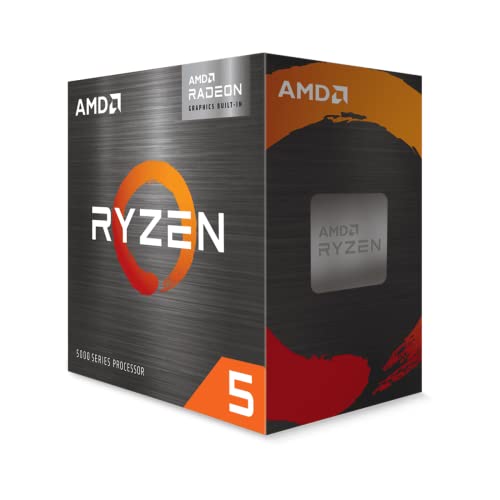
Put the money into a 5600G host instead if there is no desktop to hold the card yet. The AMD Ryzen 5 5600G runs low-power always-on services with no discrete card installed, and takes the 3060 later when the budget comes back. Buying the host first and the card second also spreads the cost — which matters more for a first local-LLM build than any single benchmark.
The recommended pick
For anyone who wants Qwen3 8B to feel like a tool: the MSI Gaming GeForce RTX 3060 12GB in a Ryzen 5 5600G host. The card runs the model at 55.2 tok/s at 4K and 31.9 tok/s at 32K (Hardware Corner), and the APU keeps the box useful for everything else without a card installed.
The condition that flips it: if the Pi is already deployed and the target model is 3B or smaller, the correct purchase is a Kingston A400 SSD to get the board off microSD, and nothing else.
Bottom line
The Pi 4 8GB can run Qwen3 8B in the sense that the process starts and tokens eventually appear. Every published measurement on faster Pi-class hardware puts that rate near two tokens per second, and the Pi 4 sits below its successor on both core generation and memory clock. The board's real strength is being a machine that costs nothing to leave running — which is a different virtue from being a machine that answers quickly. Match the purchase to which of those two things is actually needed.
Related guides
- Raspberry Pi 4 8GB for local LLMs
- Best 12 GB GPU for local LLMs in 2026
- llama.cpp vs Ollama on an RTX 3060 12GB
- Llama 3.2 3B: Raspberry Pi 4 8GB vs RTX 3060 12GB
- RTX 3060 benchmark data
Live price check
Both machines carry live pricing and full Product schema on their SpecPicks detail pages: the Raspberry Pi 4 Model B 8GB and the MSI Gaming GeForce RTX 3060 12GB. Every price in this piece is a catalog snapshot taken 2026-09-16 and may vary.
Citations and sources
- Hugging Face — Qwen/Qwen3-8B model index — parameter count (accessed 2026-09-16)
- Hugging Face — Qwen/Qwen3-8B model card — architecture and context window (accessed 2026-09-16)
- Hugging Face — Qwen/Qwen3-8B-GGUF — official quantized file sizes (accessed 2026-09-16)
- Raspberry Pi — Raspberry Pi 4 Model B specifications — BCM2711, Cortex-A72 at 1.8 GHz, LPDDR4-3200, USB 3.0 ports (accessed 2026-09-16)
- Raspberry Pi — Raspberry Pi 5 — BCM2712, Cortex-A76 at 2.4 GHz, LPDDR4X-4267 (accessed 2026-09-16)
- Jeff Geerling — ai-benchmarks issue #7 — CPU-only Pi 5 generation rates and peak power for 3B/8B/13B models (accessed 2026-09-16)
- Hardware Corner — RTX 3060 12GB LLM benchmarks and context scaling — Qwen3 8B/14B prefill and generation at 4K/16K/32K (accessed 2026-09-16)
- NVIDIA — GeForce RTX 3060 / 3060 Ti specifications — CUDA cores, memory config, 170 W board power, 550 W system requirement (accessed 2026-09-16)
- TechPowerUp — GeForce RTX 3060 12 GB database entry — memory bandwidth (accessed 2026-09-16)
This piece is editorial synthesis based on publicly available information. No independent first-party benchmarking is reported.
As an Amazon Associate, SpecPicks earns from qualifying purchases. Prices shown are catalog snapshots taken 2026-09-16 and may vary.