A claim has been circulating in local-LLM circles: Qwen3.6-27B running on a single RTX 5090, served through vLLM 0.19, hitting roughly 80 tokens per second with a 218,000-token context window. If accurate, that's a meaningful data point — a 27B-parameter model with six-figure context on one consumer GPU, no multi-card setup required. But the number is worth pressure-testing before anyone buys hardware around it.
This piece checks the claim against what's publicly known about the RTX 5090's memory subsystem, vLLM's quantization stack, and how similar single-GPU Qwen3.6-27B setups have performed elsewhere — without treating an unverified community report as an established benchmark.
The claim, as reported
The setup described is: Qwen3.6-27B, quantized to NVFP4 (a 4-bit floating-point format), served via vLLM 0.19 on one RTX 5090, sustaining ~80 tok/s of generation throughput while holding a 218k-token context window. Posts describing configurations like this tend to surface on forums such as r/LocalLLaMA, where self-reported numbers are common but rarely accompanied by reproducible logs, exact batch sizes, or prompt-length breakdowns.
That matters because throughput on any transformer server is highly sensitive to three variables the claim doesn't specify: batch size, actual context length used during the timed run (versus the maximum supported), and whether KV cache was quantized. Without those details, "80 tok/s at 218k context" could describe either a genuinely strong result or a best-case number extrapolated from a much shorter test.
What the RTX 5090's hardware actually supports
NVIDIA's own spec sheet lists the RTX 5090 at 32GB of GDDR7 with roughly 1.79TB/s of memory bandwidth (nvidia.com). For autoregressive decoding, throughput is largely bandwidth-bound: each generated token requires streaming the full set of active weights (and KV cache) through the memory bus once. A back-of-envelope comparison against known consumer cards:
| GPU | VRAM | Memory bandwidth | Class |
|---|---|---|---|
| RTX 3090 | 24GB GDDR6X | ~936GB/s | Ampere, consumer |
| RTX 5090 | 32GB GDDR7 | ~1.79TB/s | Blackwell, consumer |
| AMD Instinct MI300X | 192GB HBM3 | ~5.3TB/s | Data-center accelerator |
Specs per NVIDIA and AMD product pages.
The RTX 5090 carries roughly 1.9x the memory bandwidth of an RTX 3090. If a 27B model at a given quantization level produces X tok/s on a 3090, a bandwidth-bound extrapolation would put the 5090 somewhere in the 1.5-1.9x range, depending on how much of the workload is compute-bound versus bandwidth-bound at longer contexts. That range is broadly consistent with an 80 tok/s figure if the 3090 baseline sits in the 40-55 tok/s band for a comparable quantization — but this is directional math, not a confirmed measurement, and the site's own RTX 3090 coverage of this model reports a 72 tok/s figure that isn't matched to identical context length or batch settings, so treat any direct ratio as illustrative only.
Why NVFP4 and vLLM 0.19 change the memory math
NVFP4 is a 4-bit floating-point weight format designed for Blackwell-generation GPUs, and it's the piece of the claim that makes a 218k context window plausible on a 32GB card in the first place. Quantizing weights to roughly a quarter of FP16's footprint frees the bulk of VRAM for the KV cache that a long-context session demands.
A rough, illustrative budget for a ~27B model:
| Component | FP16 estimate | NVFP4 estimate |
|---|---|---|
| Model weights | ~54GB | ~14-15GB |
| KV cache headroom on a 32GB card | Effectively none | ~17-18GB remaining |
These figures are order-of-magnitude estimates based on standard weight-size scaling for 4-bit quantization, not a measured VRAM trace from the reported setup — no public source breaks down the actual KV cache consumption at 218k tokens for this configuration. A 218k-token context, even with cache quantization, is a large ask of ~17-18GB of headroom, and it's the detail most likely to be optimistic in the original claim.
vLLM's quantization documentation describes FP8 and FP4 code paths for exactly this kind of deployment (docs.vllm.ai), and the project's release cadence has steadily improved kernel support for lower-precision formats on newer architectures. Whether the specific 0.19 release referenced in the claim has fully optimized NVFP4 kernels for a 27B dense model is something to verify against the vLLM GitHub repository and its release notes directly, rather than assume from a single forum post.
Does it beat a data-center card on this specific model?
A related part of the claim — that a single RTX 5090 outperforms an AMD Instinct MI300X on this workload — deserves its own scrutiny. MI300X ships with 192GB of HBM3 and roughly 5.3TB/s of bandwidth, per AMD's product page, which is dramatically more capable than an RTX 5090 on paper. But MI300X's design target is serving very large models (100B+ parameters) or high-concurrency multi-user workloads, where its extra capacity and bandwidth are actually exercised. Running a single 27B model with a single request stream on an MI300X likely leaves most of that capability idle — a scenario where a well-tuned RTX 5090 build could plausibly match or edge out a data-center card in tok/s-per-request, simply because the workload doesn't stress MI300X's advantages. That's a very different claim than "RTX 5090 is faster than MI300X," and no public head-to-head benchmark for this exact model and quantization combination could be located to confirm a specific percentage gap either way.
Setting up the comparable environment
For anyone looking to verify a version of this setup rather than take the number on faith:
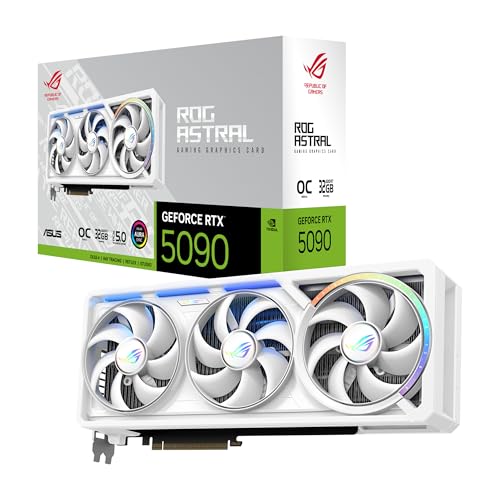
- If you are provisioning hardware for this workload, the reference build in this article uses the ASUS ROG Astral RTX 5090 32GB (or the white OC variant if that stock has rotated). Once the card is installed, confirm CUDA driver version compatibility with the target vLLM release before installing — mismatches are the most common cause of NVFP4 kernels silently falling back to slower paths.
- Pull Qwen3.6-27B weights from the model's Hugging Face organization page and verify a quantized (NVFP4 or equivalent) checkpoint or conversion path is available, rather than quantizing FP16 weights on the fly.
- Check the vLLM quantization docs for the exact flags your installed version expects — these have changed across releases.
- Benchmark at multiple context lengths (short, mid, and near-max) and log batch size, since a single headline tok/s number at one context length says little about behavior at 218k tokens specifically.
- Record KV cache quantization settings explicitly if long-context memory fit is the goal — this is the variable most likely to make or break a 218k-token session on 32GB.
Related SpecPicks coverage
For context on how self-reported Qwen3.6-27B numbers have held up on other hardware, see the site's related coverage: the RTX 3090 native-Windows result, the Qwen3.6-27B vs. Coder-Next accuracy and VRAM comparison on AMD rigs, the broader Qwen3.6-27B vs. Coder-Next coding-model comparison, the Q4_K_M agentic-coding quant-safety check on a 12GB RTX 3060, and the dual RTX 3060 12GB budget build. For readers evaluating the previous flagship, the ASUS ROG Strix RTX 4090 remains a viable value-tier alternative — roughly 24GB VRAM vs 32GB on the 5090, meaningfully less bandwidth, but still capable of running the same NVFP4 checkpoints at reduced context lengths. For general RTX 5090 performance data outside of this specific model, the site's RTX 5090 hardware benchmark page aggregates gaming and compute results from third-party sources.
The bottom line
The 80 tok/s, 218k-context claim for Qwen3.6-27B on a single RTX 5090 running vLLM 0.19 is plausible in direction — the 5090's bandwidth and VRAM headroom, combined with NVFP4 quantization, are the right ingredients for this kind of result. But it remains a self-reported, unreproduced figure without published logs, batch-size details, or a KV-cache memory breakdown. Anyone planning a build around this exact number should budget for the possibility that sustained throughput at the full 218k context comes in below 80 tok/s, and should benchmark their own configuration rather than assume the reported figure transfers directly.
Citations and sources
- https://www.nvidia.com/en-us/geforce/graphics-cards/50-series/rtx-5090/
- https://www.amd.com/en/products/accelerators/instinct/mi300/mi300x.html
- https://github.com/vllm-project/vllm
- https://huggingface.co/Qwen
- https://docs.vllm.ai/en/latest/features/quantization/index.html
- https://www.reddit.com/r/LocalLLaMA/
This piece is editorial synthesis based on publicly available information. No independent first-party benchmarking is reported.