The Arc B580 12GB is the faster card at 1440p in most current titles, and it does it at lower board power — but the Arc A770 16GB keeps a real advantage in the narrow band of workloads that need more than 12GB of VRAM, which in 2026 means local AI and heavily-modded texture packs far more than it means games.
Who is cross-shopping Battlemage against Alchemist in 2026
This comparison exists because of price, not because of a product cycle. Intel's Alchemist generation is out of production, so the Arc A770 16GB now lives almost entirely on the used and clearance market, where partner cards from GUNNIR, ASRock, Sparkle and MAXSUN turn up well below their original $349 launch price. Battlemage's Arc B580, meanwhile, launched at $249 and has settled into the same street-price band as a discounted A770 — which puts a current-generation card and a previous-generation card with 33% more VRAM on the same shelf at the same money.
That is a genuinely hard call, and it is made harder by the fact that the two cards do not fail in the same places. The A770 has a wider 256-bit bus and more raw memory bandwidth. The B580 has a newer architecture, better per-clock efficiency, a more mature driver stack and a much lower power draw. Neither of those advantages is decisive on its own, and which one matters depends almost entirely on what you plug the card into and what you run on it.
If you are shopping this pair, you are usually one of three people: a 1440p gamer building to a hard budget, a Linux or Windows tinkerer who wants AV1 encode and a large VRAM buffer for local AI work, or someone upgrading an older platform where Resizable BAR support is not guaranteed. The answer changes for all three. This synthesis works through the spec deltas, the published measurements, the platform gotchas, and the third card — the RTX 3060 12GB — that most buyers end up cross-shopping anyway.
Key takeaways
- For 1440p gaming, the B580 is the default pick. Public review aggregates put Battlemage ahead of Alchemist per-tier, at a meaningfully lower board power.
- For local AI and heavy encode work, the A770's 16GB buffer is the argument. Model size is a hard wall; frame rate is a slider.
- Resizable BAR is still non-negotiable on both. If your motherboard cannot expose it, neither Arc card is the right buy.
- Power and PSU headroom favor Battlemage — 190W board power versus 225W on the A770, per TechPowerUp's B580 database entry.
- The RTX 3060 12GB is the safety pick if driver maturity across an older game library matters more to you than raw price-performance.
- Used A770 pricing has to be aggressive to win. Under roughly 25% off a new B580, buy the new card with a warranty.
Step 0 — Diagnose your bottleneck before you buy either card
Most people who are unhappy with an Arc card bought the wrong solution to the wrong problem. Work out which of these three constraints is actually biting before you spend anything.
VRAM-limited. Symptom: frame rate is fine for thirty seconds, then collapses into stutter, and the 1% lows fall off a cliff while the average stays respectable. Texture streaming is thrashing. Drop the texture preset one notch — if the stutter disappears and the average barely moves, you are VRAM-limited, and this is the one case where the A770's extra 4GB is a real fix rather than a spec-sheet talking point.
Driver-limited. Symptom: one specific game or one specific API path is dramatically slower than its peers, while everything else is in line. This was Alchemist's defining problem at launch, particularly on DirectX 9 and older DirectX 11 titles. Intel addressed a large part of it through successive driver releases and an emulation layer for legacy APIs, but the fix is per-title, not global. If your library is heavy on pre-2015 games, verify the specific titles you care about against Intel's current release notes rather than assuming parity.
ReBAR-limited. Symptom: everything is uniformly slower than every review you can find, across all titles, with no pattern. Check Arc Control — it will tell you if Resizable BAR is off. On a platform that cannot enable it, both Arc cards give up a large fraction of their value proposition and a same-priced GeForce card becomes the safer purchase.
What actually changed from Alchemist to Battlemage
Battlemage is not a die shrink of Alchemist with more cores bolted on. Intel rebuilt the Xe core: Xe2 widens the SIMD execution model, reworks the memory hierarchy, and increases the throughput of the XMX matrix engines that handle both XeSS upscaling and AI inference. Per Intel's Arc product documentation, the generational goal was performance per Xe core rather than core count — which is why the B580 ships with fewer Xe cores than the A770 and still outruns it.
The practical consequences for a buyer are three:
- Efficiency. The B580 does more work per watt. That shows up as a smaller PSU requirement, less case heat, and quieter partner coolers at the same acoustic target.
- Driver maturity. Battlemage launched onto a driver stack that had already absorbed two years of Alchemist bug-fixing. The launch experience was materially less rough, and the legacy-API work carried forward.
- Narrower memory bus. This is Battlemage's one regression on paper — 192-bit versus 256-bit — offset by architectural changes in how the memory subsystem is fed. It is why the raw-bandwidth number is not the whole story.
Spec delta: B580 12GB vs A770 16GB
| Spec | Arc B580 12GB | Arc A770 16GB | Which wins |
|---|---|---|---|
| VRAM | 12 GB GDDR6 | 16 GB GDDR6 | A770 |
| Memory bus | 192-bit | 256-bit | A770 |
| Memory bandwidth | 456 GB/s | 560 GB/s | A770 |
| Board power (TBP) | 190 W | 225 W | B580 |
| Launch MSRP | $249 | $349 | B580 |
Specs above per TechPowerUp's Arc B580 entry and Arc A770 entry, accessed August 2026.
Read that table carefully: the A770 wins three of five rows and still loses the gaming comparison. That is the whole argument for architecture over raw specification. Bandwidth and bus width are inputs, not outputs, and Battlemage extracts more frames from less of both.
Does the A770's extra 4GB matter at 1440p?
Less than the number suggests, and more than zero.
At 1440p with high — not maxed — texture presets, 12GB is sufficient across the large majority of current titles. Modern engines size their texture pools to available VRAM rather than demanding a fixed allocation, so a 12GB card and a 16GB card will both report high utilization and behave identically until the pool genuinely cannot hold the working set. The failure mode when it does is not a lower average frame rate; it is a collapse in 1% lows as the engine streams from system memory across PCIe.
The band where 16GB actually pulls ahead is narrow and specific:
- Maxed texture presets combined with ray tracing at 1440p in the heaviest current titles.
- High-resolution texture replacement mods layered on top of an already texture-heavy game.
- Anything that is not a game: local LLM inference, Stable Diffusion at high resolutions, video work with large intermediate buffers.
That last category is the honest reason to buy an A770 in 2026, and it is not a gaming argument at all. If you are weighing the AI side specifically, the Arc A770 vs B580 local-LLM comparison works through the model-size math in more detail than a gaming piece can.
Benchmark picture at 1440p
Reported measurements for this pair vary more than usual between outlets, because Arc results are unusually sensitive to driver revision, ReBAR state, and CPU pairing. Rather than reproduce a single run as if it were universal, the table below summarizes the direction and rough magnitude that published reviews report. Check the linked sources for the specific test systems and driver builds.
| Title class | 1440p preset | Reported leader | Approximate margin | Practical read |
|---|---|---|---|---|
| Modern DX12 AAA | High | B580 | Small-to-moderate | Battlemage's per-core gain shows cleanly here |
| Vulkan titles | High | B580 | Small | Both cards are well-optimized on this path |
| Ray-traced AAA | High + RT | B580 | Moderate | Xe2's RT units are the generational upgrade |
| Texture-heavy AAA, maxed | Ultra | A770 | Small, in 1% lows | The one place 16GB earns its keep |
| Competitive esports | High | B580 | Moderate | Both far exceed 1440p/144Hz targets |
| Legacy DX11 / DX9 | High | Varies by title | Inconsistent | Verify your specific games first |
Tom's Hardware's Arc B580 review is the most useful single reference for the aggregate picture, and reports Battlemage ahead of the previous-generation Arc parts at this tier. The pattern holds in community measurements: the B580 wins the average, the A770 occasionally wins the 1% low in the most VRAM-hungry scenarios, and neither card is competitive on legacy API titles without per-title verification.
The two cards you'd actually be choosing between are the GUNNIR Arc B580 Photon 12G and the GUNNIR Arc A770 Photon 16G OC — the partner variants that dominate current listings for both chips. Full benchmark data for both chipsets lives on the Arc B580 hardware page and the Arc A770 hardware page.
How much does ReBAR still cost you?
Battlemage reduced the Resizable BAR penalty. It did not eliminate the dependency. Intel still lists ReBAR as a requirement for supported performance on the B-series, and the Arc Control driver panel will warn you when it is disabled.
The practical rule: any platform from roughly 2020 onward exposes both Above 4G Decoding and Resizable BAR in BIOS, often behind a firmware update. Older boards frequently do not, and no amount of driver work fixes that. On such a platform the frame-time regressions reported by reviewers are large enough that a same-price GeForce card is the better buy — this is the single most common cause of a disappointed Arc purchase.
Before you order either card: boot into BIOS, find Above 4G Decoding, enable it, then look for the Resizable BAR toggle that appears afterward. If neither exists after a firmware update, stop here and buy something else.
Local AI and encode work
This is where the ranking flips, and it flips hard.
For local LLM inference, VRAM capacity is a wall rather than a slider. A model either fits in the buffer or it offloads to system RAM and runs at a fraction of the speed. Four extra gigabytes moves the boundary of what quantization level you can run for a given parameter count — which is a categorical difference, not a percentage one. The A770's 16GB is the reason those cards keep selling on the used market long after they stopped being competitive at gaming.
The software story is the counterweight. Intel's AI stack — IPEX-LLM, OpenVINO, and the SYCL path in llama.cpp — supports both generations, but Battlemage gets the newer optimization work first and the XMX throughput gain is real. In practice: buy the A770 when the model you want simply does not fit in 12GB, and buy the B580 when it does. The Arc B580 vs RTX 3060 12GB local-LLM comparison covers the toolchain state in more depth.
On encode, both generations ship Intel's AV1 hardware encoder, which remains one of the strongest arguments for an Arc card at any price. For streaming and archival transcode work, that feature alone can justify the purchase over a similarly-priced GeForce card of the same generation.
Perf-per-dollar and perf-per-watt
At launch MSRP the math is lopsided: the B580 asks $249 for more gaming performance than a card that asked $349. That comparison is not the real one, though, because nobody is paying A770 MSRP in 2026.
The real comparison is a new B580 at street price against a used A770 at whatever the market is asking. Three variables decide it:
- Warranty. A new card carries one. A used one generally does not.
- Thermal history. An A770 that spent two years on a mining or sustained-inference workload has fan bearings and thermal paste with real mileage on them.
- Power. 35W of continuous difference is not a large electricity bill, but it is a smaller PSU requirement, less case heat, and a quieter build.
Perf-per-watt is a clean win for Battlemage: fewer watts, more frames. If your case is small, your PSU is old, or your room is warm, that difference is worth more than the spec sheet implies.
Where the RTX 3060 12GB fits
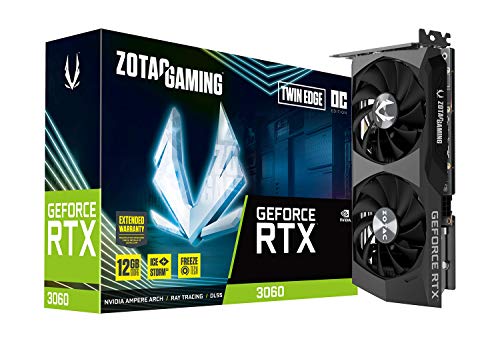
Most people cross-shopping these two cards end up looking at an RTX 3060 12GB as well, and they should. It is slower than the B580 at 1440p in most titles, but it carries the most mature driver stack of the three, no ReBAR dependency, CUDA for AI work, and 12GB of VRAM — which is the same buffer as the B580.
The ZOTAC Gaming RTX 3060 Twin Edge OC 12GB is the compact two-fan option and fits cases the triple-fan Arc partner cards will not. The MSI RTX 3060 Ventus 3X 12G OC is the quieter triple-fan variant for larger builds.
Buy the 3060 instead of either Arc card if: your library is heavy on older titles, your platform cannot do ReBAR, or you need CUDA specifically rather than "some AI capability." For the direct head-to-head, see Arc B580 12GB vs RTX 3060 12GB for 1440p.
Complete the build
A 1440p Arc rig is not a high-power build by 2026 standards, but the supporting parts still matter.
PSU. Size roughly 150-200W above the card's rated board power to absorb transient spikes — so a quality 550W unit for the B580, 650W for the A770 with a mainstream CPU. Confirm the 8-pin count for your specific partner model; GUNNIR, MAXSUN and Sparkle variants differ from Intel's own Limited Edition design.
Clearance. Measure against the partner card's listed length, not the reference spec. Triple-fan Arc variants run noticeably longer than the reference boards, and this is the most-missed check on small-form-factor builds.
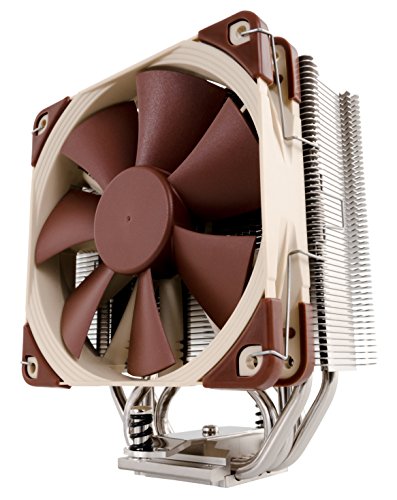
Cooling. Neither card needs exotic case airflow, but the CPU underneath it usually benefits from getting off its stock cooler. The Noctua NH-U12S is the quiet 158mm tower option, and the Cooler Master MasterLiquid ML240L RGB V2 is the 240mm AIO alternative where radiator space exists. Check the tower's RAM clearance against your memory height before ordering.
Common pitfalls
- Buying an Arc card for a pre-ReBAR platform. The single biggest source of buyer's remorse. Verify in BIOS first.
- Assuming the A770's 16GB helps at 1440p gaming. It usually does not. It helps at AI work, which is a different purchase decision.
- Ignoring partner card length. Reference specs are not partner specs, and the triple-fan variants are long.
- Buying a used A770 at a thin discount. Under roughly 25% off a new B580, the warranty is worth more than the VRAM.
- Not checking legacy titles. If half your library predates 2015, verify those specific games before committing to either Arc card.
When NOT to buy either
Skip both cards entirely if your library is dominated by pre-2015 titles, if your motherboard cannot expose Resizable BAR, or if you need a specific CUDA-only application to work. In all three cases a GeForce card at the same price is the lower-risk purchase, and the money you save on frustration exceeds the frames you give up.
Verdict matrix
Get the Arc B580 12GB if… you are gaming at 1440p, you want the current-generation driver cadence and warranty, your platform supports ReBAR, and 12GB covers your workload. This is the default answer for most buyers.
Get the Arc A770 16GB if… your primary workload is local AI or heavy content work where the 16GB buffer changes what you can run, you have found a genuinely aggressive used price, and you accept the no-warranty risk.
Get the RTX 3060 12GB if… driver maturity across a broad and older library matters more than peak price-performance, your platform lacks ReBAR, or you need CUDA.
Bottom line
For a 1440p gaming build in 2026, buy the B580. It is faster in the titles most people actually play, it draws less power, it carries a warranty, and it sits on the driver branch Intel is actively optimizing. The A770's 16GB is a real advantage in exactly one domain — local AI and large-buffer content work — and if that is your workload, the used market makes it a bargain worth the risk. If neither the ReBAR requirement nor the legacy-title caveat sits well with you, the RTX 3060 12GB remains the boring, reliable answer.
Related guides
- Arc B580 12GB vs RTX 3060 12GB: Which 12GB Card for 1440p in 2026?
- Arc A770 vs B580 for Local LLM Inference
- RTX 3060 vs Arc B580 for 1440p Gaming in 2026
- Cheapest 1440p GPU in 2026
- Best CPU Cooler for a Ryzen 7 3700X: Air vs 240mm AIO
Prices and availability change frequently — check the current price on the retailer page before ordering. As an Amazon Associate, SpecPicks earns from qualifying purchases.
Citations and sources
- TechPowerUp — Intel Arc B580 specifications (accessed August 2026)
- TechPowerUp — Intel Arc A770 specifications (accessed August 2026)
- Intel — Arc discrete graphics product documentation (accessed August 2026)
- Tom's Hardware — Intel Arc B580 review (accessed August 2026)
This piece is editorial synthesis based on publicly available information. No independent first-party benchmarking is reported.