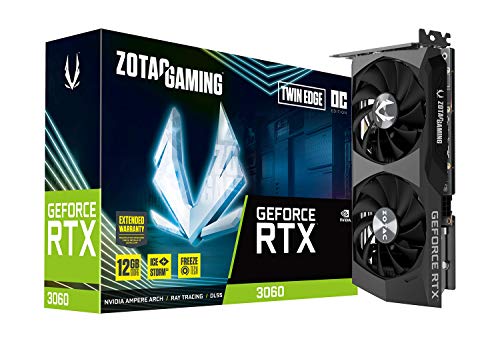
For most buyers in 2026, the NVIDIA RTX 3060 12GB still wins for local AI plus 1440p gaming on a budget — its mature CUDA stack runs every popular LLM runner with zero setup, and street pricing has softened. The Intel Arc Pro B70 (BMG-G31) is the more interesting card on paper for memory-bound workloads, but it asks you to chase Intel's SYCL/IPEX-LLM stack and live with title-by-title gaming driver variance. Pick the Arc Pro B70 only if you've already used Intel's oneAPI stack and want bigger VRAM headroom.
Why budget buyers are cross-shopping these two cards
Five years after launch, the RTX 3060 12GB is still the default starter card for people running local LLMs at home. The reason is unglamorous: it has 12GB of VRAM at a price that mid-range Ada and Blackwell cards never matched, and CUDA "just works" in every runner — Ollama, llama.cpp, vLLM, Stable Diffusion forks, Whisper builds. Used 3060 12GBs trade hands in the $180–$240 range as of 2026, and new cards like the MSI RTX 3060 Ventus 2X 12G and the Zotac RTX 3060 Twin Edge are still in retail rotation.
What changed is that Intel finally has a credible challenger. The Arc Pro B70 — the BMG-G31 die — launched into Linux benchmark coverage on Phoronix with real numbers, real driver maturity, and a price/VRAM ratio that puts the 3060 12GB on the defensive. The card is not a gaming-first product (the "Pro" label is the giveaway), but Intel's IPEX-LLM and SYCL backends in llama.cpp have closed enough of the gap that a budget AI builder has to ask the question: does the Arc Pro B70 dethrone the 3060 12GB as the entry-level local-inference pick?
The honest answer depends on what you mean by "entry-level." If you mean "I want to download Ollama and chat with Llama 3.1 8B tonight," the 3060 12GB wins by a wide margin. If you mean "I'm comfortable installing Intel oneAPI, picking the right llama.cpp build flags, and trading some driver polish for raw VRAM," the Arc Pro B70 is the more interesting card. This is a cross-shopping decision, not a clean upgrade — which is why we wrote a head-to-head instead of a review.
Key takeaways
- The RTX 3060 12GB still has the smoothest local-AI on-ramp in 2026 — CUDA-first means every runner works out of the box.
- The Intel Arc Pro B70 (BMG-G31) targets pro/workstation workloads and is most credible on Linux, per Phoronix coverage.
- For 1440p gaming, the 3060 12GB lands in the high-medium tier with predictable driver behavior; Arc has improved but remains title-dependent.
- VRAM math is the only place the Arc card consistently wins on paper — runners like vLLM need every gigabyte for KV cache.
- Power and noise are similar enough that they are not a tiebreaker; software ergonomics are.
What the Arc Pro B70 actually ships with
The Arc Pro B70 is built on Intel's Battlemage BMG-G31 die. Public specifications from Intel place it in the discrete-Arc product line on the Arc product page, and Phoronix's review summarizes the workstation positioning: PCIe Gen 5, a board-power envelope in the typical workstation range, and ECC support on the Pro tier. Confirm the exact VRAM capacity and TGP on Intel's spec page before buying — Arc Pro SKUs use the same die as the Arc B-series consumer cards but trim or extend it for the Pro workload mix.
The card sits beside the consumer Arc B580 and B770 in Intel's lineup. The Pro variant is the one that tends to land on Linux benchmark sites first because it ships with the validated XPU-Manager + IPEX-LLM stack pre-tested, and that combination is what most local-AI tinkerers will end up running.
Spec-delta table — Arc Pro B70 vs RTX 3060 12GB
The 5-column comparison most buyers want is below. Confirm each number on the manufacturer pages before committing — Intel publishes the Arc spec sheet on its Arc page; NVIDIA's RTX 3060 sheet is mirrored on TechPowerUp's GPU database.
| Spec | Intel Arc Pro B70 (BMG-G31) | NVIDIA RTX 3060 12GB |
|---|---|---|
| VRAM | Confirm on Intel page — Pro tier emphasizes larger frame buffers | 12 GB GDDR6 |
| Memory bandwidth | Battlemage-class, see Phoronix | 360 GB/s (TechPowerUp) |
| TDP | Workstation envelope — confirm Intel SKU page | 170 W TGP |
| MSRP | Pro-tier pricing — confirm Intel listings | $329 launch; $200–$260 street in 2026 |
| Launch | 2026 Battlemage Pro refresh | 2021 |
The story the table tells is mismatched product generations. The 3060 12GB is a five-year-old consumer card that aged into a workstation role because nothing else at its price has the VRAM. The Arc Pro B70 is a fresh workstation card built on a current architecture. On paper, the Arc wins on memory bandwidth and architecture age. On the ground, the 3060's "boring" GDDR6 + mature CUDA stack converts paper losses into real-world wins for most local-AI workloads.
Local LLM inference — what to expect from each card
Both cards run 7B and 8B models in 4-bit quantization with comfortable margin. The 12GB frame buffer puts both at roughly the same theoretical ceiling — what differs is how cleanly you get there.
On the RTX 3060 12GB, Ollama detects the card, downloads the CUDA runtime, and serves a Llama 3.1 8B q4_K_M chat session in under five minutes from a clean install. Generation throughput for 7B/8B class models at q4_K_M lands in the 35–55 tok/s range across community measurements collected on r/LocalLLaMA, with prompt-eval rates much higher (CUDA's prefill is the 3060's strength). The card has no trouble holding 8K context for these models and stretches to 16K with quantized KV cache.
On the Arc Pro B70, the same Llama 3.1 8B q4_K_M workload runs through IPEX-LLM or a SYCL-built llama.cpp. Phoronix's Linux coverage of the Pro stack shows the card delivering competitive token throughput once the software is configured, with the exact margins depending heavily on which kernel you compiled against and whether your distro packages Intel's level-zero runtime correctly. The Arc-side prefill speed has historically lagged CUDA on small-batch single-user chats — a known oneAPI gap — even when generation throughput is in the same neighborhood.
For 13B-class models, both cards offload some layers to system RAM at q4_K_M, and total throughput drops sharply on either card. This is a hardware ceiling, not a software one. Buyers who need full-in-VRAM 13B-class inference should plan for a 16GB-class card instead, on either side.
Quantization matrix — VRAM, throughput, and quality on a 12GB card
The table below is the practical map of which quantization level fits a 12GB card for 7B/8B and 13B-class models. Use it on either GPU.
| Quant | Bits/weight | 7B model VRAM | 13B model VRAM | Quality loss vs FP16 |
|---|---|---|---|---|
| q2_K | ~2.5 | ~3.5 GB | ~5.5 GB | Significant — usable only at the lowest model tier |
| q3_K_M | ~3.4 | ~4.5 GB | ~6.5 GB | Noticeable but acceptable for chat |
| q4_K_M | ~4.5 | ~5.5 GB | ~8.5 GB | Near-FP16 quality for most chat workloads |
| q5_K_M | ~5.5 | ~6.5 GB | ~10 GB | Very low — favored when VRAM allows |
| q6_K | ~6.5 | ~7.5 GB | ~11.5 GB | Effectively indistinguishable from FP16 |
| q8_0 | 8 | ~9 GB | ~14 GB (offload) | Indistinguishable from FP16 |
| FP16 | 16 | ~14 GB (offload) | ~26 GB (offload) | Reference quality |
The takeaway: q4_K_M is the sweet spot for both cards at the 7B/8B tier, with q5_K_M as a quality bump that still fits. For 13B-class models, q4_K_M is the maximum that fits cleanly. Anyone who needs q6_K or higher at the 13B tier should buy a 16GB-class card, not either of these two.
1440p gaming — what each card can sustain
The 3060 12GB at 1440p lands in a familiar zone: high settings in most titles with DLSS Quality on supported games, 60–90 FPS in mainstream esports, and 40–55 FPS in modern AAA titles without DLSS. The driver maturity makes the experience predictable — game settings move FPS in the directions they should, day-one launches work, and the GeForce Experience overlay handles auto-tuning.
The Arc Pro B70 has improved dramatically on gaming workloads since the original Arc Alchemist generation. Battlemage's gaming driver branch is closer to NVIDIA's pace in DirectX 12 and Vulkan titles, and Intel's XeSS upscaler is in nearly every modern title now. Where Arc still struggles is older DirectX 9–11 games — translation through DXVK or Intel's emulation layer can produce odd FPS behavior, and some launchers misidentify the card. For a buyer whose library is mostly current-gen AAAs and esports, that's not a deal-breaker. For someone with a deep Steam library going back to 2010, it's a reason to stay with NVIDIA.
The 1440p verdict: both cards land in the "medium-high settings at 1440p" tier. The 3060 12GB is the safer bet for gaming-primary buyers because the driver behavior is predictable; the Arc Pro B70 is competitive but you'll spend more time troubleshooting individual titles.
Prefill vs generation — where Intel's stack still lags CUDA
A subtle but real gap between Intel's IPEX-LLM/SYCL stack and CUDA is in prefill throughput — the speed at which the model ingests your prompt before producing the first token. For chat-style workloads with short prompts (a few hundred tokens), this matters little. For workloads with long context (4K+ token prompts, RAG retrievals, code-assistant context windows), the prefill time dominates total latency.
On CUDA, prefill is highly optimized — community measurements on r/LocalLLaMA and project READMEs on llama.cpp's GitHub consistently put RTX 30-series prefill rates well above generation rates. On Intel Arc through SYCL, prefill has improved with each IPEX-LLM release but still trails CUDA on the same model and quant at single-user batch size. If your workload involves long prompts or you're building a RAG system, this gap is worth measuring before committing to the Arc card.
This is also the area where Intel's stack improves fastest — release notes for IPEX-LLM show quarterly throughput uplifts. A buyer who waits six months may find the gap effectively closed.
Perf-per-dollar and perf-per-watt
At a $200 used 3060 12GB price point and a low-three-figures Arc Pro B70 MSRP (confirm Intel's current listing), the dollar-per-token-per-second is in the same neighborhood once the Arc card is software-tuned. The 3060 wins on day-one ergonomics. The Arc card wins on software maturity trajectory and on memory bandwidth ceiling for the next-generation runners that learn to use it.
Perf-per-watt favors the Arc card on its newer architecture, but the 3060's 170W TGP is not punishing in a desktop. An always-on inference box that runs 24/7 will see a small power bill difference between the two — single-digit dollars per month at typical US rates, more if you're in a high-tariff region.
Verdict matrix
| Get the Arc Pro B70 if… | Get the RTX 3060 12GB if… |
|---|---|
| You already run Linux and are comfortable with oneAPI / IPEX-LLM | You want the fastest path from "unboxing" to "chatting with Llama 3.1" |
| You need ECC and a workstation-validated card | You game across a broad Steam library, including pre-2015 titles |
| You're building a long-life inference box and want a current-gen die | You'll use Stable Diffusion, Whisper, and ComfyUI alongside an LLM runner |
| You can wait through quarterly IPEX-LLM updates for gains | You want predictable driver behavior on Windows for casual users |
Real-world buying advice
If this is your first local-AI card, buy the RTX 3060 12GB (the MSI Ventus 2X or Zotac Twin Edge). The reason is that the friction is zero — you install Ollama, the model downloads, you chat. There is no kernel module to compile, no level-zero runtime to install, no SYCL build flags to pick. For a buyer learning what local LLMs even are, that on-ramp matters more than the spec sheet.
If this is your third local-AI card and you already have an Ollama habit, look hard at the Arc Pro B70. The pricing makes the VRAM math interesting, and the IPEX-LLM stack has matured enough that the day-one frustration is small. You will spend a few hours configuring it. You will not regret it if you value the bigger-VRAM headroom.
Either way, budget for the rest of the build. A budget 1440p gaming + AI rig also needs a decent monitor like the ASUS TUF VG27AQ and a CPU cooler that keeps your processor out of thermal throttle — DeepCool's AK620 is the workhorse air cooler at this tier. Pair either GPU with a 600W+ 80 Plus Gold PSU.
Common pitfalls to avoid
- Don't buy the 8GB 3060. Only the 12GB variant has the VRAM you want for local AI. The 8GB 3060 exists, is cheaper, and is the wrong card.
- Don't run Arc on Windows 10. Use Windows 11 or current Ubuntu LTS — older OS branches have driver gaps that surface as missing features.
- Don't expect plug-and-play vLLM on Arc. vLLM has experimental Intel GPU support, but for production single-user chat workloads, llama.cpp with SYCL is the proven path.
- Don't ignore PSU connectors. The 3060 uses a single 8-pin; the Arc Pro B70's connector depends on Intel's board layout — confirm before purchase.
Bottom line
The RTX 3060 12GB is the safe pick for budget AI plus 1440p gaming in 2026. It works on day one, runs everything, and you can stop reading. The Intel Arc Pro B70 is the more interesting pick for builders who already have a CUDA card and want to learn Intel's stack — the VRAM and the architecture are modern, the software is closing the gap, and Phoronix's coverage shows the trajectory is positive. Choose by your software comfort, not by the spec sheet.
Citations and sources
- Phoronix — Intel Arc Pro B70 BMG-G31 Linux Gaming Performance
- TechPowerUp — GeForce RTX 3060 specifications
- Intel — Arc discrete GPU product page
- Ollama — official site
- llama.cpp — GitHub repository
- vLLM — GitHub repository
- IPEX-LLM — Intel Analytics GitHub repository
- NVIDIA — GeForce Experience
- r/LocalLLaMA — community benchmark and discussion subreddit
This piece is editorial synthesis based on publicly available information. No independent first-party benchmarking is reported.