No — you do not have to upgrade the stock cooler on a Ryzen 7 3700X. The bundled Wraith Prism keeps the chip inside its thermal window under normal gaming load. People replace it for noise, not for temperature, and that is a legitimate reason: the stock fan ramps hard and stays audible in a quiet room.
Why cooler choice is the cheapest remaining lever on AM4
AM4 in 2026 is the value-build backbone. The platform is mature, DDR4 is cheap, motherboards are plentiful on the used market, and a Ryzen 7 3700X — eight Zen 2 cores at a 65W TDP class — still handles 1080p and 1440p gaming, streaming, compilation and light local-AI work perfectly well. What it does not do is stay quiet under sustained load with the cooler in the box.
That is the whole reason this comparison exists. The 3700X is not a thermally demanding part. AMD's own specification puts it at a 65W TDP with a 95°C maximum operating temperature, and the bundled Wraith Prism is sized for exactly that. So the question is not "can the stock cooler handle it" — it can — but "what do I get for spending $60-90 on a replacement." The honest answer is: quiet, a little headroom, and a cooler that will carry forward to your next CPU.
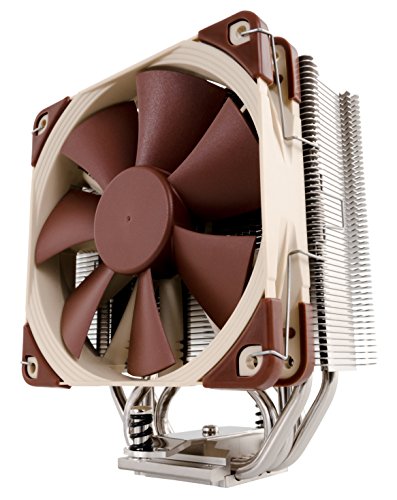
This synthesis compares the three most common upgrade paths against the stock cooler: a 120mm air tower (Noctua NH-U12S), a 240mm AIO (Cooler Master MasterLiquid ML240L RGB V2), and a 120mm AIO (NZXT Kraken M22). It covers the diagnosis step first, because a meaningful share of people asking this question are looking at a power limit, not a thermal limit.
Key takeaways
- The stock Wraith Prism is thermally adequate. The upgrade case is acoustic.
- A 240mm AIO buys very little clock on a 3700X. This chip is power-limited before it is thermally limited with any competent cooler.
- A good 120mm air tower is the value answer. Quiet, cheap, no pump, and it outlives the CPU.
- Buy for the CPU you will own next. If a Ryzen 7 5800X upgrade is in your plan, size the cooler for that part now.
- RAM clearance is the most-missed check on tower coolers. Measure before you order.
- A 120mm AIO is the worst value of the three upgrade paths for this chip specifically.
Step 0 — Diagnose it first: thermal throttle or power limit?
These look identical from the outside — clocks drop under sustained load — and they have completely different fixes.
Thermal throttling means the CPU has hit its temperature ceiling and is reducing clocks to stay under it. On a 3700X, watch for package temperature pinned at or near 95°C while clocks sag. This is what a better cooler fixes.
Power limiting means the CPU is holding its PPT, TDC or EDC ceiling and cannot draw more current regardless of how cold it is. Symptom: temperature sits comfortably in the 60s or 70s under all-core load while clocks still sit below the advertised boost. A better cooler does nothing here — the limit is the power budget, not the heat.
Read the difference with any monitoring tool that exposes both package power and package temperature (HWiNFO on Windows, zenpower/k10temp on Linux). Load the machine with a sustained all-core workload, wait two minutes for steady state, and look at both numbers together.
The 3700X, in a case with adequate airflow, is usually power-limited rather than thermally limited under all-core load. That single fact is why the cooler upgrade on this chip is an acoustic purchase and not a performance one — and it is what most "will an AIO give me higher clocks" threads get wrong.
What the Wraith Prism actually delivers — and where it runs out
The Wraith Prism is a competent cooler that AMD included at no extra cost, and it is better than most bundled coolers have any right to be: a copper core, direct-contact heatpipes, RGB, and a dual-mode fan switch on the shroud (low/high).
Where it runs out is acoustics. Under sustained all-core load the fan ramps to keep the package under its ceiling, and at that ramp point it is clearly audible from a metre away. The high/low switch on the shroud helps — the low setting is meaningfully quieter and still sufficient for gaming loads on this chip — but the fan curve is aggressive by default and the small-diameter, high-RPM design has a higher noise floor at any given heat load than a 120mm tower.
The second limitation is transient response. A small heatsink has less thermal mass, so a sudden load spike produces a sharp fan ramp rather than a gradual one. Fan speed oscillation is more annoying than steady noise, and it is the thing people most often describe when they say the stock cooler "bothers" them.
If your machine sits under a desk in a room with ambient noise, none of this matters and the money is better spent elsewhere in the build. If it sits on the desk in a quiet room, this is a real problem worth $60 to fix.
Spec delta: the four options
| Cooler | Type / size | Height or radiator | Rated noise | Socket support |
|---|---|---|---|---|
| AMD Wraith Prism | Air, bundled | ~85 mm tall | Audible ramp under load | AM4 |
| Noctua NH-U12S | Air, 120 mm tower | 158 mm tall | 22.4 dB(A) max per Noctua | AM4, AM5, LGA1700 (kit) |
| Cooler Master ML240L RGB V2 | AIO, 240 mm | 240 mm radiator | Varies by fan curve | AM4, AM5, Intel mainstream |
| NZXT Kraken M22 | AIO, 120 mm | 120 mm radiator | Varies by fan curve | AM4, Intel mainstream |
The row that matters most on this table is the last one. The NH-U12S carries forward to AM5 and current Intel sockets with a mounting kit; the AIOs also carry forward. None of these is a dead-end purchase, which changes the value math — you are not buying a cooler for a 3700X, you are buying a cooler that will start on a 3700X.
Air vs AIO on an 8-core 65W-class part
Liquid cooling buys you three things: more surface area for a given case constraint, the ability to move heat away from a cramped CPU socket area, and — with a 240mm or larger radiator — a lower noise floor at high heat loads because two slow 120mm fans move more air more quietly than one fast one.
On a Ryzen 7 3700X, only the third of those is worth paying for, and the margin is smaller than the marketing suggests. This is a modest heat load. A competent 120mm air tower has enough capacity to keep it well under its ceiling at fan speeds that are effectively inaudible, which means the AIO's extra capacity goes unused.
The counter-case for a 240mm loop is real but narrow:
- Very small or airflow-starved cases where a 158mm tower does not fit but a front-mounted radiator does.
- Builds where the GPU dumps a lot of heat into the socket area — a radiator exhausting directly out of the case sidesteps that.
- A planned upgrade to a hotter chip. This is the strongest argument, and it is covered below.
- Aesthetics. Not a technical reason, but an honest one, and it is why most ML240L units get bought.
Sustained-load picture
The pattern reported across published cooler comparisons at this thermal class is consistent enough to summarize, though absolute numbers depend heavily on ambient temperature, case airflow and fan curve. Tom's Hardware's CPU cooler roundup is the most useful single reference for the tier rankings.
| Cooler | Sustained all-core temp | Boost-clock retention | Noise at load | Notes |
|---|---|---|---|---|
| Wraith Prism (high) | Comfortably under ceiling | Full | Clearly audible | Adequate, not quiet |
| Wraith Prism (low) | Under ceiling, warmer | Full | Noticeably quieter | The free upgrade most people skip |
| Noctua NH-U12S | Cooler than stock | Full | Near-inaudible | The value pick |
| ML240L RGB V2 | Coolest of the four | Full | Quiet, pump audible | Overkill for this chip |
| Kraken M22 | Similar to a good air tower | Full | Quiet, pump audible | Least compelling value |
The important column is "boost-clock retention," and every option holds full boost on this chip. That is the finding: on a 3700X, all four coolers deliver the same performance. They differ only in how loud they are while doing it.
Note the second row. Flipping the Wraith Prism's shroud switch to low is free, takes thirty seconds, and gets you a large share of the acoustic benefit people spend $85 chasing. Try it before you buy anything.
When this is right / when it isn't
The case FOR staying on air: an air cooler has one moving part and a heatsink that does not degrade. A decade of service is normal. There is no pump to fail, no coolant to permeate out, and no warranty window after which a failure means a dead CPU rather than a loud one. On a value-oriented AM4 build intended to run for years — a secondary machine, a home server, a hand-me-down — air is the lower-risk choice on total cost of ownership.
The counter-case for a 240mm loop: if the build will eventually host a hotter chip, if the case cannot take a 158mm tower, or if the socket area is heat-soaked by a large GPU, the radiator solves a problem the tower cannot.
Does the answer change on a Ryzen 7 5800X?
Yes, materially — and this is the most important section for anyone whose upgrade path runs through AM4.
The Ryzen 7 5800X drops into the same socket and most of the same boards with a BIOS update, and it is the natural upgrade from a 3700X. But it is a substantially hotter-running part: same core count, higher power draw, and a well-documented tendency to sit near its thermal ceiling under all-core load even with good cooling. A cooler that was comfortable on a 3700X will be working noticeably harder on a 5800X.
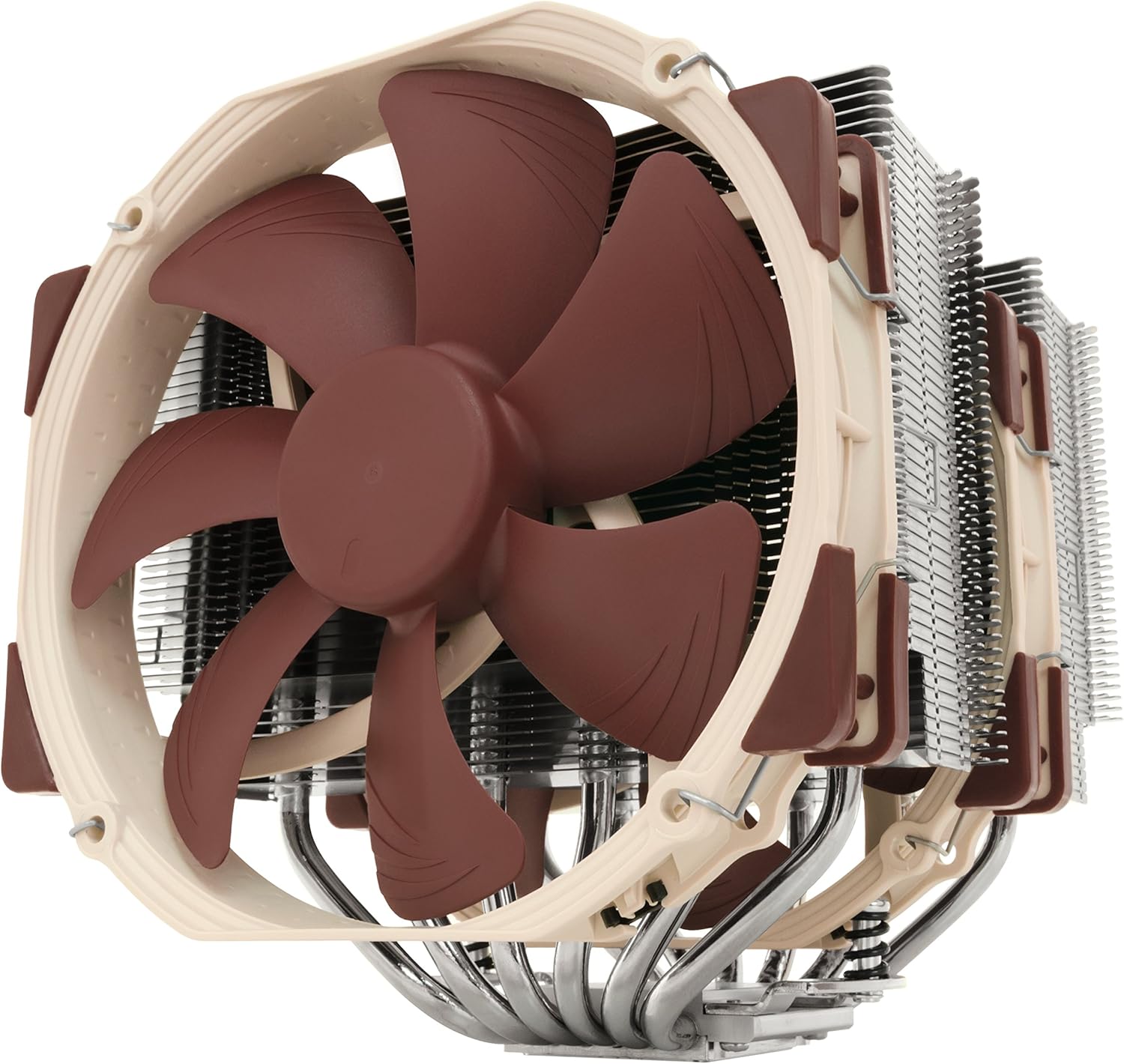
If a 5800X is already in your plan, size the cooler for that chip now rather than buying twice. That shifts the recommendation toward the 240mm AIO, or toward a larger air tower than the NH-U12S. The Air vs AIO comparison for the Ryzen 7 5800X covers that specific pairing, and Noctua NH-U12S vs CoolerMaster ML240L on a 5800X runs the same two coolers against the hotter chip.
Clearance and compatibility
RAM height. This is the most-missed compatibility check on air-cooled builds. The NH-U12S is a 158mm tower whose front fan can overhang the first DIMM slot; tall heat-spreader memory kits will not fit underneath without raising the fan, which in turn pushes the assembly closer to your case's width limit. Measure your RAM's height against the cooler's published clearance figure before ordering, or buy low-profile memory. AIO coolers sidestep the problem entirely, which is a legitimate reason to pick one.
Case width. A 158mm tower needs a case rated for at least 160mm of CPU cooler height. Most mid-towers clear this easily; compact and slim cases often do not. Check the manufacturer's spec, not the case's apparent size.
Radiator mounting. A 240mm radiator needs either a front or top mount with 240mm of rail space and enough clearance behind it for fans plus radiator thickness. Front-mounted with intake fans gives the radiator cool ambient air and the best CPU temperatures, at the cost of dumping that heat into the case for the GPU to deal with. Top-mounted as exhaust is kinder to the rest of the system and slightly worse for the CPU. On a build with a modest GPU, front-mount; on a build with a hot GPU, top-mount.
Pump header. Both AIOs need a dedicated pump header or a fan header set to full speed permanently — running the pump on a PWM curve is a common and avoidable mistake.
Noise-normalized comparison
Comparing coolers at stock fan curves is not a fair test, because the curves differ. The useful comparison is: at a matched acoustic target, which cooler holds the lowest temperature?
At a genuinely quiet target, the ranking on a 3700X-class heat load is: 240mm AIO first, 120mm air tower a close second, 120mm AIO third, stock cooler well behind. The gap between the first two is small enough that it does not justify the price and complexity difference for this chip. The gap between those two and the stock cooler is large and is the entire reason to upgrade.
The Kraken M22's problem is structural: a 120mm radiator has roughly the same surface area as a good 120mm tower's fin stack, plus a pump that adds its own noise floor. It is a beautiful piece of hardware and it fits cases a tower will not, but on pure thermal-per-dollar it is the weakest of the three upgrade paths.
Perf-per-dollar: cost per degree
Here is the uncomfortable arithmetic. Going from the Wraith Prism to an NH-U12S costs real money and buys you zero frames per second on a Ryzen 7 3700X. Going from the NH-U12S to an ML240L RGB V2 costs more again and also buys zero frames per second.
What each step buys is quiet. If quiet is worth money to you — and for a desk-side machine it usually is — the first step is excellent value and the second is a luxury. If quiet is not worth money to you, flip the Wraith Prism to its low setting and spend the budget on a better case fan, more RAM, or a faster SSD.
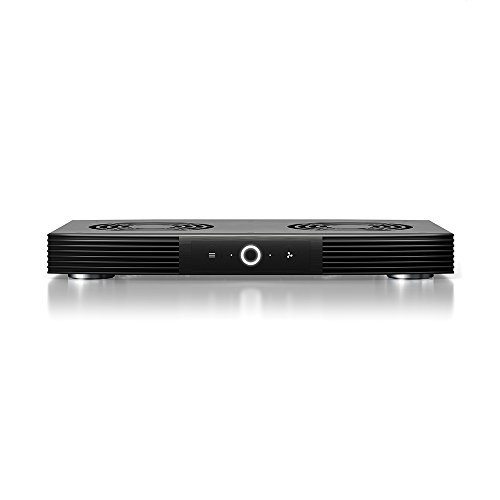
One genuinely underrated alternative: on an enclosed desk or a cabinet install, the machine's problem is often not the CPU cooler at all but trapped hot air around the case. An AC Infinity AIRCOM S7 top-exhaust fan system addresses that directly, and no CPU cooler can compensate for a case sitting in a sealed cubby. Diagnose the enclosure before you upgrade the heatsink.
Common pitfalls
- Buying an AIO expecting higher clocks. On a 3700X you will get the same clocks and less noise. Set expectations accordingly.
- Not checking RAM clearance. The most common air-cooler return reason.
- Running the pump on a PWM fan curve. Pumps want constant full speed on a dedicated header.
- Skipping the Wraith Prism's low-speed switch. Free, instant, and a large share of the benefit.
- Ignoring case airflow. A great cooler in a sealed case still cooks. Intake and exhaust first, heatsink second.
When NOT to upgrade
If the machine lives under a desk in a room with any ambient noise, if it is used for gaming rather than sustained all-core work, or if the budget is tight and the build is short on RAM or storage — keep the Wraith Prism, flip it to low, and spend the money where it changes something measurable.
Verdict matrix
Get the Noctua NH-U12S if… you want the machine quiet, you have 160mm of case width and low-profile RAM, and you want a cooler with no pump that will outlast the CPU. This is the default recommendation.
Get the Cooler Master ML240L RGB V2 if… a Ryzen 7 5800X or hotter chip is in your upgrade path, your case cannot take a 158mm tower but can take a 240mm radiator, or you want the aesthetic and accept the pump as a wear item.
Get the NZXT Kraken M22 if… your case has exactly one 120mm mount and no room for a tower, and you specifically want a liquid loop. Otherwise the air tower is the better buy at this thermal class.
Keep the stock Wraith Prism if… the machine is not in a quiet room, or the budget has better homes. Flip the shroud switch to low and move on.
Bottom line
For a Ryzen 7 3700X, the Noctua NH-U12S is the pick. It makes the machine effectively silent under gaming load, it has no pump to fail, it carries a long warranty, and it will mount to your next CPU. The 240mm ML240L is the right answer only if a hotter chip is in your future or your case dictates it. And if none of that appeals, the stock Wraith Prism on its low setting is genuinely adequate — this is one of the rare cases where the free option is a defensible final answer.
Related guides
- Air vs AIO for the Ryzen 7 5800X: Noctua NH-U12S vs CoolerMaster ML240L
- Best Quiet CPU Cooler for a Ryzen 7 3700X Silent Build
- Best AM4 CPU Cooler in 2026
- Quietest AM4 CPU Cooler: Noctua vs DeepCool vs AC Infinity
- Arc B580 12GB vs Arc A770 16GB at 1440p
Prices and availability change frequently — check the current price on the retailer page before ordering. As an Amazon Associate, SpecPicks earns from qualifying purchases.
Citations and sources
- Noctua — NH-U12S product page (accessed August 2026)
- AMD — Ryzen 7 3700X product specifications (accessed August 2026)
- Tom's Hardware — Best CPU coolers roundup (accessed August 2026)
This piece is editorial synthesis based on publicly available information. No independent first-party benchmarking is reported.