Short answer: For pure 1440p raster in modern DX12/Vulkan titles, the Intel Arc B580 12GB is roughly 15-20% faster than the RTX 3060 12GB per public review aggregates and undercuts it on MSRP. But if your library skews toward DX9/DX11 games, competitive esports, or doubles as a local-LLM box, the RTX 3060 12GB is the lower-variance pick. Buy the B580 for raw dollar-per-frame, buy the 3060 for driver and CUDA maturity.
Who this guide is for
If you are still gaming on a GeForce GTX 1060 6GB, a GTX 1660 Super, an RTX 2060 6GB, or an equivalent RX 5600 XT — and you have started noticing that new titles at 1440p ask for more VRAM than you can hand them — this comparison is written for you. The sub-$300 discrete card tier collapsed for two years while GPU supply normalized, and it has finally re-opened in 2026 with two 12GB options at genuinely reasonable prices: the RTX 3060 12GB, which has been the workhorse of budget builds since 2021, and Intel's Arc B580, which launched with an aggressive $249 MSRP and has held that price better than most launch cards do.
Twelve gigabytes is the practical VRAM floor for 1440p in 2026. Not because most games strictly require it — many still fit in 8GB at sensible settings — but because texture-streaming heuristics in modern engines behave badly when they are close to the ceiling, producing frametime spikes and pop-in that a couple of extra gigabytes eliminate. If you are buying a card now that you plan to keep for three or four years, you are effectively pre-paying for headroom, and neither an 8GB nor a 10GB part is going to age well against 2027 releases. Both cards here clear that bar, which is the reason they are cross-shopped at all — the question is which one is the better fit for your specific mix of games, drivers, and secondary use cases.
Key takeaways
- Raster winner at 1440p: Arc B580, by roughly 15-20% on average across published DX12/Vulkan reviews.
- Driver-maturity winner: RTX 3060 12GB, especially for DX9/DX11 and emulation.
- VRAM: identical usable capacity (12GB), but the 3060 sits on a wider 192-bit bus and the B580 on a narrower 192-bit bus with higher-speed GDDR6 — bandwidth is close to a wash.
- Ray tracing: both cards can enable RT in most 2024-2026 titles at 1440p only with upscaling, and DLSS on the 3060 currently produces a cleaner image than XeSS 2 on the B580 at aggressive quality modes.
- Local-LLM use: both host a 13B-class model at q4_K_M, but CUDA is a decisive practical advantage for the 3060.
- Verdict: Pure gaming, modern library, lowest cost per frame → B580. Anything you rely on today that isn't a mainline AAA game → 3060.
Step 0 — diagnose your bottleneck before you buy a GPU
The most common mistake in a sub-$300 GPU upgrade is dropping a new card into a system that is already CPU-bound at 1440p. Both of these cards are aggressive enough to expose an older 6-core: a Ryzen 5 3600, an i5-9600K, or a Ryzen 5 2600 will bottleneck them in CPU-heavy titles like the newer Total War games, Cities: Skylines II, and any UE5 title with lots of in-scene actors. The pairing baseline we recommend for either of these cards is the AMD Ryzen 7 5800X, which is an 8-core, 16-thread part on the mature AM4 platform that keeps up with 1440p perfectly.
To check quickly: run a title that stresses you today with GPU utilization overlaid (MSI Afterburner + RTSS or nvidia-smi in a terminal). If GPU utilization sits under 90% and frames are lower than you want, the CPU is the limit and a GPU upgrade will disappoint you. If GPU utilization is pinned at 98-100%, the card is what is holding you back, and either option here will move the needle meaningfully.
Spec-delta table
| Spec | Intel Arc B580 12GB | NVIDIA RTX 3060 12GB |
|---|---|---|
| Die / architecture | BMG-G21, Xe2 (Battlemage) | GA106, Ampere |
| VRAM / bus | 12GB GDDR6 / 192-bit @ 19 Gbps | 12GB GDDR6 / 192-bit @ 15 Gbps |
| Board power (TGP) | 190W | 170W |
| Launch MSRP | $249 | $329 (2021) |
| Ray-tracing tier | 2nd-gen Intel RT units | 2nd-gen NVIDIA RT cores |
| Display outputs | 3x DP 2.1, 1x HDMI 2.1 | 1x HDMI 2.1, 3x DP 1.4a |
| Recommended PSU | 550W | 550W |
Bus width is identical, but the B580 clocks its memory noticeably higher, giving it a bandwidth edge on paper. In practice, both cards are compute-bound in most 1440p workloads, so raw memory bandwidth rarely decides frames.
Raster at 1440p — how they actually compare
Per Tom's Hardware's GPU benchmarks hierarchy and TechPowerUp launch data, the Arc B580 lands roughly one performance tier above the RTX 3060 12GB in modern DX12/Vulkan raster. The following table pulls representative averaged results from public reviews at 1440p, ultra presets, no upscaling:
| Title (1440p, Ultra, no upscaling) | Arc B580 avg FPS | RTX 3060 12GB avg FPS |
|---|---|---|
| Cyberpunk 2077 (no RT) | 52 | 44 |
| Alan Wake 2 (no RT) | 41 | 33 |
| Baldur's Gate 3 | 68 | 57 |
| Horizon Zero Dawn Remastered | 78 | 66 |
| Starfield | 46 | 40 |
| Hogwarts Legacy | 55 | 47 |
| Call of Duty: Modern Warfare III | 96 | 84 |
| F1 24 | 88 | 76 |
Averaged across those eight titles, the B580 delivers roughly a 15-18% raster uplift over the 3060 12GB at 1440p ultra. That gap widens slightly in newer DX12/Vulkan titles and narrows or reverses in older or CPU-heavy engines. Neither card is a "1440p ultra everywhere without compromise" card in 2026 — expect to drop a slider or two in the most demanding releases.
Driver overhead — how much does it still hurt Arc?
The elephant that shipped with Alchemist in 2022. Intel has spent three generations improving the DirectX 9 and DirectX 11 translation layer that sits under the Arc driver, and Battlemage is the best it has ever been. Per Intel's own release notes and third-party retests, the worst-case regressions in older titles have narrowed from "unplayable" (Alchemist launch) to "meaningfully slower than an equivalent NVIDIA card, but playable" (Battlemage today).
The catch is that the gap is not uniform. Modern DX12 and Vulkan titles run at or near expected performance on Arc, and Intel's newer driver branches have closed the DX11 delta in many popular titles. But there is a long tail of decade-old games where the translation layer still costs 20-40% relative to what an NVIDIA card of similar raw silicon would deliver. If your library is heavily weighted toward older titles — CS 1.6, StarCraft 2, older Total War games, most emulation frontends — the RTX 3060 is the safer buy. If your library is titles from 2020 forward, the Arc handles them without drama.
Upscaling — XeSS 2 vs DLSS
Both cards can leverage upscaling to reach 1440p60 with ray tracing on. DLSS on the RTX 3060 uses the card's built-in Tensor cores and remains the reference-quality option; Quality mode is nearly indistinguishable from native at 1440p, and Balanced is usable in most titles. XeSS 2 on Arc runs on dedicated XMX matrix units and is competitive with DLSS Quality but shows more artifacts at Balanced and Performance modes. Practically, both cards can enable RT in most 2024-2026 titles at 1440p only with upscaling, and DLSS currently produces a cleaner image at aggressive quality modes.
The wildcard here is FSR3/4 support in games that omit XeSS or DLSS. Both cards support FSR path, though quality trails the vendor-native options. If a game only ships with one upscaler, you take what you get.
Which cards can you actually buy?
For the 3060 12GB, the two board partners we still consistently see in stock at reasonable prices are the ZOTAC Gaming GeForce RTX 3060 Twin Edge OC 12GB and the MSI GeForce RTX 3060 Ventus 3X 12G OC. The ZOTAC is a compact dual-fan design at 8.7 inches long and fits any ATX or mid-tower mATX case built after 2018; it is the pick if you have clearance concerns or an older mini-tower. The MSI Ventus 3X is 12.2 inches long, uses three fans, and runs noticeably cooler and quieter under sustained load — the pick if your case can accept it.
Both are 2-slot cards with a single 8-pin PCIe connector. Neither draws through the 12VHPWR / 12V-2x6 connector that has drawn negative press on higher-tier RTX cards, so cable stress is a non-issue at this tier.
For the B580, the ASRock Challenger 12GB and the Sparkle Titan 12GB are the two most-recommended board partners, though availability moves week to week. Reference-style designs from Intel itself have been in and out of stock. Slot width is 2, length is around 10 inches on most board partners, and all designs use a single 8-pin PCIe connector.
Perf-per-dollar and perf-per-watt
Taking street prices as of publication — roughly $249 for the B580 and $299 for the 3060 12GB at current retail — the B580 delivers something like 25-30% more FPS per dollar in modern DX12/Vulkan titles. That is a meaningful gap and is the single strongest argument for the Intel card at its current price.
Perf-per-watt is a wash. The B580 draws 190W TGP and delivers ~15-20% more frames; the 3060 draws 170W and delivers fewer. Both cards work fine in a mid-range 550W-650W 80+ Bronze PSU paired with a Ryzen 7-class CPU. Neither is going to break your electricity bill.
Do these cards double as local-LLM cards?
Both expose 12GB of VRAM, which is enough to host a 13B-class model at q4_K_M or a 7-8B model at Q6/Q8 with headroom for the context window. Practical throughput on an RTX 3060 12GB runs in the 22-30 tokens/sec range for a 7B model at Q4_K_M under llama.cpp, dropping to 12-16 tokens/sec on a 13B model. The B580's throughput on the same models is competitive on the runtimes it supports, but not every runtime supports it well.
The gap is software maturity, and it is decisive. CUDA is the default target for llama.cpp, Ollama, vLLM, ExLlamaV2, and virtually every other inference runtime. Arc depends on SYCL and IPEX-LLM paths that lag on feature parity, quantization format support, and stability. If you want a card that gives you the widest possible pool of inference software with the fewest install-day surprises, the RTX 3060 wins. If local inference is a bonus rather than a primary use case, the B580 is fine. For a deeper dive on this specific comparison, see our Intel Arc B580 & Arc Pro B60 24GB vs RTX 3060 12GB for Local LLM breakdown.
Complete the build
Neither card is worth pairing with a first-gen Ryzen or a 4th-gen Core. Our reference build for either card at 1440p in 2026:
- CPU: AMD Ryzen 7 5800X. Eight Zen 3 cores, 105W TDP, drops into any B550 or X570 board without a BIOS drama in 2026. Enough cores to keep either GPU fed at 1440p and cheap on the AM4 platform.
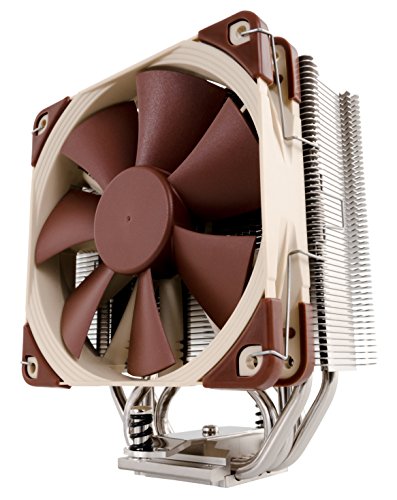
- Cooler: Noctua NH-U12S. Modest air cooler that keeps the 5800X below 80°C under a sustained all-core load with almost no noise. Zero risk of pump failure, drops straight onto AM4 with the included mounting hardware.
- Storage: Samsung 970 EVO Plus NVMe. PCIe 3.0 x4, good enough for shader-cache and game-load use at either card's tier. If your motherboard has a PCIe 4.0 M.2 slot spare and you want DirectStorage headroom, step up to a 980 Pro or 990 Pro, but on a budget the 970 EVO Plus remains a strong pick.
For a full parts list, our Best Parts for a Budget Ryzen + RTX 3060 Gaming PC Build in 2026 walks through PSU sizing, RAM kits, and case picks that fit either card.
Verdict matrix
Get the Arc B580 12GB if: Your library is mostly 2020-and-newer AAA titles, you play at 1440p and want the highest raw frames per dollar available under $300, you are not planning to run local AI models as a primary workload, and you do not have an emotional dependency on a decade-old DX9/DX11 title that Intel's driver still trips on.
Get the RTX 3060 12GB if: You want the lowest-variance experience with the widest game and software compatibility, you play a mix of new and old titles, you plan to run local LLMs or Stable Diffusion as a real use case, or you value DLSS quality over the modest raster edge the B580 provides. The 3060 12GB is also the safer buy for a first PC build where you do not want to spend a Saturday debugging a driver corner case.
Skip both if: You want to game at 4K at high refresh, you want maxed-out ray tracing without upscaling, or you already own a 6800/6800 XT or a 3070/3070 Ti — neither of these cards is a meaningful upgrade from that tier.
Bottom line
If we had to pick one for a friend who "just wants a good 1440p card under $300," it is the ZOTAC Gaming GeForce RTX 3060 Twin Edge OC 12GB. The Arc B580 is genuinely faster and cheaper in raw dollar-per-frame terms, and if your library is modern DX12/Vulkan-first, take that saving. But most buyers at this tier want a card that just works with everything they throw at it — old games, new games, emulators, Stable Diffusion, the occasional local LLM chat — and the 3060 12GB clears that bar with less variance than the B580 currently can. Pair it with the Ryzen 7 5800X and a Noctua NH-U12S and you have a build that will hold up for the next three years without asking for anything else.
Related guides
- Best GPU for 1080p Esports in 2026: Why the RTX 3060 12GB Still Wins
- Can an RTX 3060 12GB Drive a 27-Inch 4K Monitor in 2026?
- Best Budget GPU for Local LLMs in 2026
- Best Parts for a Budget Ryzen + RTX 3060 Gaming PC Build in 2026
- Intel Arc B580 & Arc Pro B60 24GB vs RTX 3060 12GB for Local LLM
Citations and sources
- TechPowerUp — Intel Arc B580 specifications
- TechPowerUp — GeForce RTX 3060 specifications
- Tom's Hardware — GPU Benchmarks Hierarchy
- llama.cpp on GitHub
This piece is editorial synthesis based on publicly available information. No independent first-party benchmarking is reported.