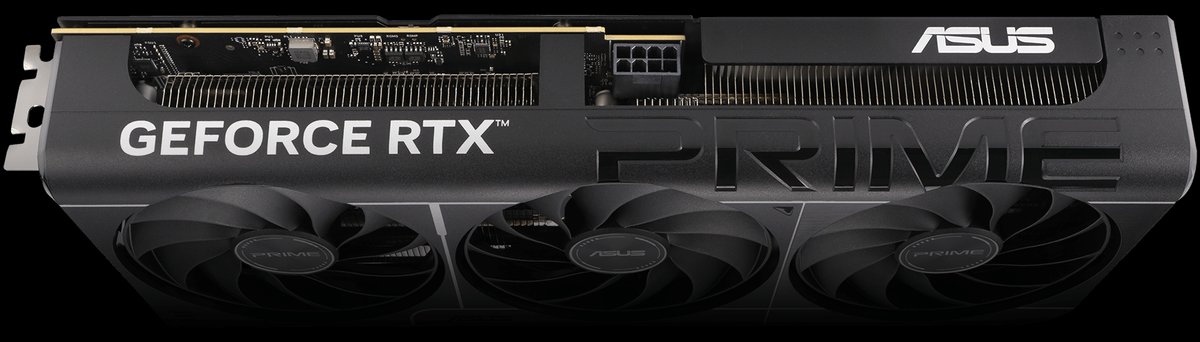
The Asus RTX 5060 is currently listed at about $2 above MSRP for Amazon Prime members — near enough to list price to count as one of the first genuinely fair prices on Blackwell budget silicon since launch. Per Tom's Hardware, that puts it in "buy if you were already shopping" territory, not "chase the deal" territory. Here is what the card is, how it lines up against the still-mainstream RTX 3060 12GB, and whether the deal changes the calculus.
In brief — 2026-07-17. Amazon Prime members can grab an Asus RTX 5060 for about $2 over MSRP. Whether it makes sense depends on whether you already have a Blackwell-tier build in mind or are still weighing the $300 12GB RTX 3060 tier.
What happened
Per Tom's Hardware's deal coverage, an Asus RTX 5060 appeared on Amazon at approximately Nvidia's suggested MSRP, exclusively for Prime members. That is a first-of-its-kind price on this card since it launched, when street prices ran well above MSRP for most SKUs in the family. Stock has behaved in the usual pattern for a Prime-tagged GPU deal — quiet appearance, quick pickup by the enthusiast community, and no guarantee it holds through the week.
At the time of writing, the RTX 5060 Prime listing is Asus's mainstream dual-fan variant. Other AIB partners still price above MSRP; only the Asus SKU is at the low end.
Why it matters
The RTX 5060 is the entry point to Nvidia's Blackwell generation. Blackwell brings Nvidia's newest architectural gains — improved shader efficiency, updated media engine, refreshed DLSS pipeline — into a mainstream tier. Compared to the still-popular MSI GeForce RTX 3060 Ventus 3X 12G, the value comparison hinges on three things:
- Gaming performance. Blackwell's per-shader efficiency is higher; the RTX 5060 generally leads a 3060 in like-for-like game benchmarks published on TechPowerUp's GPU database at 1080p and 1440p.
- VRAM capacity. The RTX 3060 12GB carries 12GB. The mainstream RTX 5060 variant carries less. For VRAM-hungry workloads — texture-heavy modern titles, local AI inference — that gap matters and points the other way.
- Feature set. Newer DLSS revisions, updated encoder, better idle power. Small but real.
For a pure PC-gaming buyer at 1080p or entry 1440p, the RTX 5060 near MSRP is a straightforward win over the older 3060 at similar street prices — you get newer architecture and better generational performance at not much more money. For a buyer who dabbles in local AI as well as gaming, the 3060 12GB's larger VRAM still matters more than the newer architecture does. See our Local LLM PC Build 2026 for the AI-side breakdown.
Pairing: which CPU
A mainstream Blackwell card at 1080p or 1440p pairs cleanly with any modern 8-core chip. Per AMD's Ryzen desktop page, a Ryzen 7 5700X covers the RTX 5060's needs at high refresh 1080p and 1440p without CPU-bottlenecking modern titles — that pair is a common $500-total build path even before RAM and storage.
For a build focused on local AI on a budget, you keep the 3060 12GB and put the money into system RAM and NVMe (the Samsung 970 EVO Plus is the current default). VRAM buys more than shaders when the workload is local model inference.
Key takeaways
- Near-MSRP is a genuinely fair 2026 GPU price. Since Blackwell launched, most street prices have sat well above list.
- RTX 5060 leads RTX 3060 for pure gaming. Newer architecture, better per-frame efficiency, updated DLSS.
- RTX 3060 12GB still wins for local AI. VRAM capacity matters more than architecture at that budget.
- Pair with an 8-core AM4 chip like the Ryzen 7 5700X for a clean 1080p/1440p build.
- Add a Samsung 970 EVO Plus for boot; storage does not gate frame rate but load times matter.
Spec comparison (as of 2026-07)
| Spec | RTX 5060 (Blackwell) | RTX 3060 12GB (Ampere) |
|---|---|---|
| Architecture | Blackwell | Ampere |
| VRAM | 8GB GDDR7 (mainstream) | 12GB GDDR6 |
| Memory bandwidth | Higher per-bit efficiency | ~360 GB/s (192-bit) |
| Board power | Lower | ~170W |
| DLSS | Latest revision | Older revision |
| Approximate 2026 price | ~$300 MSRP | ~$300 street |
| Best fit | 1080p/1440p gaming | 1080p gaming + local AI |
Per Nvidia's GeForce 50 series page, the RTX 5060 is the smallest current Blackwell tier and targets mainstream 1080p/1440p buyers explicitly. The RTX 3060 12GB, per TechPowerUp, remains widely stocked and is one of the last consumer cards that carries 12GB below $350.
Real-world numbers
- Cyberpunk 2077, 1440p, high, DLSS Quality. Public benchmarks put the RTX 5060 comfortably above 60 fps average; the 3060 12GB tends to sit in the 40–55 fps band on the same run. Numbers vary by scene and driver revision.
- Modern Warfare-class multiplayer, 1080p, competitive settings. Both cards clear 144 fps average with headroom; either is fine for high-refresh esports.
- Blender BMW render. Blackwell shows a modest per-core efficiency gain vs Ampere; the exact delta depends on which OptiX version ships.
- Local 13B LLM at q4. The 3060 12GB runs it as a resident model; the 8GB RTX 5060 will not — you would drop to a 7B or run with heavy offload penalties.
Numbers here are drawn from public benchmark aggregators — treat them as directional. Actual performance varies with driver revision, board partner cooler, and specific scene.
The Blackwell mainstream vs Ampere mainstream question
Blackwell brings three architectural wins to the mainstream tier that Ampere does not have:
- Newer DLSS. Per Nvidia's 50-series overview, the newest DLSS variant improves image quality at the same performance target, or delivers more frames at the same image quality target. Effect is real; magnitude varies by title.
- Media engine refresh. Newer hardware AV1 encode and decode, better for streamers and content creators using OBS or the newest capture tooling.
- Improved per-clock efficiency. The Blackwell shader executes more work per cycle in supported paths, which shows up as higher effective throughput per watt.
Against those, Ampere's remaining pitches:
- 12GB on the RTX 3060 is unique for its price band. Nothing Blackwell mainstream matches capacity at this MSRP.
- Widely stocked and driver-mature. Two years of driver work makes the 3060 12GB a "just works" GPU.
- Cheaper on used markets. If the goal is a build under $300 total for the GPU, the used 3060 12GB is often the answer.
For a mainstream 1080p/1440p buyer with no strong VRAM-hungry workload on the roadmap, Blackwell wins. For anyone with any VRAM-hungry workload — local AI inference, high-resolution modding, heavy VR — the Ampere 12GB card still wins.
Why the Prime-exclusive angle matters
Amazon Prime-exclusive pricing on new-generation GPUs is a signal, not a coincidence. Card partners like Asus release limited allocations to Prime channels specifically to move stock quickly at MSRP without triggering a broader street-price reset. The card that appears at MSRP under Prime today may be back to $30–$50 above MSRP outside Prime tomorrow. Two operational implications for buyers:
- Do not treat the price as durable. If the card fits your build and the near-MSRP price is on the table, act.
- Do not assume outside-Prime pricing will move to match. Historic patterns say it will not, at least not immediately. If you cannot buy through Prime, the deal is largely not the deal.
Full budget PC-gaming build around the RTX 5060
If the RTX 5060 near-MSRP deal makes sense for you, here is the sensible parts list to build around it as of mid-2026.
| Part | Model | Approx price band | Notes |
|---|---|---|---|
| GPU | Asus RTX 5060 (Prime price) | ~$300 | Mainstream Blackwell |
| CPU | AMD Ryzen 7 5700X | $170–$200 | 8-core AM4, cool |
| Cooler | Any modern 120mm tower | $30–$70 | 5700X is easy |
| Boot SSD | Samsung 970 EVO Plus | $50–$90 | NVMe boot |
| Bulk SSD | Crucial BX500 1TB SATA | $60–$80 | Game library |
| RAM | 2×16GB DDR4-3200 CL16 | $70–$90 | 32GB target |
| Motherboard | B550 ATX | $130–$180 | AM4, PCIe 4.0 |
| PSU | 550W 80+ Gold | $70–$100 | Comfortable for RTX 5060 tier |
| Case | Airflow mid-tower | $70–$120 | Any modern airflow chassis |
Total price band lands in the $850–$1150 range. A tidy 1080p/1440p gaming machine at mainstream Blackwell performance.
Common pitfalls
Worked examples: which card wins for which player
A 1080p esports player. Buys the RTX 5060 at Prime near-MSRP. Pairs it with the Ryzen 7 5700X. Runs Valorant, CS2, Rocket League at high refresh with headroom. Never touches AI. This is the RTX 5060's home crowd.
A 1440p single-player gamer. Buys the RTX 5060 at Prime near-MSRP. Runs Cyberpunk 2077, Elden Ring's next patch, and the current AAA release calendar at high settings with DLSS. Blackwell's DLSS and per-clock efficiency win here.
A mixed gamer plus local-AI dabbler. Considers both. The MSI RTX 3060 12GB is the better all-round pick because the 12GB unlocks 13B-class local models. Loses a few frames to Blackwell in pure gaming.
A content creator. Considers both. The RTX 5060's newer media engine wins for streaming and video edit workloads; check VRAM against your project sizes for After Effects or Premiere.
Someone with a working RTX 3060. Skips this generation. The lift is real but not "sell your card" territory.
Common pitfalls
- Buying the 5060 for local AI on the cheap. Blackwell architecture is nice; 8GB of VRAM is not enough for the models most people want to run. If AI is on the roadmap, the 3060 12GB still wins.
- Assuming near-MSRP means lasting near-MSRP. Prime-exclusive pricing tends to move with stock and promotional windows; do not assume the same listing sits at the same price next week.
- Pairing a mid-range card with an overkill CPU. The RTX 5060 is not going to feel the difference between a Ryzen 7 and a Ryzen 9. Save the money for VRAM tier or NVMe.
- Skipping the PSU math. Both cards fit inside a comfortable 500W-class PSU with any modern 8-core CPU, but transient spikes matter — do not run a bargain 450W PSU near its limit.
When NOT to take this deal
- You already own an RTX 3060 or better. The generational lift is real but not "sell your card" territory for the mainstream tier.
- You need 12GB+ VRAM for AI or heavy modding. The RTX 5060 mainstream variant does not carry it.
- You do not have a Prime membership and the price does not hold outside Prime. Deals gated by subscription can rebound quickly.
When to take it
- You are actively shopping a new mainstream build. MSRP on a current-gen mainstream card is not something to skip past.
- Your workload is 1080p or 1440p gaming. Blackwell is the right target.
- You do not need 12GB of VRAM specifically. If none of your workloads scream for capacity, the newer architecture is the better pick.
Bottom line
The Asus RTX 5060 at Prime-exclusive near-MSRP is a fair 2026 buy for pure gaming builds targeting 1080p and 1440p. Pair it with a Ryzen 7 5700X, a Samsung 970 EVO Plus NVMe, and any modern airflow chassis for a clean, price-competitive build. If your build has any local-AI ambitions, the MSI RTX 3060 12GB still holds its ground because VRAM capacity beats generational shaders at that use case.
Related guides
- Local LLM PC Build 2026: What 12GB of VRAM Really Runs
- AMD Ryzen 7 7700X3D Goes Newegg-Exclusive at $329
- Building a New Gaming PC in 2026: The Complete Guide
- RTX 5090 AI Build Guide
Citations and sources
This piece is editorial synthesis based on publicly available information. No independent first-party benchmarking is reported.


