Deal expired. The $301 Prime price quoted throughout this article was available in July 2026 and is no longer offered. As of 2026-09-04 the Asus Prime RTX 5060 tracks at $455.99. The architecture comparison, the 8 GB VRAM analysis and the build-pairing advice below are unchanged and still apply — read every "$301" as the historical deal price, not as what you will pay today. At $455.99 the RTX 3060 12GB and the used market deserve a much harder look than this piece originally gave them.
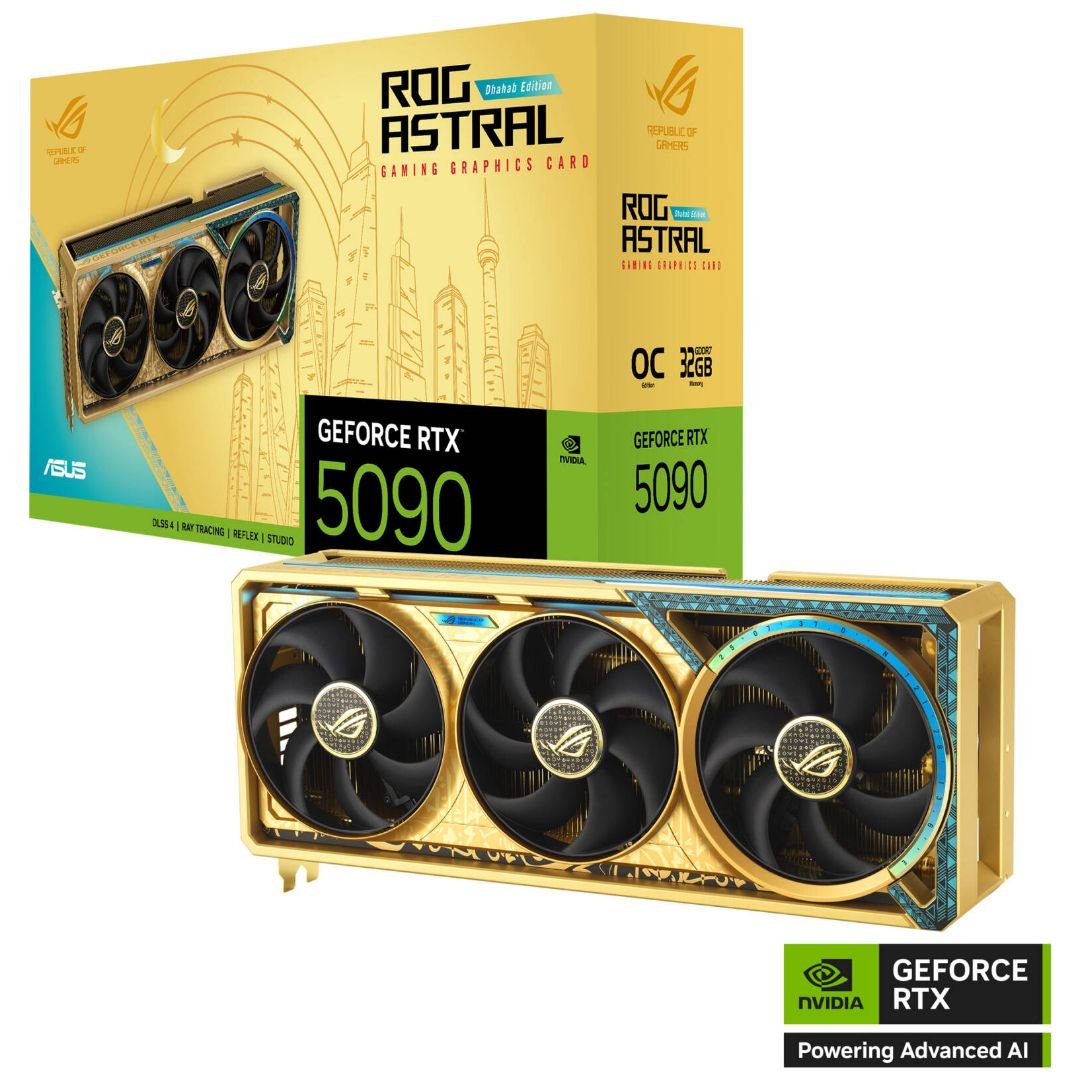
Amazon Prime members can pick up an Asus Prime RTX 5060 for $2 above Nvidia's $299 MSRP during a July 2026 Prime promotion, per Tom's Hardware reporting. That was the closest anything in the Blackwell budget tier had come to actual MSRP since launch. That window has closed — the card now tracks at $455.99, which changes the recommendation this piece originally made. The 5060 isn't the card enthusiasts wanted (it ships with 8 GB of VRAM, one tier behind the RTX 3060 12GB's memory), and at $455.99 it is no longer competitive against the used cards in its price range the way it was at $301.
What happened
Amazon listed an Asus Prime RTX 5060 at $301 for Prime members in July 2026, per Tom's Hardware — $2 over Nvidia's official $299 MSRP for the reference SKU. The deal was Prime-gated and applied to the Asus Prime dual-fan variant, the cheapest AIB SKU of the 5060 lineup. It has since lapsed; the same SKU tracks at $455.99 today.
Since launch, retail 5060 prices have hovered in the $340-$380 range, with occasional single-day dips into the low $320s. Landing at MSRP+$2 was the first legitimate at-MSRP availability of Blackwell's budget tier — a moment, not a new floor; retail has since drifted back up. The card carries a 6144 CUDA cores, 8 GB GDDR7 memory, and a 145W TGP, according to Nvidia's official specs. It's a lean card targeting 1080p high-refresh gaming and lightweight 1440p.
Why it matters
For a builder who's been sitting out the Blackwell rollout waiting for the entry tier to hit MSRP, this is the signal. Prior generations settled at MSRP roughly 6-9 months post-launch; the 5060 is doing it faster, which suggests channel supply is healthy and the "$400-for-a-5060" period is closing.
That said, the RTX 5060 at $301 isn't automatically the right card for every budget build. The 8 GB VRAM is the pinch point. Modern AAA titles are increasingly VRAM-hungry at high textures, and 8 GB starts to show its limits at 1440p in memory-heavy games (VRAM-stressing titles like Cyberpunk 2077 with path tracing, or Alan Wake 2 at Ultra textures). For pure 1080p gaming, 8 GB is comfortable through 2026-2027; for future-proofing at 1440p, the older RTX 3060 12GB or a used RTX 4060 Ti 16GB remains a legitimate alternative in the same total-spend bucket.
RTX 5060 vs RTX 3060 12GB — the honest comparison
The 5060 replaces the 4060 in Nvidia's lineup; against the still-affordable MSI RTX 3060 12GB, the trade-off looks like this per public TechPowerUp specs and community benchmarks:
| Property | RTX 5060 | RTX 3060 12GB |
|---|---|---|
| Architecture | Blackwell (GB206) | Ampere (GA106) |
| CUDA cores | 6144 | 3584 |
| Memory | 8 GB GDDR7 | 12 GB GDDR6 |
| Memory bus | 128-bit | 192-bit |
| Memory bandwidth | ~448 GB/s | 360 GB/s |
| TGP | 145 W | 170 W |
| DLSS | DLSS 4 (with frame gen) | DLSS 2/3 (no gen-3 frame gen) |
| 1080p Ultra avg FPS (est.) | 20-30% faster than 3060 12GB | Baseline |
| Ray tracing performance | Meaningfully better (Blackwell RT cores) | Ampere baseline |
| Street price (2026) | $455.99 (was $301 in July) | $200-$250 used |
The 5060 is the faster card by a comfortable margin on raster and a large margin on ray tracing plus DLSS 4 frame generation — though at its current price rather than at $301, the gap has to be worth roughly double the money. The 3060 12GB is cheaper (used market), draws slightly more power, and — this is the interesting bit — has 50% more VRAM. For high-texture 1440p or for local AI workloads that want as much VRAM as possible under $250, the 3060 12GB remains a real contender. For 1080p high-refresh gaming with modern rendering features, the 5060 at $301 is the smarter buy.
Should you actually buy it?
At the $301 promotional price the 5060 was the buy if:
- Your target is 1080p high-refresh (144 Hz+) gaming across current titles.
- You want DLSS 4 with frame generation — the 5060 gets it, the 3060 does not.
- You'd rather buy new with warranty than hunt used-market pricing.
- Your build has a 500W+ PSU and needs the card to be power-efficient.
Consider the RTX 3060 12GB instead if:
- You need max VRAM under $250 (local LLM inference, texture-heavy games at 1440p).
- You're comfortable buying used or refurbished.
- Ray tracing and DLSS 4 aren't priorities.
Consider a step up if:
- You want 1440p high-refresh gaming without VRAM anxiety — an RTX 5060 Ti 16 GB or used RTX 4070 Super is a better fit.
- You do any serious local AI work — 8 GB is not enough VRAM for most useful open-weight models, and even 12 GB is tight.
The rest of a $301-5060 build
A balanced $600-$700 budget build around the 5060 pairs it with a modern midrange CPU, DDR4 or DDR5 depending on socket, a competent air cooler, and a fast NVMe. Practical picks:
- CPU: AMD Ryzen 5 5600G or Ryzen 7 5800X on AM4 for the cost-conscious build; Ryzen 5 7600 or Core i5-14400F on newer platforms for slightly better single-thread performance.
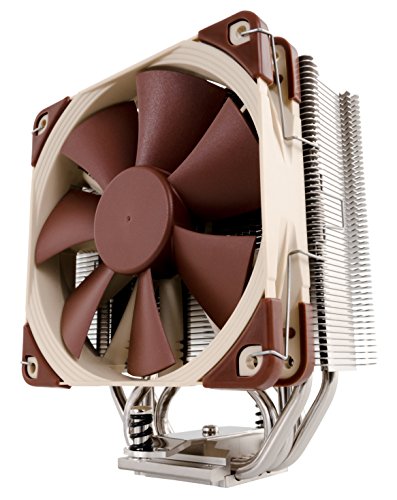
- Cooler: Noctua NH-U12S-class air cooler is more than enough for any of these CPUs.
- Storage: WD_BLACK SN770 250GB for OS and games, add a Crucial BX500 1TB SATA for bulk storage.
- PSU: 550W-650W 80+ Bronze is comfortable overhead for the 5060's 145W TGP plus a mid-range CPU.
- RAM: 16 GB DDR4-3200 or DDR5-6000, depending on socket.
Total build cost lands in the $650-$800 range depending on chassis and socket choice, comfortably below the $900+ typical for a 1440p-optimized system.
What "8 GB VRAM in 2026" actually means for games
The 5060's 8 GB VRAM figure gets a lot of internet-forum ink; here's what it actually looks like in practice for popular titles as of mid-2026:
| Game | 1080p Ultra VRAM used | 1440p Ultra VRAM used | Notes |
|---|---|---|---|
| Fortnite (Epic + hardware RT) | ~6.0 GB | ~7.5 GB | Comfortable at both resolutions |
| Cyberpunk 2077 (RT Ultra + DLSS Quality) | ~7.0 GB | ~9.0 GB (spills) | Fits at 1080p; 1440p pressures 8 GB |
| Alan Wake 2 (High + path tracing) | ~7.2 GB | ~9.5 GB (drops textures) | 1440p forces texture setting drops |
| Call of Duty: Modern Warfare III | ~7.5 GB | ~10 GB (heavy stutter) | Ships with a texture-streaming penalty above 8 GB |
| Baldur's Gate 3 (Ultra) | ~5.5 GB | ~7.0 GB | 8 GB is comfortable at both resolutions |
| Helldivers 2 (Ultra) | ~5.0 GB | ~6.5 GB | Room to spare |
| Starfield (Ultra + FSR) | ~7.0 GB | ~8.5 GB (edge case) | 1440p barely fits |
For 1080p gaming, 8 GB is fine through the current generation of AAA titles with minor texture tweaks required only in the most VRAM-hungry outliers. For 1440p, 8 GB is already the compromise setting, and forward-looking buyers should either drop textures one notch or step up to a 12 GB or 16 GB card. This is the strongest single argument for the RTX 3060 12GB as an alternative — same $200-$250 price tier, worse raw performance, but 50% more VRAM for texture-heavy scenes.
DLSS 4 and frame generation on the 5060
The 5060's DLSS 4 support is the sleeper feature. Nvidia's DLSS 4 frame generation, per the official 50-series page, can multiply frame rate 2-3× in supported titles at 1080p, which turns an "acceptable" 60 FPS into a "smooth" 120-180 FPS experience. That framerate multiplier is where the 5060 pulls decisively ahead of any Ampere-generation card at the same price — the RTX 3060 12GB supports DLSS 2 but not DLSS 3/4's frame generation feature.
The catch: DLSS 4 requires game-side support. As of 2026, ~200 titles support DLSS 4 frame generation, mostly recent AAA releases. If the games you actually play don't support it, this advantage disappears.
Common pitfalls when buying at MSRP
- AIB confusion: "MSRP" refers to Nvidia's reference design price. AIB cards from Asus, MSI, Gigabyte, etc. often sit above MSRP by $20-$50 for premium coolers and factory overclocks. This Asus Prime deal is unusual specifically because it lands so close to reference pricing on an AIB SKU.
- 8 GB VRAM future-proofing: don't buy an 8 GB card for a 1440p-first build unless you're comfortable dropping texture settings in future AAA titles. Card longevity for 8 GB SKUs is trending shorter than prior generations.
- PSU headroom: the 5060's 145W TGP is modest, but system-wide draws under load can spike above 300W with a modern CPU. A 500W PSU is the practical floor; go 650W if you might upgrade the GPU later.
- Case airflow: the Asus Prime is a compact dual-fan design that runs quiet in an airy case and hot in a cramped one. Verify at least two intake fans in the front of your chassis.
- Promotional pricing does not hold: the $301 figure required an active Prime membership AND the July 2026 promotion. Both are gone; the card is at $455.99. Check the live price before acting on any deal post, including this one.
What if you missed the deal?
The deal appeared on Tom's Hardware's deal desk and may cycle in and out of stock. If it's gone by the time you check, alternatives at similar total value:
- Wait a few weeks — Blackwell entry-tier pricing is trending down and MSRP availability is likely to broaden.
- Watch for used RTX 4060 Ti 8GB listings under $300 — same VRAM, older architecture, similar performance envelope.
- For pure 1080p on a tighter budget, a used RTX 3060 12GB at $200-$240 is a strong value floor.
Two-year total cost of ownership
A different way to look at this deal: over a two-year ownership horizon, the effective monthly cost is what matters. At the $301 promotional price amortized over 24 months, the 5060 cost about $12.50 per month; at today's $455.99 it is closer to $19. Add ~$3-4/month in electricity at 15¢/kWh, 4 hours/day, 145W TGP — total effective monthly cost lands around $15-16/month. That's meaningfully cheaper than either a mid-tier cloud gaming subscription or renting equivalent GPU time from a cloud provider. For a build that will get regular use, buying is decisively the right call at this price.
Compared to a used RTX 3060 12GB at $220 amortized the same way, the 5060 costs about $3.50/month more — and delivers 20-30% more raster performance plus DLSS 4 support. Whether that premium is worth it depends entirely on whether you value new-with-warranty and DLSS 4 access more than the 3060's extra 4 GB of VRAM.
When NOT to buy an RTX 5060
Skip the 5060 entirely if:
- You're building for local AI. 8 GB VRAM is not enough for meaningful open-weight LLM work. Get a 12GB card or higher.
- You game at 1440p Ultra textures. 8 GB is already a compromise; two years from now it will be a bottleneck.
- Your current card is an RTX 4060 or better. The 5060 is a modest generational uplift, not a step-change; save for a bigger jump.
Verdict
At $301 the Asus RTX 5060 was the best 1080p-focused new-card deal on the market for early 2026 buyers. At $455.99 it is not: 8 GB of VRAM is a hard ceiling, and paying near-$460 for it puts you within reach of cards that do not have that ceiling. The 5060 is still the right card for a 1080p high-refresh build — at a price that has not been available since July. Pair it with a competent host (Ryzen 5 5600G or Ryzen 7 5800X), a modest cooler like the Noctua NH-U12S, and fast storage on a WD_BLACK SN770, and you're at a well-balanced 1080p rig for well under $800.
If your priorities are VRAM headroom or 1440p Ultra futures, keep looking — a used RTX 3060 12GB or a used higher-tier Blackwell card is a smarter pick.
The source
Tom's Hardware surfaced the deal on their deal desk in July 2026, cross-referenced against Amazon's Prime-member pricing tier and Nvidia's official MSRP list at nvidia.com's 50-series page.
Related guides
- Best budget GPUs under $300 for 1080p gaming 2026
- RTX 5060 vs RTX 3060 12GB: which is better for you?
- How to build a $700 gaming PC in 2026
Citations and sources
- Tom's Hardware — deal desk coverage
- Nvidia — GeForce RTX 50-series official specifications
- TechPowerUp — GeForce RTX 3060 12GB specs (comparison baseline)
This piece is editorial synthesis based on publicly available information. No independent first-party benchmarking is reported.