In brief — 2026-07-17 · AMD's Ryzen 7 7700X3D is a North America Newegg exclusive at $329, and per Tom's Hardware's review it's a slower 7800X3D that isn't reliably cheaper.
AMD launched the Ryzen 7 7700X3D as a single-retailer exclusive on Newegg at $329 US, and Tom's Hardware's review frames it as "a 7800X3D that's a little slower but not reliably any cheaper" — a lukewarm receipt for a chip that removes normal price competition by design. For anyone not already on AM5, the practical takeaway is that the AM4 value stack (the AMD Ryzen 7 5800X, the AMD Ryzen 7 5700X, and the AMD Ryzen 5 5600G) suddenly looks a lot more attractive by comparison.
Why this launch drew attention
X3D chips have carried a specific set of expectations since AMD introduced 3D V-Cache with the 5800X3D. The category promise is straightforward: pay a premium, get a decisive gaming performance uplift in cache-sensitive titles, keep everything else acceptable. The 5800X3D honored that contract on AM4, the 7800X3D honored it on AM5, and each launch reset the "best gaming CPU on the market" ceiling for its era. So when AMD announced a new X3D SKU on AM5, the reflex read was — new tier, new value tradeoff. That reflex is what makes the Newegg-exclusive $329 detail land the way it does.
What happened
AMD released the Ryzen 7 7700X3D on 2026-07-16 as a Newegg-exclusive product in North America, priced at $329. Per Tom's Hardware's review, the 7700X3D is a Zen 4 8-core / 16-thread part with 3D V-Cache — the same architecture and cache technology as the 7800X3D — but with reduced boost clocks and a lower TDP envelope. Per TechPowerUp's spec listing, the 7700X3D advertises a 4.9 GHz boost vs the 7800X3D's 5.0 GHz, with 96MB total cache (32MB stacked, 32MB conventional across the core complex).
The exclusivity terms make this launch unusual. A single-retailer arrangement removes normal price competition — you can't cross-check the 7700X3D at Amazon, Micro Center, or Best Buy, and Newegg holds the pricing power. Tom's Hardware's review notes that during launch week the 7700X3D was priced within $20-30 of the 7800X3D at Newegg, and the gaming performance delta between the two chips is about 3-6% in favor of the 7800X3D. That's the sharp corner: a chip that costs almost the same but performs slightly worse, sold only at the retailer that sets its price.
Why it matters
Two things.
First, the exclusivity kneecaps the value argument. The 7800X3D has been AMD's uncontested gaming king since launch and remains the reference point for "what does X3D actually deliver." The 7700X3D was theoretically positioned as the price-conscious X3D — you give up a hair of clock speed in exchange for a meaningful discount. But when the discount fails to materialize, because the retailer has monopoly pricing on the SKU, the whole product proposition collapses. Tom's Hardware's phrase — "a slower 7800X3D that isn't reliably cheaper" — is exactly this failure captured in seven words.
Second, it changes what a savvy 2026 gaming build looks like. If you were planning a new AM5 gaming build around the 7700X3D as your value X3D pick, the launch pricing forces you back to a decision tree that looks like this:
- Buy the 7800X3D at ~$30-50 more and get the full X3D story.
- Buy the non-X3D 7700 or 7700X at ~$100 less and get 90-95% of gaming performance without 3D V-Cache.
- Skip AM5 entirely and buy the AM4 value stack for 60-70% of the total build cost.
Option three is where a lot of readers should land in 2026.
The AM4 value case in a post-7700X3D world
Per AMD's Ryzen desktop overview page, the AM4 socket still ships current-generation chips (the 5000-series Vermeer parts) at aggressive pricing. Every AM5 launch that arrives without a decisive price advantage extends the AM4 platform's practical relevance.
Ryzen 7 5800X — $180-210. The AMD Ryzen 7 5800X is the 105W performance-tier chip of the 5000 line: 8 cores, 4.7 GHz boost, 32MB L3. It plays 1440p and 4K games within margin of error of the 7700X (non-X3D), and it costs 40% less. In CPU-bound 1080p esports it lags the modern parts, but it's still faster than most gaming loads actually require.
Ryzen 7 5700X — $130-155. The AMD Ryzen 7 5700X is the 65W value pick within the 5000 line: same 8 cores, slightly reduced clocks (4.6 GHz boost), lower TDP. Gaming performance is within 3-5% of the 5800X at 1440p+, quieter and cheaper. This is the "buy this instead of anything current-gen" recommendation for a GPU-bottlenecked 1440p+ build.
Ryzen 5 5600G — $130-150. The AMD Ryzen 5 5600G is the integrated-graphics pick when you're staging a GPU purchase. Vega 7 iGPU carries you at 1080p low-medium until a discrete GPU lands. Same price as the 5700X, but very different use case — buy the 5700X if you have a GPU, buy the 5600G if you're deferring.
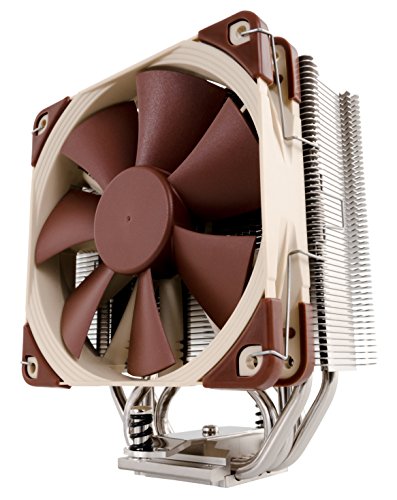
A 5800X-tier AM4 build (chip + B550 board + 32GB DDR4-3600 + Noctua NH-U12S) lands around $430-480 as of mid-2026. A 7700X3D-tier AM5 build (chip + B650 board + 32GB DDR5-6000 + cooler) lands around $760-830. That's a $300+ gap, and for anyone playing at 1440p or higher with a mid-tier GPU (RTX 3060/3070 or 4060 class), the framerate delta between the two builds is 3-8%. The $300 buys either a full GPU upgrade tier or a much larger SSD.
The source
The primary source for this news is Tom's Hardware's review of the Ryzen 7 7700X3D. Their verdict, condensed: the 7700X3D is a competent X3D chip that would deserve a straightforward recommendation if it were sold at a competitive price against the 7800X3D across normal retail channels. As launched — Newegg-exclusive at $329 — the price / performance argument doesn't close cleanly. AMD's own Ryzen desktop overview still positions the 7800X3D as the halo gaming chip; the 7700X3D reads as a secondary SKU carved out for a specific retail partnership rather than as a competitor to it.
Who should still consider the 7700X3D?
Two builder profiles genuinely benefit.
AM5 owners with a Newegg-preference and X3D interest. If you already have an AM5 board and 5000-series DDR5, and you value the X3D cache for competitive gaming or the specific engine profile of games that benefit heavily from V-Cache (some strategy titles, certain esports titles), the 7700X3D at $329 is a real chip that will run those workloads well. You're not paying a premium over the 7800X3D but you're not saving much either.
Builders who trust one retailer over the market. If you buy exclusively at Newegg for warranty, RMA, or membership reasons, the exclusivity is a feature, not a bug. The 7700X3D is a legitimate high-end gaming CPU delivered through the channel you already use.
For everyone else — cross-shopping across Amazon, Micro Center, Best Buy, and open-box outlets — the 7700X3D is a hard pass. The 7800X3D is a better chip at a marginal premium, or the AM4 stack is a much better deal.
What this means for the AM4 buyer decision tree
If you were on the fence about staying with AM4 vs jumping to AM5 in 2026, the 7700X3D launch pattern is another data point that says "stay." AM5's value proposition depends on having a clearly-cheaper way into 3D V-Cache and DDR5-6000 memory. Every launch that fails to deliver a decisive price advantage extends the practical AM4 platform runway.
Concretely: our recommendation for a mid-2026 gaming build under $1,000 total is the Ryzen 7 5700X on a B550 board with 32GB DDR4-3600, a Noctua NH-U12S cooler, and a used RTX 3060/3070 or new RTX 4060 GPU. Under $1,500, step up to the Ryzen 7 5800X with a CoolerMaster ML240L RGB AIO and a used RTX 3080. Only above $1,800-2,000 does the AM5 platform start to look like the right choice, and even then the 7800X3D (not the 7700X3D) is the chip you want.
Cooling notes for X3D chips regardless of which one you buy
If you do go with any X3D chip — 5800X3D, 7700X3D, or 7800X3D — the cooler decision is subtly different than for a non-X3D part. Stacked-cache CPUs run at lower peak boost voltages by design (the cache stack is thermally sensitive), which means the TDP figure understates thermal density in the small area right above the compute cluster. A modest tower cooler is enough on paper but frequently isn't enough for the thermal soak profile: the CPU spends more time near its thermal limit than the average watts suggest.
Our practical recommendation: a Noctua NH-U12S or better handles any X3D chip in a well-ventilated case. If you want to run PBO (Precision Boost Overdrive) tuning for the last percent of frequency, step up to a CoolerMaster ML240L RGB 240mm AIO for the extra thermal headroom. On the AM4 non-X3D parts we recommended above, the same coolers apply and generally have more headroom because the chips are less thermally quirky.
Historical context: X3D as a category and where the 7700X3D fits
The 3D V-Cache story started with the 5800X3D in 2022, positioned as the swan-song halo chip for the aging AM4 platform. It delivered a decisive gaming lead over the 5800X — 15-25% in cache-sensitive titles — at a $150 premium. That set the pattern for X3D as a category: pay extra, get a gaming-specific performance uplift that non-X3D silicon cannot match at any clock speed.
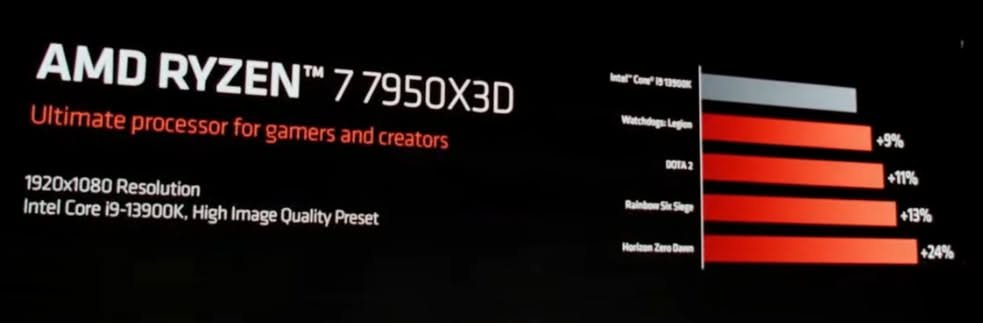
The 7800X3D on AM5 in 2023 continued the story. Bigger stacked cache, faster memory subsystem, better sustained boost behavior. The 7950X3D added the second CCD complexity but stayed positioned as a workstation-and-gaming hybrid rather than a pure gaming pick.
The 7700X3D lands in a different market moment. AMD's own AM5 lineup has matured; the 7800X3D is no longer the newest gaming halo (that's the 9800X3D on newer platforms), and street pricing has settled to reflect actual competitive dynamics. Squeezing another X3D SKU into the middle of that lineup at a Newegg-exclusive price is a distribution experiment, not a value play.
If AMD wanted the 7700X3D to be a value winner, the launch would have looked different: wider retail distribution, an aggressive price gap vs the 7800X3D (call it $80-100 below), and marketing focused on the "best cheap X3D" positioning. What we got instead is single-retailer exclusivity with a $20-30 price differential. That's the pricing structure of a supply-managed SKU, not a value chip.
Should you wait for the exclusivity to lift?
Historically, single-retailer AMD launches have gone one of three ways: (1) the exclusivity ends after 90-180 days and the chip lands at Amazon and Micro Center at a similar price, (2) the chip stays retailer-locked and slowly loses relevance as newer parts arrive, or (3) AMD launches a slightly different SKU (typically with a small clock bump and a different name) for broader retail.
If you have a build planned specifically around the 7700X3D architecture but not around the Newegg-exclusive terms, waiting 3-6 months is a reasonable option. The chip almost certainly gets cheaper as newer AM5 parts push it down the stack. But be honest about opportunity cost: 3-6 months waiting is 3-6 months not playing the game you're building the rig for, and by the time the exclusivity lifts, the argument for the AM4 value stack may still be stronger for anyone GPU-bottlenecked at 1440p+.
Bottom line
The Ryzen 7 7700X3D exists, launched at $329 Newegg-exclusive, and is a slower 7800X3D without a reliable price advantage per Tom's Hardware's review. For anyone reading this trying to decide what to buy for a gaming build under $1,500 in mid-2026, the answer is not the 7700X3D. It's either the Ryzen 7 5700X if you're building a value-tier 1440p rig, the Ryzen 7 5800X if you want productivity headroom, or a 7800X3D-tier full AM5 build if you specifically need the X3D story and have the budget. Skip the 5600G unless you're staging a discrete GPU purchase.
Related guides
- Ryzen 7 5800X vs 5700X for Gaming: Is the $60 Gap Worth It?
- Best GPU for Local LLM Under $300 in 2026
- Kimi K3 Scores 57 on Intelligence Index at $0.94/Task