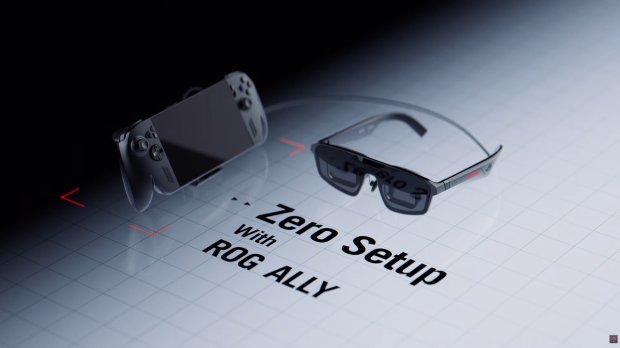
In brief — 2026-07-18 · Asus ROG Xreal R1 AR gaming glasses deliver 240Hz with RGB styling, aimed squarely at PC gamers looking for a wearable secondary display.
Per Tom's Hardware, the Asus ROG Xreal R1 is a gaming-focused AR headset developed in partnership between Asus ROG and Xreal, running at a 240Hz refresh rate with the RGB-heavy styling ROG is known for. It targets gamers who want a portable or secondary big-screen display for PC gaming rather than a full VR replacement — a category that sits between a 4K desktop monitor and a mobile screen.
What happened
Asus and Xreal jointly announced the ROG Xreal R1, an AR gaming glasses product that pairs Xreal's optical technology with ROG branding, styling, and gaming-specific tuning. According to Tom's Hardware's coverage, headline specs include a 240Hz refresh rate — considerably higher than the 60–120Hz range that competing AR glasses typically hit — and ROG's characteristic RGB accents.
The R1 is not a standalone gaming system. Like other AR glasses in Xreal's lineup, it acts as a wearable display: a host device (a gaming PC, a handheld, or a phone) renders the game, and the glasses show the output on translucent lenses that overlay the image on the wearer's field of view. Cable-connected via USB-C for now, with proprietary wireless bridges available separately.
Pricing and full availability were not specified in the initial coverage. What is clear: this is Asus ROG's first serious push into AR gaming hardware, and it targets a specific slice of the PC gaming market — the enthusiast tier that already owns a good desktop but wants a portable or supplementary display for travel, secondary-screen productivity, and cloud gaming.
Why it matters
Traditional PC gaming has centered on desktop monitors for decades, and rightly so — a good 4K QD-Mini LED display like the KOORUI 27" 4K QD-Mini LED offers pixel density, contrast, and color accuracy that no wearable display currently matches. The MSI RTX 3060 12GB or better can drive that panel at 4K/60 or 1440p/160 with the smooth motion clarity gamers expect.
AR glasses are not a replacement for that setup. They are a supplement, and the specific gap they fill is portability plus large-virtual-screen viewing. The ROG Xreal R1's 240Hz refresh rate matters here because it puts wearable displays into refresh-rate parity with high-end desktop monitors for the first time. Where earlier AR glasses left competitive gamers wanting more (60Hz meant blurry sweeps and noticeable input lag), 240Hz is fast enough for most esports titles.
The R1 will not replace your desktop. It might replace your travel setup, your bedroom couch display, or your standing-desk secondary screen. Whether that's worth the price will depend on the pricing tier that ships alongside launch.
Where AR glasses fit next to a traditional monitor
To be concrete about the tradeoff, here is how a 240Hz AR headset compares to a high-end 4K desktop monitor for gaming:
| Dimension | Desktop 4K monitor | AR glasses (240Hz class) |
|---|---|---|
| Pixel density | ~163 PPI at 27" 4K | Effective ~30–40 PPI perceived |
| Contrast | Native QD-Mini LED | Depends on ambient light |
| Refresh rate | 160–240Hz typical | 240Hz on R1 |
| Portability | None | High |
| Color accuracy | 99% Adobe RGB typical | Manufacturer-dependent |
| Privacy | Public | Private |
| Setup complexity | Plug in | USB-C + host device |
| Peripheral compatibility | Any mouse, headset, controller | Same |
The tradeoff is clear: the desktop monitor wins on raw image quality; the AR glasses win on portability and personal viewing. The 240Hz spec closes the motion clarity gap that used to be a definitive strike against wearables.
The source
Full coverage is at Tom's Hardware's AR/VR section. What's confirmed so far:
- 240Hz refresh rate on the ROG Xreal R1 (per Tom's Hardware's reporting)
- RGB styling consistent with ROG's design language
- USB-C connectivity to host devices
What's not yet confirmed at the time of writing:
- Suggested retail price
- Regional launch dates and availability
- Full field-of-view and pixel-density specifications
- Long-session weight and comfort specs
- Whether the R1 will support any Xreal-specific accessories out of the box
As with any pre-launch announcement, treat headline specs as directional until the full launch materials drop.
How it compares for gamers weighing a KOORUI 27" 4K monitor vs a wearable display
For anyone shopping right now for a new gaming display, the pragmatic pick remains the traditional desktop path. A KOORUI 27" 4K QD-Mini LED Gaming Monitor delivers native 4K at 160Hz (or FHD at 320Hz in dual mode), with 99% Adobe RGB color coverage — spec-for-spec, still the reference PC gaming display.
The ROG Xreal R1 makes sense as a second display, especially for:
- Travel gaming. A Nintendo Switch Lite or a portable PC + AR glasses turns a hotel room into a big-screen setup. No external monitor required.
- Bedroom couch gaming. A private big-screen experience without waking a partner or filling the room with monitor glow.
- Multi-monitor productivity. A virtual second screen for work when the desk doesn't fit a physical second display.
- Cloud gaming. Streaming services benefit from a portable display that pairs easily with a phone.
None of these compete with the desktop for primary gaming duty. They complement it.
What hardware do you need to drive AR gaming glasses?
At the risk of stating the obvious: AR glasses are displays. They don't render anything themselves. The host device — a PC, a handheld, or a phone — does all the compute.
For PC gaming through the R1, expect the same graphics-card requirements as driving a monitor at the equivalent resolution and refresh rate. Modern GPU tiers like the MSI RTX 3060 12GB or newer will handle most games at the R1's effective resolution comfortably. Pairing a Turtle Beach Recon 50 headset for audio and a SteelSeries QcK mouse pad for input rounds out the setup identically to a monitor-based configuration.
For handheld / cloud gaming through the R1, any device with USB-C DisplayPort Alt Mode should drive the glasses. That includes most modern gaming handhelds and some phones. Check the R1's exact device compatibility list at launch.
The AR gaming market context
Xreal has been the most consistent AR-glasses maker in the consumer space, iterating annually with steady spec improvements. Asus ROG's involvement signals two things: first, that the market is mature enough to attract mainstream gaming brand attention; second, that Xreal is looking to broaden distribution beyond enthusiast channels.
That distribution matters. AR glasses have historically been hard to buy — Xreal's direct channel plus a handful of specialist retailers were the main paths. If ROG's involvement means the R1 shows up at typical gaming-hardware retailers alongside monitors and keyboards, the addressable market widens meaningfully.
For enthusiasts already deep in the AR ecosystem, the R1's 240Hz spec is the notable jump. For everyone else, ROG's branding is what makes them look at AR glasses in the first place.
What we still don't know
Every early announcement leaves gaps. Here are the ones to watch for as full launch materials drop:
- Effective pixel density and field of view. These determine how "big" the virtual screen feels and how sharp text is. Xreal's earlier glasses land near a virtual 130-inch screen at 3–4 meters, with pixel densities that trail desktop 1080p monitors.
- Weight and long-session comfort. AR glasses live or die by whether you can wear them for two hours of gaming without a headache.
- Prescription lens support. A large fraction of the gaming audience wears glasses. Whether the R1 supports prescription inserts (Xreal's typical pattern) will be a purchase-blocker for many.
- Latency. 240Hz on paper is different from 240Hz perceived. If the display driver adds meaningful frame delay, the spec is misleading for competitive play.
- Battery. If the R1 has an integrated battery, capacity matters. If it draws entirely from the host device, host battery life takes a hit.
Expect this information over the next several weeks as Asus and Xreal publish full spec sheets and hands-on reviewers get sample units.
Who are AR gaming glasses actually for?
Being blunt: not everyone. The R1 is aimed at gamers who already own a strong desktop and want a second, portable display for specific use cases — travel, couch play, private viewing, or a virtual second monitor. It is not a replacement for a good desktop setup and it is not a primary gaming device for most people.
For readers weighing an AR headset against a monitor upgrade this year, the pragmatic move is: buy the monitor first. A 4K QD-Mini LED like the KOORUI 27" will serve every gaming role well. Add AR glasses later when your use case justifies it — you travel constantly, your living situation makes a private display valuable, or you specifically want the multi-screen productivity story that virtual displays enable.
Bottom line
The Asus ROG Xreal R1 is a legitimate step forward for the AR gaming category. The 240Hz refresh rate closes the motion clarity gap that used to make wearables a hard sell for competitive PC gamers. ROG branding brings distribution that Xreal hasn't had alone. Full impact depends on pricing and availability, both of which remain unconfirmed at this point.
If you already own a KOORUI 27" 4K QD-Mini LED or comparable primary display and have $500–$700 to spend on a supplementary portable screen, the R1 is a serious option. If you're picking one gaming display for the year, buy the desktop monitor first.
Related guides
- Best budget PC gaming accessories under $100
- Grok 4.5, GPT-5.6, Kimi K3: four frontier models
- /category/gaming-monitors — every monitor we've indexed
Citations and sources
This piece is editorial synthesis based on publicly available information. No independent first-party benchmarking is reported.


