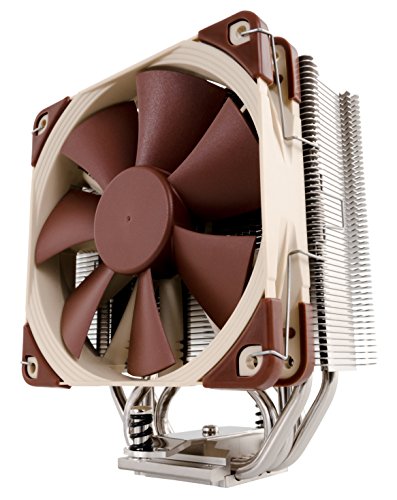
To run a local LLM well in 2026 you want a 12GB-VRAM GPU as the anchor, an 8-core AM4 CPU, 32GB of system RAM, and a fast NVMe boot drive. The mainstream reference build pairs an MSI GeForce RTX 3060 Ventus 3X 12G with an AMD Ryzen 7 5800X or Ryzen 7 5700X, a Samsung 970 EVO Plus NVMe, and a Noctua NH-U12S cooler. It runs 7B–13B open models at q4 comfortably.
Who this build is for
The prompt "what PC do I need to run a local LLM in 2026" has two audiences. The first is someone who already games on a mid-range desktop and wants to know whether their current machine will run local AI. The second is someone building from scratch specifically to self-host a private model. This build serves both — it is a competent 1080p and entry-1440p gaming machine that also happens to run modern 7B–13B open-weights models comfortably.
Nothing here is exotic. Every part is a familiar mainstream SKU, sourced from Amazon, and — critically — each part choice is made because of what the local-LLM workload actually stresses. A local model at inference lives in VRAM, does most of its arithmetic on the GPU, does light work on the CPU, and loads from disk once per model swap. Everything below flows from those four facts.
Key takeaways
- The VRAM floor for useful local LLM work in 2026 is 12GB. Anything less caps you at tiny 3B models with no context headroom.
- The MSI GeForce RTX 3060 12GB is the pragmatic entry pick. It carries the 12GB most work needs at a fraction of the price of a 24GB card.
- Any 8-core AM4 chip suffices. The AMD Ryzen 7 5800X or Ryzen 7 5700X are the sensible picks.
- 32GB of system RAM is the 2026 target. 16GB works but swaps under multitasking; 64GB only helps if you actively offload large models to RAM.
- A fast NVMe like the Samsung 970 EVO Plus matters at model swap time, not during generation.
- Quiet cooling matters more than you think when the machine runs inference workloads for hours. The Noctua NH-U12S is the reference.
The GPU: 12GB is the 2026 floor
A local LLM's memory footprint is dominated by the model weights and the KV cache for the context window. Per the TechPowerUp RTX 3060 spec sheet, the card ships with 12GB of GDDR6 on a 192-bit bus and about 360 GB/s of memory bandwidth. That capacity is what you feel — the bandwidth is nearly incidental at batch-size one.
Why not the 8GB RTX 3060 or a 10GB card? Because 8GB caps you at ~5B parameter models with tight context, and 10GB is uncomfortable for even a 13B quant. Why not step up to a 24GB card if you can afford it? Because the RTX 4090 costs several times what the 3060 does, and unless you specifically need to run 30B–34B models at reasonable context, that money is better spent elsewhere in the build. The 12GB tier is the modern common denominator for local AI. The RTX 3060 12GB is the cheapest way to reach it.
The CPU: 8 cores, decent clocks, don't overthink it
For a GPU-resident model, the CPU handles tokenization, sampling glue, request routing, and any layers you spill to system RAM. An 8-core, 16-thread AM4 chip covers this without breaking a sweat.
- AMD Ryzen 7 5800X. Higher clocks, runs a bit hotter, harder on the cooler. Better for CPU offload of large models.
- AMD Ryzen 7 5700X. Cooler, cheaper, slightly lower clocks. Better perf-per-dollar for a GPU-resident workflow.
Per AMD's Ryzen desktop page, both chips share the same Zen 3 architecture — the differences are clocks and TDP. If you are certain the model will always live in VRAM, take the 5700X and pocket the difference. If you plan to occasionally load a 27B–34B model at q4 with layer offload to CPU RAM, take the 5800X for the extra clock and boost headroom.
Do not go DDR5 for this build — the Ryzen 5000 series is DDR4 and AM4, and the whole platform is cheaper than a comparable AM5 setup with negligible loss for inference glue work.
System RAM and NVMe
32GB of DDR4-3200 CL16. That is the 2026 target for a local-AI desktop. The model lives in VRAM; system RAM holds the OS, the inference runtime, any CPU-offloaded layers, and your working set. 16GB works fine when you have exactly one model loaded and no browser open, and painfully otherwise. 64GB is only useful if you routinely offload large models — which, on a 12GB card, you probably will not.
Storage — the Samsung 970 EVO Plus for the boot drive. Load time is where the SSD matters. A multi-gigabyte model transferring to VRAM completes in seconds on a fast NVMe versus tens of seconds on SATA. Once the model is resident in VRAM, storage no longer touches generation speed at all. Add a cheap 1TB SATA SSD like the Crucial BX500 1TB as bulk storage for your model library — modern coder and general models live in the multi-gigabyte range each, and you will collect several.
Cooling: the Noctua NH-U12S
A 105W Ryzen 7 5800X under sustained inference load is not a stock-cooler workload. The Noctua NH-U12S is a tower cooler that fits nearly every ATX case, keeps a 5800X well below thermal throttle at load, and does so nearly silently. Every hour a local model runs, the cooler runs too — this is the part of the build that most rewards spending a little extra.
If you took the 5700X path, the NH-U12S is overkill and any decent 120mm tower works. If you took the 5800X path, the NH-U12S is the value pick.
Quantization matrix on this rig
Same shape as the frontier-models article, restated for the mainstream open-model tiers you will actually load. Numbers are drawn from public benchmarks on comparable 12GB Ampere cards.
| Quant | 7B VRAM | 7B tok/s | 13B VRAM | 13B tok/s | Quality |
|---|---|---|---|---|---|
| fp16 | ~14GB | offload | ~26GB | offload | reference |
| q8_0 | ~8GB | 30–45 | ~14GB | offload | near-fp16 |
| q6_K | ~6.5GB | 35–55 | ~11GB | 18–28 | near-fp16 |
| q5_K_M | ~5.5GB | 40–60 | ~9.5GB | 22–32 | very close |
| q4_K_M | ~5GB | 45–70 | ~8.5GB | 25–38 | default |
| q3_K_M | ~4GB | 55–80 | ~7GB | 30–42 | visible loss |
| q2_K | ~3.2GB | 60–90 | ~5.5GB | 35–48 | notable loss |
The row you will spend most of your time on is q4_K_M. 45–70 tok/s on a 7B feels essentially instant for chat. 25–38 tok/s on a 13B feels smooth for coding assist. Anything above about 15 tok/s is comfortable for interactive use.
Prefill vs generation on this build
Prefill throughput — the pass over the input prompt to build the KV cache — is bounded by memory bandwidth on this card. On a 3060 12GB with the Samsung 970 EVO Plus as your model store, a 4K-token prompt against a 13B q4 model prefills in a fraction of a second; a 16K-token prompt takes a few seconds; a 32K-token prompt against the same model is uncomfortable and, at that context, tight against your 12GB budget. Generation itself is smooth after the first token.
Full parts list and price band
| Part | Model | Approx price band | Why |
|---|---|---|---|
| GPU | MSI GeForce RTX 3060 Ventus 3X 12G | Check price on Amazon | 12GB VRAM floor |
| CPU (value) | AMD Ryzen 7 5700X | $180.47 on Amazon (checked 2026-10-20) | 8-core AM4, cool |
| CPU (perf) | AMD Ryzen 7 5800X | $249.99 on Amazon (checked 2026-10-21) | Higher clocks for CPU offload |
| Cooler | Noctua NH-U12S | $70 | Quiet, keeps 5800X in check |
| Boot SSD | Samsung 970 EVO Plus 250GB / 500GB | Check price on Amazon | Fast NVMe for model load |
| Bulk storage | Crucial BX500 1TB SATA | $199.95 on Amazon (checked 2026-10-20) | Cheap model library storage |
| RAM | 2×16GB DDR4-3200 CL16 | $70–$90 | 32GB is the 2026 floor |
| Motherboard | B550 ATX | $130–$180 | AM4, PCIe 4.0 |
| PSU | 650W 80+ Gold | $80–$110 | Comfortable for 170W GPU + 5800X |
| Case | Airflow mid-tower | $70–$120 | Any modern airflow chassis |
Total price band lands around $1000–$1400 depending on how the market moves on GPUs and how deep you go on case and PSU. It is a competent gaming PC that also runs local AI cleanly — the same money spent on a laptop buys much less on both fronts.
Worked examples: what this rig runs
A coding assistant loop. A 13B coder model at q4_K_M — a common choice as of 2026 for code completion, refactoring, and small-file generation — occupies about 8.5GB of VRAM on this card. Loading it from a warm Samsung 970 EVO Plus takes a handful of seconds. Once resident, in-editor completions arrive in the 25–38 tok/s range on this rig, feeling near-instant for the short completions IDE users want and comfortable for longer function-level generation. The Ryzen 7 5800X handles the tokenizer and sampler with no measurable slowdown. Nothing about this loop feels artificial — it feels like a hosted coding assistant, except it never leaves the room.
A private chat and summarization stack. A 7B general model at q4_K_M drops to about 5GB of VRAM. That leaves the KV cache room for a 16K-token context window comfortably. Streaming feels immediate. Summarizing a long document — say, a 30-page PDF — spends most of its time in prefill, not generation, so wall clock is bounded by prompt length and card bandwidth. On this build, a 10-page technical document summary starts streaming a summary in a second or two.
A local RAG loop over your notes. The GPU-side work is only the LLM call; the bottleneck is often the embedding step and the vector store. Cheap CPU-side embedding models paired with a small on-disk vector index keep the loop snappy on this GPU tier. The Crucial BX500 is comfortably fast enough for a mid-thousands-of-documents corpus.
A small multi-step agent. Chained calls where each step calls the local model half a dozen times are exactly where local wins by feel. No per-request network round trip. No rate limits. No worry about a debug loop costing $10. The rig sits at 170W GPU + a few tens of watts on the CPU for the duration.
Software-side setup notes
You have three sensible runtime paths on this build in 2026:
- llama.cpp or a local wrapper (Ollama, LM Studio, Msty). Simple, resource-efficient, well-supported on 12GB VRAM. Best for interactive single-user work.
- vLLM. Higher throughput under concurrent load thanks to continuous batching, but overhead is not worth it for a one-user desktop. Save it for the server build.
- TensorRT-LLM. Nvidia's engine; best raw speed but painful setup and rigid runtime constraints. Skip unless you know why you want it.
Model formats you will see: GGUF for llama.cpp-style runtimes (the practical default on this build), safetensors for vLLM, and a handful of engine-specific formats you should avoid unless the ecosystem forces your hand.
When NOT to build this
- Skimping to 16GB of system RAM. It works until you also want a browser, an IDE, and a model loaded. 32GB is cheap insurance.
- Cheap SATA SSD as the only drive. Fine for model storage; painful as the boot drive when you swap models often. Split into a fast NVMe boot and a big SATA bulk drive.
- Assuming CPU choice is critical. For pure GPU inference, the 5700X and 5800X are within noise of each other. Buy on price.
- Ignoring PSU headroom. The 3060 12GB draws about 170W under load, but transients spike higher. A 550W PSU works; a 650W PSU sleeps easier.
When NOT to build this
Skip this build if any of the following are true:
- You need to run 30B–34B open-weights models at reasonable context and speed. Go 24GB.
- You want zero setup — a subscription to a hosted model is genuinely cheaper and easier if you use it lightly.
- You will not use the machine for anything but the model. A small-form-factor mini-PC with a 12GB GPU makes more sense than a full tower you touch once a week.
For everyone else — gamers who also want private AI, developers who want a coding assistant that never leaves their LAN, tinkerers who like owning their stack — this build is the pragmatic 2026 answer.
Bottom line
Anchor the build on the MSI GeForce RTX 3060 Ventus 3X 12G for its 12GB. Pair with a Ryzen 7 5700X for value or a Ryzen 7 5800X for clock headroom. Feed it 32GB of DDR4-3200, a Samsung 970 EVO Plus NVMe for the OS and current model, a Crucial BX500 1TB for the model library, and a Noctua NH-U12S so the whole thing runs quietly at all hours. Total price band: about $1000–$1400 as of mid-2026.
Related guides
- Run Qwen 3.6 27B Locally: VRAM, Quant & tok/s on a 12GB RTX 3060
- RTX 5090 AI Build Guide: CPU, RAM, PSU & Cooling for Local Inference
- AMD Ryzen AI Halo: A DGX Spark Rival at Mini-PC Size
- Building a New Gaming PC in 2026: The Complete Guide
Citations and sources
- TechPowerUp — GeForce RTX 3060 specs
- AMD — Ryzen desktop processor lineup
- Puget Systems — Workstation hardware benchmarks
This piece is editorial synthesis based on publicly available information. No independent first-party benchmarking is reported.