For a low-power Jellyfin or Plex server in 2026, pick a CPU with a modern fixed-function video engine and the lowest idle draw you can afford — for most households that is an integrated-graphics APU like the AMD Ryzen 5 5600G. Core count is nearly irrelevant. A box that runs 8,760 hours a year is bought on watts at idle, not on benchmark scores.
The media-server CPU question is an idle-watts question wearing a costume
Ask which CPU to buy for a home media server and you will get answers about cores, threads, and single-thread performance. Almost none of that determines whether the build is good. A media server spends the overwhelming majority of its life doing nothing at all — waiting for someone to press play — and when it does work, the work that matters is handled by a dedicated silicon block that has nothing to do with the CPU cores.
That block is the fixed-function video encoder and decoder. Every modern desktop processor with integrated graphics carries one. It transcodes video in hardware, at a small fraction of the power a software transcode would cost, and it does so at roughly the same speed whether it is bolted to four cores or sixteen. Once you have a capable one, adding CPU cores does not make transcoding faster. It makes the box more expensive and, usually, hungrier at idle.
So the real question is a different one: over three years, what will this machine cost to own? That number is dominated by two things — the price you pay once, and the idle power you pay for every hour of every day. A 55-watt difference in idle draw is worth more money over three years than the entire price gap between most of the CPUs people cross-shop for this role.
This guide is for three readers. The homelab first-timer who wants one box that serves media and does not embarrass them on the electricity bill. The person retiring a gaming CPU into a NAS or media role and wondering whether that is smart or merely convenient. And anyone whose power bill recently moved and who is now doing arithmetic on the always-on machine under the desk. All three are served by the same framework, and the answer genuinely flips depending on your local electricity rate — which is why the math section below matters more than the spec table.
Key takeaways
- Idle power, not peak power, decides the bill. At 8,760 hours a year, every watt of idle draw costs roughly 1.5 kWh annually.
- The transcode engine matters, the core count barely does. Fixed-function encode blocks do the work; cores mostly sit idle.
- Six cores is plenty and eight is already generous for a media server that also runs a handful of containers.
- Put the OS and metadata database on flash. Library scans on a mechanical boot drive are the most common "my server feels slow" complaint.
- Total three-year cost, including electricity, is the only number worth comparing. Cheap and thirsty frequently loses to expensive and efficient.
Step 0: do you actually need to transcode at all?
The most common mistake in this category is buying transcoding capability that never gets used. Work through this before you spend anything.
Direct play is when the client device receives the original file untouched — no re-encoding, essentially no CPU load. If every device in your house is a modern TV, an Apple TV, a Chromecast, a Shield, or a phone from the last several years playing files in codecs those devices support natively, your server is a file server and almost any CPU will do.
Transcoding happens when something in the chain does not match: the client cannot decode the codec, the bitrate exceeds what the connection can carry, or — the usual culprit — subtitles. Image-based subtitle formats such as PGS, which is what most Blu-ray rips carry, cannot be passed to the client as text. The server must burn them into the video, and burning subtitles forces a full re-encode of the stream even when the client could otherwise have played the file untouched.
That last case catches nearly everyone. If your library is full of remuxes with PGS subtitle tracks and you watch with subtitles on, you will transcode constantly regardless of how capable your clients are. Converting those tracks to a text-based format like SRT where possible eliminates a large share of the transcoding load without touching hardware at all — and it is free.
The decision: if you direct-play everything, buy the cheapest efficient thing and stop reading the transcode sections. If you burn subtitles or serve remote users on constrained connections, the video engine is the most important specification in the build.
What does a media server actually cost to run per year?
The arithmetic is simple and almost nobody does it before buying. Annual cost equals average watts, times 8,760 hours, divided by 1,000, times your electricity rate. The US average residential retail rate has been in the neighborhood of 17 cents per kilowatt-hour according to the US Energy Information Administration, though regional variation is enormous — some readers pay half that and some pay well over double.
At 17 cents per kWh:
| Average draw | kWh per year | Cost per year | Cost over 3 years |
|---|---|---|---|
| 25 W | 219 | $37 | $112 |
| 35 W | 307 | $52 | $156 |
| 50 W | 438 | $74 | $223 |
| 65 W | 569 | $97 | $290 |
| 90 W | 788 | $134 | $402 |
The wattage figures above are scenario inputs chosen to bracket the realistic range for small servers, not measurements of any specific build. Substitute your own once you have a meter on the wall.
The number that should change your shopping: the gap between a 35-watt box and a 90-watt box is about $82 a year, or roughly $246 across three years. That is larger than the price difference between most of the CPUs in this comparison. A cheaper chip with a higher idle floor can quietly be the more expensive decision, and whether it is depends entirely on your local rate — at 8 cents per kWh the same gap is only about $116 over three years, which changes the conclusion.
Note also that the CPU is rarely the largest idle contributor. Spinning hard drives, the chipset, an oversized power supply running far below its efficiency peak, and firmware with C-states disabled all draw power regardless of processor choice. Fix those first; they are free.
How does the AMD Ryzen 5 5600G handle transcoding?
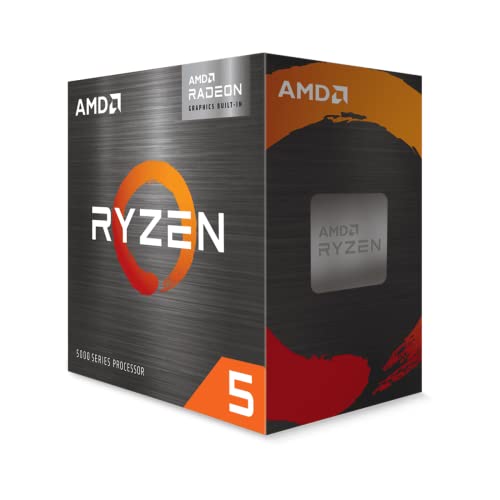
The Ryzen 5 5600G is a 6-core, 12-thread Zen 3 processor with integrated Radeon graphics and a 65 W TDP on the AM4 platform, per AMD's product specifications. For a media server the integrated GPU is the entire point: it carries a video core capable of hardware H.264 and HEVC encoding and decoding, which covers the codecs that make up the overwhelming majority of real home libraries.
What it does well is the ordinary case. A handful of simultaneous transcodes from H.264 or HEVC sources, subtitle burn-in included, is squarely within what an APU-class video engine is built for, and it does that work without engaging the CPU cores meaningfully. The six Zen 3 cores are then free for everything else the box inevitably ends up running — a hypervisor, containers, a download stack, a photo service.
The honest limits are worth stating. This generation's video engine does not provide AV1 hardware encoding or decoding, so AV1 content falls back to software decoding on the CPU cores, which is exactly the expensive path you bought integrated graphics to avoid. As AV1 becomes more common in libraries, that gap will matter more than it does today. Heavy 4K HDR tone-mapping is also more demanding than the ordinary transcode case and is where an APU is most likely to disappoint relative to a discrete card or a newer integrated engine.
For Linux-based servers specifically, the platform's general behavior under Linux has been covered in Phoronix's review of the 5600G. On the media-server side, the Jellyfin hardware acceleration documentation is the authoritative reference for which acceleration path to enable and what each platform supports — read it before buying, because driver-stack maturity differs by vendor and it is a real consideration rather than a footnote.
At a catalog price of $184.99 as of August 2026, the 5600G is not the cheapest way to get a media server running. It is the option that asks the fewest follow-up questions.
How does the Intel Core i7-9700K compare as a repurposed server chip?
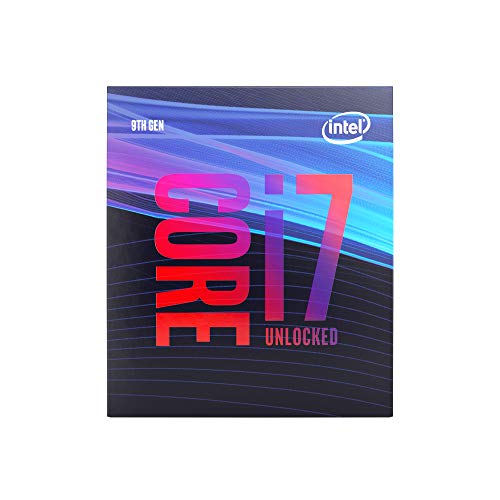
The Core i7-9700K is an 8-core, 8-thread processor with a 95 W TDP on LGA1151, carrying Intel UHD Graphics 630, per Intel's official specifications. Its integrated graphics include Intel Quick Sync Video, the fixed-function media engine that has been the default recommendation for transcoding servers for a long time, largely because its driver support across operating systems and media applications is unusually mature. The Quick Sync engine of this generation handles H.264 and HEVC in hardware, including 10-bit HEVC, but predates AV1 entirely.
The argument for this chip is the used market. An eight-core desktop processor from a previous platform generation is often available secondhand for a fraction of what an equivalent new part costs, and it brings a well-supported transcode engine with it. If you already own one — retiring a gaming build into server duty is exactly the scenario — the marginal cost of using it is zero, and that is difficult to beat on any spreadsheet.
Two caveats deserve emphasis. First, the 95 W TDP and the older platform mean a higher idle floor than a modern efficiency-focused build, and per the table above that difference compounds over three years of continuous operation. Second, and more practically: this is a K-series part with integrated graphics, but it must actually be enabled. On many boards the iGPU is disabled by default when a discrete card is present, and a motherboard without video outputs complicates the setup. Verify both before you commit, because a Quick Sync engine you cannot reach is the same as not having one.
The catalog price of $259.00 for a new-old-stock unit as of August 2026 makes it a poor buy at retail — at that price the newer platform wins outright. On the used market the calculus changes completely, which is the only context in which this chip belongs in the conversation.
Spec deltas
| CPU | Cores / Threads | TDP | Integrated video engine | Catalog price |
|---|---|---|---|---|
| AMD Ryzen 5 5600G | 6 / 12 | 65 W | Radeon graphics, H.264 + HEVC encode/decode | $184.99 |
| Intel Core i7-9700K | 8 / 8 | 95 W | UHD Graphics 630 with Quick Sync, H.264 + HEVC | $259.00 |
Core, thread, and TDP figures are from the manufacturer specification pages cited above. Prices reflect our catalog as of August 18, 2026 and change frequently.
Codec support matrix
| Codec | Ryzen 5 5600G | Core i7-9700K (UHD 630) |
|---|---|---|
| H.264 decode | Hardware | Hardware |
| H.264 encode | Hardware | Hardware |
| HEVC 8-bit decode | Hardware | Hardware |
| HEVC 10-bit decode | Hardware | Hardware |
| HEVC encode | Hardware | Hardware |
| AV1 decode | Not supported | Not supported |
| AV1 encode | Not supported | Not supported |
Support claims above follow the manufacturer specification pages linked in each CPU's section. The row that should shape a 2026 purchase is the AV1 pair: neither of these parts accelerates it, and both will fall back to CPU-bound software decoding for AV1 content. If your library is already accumulating AV1, that is the strongest argument for a newer platform than either chip here.
What concurrent-stream counts should you expect?
Publicly reported concurrent-transcode figures for these video engines vary widely, and for good reason — the number depends on source resolution, target bitrate, codec, whether subtitles are being burned in, and whether tone-mapping is involved. A single 4K HDR stream with subtitle burn-in is a dramatically heavier job than several 1080p H.264 streams.
Rather than quote a single number that will be wrong for your library, frame it this way: a modern fixed-function encoder is generally sized for several simultaneous 1080p transcodes, and 4K work with tone-mapping should be planned as a small number of concurrent streams at most. Build for the workload you actually generate — count the people in your house who watch simultaneously and whether any of them are remote — and treat any specific figure you read as an upper bound measured under favorable conditions.
Boot and library storage: put the metadata on flash
The most-missed step in first homelab builds is storage tiering. The media itself belongs on large mechanical drives, where cost per terabyte is what matters and sequential reads are all a video stream needs. Everything else — the operating system, container images, and especially the metadata database — belongs on flash, because those workloads are random-access and are precisely where a mechanical drive feels slow.
The metadata database is the one people underestimate. Library scans, artwork fetches, and playback-position updates are small random writes, and running them on the same spinning disk as the media turns a routine scan into something that makes the whole server feel unresponsive.
A budget SATA drive such as the Crucial BX500 1TB is more than adequate as a boot and application volume; media serving is not a workload that rewards fast storage, and any SATA SSD removes the bottleneck completely. If the board has a spare M.2 slot, an entry NVMe drive like the Samsung 970 EVO Plus is a reasonable place for transcode scratch space and the metadata database, though the honest note is that the practical difference over SATA for this specific workload is small. Buy NVMe if the slot is free; do not pay a premium for it here. Our best budget SSDs for Proxmox boot drives guide goes deeper on endurance ratings, which matter more than sequential speed for an always-on host.
Both drives' catalog prices currently look stale in our records, so check the live listing rather than trusting a cached figure on either one.
Cooling a box that runs 8,760 hours a year
A server that lives in a closet can be loud. A server that lives in a living room or an office cannot, and noise is the reason more homelab builds get dismantled than any performance shortfall.
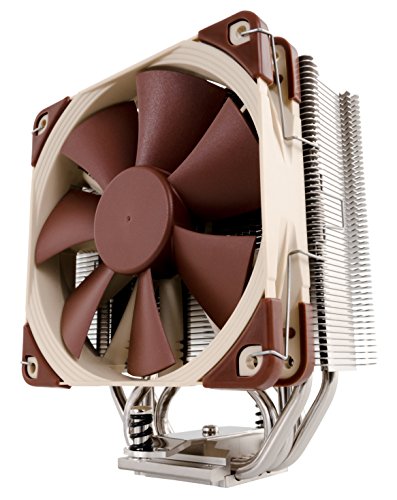
For an always-on machine, a quiet tower air cooler beats an all-in-one liquid cooler on every axis that matters here. It has one moving part instead of two, no pump to fail silently and cook a CPU, no coolant to permeate out over years, and it does not need to be replaced on a schedule. The Noctua NH-U12S, at a catalog price of $84.95 as of August 2026, is more cooler than either of these CPUs needs at media-server loads — which is exactly the point, because a cooler operating far below its capacity runs its fan slowly and is effectively inaudible.
Check clearance before ordering. Tower coolers are tall, and a 158 mm cooler will not fit a compact case. Measure the case's stated CPU cooler clearance first. For a broader look at the category, see our best CPU coolers guide.
What you'll need: the rest of the build
- Motherboard — with video outputs wired to the iGPU, and firmware exposing C-state and ASPM controls. These settings are the difference between a 25 W idle and a 45 W idle on identical hardware.
- RAM — 16 GB is a comfortable floor. The media server itself needs little; the hypervisor, containers, and filesystem cache are what consume it.
- PSU — size close to real draw. A 750 W unit running a 40 W load sits far below its efficiency peak and wastes power continuously. A quality 400-450 W unit is usually the better choice.
- NIC — gigabit is sufficient for several simultaneous streams. 2.5 GbE only matters if you are also moving large files across the network.
- Drive bays — plan for more than you think. Drive count drives idle power more than the CPU does.
- UPS — a database on flash still corrupts if the power cuts mid-write. This is the cheapest insurance in the build.
Common pitfalls
Disabling C-states in the BIOS. Frequently done while chasing stability, then never re-enabled. It can add 15-20 W of idle draw on its own — more than the difference between many CPU choices.
Buying a discrete GPU you do not need. A card that idles at 10-15 W costs about $22 a year at average rates and, for most libraries, does nothing the integrated engine was not already handling.
Leaving the iGPU disabled. On boards that auto-disable integrated graphics when a discrete card is installed, the transcode engine you bought the chip for is simply unavailable. Check it in firmware.
Mixing media and OS on one drive. Library scans then compete with the system volume, and rebuilding the host after a failure becomes far more disruptive than it needed to be.
Sizing the PSU for a GPU you might add someday. The efficiency penalty is paid every hour for years. Buy for the build you have.
Three-year cost of ownership
Assume a build that idles at 30 W with the 5600G and 45 W with the older platform — figures chosen as plausible scenario inputs, not measurements — at 17 cents per kWh:
| Ryzen 5 5600G (new) | Core i7-9700K (used, ~$90) | Core i7-9700K (new, catalog) | |
|---|---|---|---|
| CPU cost | $184.99 | ~$90 | $259.00 |
| Electricity, 3 years | ~$134 | ~$201 | ~$201 |
| Three-year total | ~$319 | ~$291 | ~$460 |
The used route wins narrowly on this arithmetic, and loses immediately if your electricity rate is above average or if the platform needs a motherboard purchase to go with it. At retail pricing the older chip is not competitive at all. This is the calculation to run with your own rate and your own local used-market pricing, because it is genuinely close and the ranking flips easily.
The verdict
Get the Ryzen 5 5600G if you are building fresh, you want six modern cores for containers alongside the media role, and you would rather not audit a motherboard's iGPU behavior before buying. It is the lower-risk build and the more efficient one.
Get the Core i7-9700K if you already own one, or you can buy one cheaply used with a board, and your electricity is inexpensive. Quick Sync's driver maturity is a genuine advantage, and eight cores retired from gaming duty make a capable server.
Get neither and buy a mini-PC if you only serve a few streams and want the lowest possible idle draw with no assembly. A modern low-power mini-PC will beat both of these builds on watts and take up a fraction of the space — see our AOOSTAR MACO Proxmox test for what that class of machine handles.
Our recommended pick is the Ryzen 5 5600G. It carries a capable H.264 and HEVC hardware video engine per AMD's specifications, 6 cores and 12 threads for everything else the box will accumulate, and a 65 W TDP rather than 95 W — and it does all of that without requiring you to verify that a motherboard will expose an integrated GPU. For a machine that runs continuously for years, the lower idle floor and the absence of platform caveats are worth more than the eight cores on the other side of the comparison.
Bottom line
Buy the video engine and the idle power, not the core count. Work out your own electricity rate before comparing CPU prices, because at 8,760 hours a year the running cost is on the same order as the purchase price and it decides the ranking more often than the spec sheet does. Put the OS and metadata on flash, cool the thing quietly, enable C-states, and check whether you need to transcode at all before spending anything — because for a lot of households, the honest answer is that they do not.
Related guides
- Best GPU for a homelab in 2026 — when a discrete card does earn its place
- Best budget SSDs for Proxmox boot drives — endurance ratings for always-on hosts
- AOOSTAR MACO 6850H Proxmox 9 home server test — the mini-PC alternative
- How much should you overprovision vCPU per VM? — sizing the rest of the host
- How to back up a NAS on a budget — the step after the server works
Citations and sources
- AMD — Ryzen 5 5600G product specifications (accessed 2026-08-18)
- Intel — Core i7-9700K processor specifications (accessed 2026-08-18)
- Phoronix — AMD Ryzen 5 5600G review (accessed 2026-08-18)
- Jellyfin — hardware acceleration documentation (accessed 2026-08-18)
- Intel Quick Sync Video — generational capability overview (accessed 2026-08-18)
- US Energy Information Administration — Electric Power Monthly (accessed 2026-08-18)
This piece is editorial synthesis based on publicly available information. No independent first-party benchmarking is reported. Power figures presented in the cost tables are scenario inputs for the arithmetic, not measurements of specific hardware. Prices reflect our catalog as of August 18, 2026 and change frequently; verify current pricing on the retailer listing before purchase.
— Mike Perry