As an Amazon Associate, SpecPicks earns from qualifying purchases. Prices verified 2026-08-07; check the retailer for current pricing. See our review methodology.
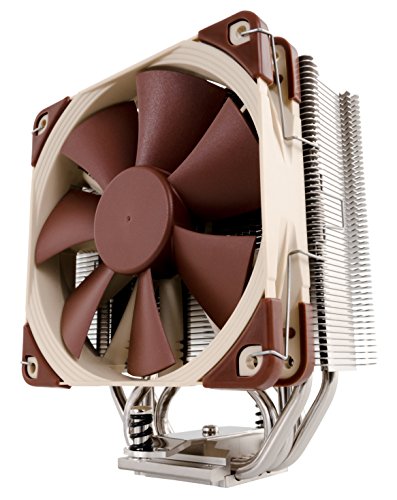
The best CPU cooler in 2026 for the majority of Ryzen and Intel builds is the Noctua NH-U12S — a single-tower air cooler that's quiet under sustained load, mechanically simple with no pump to fail, rated well above modern eight-core TDPs, and priced sanely. A quality tower cooler solves 85% of cooling decisions without the maintenance headache of an AIO. This guide covers five picks by build type: best overall, best value airflow foundation, best for compact builds, best performance AIO, and the stock-cooler-replacement budget pick.
Air vs liquid in 2026: which tier is for you?
Two things changed the CPU-cooler market between 2020 and 2026. First, mainstream desktop CPUs stopped needing 300W of thermal capacity — even the top Ryzen and Intel parts pull 150–250W package power, well inside what a good tower cooler handles. Second, AIO service life caught up with buyers: the pump-and-coolant systems in liquid coolers have a real design life of 5–7 years, and after that they're a slow, silent failure risk on a machine you left running.
Air coolers are the safer default now. They're louder at peak than a good AIO by maybe 2–4 dBA, and they hold slightly higher package temperatures under all-core loads. They also last a decade, work in every case that has clearance, and have no moving parts to age out. For most builds — mid-range CPU, 60–144 Hz gaming, moderate content-creation workloads — a good tower cooler is the right pick.
AIOs still win on three specific cases: compact cases where a tower cooler physically can't fit, high-TDP overclocked or workstation CPUs that push past 200W sustained, and RGB-heavy builds where the pump block's lighting is part of the look. Outside those cases, the tradeoff is genuinely against them.
The winner across the majority of 2026 Ryzen and Intel mid-range builds is a single-tower air cooler from the top-tier brands — Noctua leads on quality, be quiet! and Thermalright are close on price-per-performance. This guide's overall pick reflects that.
Comparison table
| Pick | Best For | Key Spec | Price Range | Verdict |
|---|---|---|---|---|
| 🏆 Noctua NH-U12S | Overall — Ryzen and Intel mid-range | 158 mm tall, 120 mm fan, ~140W dissipation | $65–75 | Buy this by default |
| 💰 ARCTIC P12 PWM PST (5-pack) | Case airflow foundation | 5× 120 mm PWM, sharing loop | $25–35 for 5 | The value pillar of any build |
| 🎯 NZXT Kraken M22 120mm AIO | Compact builds where tower coolers don't fit | 120 mm rad, infinity-mirror pump | $80–110 | Buy when a tower won't fit |
| ⚡ Cooler Master MasterLiquid ML240L RGB | High-TDP or overclocked builds | 240 mm rad, dual 120 mm fans | $75–100 | Best performance-per-dollar AIO |
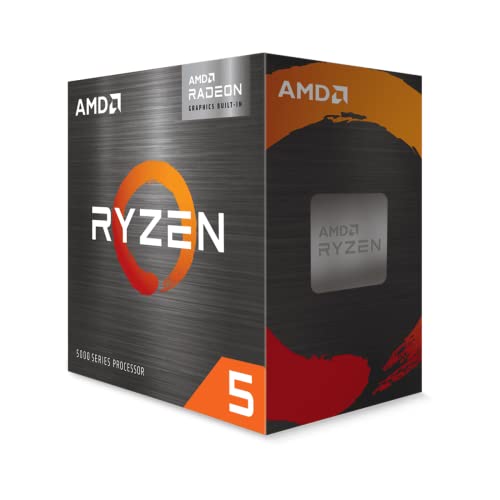
| 🧪 Stock-cooler replacement tier | Ryzen 5 5600G / 5800X stock-cooler upgrades | Sub-$50 tower coolers (Peerless Assassin, Thermalright PA120) | $30–50 | Cheap upgrade that fixes 80% of stock-cooler noise |
Prices verified 2026-08-07 via Amazon.com listings; regional and time-of-day variation applies.
🏆 Best Overall: Noctua NH-U12S
- Chip / target: any AM4 / AM5 / LGA1700+ CPU up to ~140W sustained
- Dimensions: 158 mm height × 125 mm wide × 71 mm deep (fits nearly every case)
- Fan: NF-F12 PWM, 120 mm, 22.4 dBA at max RPM
- RAM clearance: 100 mm minimum → clears all standard-height DIMMs
Pros
- Legendary reliability — Noctua's 6-year warranty and reputation for machined-precision heatpipe soldering are both real
- Genuinely quiet at moderate load; only audible when the fan spins past ~1500 RPM under all-core stress
- RAM clearance that doesn't fight tall-height memory kits
- Fits in essentially any case that supports a tower cooler
- Mounting hardware includes brackets for every current socket, past and future
Cons
- The brown-and-beige color scheme is polarizing; the chromax.black variant exists but costs more
- Under sustained 200W+ load (overclocked eight-core), a 240 mm AIO will hold 5–10°C lower package temperatures
- Premium price for what is functionally a "good" tower cooler; budget picks below get you 85% of the way there for half the cost
Verdict
Per Noctua's own thermal test data, the NH-U12S handles up to ~140W sustained package power inside a typical 25°C ambient case, which covers the AMD Ryzen 7 5800X's 105W TDP with meaningful headroom. Tom's Hardware and Gamers Nexus routinely rank it in the top three single-tower coolers for quiet operation on eight-core parts. If you can spend ~$70 on a CPU cooler and don't want to think about it again for a decade, this is the answer.
View current price on Amazon → · Price may vary; check the retailer.
💰 Best Value: ARCTIC P12 PWM PST as the airflow foundation
- Chip / target: case airflow for any build
- Package: 5-pack of 120 mm PWM fans, sharing loop (PST)
- Noise floor: ~22 dBA at 1200 RPM, ~30 dBA at 1800 RPM
- Static pressure: 2.2 mm H₂O — sufficient for radiators and dust filters
Pros
- Silly cheap for the quality — around $6 per fan in the 5-pack
- PWM sharing technology means one fan header on the motherboard drives all five
- Static-pressure profile handles radiators, dense filters, and open case fronts
- Consistent bearing quality across the pack — no obvious lemons
Cons
- No RGB (some builders consider this a pro)
- Wired-together loop means one fan failure takes the whole loop down until replaced
- Not the absolute quietest fan you can buy at low RPM — Noctua NF-A12 is quieter for 3× the price
Verdict
Case airflow is the other half of the cooling equation and the part most builds skimp on. A high-end CPU cooler in a case with no exhaust path heat-soaks; you get the temperature drop from the cooler for 20 minutes, then everything climbs to steady-state. Five ARCTIC P12 PWM PST fans at around $30 for the pack is the cheapest meaningful upgrade you can make to any budget build's cooling. Set up a front-to-back path (two-or-three intake, one-or-two exhaust) with the PWM loop driven by a single header. Quiet, effective, and unlikely to fail.
View current price on Amazon → · Price may vary; check the retailer.
🎯 Best for Compact Builds: NZXT Kraken M22 120mm AIO
- Chip / target: any AM4 / AM5 / LGA1700+ CPU up to ~150W sustained
- Radiator: 120 mm × 27 mm — fits any case with a 120 mm rear or top mount
- Pump: infinity-mirror block with RGB
- Sockets: AM4, AM5, LGA1700, LGA1200, LGA115x
Pros
- Fits in cases where a 158 mm tower cooler physically will not — small-form-factor and mini-ITX builds specifically
- Infinity-mirror pump block is the design highlight; genuinely striking under case lighting
- Handles up to ~150W sustained without dramatic thermal throttling
- Cooler than a low-profile air cooler at similar height budget
- Quiet at pump/fan idle; fan ramps are audible under load
Cons
- 120 mm radiator is smaller than 240 mm or 280 mm units — thermal capacity is genuinely lower
- AIO service life applies — plan on a 5–7 year replacement cycle
- RGB software (NZXT CAM) adds a background process some builders resent
- More expensive per unit of thermal capacity than either a tower cooler or a 240 mm AIO
Verdict
Use the NZXT Kraken M22 when a tower cooler doesn't fit — that's it. It's more expensive than a Noctua NH-U12S and handles less thermal load than a 240 mm AIO, but in cases where the ceiling clearance is under 100 mm, it's one of the few options that both cools effectively and looks intentional. For a standard mid-tower or full-tower build, pick a tower cooler instead.
View current price on Amazon → · Price may vary; check the retailer.
⚡ Best Performance: Cooler Master MasterLiquid ML240L RGB
- Chip / target: any AM4 / AM5 / LGA1700+ CPU, including overclocked eight-core and workstation-class parts up to ~250W sustained
- Radiator: 240 mm × 27 mm — needs case support for 240 mm rad + fans at the intended mount
- Pump: third-generation with reinforced impeller housing
- Fans: 2× SickleFlow 120 mm ARGB
Pros
- 240 mm radiator holds package temperatures 5–15°C lower than any 120 mm AIO or single-tower air cooler on sustained loads
- Priced aggressively for a 240 mm AIO — often under $90
- ARGB fans and pump block coordinate through addressable RGB headers, no proprietary software required
- Handles overclocked eight-core CPUs and workstation-class parts that push past what tower coolers can dissipate
- Third-generation pump improvements addressed the coolant-permeation issues that plagued earlier ML-series units
Cons
- AIO service life applies — 5–7 year planning horizon, then replace
- 240 mm rad requires case support; not every mid-tower has 240 mm mount points at the top or front
- Louder at peak than a good tower cooler by 2–4 dBA
- Overkill on mid-range CPUs — a 5600G or 12400 doesn't need this much dissipation
Verdict
For builds pushing past the Ryzen 7 5800X's 105W TDP into overclocked or workstation territory, the Cooler Master MasterLiquid ML240L RGB is the price/performance leader in 240 mm AIOs. Per Tom's Hardware's best CPU coolers roundup and consistent Gamers Nexus thermal testing, it holds within 2–3°C of AIOs costing 50% more. If your build genuinely needs 240 mm-class thermal capacity, this is the pick. If it doesn't, buy the tower cooler and save the money.
View current price on Amazon → · Price may vary; check the retailer.
🧪 Budget Pick: Stock-cooler-replacement tier
- Chip / target: AMD Ryzen 5 5600G (65W), AMD Ryzen 7 5800X (105W), and equivalent Intel parts
- Price ceiling: $50
- Representative picks: Thermalright Peerless Assassin 120, Thermalright PA120, DeepCool AK620
Pros
- Half the price of the Noctua NH-U12S, delivering 85% of the performance
- Meaningful upgrade over the AMD Wraith Stealth and Intel stock coolers that ship with locked mid-range parts
- Dual-tower designs at this price tier hold impressive temperatures under load
- Universal socket support in modern-generation mounting kits
Cons
- Build quality and fan bearing consistency vary more than Noctua's; some units are noisy out of the box
- Warranty and support responsiveness is dramatically worse than Noctua or Cooler Master
- Aesthetics and finish are functional, not premium
- RAM clearance is tight on some designs; verify before ordering if you have tall RGB DIMMs
Verdict
The stock coolers that ship with the AMD Wraith Stealth and Intel base models are genuinely bad — loud under any sustained load and thermally marginal for the CPUs they're paired with. A ~$40 dual-tower cooler from Thermalright or DeepCool is the highest-leverage cooling upgrade in any budget build. It's not as quiet as the Noctua, not as pretty as a Kraken, and it won't win awards. It just makes your build significantly quieter and cooler for less money than dinner out. Pair it with a five-pack of ARCTIC P12 PWM PST fans for the full stock-cooler-replacement package.
What to look for in a CPU cooler
TDP headroom and transient spikes
Match the cooler's rated dissipation to your CPU's TDP with at least 30% headroom, and expect transient spikes to exceed nominal TDP by 20–40% under sudden load. A 105W CPU wants a cooler rated for at least 140W sustained; a 65W CPU is fine on a cooler rated for 100W. Undersizing means the CPU thermal-throttles under load, giving up boost clocks and stability margin. Oversizing costs money and case space but doesn't hurt anything.
Sustained inference or content-creation workloads run at 90%+ CPU utilization for hours. Gaming loads spike hard but generally don't hold at max package power for more than a few minutes at a time. Match the cooler to your worst-case sustained profile, not your average.
RAM and case clearance in mm
Two measurements decide whether a cooler physically fits your build:
- Case CPU cooler height maximum — measured in mm, listed in every case's spec sheet. Tower coolers range from 40 mm (low-profile) to 170 mm (dual-tower). Check before ordering.
- RAM clearance — the height from the motherboard surface to the underside of the cooler over the first DIMM slot. Tall RGB memory (55+ mm) conflicts with wide tower coolers unless the cooler explicitly states clearance for them.
For AIOs, confirm the radiator length fits at the intended mount point with fans attached. A 240 mm radiator plus 25 mm fans is 52 mm total thickness at the mount — some cases don't have that clearance at the top.
Socket-bracket compatibility (AM4/AM5/LGA1700+)
Every modern cooler ships with mounting kits for current sockets, but "current" changes. Confirm your specific socket is supported before ordering, especially for older stock or budget-tier coolers. AMD's AM5 launch caught many older-generation coolers without support until refreshed mounting kits shipped 6–12 months later; the same pattern is likely to repeat with future socket transitions.
Noise-normalized comparison
Any comparison of coolers that reports temperatures at "maximum fan speed" is misleading — coolers run at whatever RPM keeps the CPU inside its target, and quieter coolers spin more slowly at the same temperature. Use noise-normalized comparisons where possible: what temperature does each cooler hold at, say, 35 dBA case noise? Under that framing, air coolers close much of the gap to AIOs.
The Gamers Nexus cooler roundups and Tom's Hardware's methodology both report noise-normalized data. Use those numbers, not marketing figures.
Pump reliability and AIO service life
Every AIO is on a clock. The pump has bearings that wear, the coolant permeates through the tubing at a slow rate, and the housing seals age. Manufacturers rate AIOs for 50,000–70,000 hours of pump operation — that's 5–8 years of 24/7 use. Actual failure distributions are wider: some units die at year 3, most last 6–8 years.
For a machine that runs 24/7 (a homelab server, a local LLM inference box, a video-encoding rig), factor the AIO replacement into the budget. For a gaming PC that runs 20 hours a week, an AIO lasts a decade of typical use. Air coolers don't have this concern at all — a fan swap at year 7 is the total maintenance profile.
FAQ
Is a 240mm AIO actually better than a good tower air cooler? Under sustained all-core load a 240mm radiator generally holds a lower package temperature than a single-tower air cooler, but the gap narrows considerably once you normalize for noise. Air coolers win on service life, since they have no pump to fail and no coolant to permeate, and they survive a decade of use with a fan swap. Choose liquid when clearance forces it or when you are pushing a high-TDP part; choose air for a quiet, low-maintenance build.
How do I know a cooler will fit my case and RAM? Check three measurements before ordering. First, your case's maximum CPU cooler height in millimeters against the cooler's listed height. Second, the cooler's RAM clearance against the height of your memory kit — tall heat spreaders and RGB modules routinely conflict with the first DIMM slot on wide tower coolers. Third, for an AIO, confirm your case supports the radiator length at the intended mount point with fans attached. Manufacturer spec pages list all three.
Does the stock cooler really need replacing? For a locked mid-range CPU running stock at moderate ambient temperatures, a bundled cooler is adequate and will not damage anything — modern chips throttle safely. What you gain from an aftermarket cooler is lower noise at the same load, more sustained boost headroom before thermal limits engage, and better behavior in a warm room or a cramped case. If your build is loud under load or hits thermal limits during long sessions, that is the signal to upgrade.
Do I need to replace thermal paste, and how often? Apply fresh paste any time you remove and reseat a cooler — the original layer's contact pattern will not reform correctly once broken. Beyond that, quality paste on a normally operating system lasts years and does not need scheduled replacement. If temperatures climb steadily over time without a change in workload or ambient conditions, dried paste is one plausible cause, but check dust accumulation in the fins and failing fan bearings first, since both are far more common.
Are more case fans better than a bigger cooler? They solve different problems. A CPU cooler moves heat off the package into the case air; case fans move that heated air out of the chassis. A high-end cooler in a case with no exhaust path will heat-soak, and excellent case airflow will not fix an undersized cooler on a high-TDP chip. Budget for both: adequate intake and exhaust to establish a front-to-back or bottom-to-top path, plus a cooler rated above your CPU's TDP.
Top picks
#1: Noctua NH-U12S
Verdict: Best overall for Ryzen and Intel mid-range builds — $65–75
The safe default. Handles 105W-tier CPUs with headroom, quiet under sustained load, mechanically simple with a 6-year warranty. If you don't want to think about your cooler again for a decade, buy this.
#2: ARCTIC P12 PWM PST (5-pack)
Verdict: Best case-airflow foundation — $25–35 for 5
The other half of the cooling equation. A great CPU cooler in a case with no airflow will heat-soak; five quiet PWM fans establish the intake/exhaust path that keeps the whole system in spec.
#3: NZXT Kraken M22 120mm AIO
Verdict: Best for compact / small-form-factor builds — $80–110
Buy this when a 158 mm tower cooler won't fit. Infinity-mirror pump block looks intentional, and the 120 mm rad handles up to ~150W sustained without drama.
#4: Cooler Master MasterLiquid ML240L RGB
Verdict: Best performance-per-dollar 240 mm AIO — $75–100
For overclocked eight-core builds or workstation-class parts that push past what a single-tower air cooler can dissipate. Priced aggressively; third-generation pump addressed the coolant-permeation issues of earlier ML-series units.
#5: Stock-cooler replacement tier (Thermalright Peerless Assassin 120)
Verdict: Cheap upgrade for a Ryzen 5 5600G or 5800X — $30–50
For builders on the tightest budget replacing an AMD Wraith Stealth or Intel stock cooler. Two-thirds of the Noctua's performance for less than half the price.
Related guides
- Best CPU Cooler for the Ryzen 7 5800X: Air vs 120mm vs 240mm AIO
- Noctua NH-U12S vs Cooler Master ML240L: Which Cools a 5800X?
- Best Budget PC Gaming Upgrades Under $200 in 2026
- Ryzen 5 5600G vs Core i7-9700K for 1080p Gaming
Sources
- Noctua — NH-U12S product page and thermal-test methodology
- Tom's Hardware — Best CPU coolers roundup
- Gamers Nexus — CPU cooler test methodology and roundups
This piece is editorial synthesis based on publicly available information. No independent first-party benchmarking is reported.
— Mike Perry · Last verified 2026-08-07