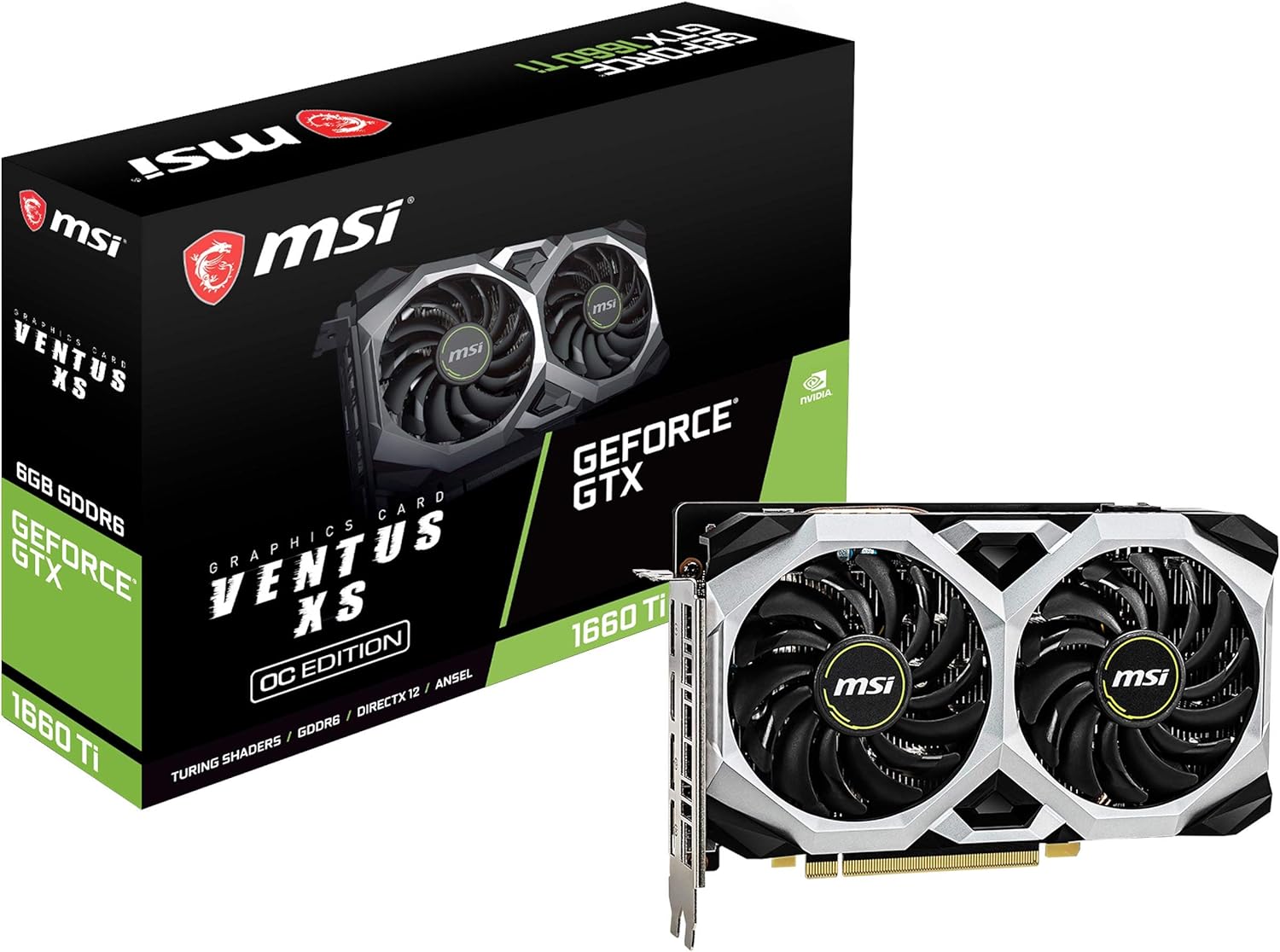
Picking a GPU for a homelab comes down to one question: what is it actually going to do? Local LLM inference wants maximum VRAM per dollar. GPU passthrough for a Windows or gaming VM wants IOMMU-friendly hardware and driver stability. Plex/Jellyfin transcoding barely needs a GPU at all. This guide walks through each of those paths, plus where AMD and NVIDIA diverge for self-hosted use, and what's realistic to buy on a sub-$1,000 budget.
What GPU Is Best for Homelab AI Workloads?
For local LLM inference and small-scale ML experimentation, VRAM capacity — not raw compute — is usually the limiting factor. It determines the largest model, or the largest batch size, that fits in memory without offloading to system RAM and taking a major speed hit.
At the workstation tier, AMD's Radeon PRO W7800 ships with 32GB of GDDR6, versus 16GB on NVIDIA's consumer RTX 4080, per each manufacturer's product page. At the datacenter tier, AMD's Instinct MI300X packs 192GB of HBM3 per accelerator, per AMD's Instinct product listing — well beyond what a single-node homelab needs, but relevant context for anyone eyeing a used enterprise card off the secondary market.
For the VRAM tiers homelabbers actually buy, community discussion on r/LocalLLaMA generally puts 12GB as enough for 7B-class models at usable quantization, with 24GB or more needed to comfortably run 30B-class models without heavy CPU offload. SpecPicks' companion piece on how many CPU cores a local-LLM rig actually needs covers the other half of that budget tradeoff — a GPU-bottlenecked homelab doesn't need a flagship CPU to go with it.
Image-generation workloads follow a similar VRAM-first logic. SpecPicks' ComfyUI setup and hardware guide breaks down what a local Stable Diffusion-style pipeline actually needs from a GPU, which tracks closely with the LLM guidance above: more VRAM buys higher resolution and larger batches before anything else matters.
| Workload | Practical VRAM floor | Notes |
|---|---|---|
| 7B-class local LLM inference | 8-12GB | Usable at 4-bit quantization on consumer cards |
| 13B-30B local LLM inference | 16-24GB | Larger contexts push toward the top of this range |
| Local image generation (ComfyUI-style) | 8-16GB | Resolution and batch size scale with VRAM |
| Plex/Jellyfin hardware transcoding | Any modern GPU with the codec's hardware encoder | Compute-light, VRAM barely matters |
| GPU passthrough to a gaming/Windows VM | Whatever the games/apps need | Driver and IOMMU support matter more than VRAM |
How to Choose a GPU for Virtualization in a Homelab
Passthrough is where homelab GPU shopping gets fussier than a desktop build, because the card has to cooperate with virtualization, not just render frames. The Proxmox wiki's PCI(e) Passthrough documentation lays out the core requirements: the motherboard and CPU need IOMMU support enabled in firmware, and the GPU ideally sits in its own IOMMU group so it can be isolated cleanly for a single VM (an ACS override patch can split shared groups, with tradeoffs).
A few practical points that come up repeatedly in homelab communities:
- vBIOS reset behavior varies by card and matters for passthrough specifically — some consumer cards have had issues resetting cleanly between VM reboots without a workaround (vendor-reset or a similar kernel patch), so it's worth checking a specific model's passthrough track record before buying used.
- PCIe lane count matters for cards like the RX 6500 XT, which runs a 4-lane interface — fine for light use, a bottleneck for anything data-heavy.
- Licensing: NVIDIA's consumer GeForce driver EULA has historically restricted use in virtualized/datacenter environments, which is part of why homelabbers researching passthrough often end up comparing GeForce against workstation or AMD alternatives. Always check current driver terms for the specific card and use case.
ServeTheHome's ongoing GPU passthrough coverage is a useful ongoing reference for what's currently working (and not) across specific card/motherboard combinations, since this changes with driver and kernel updates.
AMD vs NVIDIA for a Homelab: Which Is Better?
Neither wins outright — it splits by workload.
For ML/AI work, NVIDIA's CUDA ecosystem has the deepest framework support: PyTorch, TensorFlow, and most inference servers assume CUDA first and treat AMD's ROCm as a secondary target. ROCm has closed ground, but official hardware support lists still cover a narrower slice of AMD's lineup than CUDA covers NVIDIA's, per ongoing community reporting in r/LocalLLaMA. Where AMD pulls ahead is VRAM per card at the workstation tier — the W7800 (32GB) and W7900 (48GB) both out-VRAM NVIDIA's closest consumer equivalents, per AMD's product pages, which matters more than raw throughput once a model barely fits or doesn't.
For passthrough/virtualization, the picture flips somewhat: NVIDIA's consumer driver stability inside a Windows guest VM is generally regarded as more mature in homelab and enthusiast reporting, but licensing terms are the bigger variable to check up front, as noted above.
For transcoding, both vendors' modern hardware encoders (NVENC, AMD's VCN) comfortably handle Plex/Jellyfin duty; the deciding factor there is usually price and idle power draw rather than brand.
Budget GPU Options for a Homelab Under $1,000
Most homelab builds don't need a workstation or datacenter card at all. A few reference points:
| Card | Typical use case | Caveat |
|---|---|---|
| Used RTX 3060 12GB | Local LLM inference, light passthrough | Frequently cited as the VRAM/price sweet spot in local-AI communities |
| RX 6600 XT | 1080p gaming passthrough, transcoding | Solid mid-range passthrough candidate; check vBIOS reset behavior for the specific SKU |
| RX 6500 XT | Light desktop/transcoding only | 4-lane PCIe interface and limited encode support make it a poor fit for heavier homelab duty |
| Used RX 5700 XT | OpenCL/compute-light workloads | Older architecture; verify current driver support before buying |
SpecPicks' RTX 3060 12GB vs Ryzen 5 5600G iGPU comparison is a useful reference for exactly how much a dedicated card buys over onboard graphics at this budget tier — the VRAM gap is the headline, but idle power draw and PCIe lane availability matter for a homelab that's running 24/7.
Worth remembering: a homelab GPU node runs far more hours per year than a desktop gaming rig, so idle power draw and cooling matter as much as peak performance. SpecPicks' coverage of how NVIDIA cools its 2026 AI servers is datacenter-scale rather than homelab-scale, but the underlying lesson — sustained load changes the cooling math versus bursty gaming loads — applies at any size. On the low-power end of a homelab stack, SpecPicks' Raspberry Pi 5 power supply guide is a useful companion for the always-on nodes sitting next to a GPU box, and the ChatGPT full-duplex voice hardware breakdown covers another local-AI workload profile worth sizing a GPU against before buying.
Workspace and Remote-Access Essentials
A homelab GPU node is usually administered headless over SSH, RDP, or a KVM tool rather than sat in front of directly. A driver-free mouse jiggler is a small but genuinely useful addition for keeping remote sessions and monitoring dashboards from timing out during long training or transcoding jobs. If the GPU box is sharing desk space with a monitor and keyboard for local troubleshooting, a sturdy computer desk with room for a case, PSU, and cable management is worth budgeting for alongside the card itself — homelab builds tend to sprawl.
Bottom Line
There's no single "best" homelab GPU — the right pick follows the workload. For local LLM inference, prioritize VRAM per dollar (used RTX 3060 12GB at the low end, AMD's W-series workstation cards at the high end). For GPU passthrough to a VM, prioritize IOMMU compatibility and driver licensing terms over raw specs. For transcoding, almost any modern card with a hardware encoder is enough. Start from the workload, not the spec sheet.
Citations and sources
- https://www.amd.com/en/products/graphics/workstations/radeon-pro/w7000/amd-radeon-pro-w7800.html
- https://www.amd.com/en/products/graphics/workstations/radeon-pro/w7000/amd-radeon-pro-w7900.html
- https://www.amd.com/en/products/accelerators/instinct/mi300/mi300x.html
- https://www.nvidia.com/en-us/geforce/graphics-cards/40-series/rtx-4080-family/
- https://www.nvidia.com/en-us/design-visualization/rtx-a4000/
- https://www.techpowerup.com/gpu-specs/
- https://pve.proxmox.com/wiki/PCI(e)_Passthrough
- https://www.reddit.com/r/LocalLLaMA/
- https://www.reddit.com/r/homelab/
- https://www.servethehome.com/tag/gpu-passthrough/
This piece is editorial synthesis based on publicly available information. No independent first-party benchmarking is reported.
