A network-attached storage box is, underneath the marketing, just a set of hard drives in an enclosure. RAID protects against a single drive failing, but it does nothing against accidental deletion, ransomware, a power surge, or a fire that takes out every drive at once. The standard answer in backup literature is the 3-2-1 rule — three copies of the data, on two different media types, with one copy offsite — and Backblaze's breakdown of the strategy is a widely cited primer on why RAID alone doesn't satisfy it. This guide covers building a real NAS backup on a budget: free software plus inexpensive external drives, instead of a recurring cloud bill.
What Free Tools Can I Use to Backup My NAS?
Three free tools cover most home and small-office NAS backup needs:
- rsync — the open-source file-sync utility bundled with nearly every NAS operating system (Synology DSM, TrueNAS, Unraid, OpenMediaVault) and the engine behind most vendor "backup" buttons. After the first run it only transfers changed data, which keeps repeat backup windows short. Documentation is at rsync.samba.org.
- Duplicity — layers encryption and incremental snapshotting on top of an rsync-style transfer, useful when the backup target is a drive that leaves the building, such as a rotated external HDD. See the official Duplicity project page.
- Synology Hyper Backup / TrueNAS replication tasks — the built-in GUI schedulers on the two most common prosumer NAS platforms. Synology's Hyper Backup can target a local USB drive, a second Synology unit, or a cloud provider from a single scheduled job; TrueNAS's equivalent scheduling tools are covered in the TrueNAS documentation.
| Tool | Cost | Best for | Encryption |
|---|---|---|---|
| rsync | Free | Scripted local/USB backups | Via SSH transport |
| Duplicity | Free | Encrypted incremental backups | Built-in (GPG) |
| Synology Hyper Backup | Free, included in DSM | GUI scheduling on Synology hardware | Yes |
| TrueNAS replication tasks | Free, included in TrueNAS | GUI scheduling on TrueNAS hardware | Yes |
None of these require a subscription. The only recurring cost in this workflow is electricity and, eventually, drive replacement.
How to Backup NAS to External Drive Automatically
The simplest automated setup pairs cron (the scheduler built into Linux-based NAS OSes) with an rsync command. A typical job mounts the external drive, runs an incremental rsync pass against the NAS share, then logs the result — no manual intervention after the initial setup. Synology and TrueNAS both expose this same idea through their GUIs (Task Scheduler on DSM, Cron Jobs under System Settings on TrueNAS) so a raw shell script isn't required for most users; see the TrueNAS docs for the GUI equivalents. Unraid users get a comparable result through its built-in User Scripts plugin calling the same rsync command on a schedule.
For Windows-based NAS software (or a Windows PC pressed into service as a backup target), Robocopy or a scheduled PowerShell script achieves the same incremental-copy behavior that rsync provides on Linux-based systems, triggered through Windows Task Scheduler instead of cron.
Can I Use USB Drives for NAS Backups?
Yes, and for most home NAS deployments a USB external drive is the most cost-efficient backup target available — no ongoing subscription, and the drive can be physically disconnected between backup runs, which limits exposure to ransomware that encrypts everything currently mounted. USB 3.0 and 3.2 ports, per the USB-IF's own specification documents, support multi-gigabit transfer rates, which is comfortably faster than most home network links for an initial full backup.
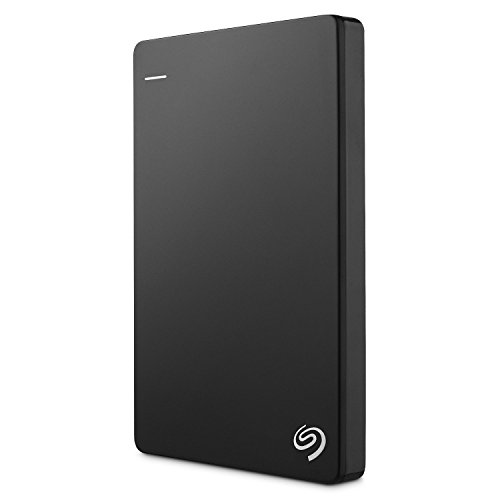
SpecPicks' catalog carries several Seagate Backup Plus drives sized for this exact job:
| Product | Capacity | Price |
|---|---|---|
| Seagate Backup Plus Slim, Black | 1TB | $119.99 |
| Seagate Backup Plus Slim, Blue | 1TB | $119.99 |
| Seagate Backup Plus Slim, Red | 2TB | $148.94 |
| Seagate Backup Plus Slim, Black | 2TB | $149.99 |
| Seagate Backup Plus Portable, Blue | 4TB | $219.99 |
| Seagate Backup Plus Portable, Silver | 4TB | $149.99 |
| Seagate Backup Plus Portable, Red | 4TB | $247.11 |
A one-time purchase at any of these price points is typically cheaper over a year or two than an ongoing consumer cloud-backup subscription of comparable capacity — see a provider's own pricing page, such as Backblaze's, for a like-for-like comparison against a specific plan. For collectors backing up older hardware rather than a modern NAS, the same drive-rotation logic applies to imaging vintage IDE drives as part of a retro-PC backup workflow.
How to Create a NAS Backup Without Cloud Storage
A cloud-free backup plan needs a second storage target that isn't the NAS itself. Three options fit a budget build:
- A second NAS or a repurposed spare PC, running rsync or Duplicity as a nightly pull job against the primary NAS's shares.
- A Raspberry Pi with attached USB storage, acting as a low-power, always-on backup node. The Raspberry Pi Foundation's own product page covers the Pi 4 Model B's specs; SpecPicks has a full walkthrough of self-hosting Immich photo backup on a Raspberry Pi 4 8GB, and a companion piece on running the same Immich setup entirely self-hosted, both of which double as a template for a general-purpose Pi backup target.
- Physical drive rotation, where one external HDD stays connected for the scheduled backup job and a second, previously-backed-up drive is stored offsite — satisfying the "offsite copy" leg of the 3-2-1 rule without any subscription at all.
Any of these can run Duplicity for the encryption layer, which matters if the offsite copy is a drive that physically leaves the house or office, since an unencrypted drive is a data-exposure risk if lost or stolen.
How to Automate NAS Backups on a Budget
Once a backup target is chosen — a second NAS, a Pi, or a rotated external drive — automation comes from the NAS's own scheduler rather than any paid add-on:
- Cron + rsync on Linux-based NAS OSes (DSM, TrueNAS, Unraid, OpenMediaVault) for a scripted incremental job.
- TrueNAS's built-in Cron Jobs and replication tasks, configured entirely through the web UI, per the TrueNAS documentation.
- Synology's Task Scheduler, which can trigger Hyper Backup jobs on a recurring window without any command-line work, per Synology's Hyper Backup feature page.
- PowerShell scripts on Windows Task Scheduler, for Windows-based backup targets or Windows-hosted NAS software.
The common thread across all four is that the scheduling layer is free and already installed — the only spend in this plan is the external drive itself, and optionally a Raspberry Pi if a dedicated backup node is preferred over drive rotation.
Related SpecPicks coverage
- Imaging Vintage IDE Drives in 2026: The Retro-PC Backup Workflow
- Self-Host Immich Photo Backup on a Raspberry Pi 4 8GB in 2026
- Self-Hosted Immich on a Raspberry Pi 4 8GB: Photo Backup Without the Cloud
- Intel Eyed as TSMC Backup by Google and Nvidia for AI Chips
Citations and sources
- https://www.backblaze.com/blog/the-3-2-1-backup-strategy/
- https://rsync.samba.org/
- https://duplicity.gitlab.io/
- https://www.synology.com/en-us/dsm/feature/hyper_backup
- https://www.truenas.com/docs/
- https://www.raspberrypi.com/products/raspberry-pi-4-model-b/
- https://www.usb.org/documents
This piece is editorial synthesis based on publicly available information. No independent first-party benchmarking is reported.