As an Amazon Associate, SpecPicks earns from qualifying purchases. See the SpecPicks review methodology.
Best Parts for a Local Coding-Agent Rig in 2026
By Mike Perry · Published 2026-09-16 · Last verified 2026-09-16 · 15 min read
A coding-agent box is not the same machine as a chat box, even when it runs the same model. With Aider, Cline or Continue pointed at a local OpenAI-compatible endpoint, the model doesn't just answer one question. It reads files, proposes a diff, receives tool output, reads the test failure, and tries again, often a dozen times per task. Every turn sends back a large prompt: file contents, the running conversation, and whatever the last command printed.
That changes which spec matters. In a chat session, generation speed dominates because most of the wall-clock time is spent watching text appear. In an agent loop, prompt prefill is the recurring cost. A 16K-token context that has to be processed again every turn is paid for over and over. Hardware Corner measures an RTX 3060 12GB prefilling Qwen3 14B at 678.2 tok/s at 16K context (Hardware Corner), about 24 seconds for a full 16K prompt with no cache hit. The same work on system RAM takes many minutes.
The second difference is uptime. You probably don't want to wait for a machine to wake up every time you open the editor, so the box stays on. That makes idle noise, sustained thermals and long-term reliability more important than peak benchmark scores.
It's also worth being honest about what local models can do in an agent loop. On Aider's polyglot leaderboard, Qwen2.5-Coder-32B-Instruct completes 16.4% of the 225 exercises in whole-file edit mode and 8.0% in diff mode. That's useful for well-scoped edits and far from frontier-API results on multi-file refactors. Buy this rig for privacy, cost control and offline work, with realistic expectations.
Every pick below comes from the same parts shortlist. The winner is the GPU that makes a 14B coder model fully GPU-resident at a working context length. This guide is editorial synthesis of public benchmark data. No first-party benchmarking is reported.
Step 0: size the model before you size the parts
Pick your model tier first. That choice sets the VRAM tier, and the VRAM tier sets everything downstream. Model specs below are from Qwen's Qwen2.5-Coder announcement and file sizes from Qwen's official GGUF repositories for the 14B and 32B models.
| Tier | Model | Parameters / layers | Q4_K_M file | GPU needed | Role in an agent loop |
|---|---|---|---|---|---|
| Completion | Qwen2.5-Coder-7B | 7.61B / 28 | smaller than 14B | 8 GB card | Tab-complete, fill-in-the-middle |
| Instruct / agent (target) | Qwen2.5-Coder-14B | 14.7B / 48 | 8.99 GB | 12 GB card | Scoped edits, test-fix loops |
| Heavy agent | Qwen2.5-Coder-32B | 32.5B / 64 | 19.85 GB | 24 GB (two 12 GB cards or one 24 GB card) | Multi-file changes, longer context |
The 14B tier is the sweet spot for 2026. It's the largest coder model that fits entirely on one affordable card with room for context, and the step up to 32B requires a second card.
Context sets the rest of the budget. The 14B model's 48 layers and 8 key-value heads at a 128-dim head (from the announcement's model table) mean an FP16 KV cache of 196,608 bytes per token. That's about 1.6 GB at 8K tokens and 3.2 GB at 16K. At 16K, 8.99 GB of weights plus 3.2 GB of cache overflows 12 GB. Quantize the KV cache to 8-bit (--cache-type-k q8_0 --cache-type-v q8_0 in llama.cpp) and it drops to about 1.6 GB, which fits. Hardware Corner confirms a 14B Q4_K model runs "up to 16k context fully in VRAM" on the RTX 3060 (Hardware Corner).
At a glance
| Pick | Best for | Key spec | Price range | Verdict |
|---|---|---|---|---|
| 🏆 MSI Gaming GeForce RTX 3060 12GB | Best overall | 12 GB GDDR6, 360 GB/s, 170 W | Mid-range GPU; check live listing | The part that makes 14B fully GPU-resident |
| 💰 ZOTAC RTX 3060 Twin Edge OC 12GB | Second card for 24 GB pooled | Same 12 GB / 192-bit bus, compact twin-fan | Mid-range GPU; check live listing | The card to add when 14B stops being enough |
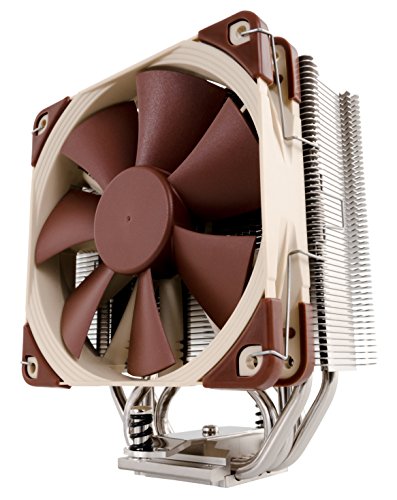
| 🎯 Noctua NH-U12S | 24/7 quiet operation | Single-tower air cooler, no pump | Under $100 | No pump to fail on a box that never sleeps |
| ⚡ AMD Ryzen 7 5800X | Best performance host | 8 cores / 16 threads, 105 W | Mid-range CPU | Headroom for editor, LSPs and tests beside inference |
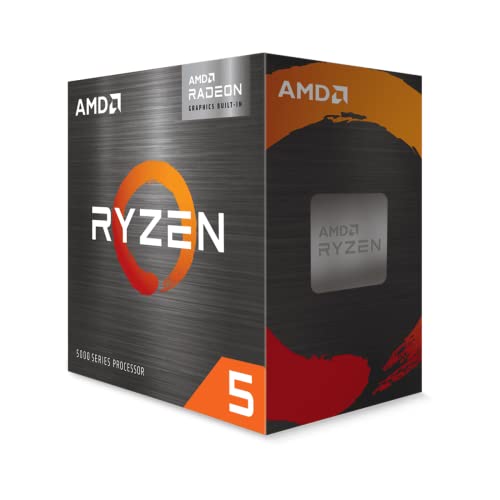
| 🧪 AMD Ryzen 5 5600G | Budget host | 6 cores / 12 threads, 65 W, integrated graphics | Budget CPU | Boots with no GPU; every slot left free |
Prices move daily. Several GPU listings in the catalog have shown scrape artifacts this month, so check the live product page before you buy. Prices may vary.
🏆 Best Overall: MSI Gaming GeForce RTX 3060 12GB
Spec chips: 12 GB GDDR6 · 192-bit memory bus · 3,584 CUDA cores · 170 W · 550 W system PSU
The MSI Gaming GeForce RTX 3060 12GB is this rig's centerpiece because of one number: 12 GB. Per NVIDIA's family page, it carries 12 GB of GDDR6 on a 192-bit interface with 3,584 CUDA cores at 170 W. That capacity holds the 8.99 GB Qwen2.5-Coder-14B Q4_K_M file with room for a working context.
The performance data is consistent across two sources. Geerling measured a 14.77B Qwen2-architecture model at Q4_K_M, DeepSeek-R1-Distill-Qwen-14B, which is built on the same base as Qwen2.5-Coder-14B, at 29.77 tok/s generation and 783.57 tok/s prefill at 4,096 tokens, with a 224 W system peak (Geerling #40). Hardware Corner measures Qwen3 14B Q4_K at 31.2 tok/s at 4K and 22.7 tok/s at 16K, with prefill of 972.6 and 678.2 tok/s at those context lengths (Hardware Corner).
In an agent loop, that means a 300-token diff after a 4K-token context arrives in about 15 seconds. At 16K context, a cold prompt costs about 24 seconds of prefill, and llama.cpp's server reuses the unchanged prefix of the conversation on the next turn, so most turns are much faster than a cold start.
Pros
- 12 GB is the smallest capacity that holds a 14B coder model entirely on the GPU (Hardware Corner)
- 360 GB/s memory bandwidth gives ~30 tok/s generation on 14B, faster than reading speed
- 170 W board power and a 550 W system PSU requirement (NVIDIA) suit a mid-range build
- The host CPU barely matters once the model is on the card: a Raspberry Pi CM5 host measured 29.40 tok/s, within 1% of a Core Ultra 265K (Geerling #40)
Cons
- 16K context requires an 8-bit KV cache. 32K doesn't fit at 14B.
- 32B-class models need a second card
- Prefill is slower than on newer cards, which matters most for agent loops
Verdict: the only part in this build that changes which model you can run. Buy this first.
💰 Best Value: ZOTAC Gaming GeForce RTX 3060 Twin Edge OC 12GB
Spec chips: 12 GB GDDR6 · 15 Gbps · PCIe 4.0 · IceStorm 2.0 twin-fan cooler · Freeze Fan Stop
The ZOTAC Gaming GeForce RTX 3060 Twin Edge OC 12GB is the same GPU with the same memory. Its listing specifies "12GB GDDR6 192-bit 15 Gbps PCIE 4.0" with "IceStorm 2.0 Cooling, Active Fan Control, Freeze Fan Stop". Its value is in its role: it's the natural second card when 14B stops being enough.
Two 12 GB cards pool to 24 GB. That opens Qwen2.5-Coder-32B at Q4_K_M, a 19.85 GB file per Qwen's repository, with about 4 GB left for context. llama.cpp splits layers across both cards. Throughput doesn't double, because each token still passes through every layer in sequence, but the step from 14B to 32B is the step from single-function edits to multi-file changes.
For a first card, the ZOTAC and the MSI are interchangeable for inference. Pick whichever physically fits and is cheaper that week. For a second card, a compact twin-fan design leaves more air between two cards in adjacent slots. Measure your case and motherboard slot spacing before ordering either.
Pros
- Identical 12 GB / 192-bit memory, so matched tok/s with the MSI
- Fan-stop at idle suits a box that sits waiting between requests
- Pairs into 24 GB for the 32B tier
Cons
- Dual-card builds need two usable PCIe slots and a larger PSU budget (two 170 W cards)
- Split inference adds overhead, so two cards generate slower than one 24 GB card would
- Adding a second card is a bet that you'll outgrow 14B. Don't buy it in advance.
Verdict: buy it as your first card if it's the cheaper 3060 that week, or as your second when 32B becomes the target. See best parts for a dual RTX 3060 24GB build.
🎯 Best for 24/7 Quiet Operation: Noctua NH-U12S
Spec chips: single-tower air cooler · 120 mm fan · no pump · no coolant
The Noctua NH-U12S is listed as a "Quiet High-Performance Single Tower CPU Cooler". On a box that never powers down, what matters most is what it doesn't have: a pump. An AIO liquid cooler adds a pump that runs every hour the machine is on, plus coolant that slowly permeates its tubing over years. A tower cooler's only moving part is a fan, which is cheap and easy to replace.
Noctua's own acoustic and thermal specification pages weren't retrievable for this guide, so no manufacturer dB(A) figure is quoted here. The structural argument doesn't depend on one. The CPUs this cooler would sit on are rated at 65 W (5600G) and 105 W (5800X) per AMD, which is well within what a 120 mm single-tower cooler is designed for at stock settings. The CPU also isn't under sustained full load in this build, since the GPU does the inference.
Check socket compatibility before you order. The NH-U12S has shipped in several revisions and mounting bundles, and AM4 support depends on the mounting kit included or requested. Confirm it against the listing for your board.
Pros
- No pump or coolant, so no fixed service life on a 24/7 machine
- Single 120 mm fan is cheap to replace
- Enough capacity for a 65-105 W AM4 CPU at stock
Cons
- Tall tower: check case clearance
- Blocks some RAM slots with tall heatspreaders on some boards
- AM4 mounting depends on the kit revision
Verdict: the part that decides whether you can hear this box from the next room. Spend here before you spend on a faster CPU. More on this in air vs AIO for a 24/7 local LLM rig.
⚡ Best Performance: AMD Ryzen 7 5800X
Spec chips: 8 Zen 3 cores / 16 threads · 105 W TDP · AM4 · no integrated graphics
The AMD Ryzen 7 5800X is the host for the reader who codes on the same machine that runs the model. Per AMD, it's 8 cores and 16 threads at a 105 W default TDP, launched in November 2020.
Inference itself doesn't need those cores. With the model fully on the GPU, host CPU speed barely moves tok/s: Geerling's Pi CM5 host lands within 1% of a Core Ultra 265K (Geerling #40). The cores are for everything else an agent loop does. While Aider or Cline waits on the model, the same machine runs the editor, one or more language servers, a type checker, and the test suite the agent just triggered. Eight cores keep those responsive.
The 5800X also makes a better CPU-offload host if you ever push past 12 GB. The ceiling there is dual-channel DDR4 bandwidth rather than core count, though. llama.cpp developer Johannes Gäßler reports five threads saturate dual-channel memory (Gäßler).
Pros
- 8 cores / 16 threads handle toolchain and test runs alongside inference
- Faster prefill for any layers that fall back to the CPU
- Same AM4 platform as the budget pick, so the upgrade path is simple
Cons
- No integrated graphics, so it needs a GPU to boot (you're buying one anyway)
- 105 W TDP means more heat than the 5600G
- Doesn't speed up GPU-resident inference
Verdict: buy it if this is your development workstation as well as your inference host. See Ryzen 5 5600G vs Ryzen 7 5800X for a 24/7 Ollama box.
🧪 Budget Pick: AMD Ryzen 5 5600G
Spec chips: 6 Zen 3 cores / 12 threads · 65 W TDP · Radeon Graphics (7 cores) · dual-channel DDR4-3200
The AMD Ryzen 5 5600G is the host for a dedicated inference box that you reach over the network from a laptop. Per AMD, it's 6 cores and 12 threads at 65 W with integrated Radeon graphics, which means the machine boots and can be administered with no discrete card installed.
That matters for two reasons. First, you can build and configure the host before the GPU budget arrives. Second, every PCIe slot stays free for inference cards, so your display never takes VRAM from the model.
As a CPU-only fallback, Zen 3 APUs measure about 10 tok/s on a 7B Q4_0 model (TechHara, Ryzen 5 5600H). That's workable for a completion model and too slow for a 14B agent, which is why the GPU is still the best-overall pick.
Pros
- 65 W TDP keeps idle and load heat low on an always-on host
- Integrated graphics frees every PCIe slot for inference
- Cheapest way onto AM4 with an upgrade path
Cons
- 6 cores is tight if the same box also runs your editor and test suite
- PCIe lane configuration on APUs is more limited than on the 5800X, so check your board manual for dual-GPU slot wiring
- CPU-only inference is limited to small models
Verdict: buy it for a headless inference server you reach over the network. See best parts for an always-on local LLM server.
What to look for in a local coding-agent rig
VRAM tier vs model size: why 12 GB is the 2026 entry target
Coding agents fail differently on small models. A 7B model doesn't just run faster than a 14B model. It produces more malformed diffs and more lost context, and each failed edit costs another full loop. Qwen2.5-Coder-14B at Q4_K_M is 8.99 GB (Qwen), so 12 GB is the smallest VRAM tier that runs the 14B tier without offload. An 8 GB card forces you down a tier.
Memory bandwidth over core count
Generation speed is set by how fast weights move. The RTX 3060's 360 GB/s (Hardware Corner) is about seven times the ~51.2 GB/s of dual-channel DDR4-3200. That's why a 12-core CPU can't substitute for a 12 GB GPU, and why extra host cores don't raise tok/s once the model is on the card.
Prompt prefill vs generation in agent loops
Agents re-send context on nearly every turn. Look at a card's prefill figures at long context, not only its generation speed. On the RTX 3060, Qwen3 14B prefill falls from 972.6 tok/s at 4K to 678.2 tok/s at 16K (Hardware Corner). Keep context focused (add only the files the task needs) and use a server that caches prompt prefixes.
Sustained thermals on an always-on box
A box that runs all day is judged on idle noise and on what fails in year three, not on burst benchmarks. Favor air cooling with no pump, cards with fan-stop at idle, and a PSU with headroom: NVIDIA specifies 550 W of system power for one RTX 3060 (NVIDIA).
Model-library storage
Coding-agent users keep several models side by side: a completion model, a 14B instruct model, maybe a 32B model at two quants. The 14B and 32B Q4_K_M files alone total 28.8 GB (14B, 32B), and adding Q6_K and Q8_0 variants of both pushes the total past 100 GB. The Crucial BX500 1TB SATA SSD, listed at "up to 540MB/s", is the cheap way to hold that library. It reads the 8.99 GB 14B file in about 17 seconds on a cold load. Keeping weights off the boot drive also makes an OS reinstall painless. See NVMe vs SATA SSD for a local LLM model library.
Frequently asked questions
How much VRAM does a usable local coding agent actually need?
Twelve gigabytes is the practical 2026 entry point. Qwen2.5-Coder-14B at Q4_K_M is an 8.99 GB file per Qwen's GGUF repository, and Hardware Corner confirms a 14B Q4_K model runs up to 16K context fully in VRAM on an RTX 3060 12GB. Eight gigabytes forces a 7B model or heavy quantization. In agent loops, both show up as more failed edits per session, not just slower output.
Does a coding agent need more CPU than a chat workload?
Somewhat, but not for inference. With the model fully on the GPU, host CPU speed barely matters: Geerling measured an RTX 3060 at 29.40 tok/s on a Raspberry Pi CM5 host against 29.77 tok/s on a Core Ultra 265K. The CPU matters because the same machine often runs the editor, language servers and the test suite the agent triggers. Eight cores keep that comfortable. A headless server can use six.
Is a second RTX 3060 better than upgrading to one bigger card?
It depends on price per gigabyte of VRAM. Two 12 GB cards pool to 24 GB, enough for Qwen2.5-Coder-32B at Q4_K_M, a 19.85 GB file per Qwen's repository. The trade-offs are real: two 170 W cards, two usable PCIe slots, and layer-split overhead that keeps two cards slower than one equivalent 24 GB card. If a single 24 GB card fits your budget, it's the simpler and faster build.
Air cooling or an AIO for a box that runs all day?
Air, in most cases. A single-tower air cooler has no pump to fail and no coolant to slowly permeate, and that matters more on a host that never powers down than the last few degrees of headroom. The CPUs in this build are rated at 65 W and 105 W per AMD, well within what a quality tower cooler handles at stock settings. An AIO makes sense for heavily overclocked, high-TDP chips, which this build doesn't use.
How much storage does a local model library really take?
More than first-time builders expect. Per Qwen's GGUF repositories, Qwen2.5-Coder-14B at Q4_K_M is 8.99 GB and the 32B at Q4_K_M is 19.85 GB. Keeping a couple of quant levels of each, plus a completion model, easily passes 100 GB. A dedicated 1 TB SATA drive for model weights is cheap insurance, and keeping weights off the boot drive makes reinstalling the host trivial.
Sources
- Jeff Geerling, ai-benchmarks issue #40: RTX 3060 12GB llama.cpp results (accessed 2026-09-16)
- Hardware Corner, RTX 3060 12GB LLM benchmarks and context scaling (accessed 2026-09-16)
- Qwen, Qwen2.5-Coder series announcement and model table (accessed 2026-09-16)
- Qwen, Qwen2.5-Coder-14B-Instruct-GGUF (accessed 2026-09-16)
- Qwen, Qwen2.5-Coder-32B-Instruct-GGUF (accessed 2026-09-16)
- Aider LLM leaderboards (polyglot benchmark) (accessed 2026-09-16)
- NVIDIA, GeForce RTX 3060 family specifications (accessed 2026-09-16)
- AMD, Ryzen 7 5800X specifications (accessed 2026-09-16)
- AMD, Ryzen 5 5600G specifications (accessed 2026-09-16)
- Johannes Gäßler, llama.cpp performance testing (accessed 2026-09-16)
- TechHara, llama.cpp benchmark: CPU vs iGPU on Ryzen 5 5600H (accessed 2026-09-16)
This piece is editorial synthesis based on publicly available information. No independent first-party benchmarking is reported.
Related guides
- Best parts for a dual RTX 3060 24GB local-LLM build
- Best parts for an always-on local LLM server
- Best parts for a CPU-offload local LLM build
- Local coding agent with Qwen3 Coder on an RTX 3060 12GB
- Best 12GB GPU picks: RTX 3060 12GB local LLM guide
— Mike Perry · Last verified 2026-09-16