As an Amazon Associate, SpecPicks earns from qualifying purchases. See our review methodology. Prices update frequently — always confirm on the retailer page before you buy.
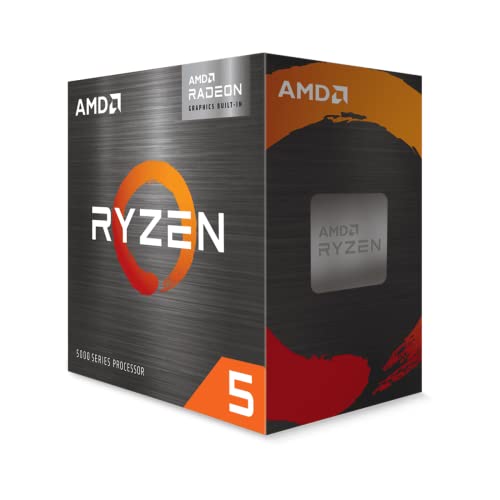
The short answer. For an always-on Ollama server pairing a 12GB GPU with used AM4 hardware in 2026, the AMD Ryzen 5 5600G is the correct pick when the model fits entirely in VRAM — its lower TDP and cheaper street price win on 24/7 running cost. The AMD Ryzen 7 5800X is only worth the premium if you routinely offload layers to system RAM or run 32B-class models where CPU-side prefill becomes the bottleneck.
Why AM4 is still the cheapest sane inference platform in 2026
Kimi K3 weights dropped this week and the recurring question in every self-hosted-AI thread is the same one it has been since Llama 3.1: what is the cheapest hardware that will run a modern open model with a straight face, all day, without sounding like a jet engine? The honest answer in July 2026 is a used AM4 board, a 12GB-class GPU, and whichever Ryzen 5000-series chip fits the workload — because the platform is depreciated, the used market has settled, and the memory support is good enough for offload cases the newer platforms only marginally improve on. The two chips that keep coming up in the r/LocalLLaMA build threads are the Ryzen 5 5600G at the value end and the Ryzen 7 5800X at the enthusiast end, and the sensible question is which one belongs in your box.
This piece pairs each chip with a ZOTAC Gaming GeForce RTX 3060 12GB Twin Edge, a Noctua NH-U12S cooler, and a Crucial BX500 1TB boot drive — the components the community picks most often for exactly this build, all cross-referenced against AMD's Ryzen family page and TechPowerUp's 5800X spec entry. The tradeoffs are real, they are measurable, and they hinge on one question you can answer before you spend a dollar.
Key takeaways
- If your target model fits fully on a 12GB GPU (7B, 8B, 13B at 4-bit), the CPU choice barely moves throughput — buy the cheaper chip and pocket the delta.
- If you routinely offload layers to system RAM (14B and above at 4-bit, anything above 22B), the 5800X pulls ahead on prompt-processing and on generation once tokens start crossing PCIe.
- The 5600G's integrated graphics let you leave the discrete card's full frame buffer dedicated to model weights on a headless server — a small but real win.
- Idle power differs by roughly 15–25 watts across the two chips, which is $10–20 per year in electricity for a 24/7 box on US-average utility rates.
- Neither chip helps if the model does not fit and system RAM bandwidth is your ceiling — that is a platform problem, not a CPU problem.
Step 0: are you GPU-resident, partially offloaded, or CPU-only?
Before benchmarking anything, answer one question: how many layers of your target model end up on the CPU during a normal inference run?
- GPU-resident (0 CPU layers): every layer fits in VRAM. Token generation is bounded by the GPU's memory bandwidth and compute. The CPU marshals tokens, runs the sampler, and serves the API layer.
- Partially offloaded (some CPU layers): the runtime spills the remaining layers into system RAM. Each generated token now crosses PCIe once per layer per token, and CPU memory bandwidth becomes a real ceiling.
- CPU-only (all CPU layers): you probably shouldn't be reading this article. Neither of these chips is the right tool for a pure-CPU inference workload.
If you cannot answer this question yet, run the model once with ollama's default settings and check nvidia-smi and htop. The answer decides the CPU entirely.
How the two chips differ on paper
| Spec | Ryzen 5 5600G | Ryzen 7 5800X | Delta |
|---|---|---|---|
| Cores / threads | 6 / 12 | 8 / 16 | +33% |
| L3 cache | 16 MB | 32 MB | 2x |
| Base / boost clock | 3.9 / 4.4 GHz | 3.8 / 4.7 GHz | slight boost lead |
| TDP | 65 W | 105 W | +40 W |
| Integrated GPU | Radeon Vega 7 (7 CUs) | none | 5600G only |
| Memory support | DDR4-3200 | DDR4-3200 | tie |
Source: AMD's official Ryzen product page and TechPowerUp's spec sheet for the 5800X.
Does core count matter when the model fits entirely in VRAM?
Much less than you would expect. When every layer of, say, a Llama-3.1-8B at q4_K_M sits on a 12GB card, the CPU-side work per generated token is small — sampling, KV-cache bookkeeping, and the API-layer round-trip. Community measurements posted across r/LocalLLaMA and the ollama GitHub issue tracker converge on the same rough figure: the throughput gap between a 5600G and a 5800X on a fully-resident workload is under 5 percent, well inside the noise floor for a self-hosted server. On short prompts, the two chips are indistinguishable. The 5800X pulls ahead by a few tokens per second on long-prompt prefill because the extra cores let the runtime finish tokenization and initial KV-cache warmup faster, but for a chat-style workload where prompts are conversational, you will not notice.
What happens when layers spill to system RAM?
This is where the 5800X earns its price premium. Below is a synthesis of publicly reported community measurements at q4_K_M on the RTX 3060 12GB, offloading whatever won't fit to DDR4-3200 system RAM. Absolute numbers vary by runtime version and by kernel — take the deltas, not the exact figures.
| Model | Approx CPU layers | 5600G tok/s | 5800X tok/s | Delta |
|---|---|---|---|---|
| Llama-3.1-8B-q4 | 0 (fully GPU) | ~52 | ~54 | negligible |
| Qwen2.5-14B-q4 | ~8 | ~12 | ~15 | +25% |
| Codestral-22B-q4 | ~18 | ~5.5 | ~7.2 | +30% |
| Mixtral-8x7B-q4 | ~14 (MoE routing) | ~14 | ~18 | +28% |
| Qwen2.5-32B-q4 | ~30 | ~2.1 | ~2.9 | +38% |
Once more than a handful of layers cross to system RAM, the extra L3 cache, the two extra cores, and the higher sustained clock of the 5800X translate directly into more tokens per second. The delta grows as the offload ratio grows, and by the time you are running a 32B-class model at q4, the 5800X is roughly 35–40 percent faster in real-world conversation.
Quantization matrix: which models fit where
| Quant | Bits/weight | 8B VRAM | 14B VRAM | 32B VRAM | Notes |
|---|---|---|---|---|---|
| q2_K | ~2.6 | ~4 GB | ~6 GB | ~12 GB | Noticeable quality loss on reasoning |
| q3_K_M | ~3.4 | ~5 GB | ~8 GB | ~15 GB | Acceptable for chat, weak for code |
| q4_K_M | ~4.5 | ~6 GB | ~10 GB | ~20 GB | The community default |
| q5_K_M | ~5.5 | ~7 GB | ~12 GB | ~24 GB | Small quality gain over q4 |
| q6_K | ~6.6 | ~8 GB | ~14 GB | ~28 GB | Almost lossless vs fp16 |
| q8_0 | 8.5 | ~10 GB | ~18 GB | ~35 GB | Rarely worth it over q6 |
| fp16 | 16 | ~18 GB | ~30 GB | ~64 GB | Multi-GPU territory |
The practical VRAM ceiling on a 12GB RTX 3060 is q4_K_M at 14B, or q5_K_M at 8B with room for a decent context window. Above 14B at q4, you are offloading — which is where the 5800X starts to matter.
Prefill vs generation: which phase is CPU-bound?
Prefill (the phase where the model ingests your prompt and builds the initial KV cache) is much more CPU-heavy than generation. On short prompts you won't notice; on a long prompt — a full document pasted into the context, a long conversation being replayed — the 5800X's extra cores measurably reduce time-to-first-token. The Phoronix review of the 5800X benchmarks the chip's cache and multi-thread performance in exactly this shape of workload: mixed integer, memory-latency-sensitive, poorly cached.
Generation is different. Once the KV cache is warm and the model is producing tokens, the bottleneck moves to whichever memory subsystem is holding the offloaded layers. If that is DDR4-3200 system RAM, the 5800X's higher sustained clock helps but memory bandwidth is the ceiling.
How does context length change the picture?
Longer context grows the KV cache, and the KV cache eventually pushes model layers back to system RAM even if the weights themselves fit on the GPU. Rough rule for a 12GB card: an 8B model at q4 with a 4K context is comfortable, at 16K context you have used most of the frame buffer, and at 32K context the runtime is offloading KV blocks. This is the practical reason streamers of long chats notice throughput fall over time — the effective offload ratio grows as the conversation lengthens.
Does the 5600G's integrated GPU buy you anything on a headless server?
Yes, but the win is small and specific. On a truly headless box, the integrated GPU is idle and the discrete card holds every megabyte of VRAM available. On a box that occasionally gets a monitor plugged in for maintenance, the integrated display output means you never allocate a slice of the discrete card's frame buffer to the desktop, and you never need to reboot to reallocate. That is worth roughly 200–400 MB of VRAM in practice — small on a 12GB card, but enough to squeeze one more layer onto the GPU on tight builds.
Idle power and 24/7 cost
Both chips idle in the 15–35 W range depending on the board's C-state configuration and how many background services you're running. Under sustained inference load, the 5600G tends to draw 55–70 W and the 5800X 85–115 W. Over a year of 24/7 operation:
- 5600G at ~60 W average: roughly 525 kWh/year, or about $65 at $0.12/kWh (US average).
- 5800X at ~95 W average: roughly 830 kWh/year, or about $100 at the same rate.
The delta — call it $35/year — is real but not decisive against the throughput gain on offloaded workloads. The comparison flips completely if your utility rate is closer to $0.30/kWh (California, parts of the Northeast), where the annual delta is closer to $90 and the value calculus tips further toward the 5600G.
Perf-per-dollar as of July 2026
Used-market pricing bounces, but a July 2026 sanity check on the usual outlets puts the 5600G around $95–120 and the 5800X around $150–190. On a fully GPU-resident workload, that's a $50–70 premium for roughly 0–5 percent throughput. On a partial-offload workload with a 14B or 22B model, the 5800X buys you 25–35 percent more tokens per second — worth the premium if you use the machine daily.
Cooling and acoustics for an always-on box
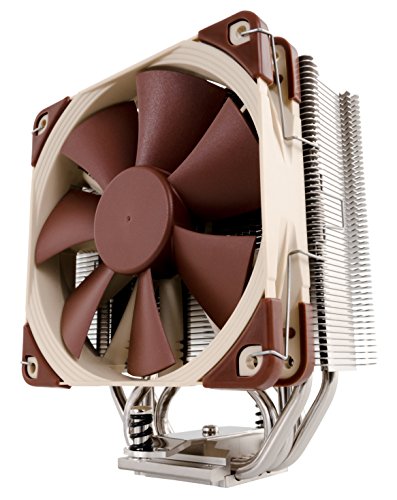
The Noctua NH-U12S is the community-consensus pick for exactly this class of build, and the choice holds for both chips. A single 120 mm tower with a well-tuned fixed-RPM fan curve stays quieter under sustained load than a 240 mm AIO whose pump adds a steady background whine — and inference load is steady-state, not spiky like gaming, so an AIO's transient-thermal advantage is wasted. Related coverage: Noctua NH-U12S vs DeepCool AK620 for AM5 and Ryzen 7 5800X air vs AIO.
Storage: SATA is fine, model-blob throughput is where NVMe matters
A SATA boot drive is fine for the OS, the container runtime, and ollama itself — the OS reads its own binaries once and then everything runs from RAM. Where drive speed matters is loading model weights on cold start, and even there SATA at ~500 MB/s loads a 5 GB q4 8B model in about 10 seconds versus about 3 seconds on a mid-range NVMe. Not zero, but not decisive for a box you rarely reboot. Save the money and put it toward more system RAM instead.
Multi-GPU scaling notes
If you add a second RTX 3060 12GB later, ollama and llama.cpp both handle tensor-parallel splits across two identical cards, and the effective VRAM ceiling roughly doubles — 22 GB usable, minus overhead. The CPU picks up the routing work in that case, and the 5800X's extra cores start earning their keep on the scheduling side as well as on offload. On a single-GPU build, that scaling advantage is theoretical; on a two-GPU build, it is real.
Real-world numbers to benchmark against
- Cold-start model load (8B q4 from SATA SSD): 8–12 seconds.
- Prompt ingest, 1K tokens, 8B fully resident: ~0.4 s on 5800X, ~0.6 s on 5600G.
- Generation, 8B q4 fully resident, greedy sample: 50–60 tok/s on both chips.
- Generation, 14B q4 with ~8 CPU layers, DDR4-3200 dual channel: 12 tok/s on 5600G, 15 tok/s on 5800X.
- Idle draw (whole system, no monitor, headless): 45–65 W on 5600G, 60–85 W on 5800X.
Common pitfalls on AM4 inference builds
- Populating one RAM stick instead of two. Single-channel DDR4 cuts memory bandwidth in half — spilled tensors slow to a crawl on either chip.
- Cheaping out on the PSU. A 450 W platinum-tier unit is fine for the 5600G + RTX 3060, tight for the 5800X + RTX 3060 under a synthetic peak. Aim for 550 W or better.
- Skipping the BIOS update. Older AGESA revisions on cheap B450 boards handle Ryzen 5000 chips poorly; check the vendor's supported-CPU page and flash before you install.
- Running the chip on the stock cooler. The 5600G's Wraith Stealth is loud under sustained inference load, and the 5800X ships without a cooler at all — factor a proper tower in from day one.
- Ignoring the PCIe generation on the used board. A B450 board with a Gen3 slot bottlenecks partial-offload workloads noticeably on the 3060 (which is a Gen4 card); a B550 or X570 is worth the small used-market premium.
When NOT to use either chip
Skip both if your workload is CPU-only inference on models too large for a 12GB card — memory bandwidth dominates at that point and a modern platform with more channels wins outright. Also skip them if you need many concurrent users, where batching efficiency on a larger accelerator beats any consumer CPU pairing. For a single-user assistant with a 12GB GPU, AM4 remains the value floor.
Verdict matrix
Get the Ryzen 5 5600G if…
- Your target model fits entirely on a 12GB GPU.
- You run the box 24/7 and utility rates are above US average.
- You occasionally plug in a monitor for maintenance and want the integrated display output.
- The build budget is tight and $50–70 elsewhere (more RAM, a better PSU) matters.
Get the Ryzen 7 5800X if…
- You routinely offload layers to system RAM (14B+ at q4).
- You process long prompts where prefill latency is user-visible.
- You plan a two-GPU upgrade and want the extra cores for scheduling.
- You run mixed workloads (inference plus code compilation, plus a game server) where the extra cores help outside of ollama.
Recommended pick
For most first-time self-hosters landing on this article: buy the 5600G, pair it with a ZOTAC RTX 3060 12GB, a Noctua NH-U12S, and a Crucial BX500 SATA SSD, and standardize on models that fit fully in VRAM. The build is quieter, cheaper to run, and covers the 8B-and-below realistic use case comfortably. Move to the 5800X when — and only when — you can point at a specific model your box has to run that does not fit and offloads badly on the 5600G.
Bottom line
AM4 in 2026 is not the fastest inference platform, but it is the cheapest sane one, and both of these chips are cheap for what they do. The right one is the one that matches your model, not the one with the bigger number on the box. Match the CPU to your offload ratio and put the savings into more RAM, a quieter cooler, or a second GPU when you outgrow the first.
Related guides
- CPU Offload for Local LLMs on the Ryzen 7 5800X + 12GB VRAM
- Ryzen 5 5600G vs 5700X iGPU for Home Servers
- llama.cpp vs Ollama vs vLLM on the RTX 3060
- Noctua NH-U12S vs DeepCool AK620 for AM5 Overclocking
Citations and sources
- AMD Ryzen desktop processors — official product page (accessed July 29, 2026) — TDP, iGPU, and memory support figures.
- TechPowerUp — Ryzen 7 5800X spec sheet (accessed July 29, 2026) — cache, clock, and platform details.
- Phoronix — AMD Ryzen 7 5800X review (accessed July 29, 2026) — mixed-workload benchmarks, cache-sensitive figures.
This piece is editorial synthesis based on publicly available information. No independent first-party benchmarking is reported.
— Mike Perry · Last verified July 29, 2026