Introduction: a decision, not a purchase
This comparison is for readers who already own one of these parts, or can get one for almost nothing, and want to know whether a local 4B model is usable before spending anything. The two parts are the usual leftovers from an AM4 build. One is a GTX 1050 Ti from a 2017 gaming PC. The other is a Ryzen 5 5600G that went into an office or HTPC box because it needs no graphics card.
Qwen3 4B is a sensible target. It's the smallest Qwen3 model that most people treat as an assistant rather than a toy. Per Qwen's own config file, it has 36 layers and uses grouped-query attention with only 8 key/value heads, which keeps its context memory modest. Its official Q4_K_M quantization is a 2.50 GB file in Qwen's GGUF repository, which sits just under the capacity of a 4 GB card.
The two parts take opposite routes to the same model. The GTX 1050 Ti has its own dedicated memory: 4 GB of GDDR5 on a 128-bit bus at 112 GB/s, per Wikipedia's GeForce 10 series table. That memory is fast but small. The 5600G has no dedicated memory. Its CPU cores and its seven-core Vega iGPU share ordinary dual-channel DDR4, which AMD's spec page rates at up to 3200 MT/s. That works out to about 51.2 GB/s: plenty of capacity, less than half the bandwidth.
Neither maker has published a Qwen3 4B result for either part. Every throughput figure below either comes from a public benchmark on the same silicon or is scaled from one, and each derived figure is labelled as such.
Step 0: which side of the 4 GB line does your quant land on?
Before you compare speeds, check whether the model fits. A 4 GB card has to hold three things:
- Weights. These are fixed by the quantization you download.
- The KV cache. This grows with context length. For Qwen3 4B it costs 2 × 36 layers × 8 KV heads × 128 head-dim × 2 bytes. That comes to about 0.147 MB per token at fp16, computed from the model config.
- Everything else. This covers the CUDA context, compute buffers, and anything else already on the card, such as a desktop compositor or a browser. Budget roughly 0.3-0.5 GB. That range is an estimate; the runtime reports the real value at load time.
The llama.cpp thread's own device banner shows the 1050 Ti exposing 4031 MiB (about 4.2 GB) to CUDA (discussion #15013). The fit table:
| Quant | Weights (GB) | + KV at 4k (fp16) | + KV at 8k (fp16) | Fits a 4 GB 1050 Ti? |
|---|---|---|---|---|
| Q3_K_M | 2.08 | 2.68 | 3.29 | Yes, even at 8k |
| Q4_K_M | 2.50 | 3.10 | 3.71 | Yes at 4k; 8k only with a q8_0 KV cache |
| Q5_K_M | 2.89 | 3.49 | 4.10 | 4k is the ceiling |
| Q6_K | 3.31 | 3.91 | 4.52 | 2k at best |
| Q8_0 | 4.28 | 4.88 | 5.49 | No |
File sizes come from Qwen's GGUF repository and Unsloth's quant set. The KV columns use the per-token figure above. None of the columns include the 0.3-0.5 GB runtime overhead, so a quant that reads "3.9" doesn't really fit a 4.2 GB card.
On the 5600G, this whole step mostly goes away. The model sits in system RAM, so on a 16 GB box even Q8_0 at 32k context (4.28 + 4.83 GB) fits. The APU's constraint is how fast that RAM can be read, not how much of it there is.
Key takeaways
- The 1050 Ti generates about 29 tok/s on Qwen3 4B Q4_K_M. That's derived from its measured 19.06 tok/s on a 3.56 GiB model in the llama.cpp CUDA thread.
- The 5600G generates about 15 tok/s. Two Zen 3 APU measurements agree on that: ~10 tok/s on a 7B Q4_0 (TechHara) and 8.8 tok/s on Mistral 7B (ROCm issue #2774), each scaled to a 2.33 GiB file.
- Prefill is where the card really pulls ahead. The 1050 Ti measures 266.70 tok/s pp512 on a 6.74B model, against about 34 tok/s on Zen 3 CPU cores and about 76 tok/s on the Vega iGPU (TechHara).
- Context is the card's ceiling, not speed. Q4_K_M plus an fp16 KV cache passes 4 GB somewhere past 8k tokens. The 5600G runs 32k without trouble, just slowly.
- Pascal is being phased out of NVIDIA's toolchain. CUDA 13.0 "removed support for Maxwell, Pascal, and Volta GPUs", per NVIDIA's release notes. Builds need CUDA 12.x or Vulkan.
- 12 GB is a different tier. An RTX 3060 12GB runs Qwen3 8B at 55.2 tok/s at 4k context (Hardware Corner).
Spec delta: what separates a 4 GB dGPU from a shared-memory APU
| Part | Memory pool | Bandwidth | Compute path | Launch price |
|---|---|---|---|---|
| EVGA GTX 1050 Ti FTW 4GB | 4 GB GDDR5, dedicated (Wikipedia) | 112 GB/s, 128-bit (Wikipedia) | CUDA (compute capability 6.1) or Vulkan (llama.cpp #15013) | US $139 (Wikipedia) |
| AMD Ryzen 5 5600G | Shared dual-channel DDR4-3200 (AMD) | 51.2 GB/s theoretical (2 channels × 8 bytes × 3200 MT/s) | 6 Zen 3 cores, or 7 Vega CUs at 1900 MHz via Vulkan/ROCm (AMD) | US $259 (Wikipedia) |
| MSI RTX 3060 12GB (upgrade reference) | 12 GB GDDR6, dedicated (NVIDIA) | 360 GB/s, 192-bit (Wikipedia) | CUDA 8.6 with tensor cores | US $329 (Wikipedia) |
Launch prices are only reference points. Both older parts now sell mainly used, and current listings for the EVGA GTX 1050 Ti FTW and the AMD Ryzen 5 5600G change often, so check the price at checkout.
The bandwidth column predicts generation speed. When a model sits entirely in one memory pool, each generated token has to read the full set of weights once, so tokens per second can't exceed bandwidth divided by file size. For Qwen3 4B Q4_K_M that ceiling is 112 / 2.50 ≈ 45 tok/s on the 1050 Ti and 51.2 / 2.50 ≈ 20 tok/s on the 5600G. The measured figures below land at roughly 65-75% of each ceiling, which is typical for llama.cpp.
How fast is Qwen3 4B on each?
| Configuration | Workload | Prefill (tok/s) | Generation (tok/s) | Source / status |
|---|---|---|---|---|
| GTX 1050 Ti, CUDA | Llama 7B Q4_0, 3.56 GiB | 266.70 (pp512) | 19.06 (tg128) | Measured, llama.cpp #15013 |
| GTX 1050 Ti, CUDA + flash attention | Llama 7B Q4_0 | 268.09 | 20.27 | Measured, llama.cpp #15013 |
| GTX 1050 Ti | Qwen3 4B Q4_K_M, 2.33 GiB | ~450 | ~29 | Derived: prefill by parameter ratio, generation by file-size ratio |
| Zen 3 APU (5600H), CPU | Llama 2 7B Q4_0 | ~34 | ~10 | Measured, TechHara |
| Zen 3 APU (5600H), Vega iGPU via Vulkan | Llama 2 7B Q4_0 | ~76 | ~10 | Measured, TechHara |
| Ryzen 7 5700G, CPU only | Mistral 7B | n/a | 8.8 | Measured, ROCm #2774 |
| Ryzen 5 5600G | Qwen3 4B Q4_K_M | ~57 CPU / ~128 iGPU | ~15 | Derived from the rows above |
Time to first token on a 2,000-token prompt (a pasted document, or a long system prompt plus chat history) follows directly from those prefill rates:
| Part | Est. prefill on Qwen3 4B | Est. time to first token at 2k context |
|---|---|---|
| GTX 1050 Ti | ~450 tok/s | ~4.5 s |
| 5600G, Vega iGPU | ~128 tok/s | ~16 s |
| 5600G, CPU only | ~57 tok/s | ~36 s |
These are estimates. Prefill rates also fall as the prompt gets longer, so real waits will run a little higher than this.
A newer data point shows how much the software has improved since TechHara's run. A September 2026 benchmark set for a Ryzen 7 5700G, which uses the same Cezanne die with one more Vega CU, measured a 7.5B dense model at 179.4 tok/s prefill and 17.3 tok/s generation on Vulkan at 4k context, against 84.9 and 13.8 tok/s on the CPU. That machine's RAM was overclocked to DDR4-4200 and its iGPU to 2400 MHz, and its author notes that stock 3200-3600 MT/s memory "will decode proportionally slower". On a stock 5600G, treat those numbers as a ceiling, not an expectation.
Quantization matrix
| Quant | File (GB) | 1050 Ti: fits? | 1050 Ti est. gen | 5600G est. gen | Quality note |
|---|---|---|---|---|---|
| Q2_K | 1.67 | Yes, 16k+ context | ~43 tok/s | ~22 tok/s | Heavy loss on a 4B model; avoid |
| Q3_K_M | 2.08 | Yes, 8k context | ~35 tok/s | ~18 tok/s | Noticeable loss |
| Q4_K_M | 2.50 | Yes, 4k (8k with q8 KV) | ~29 tok/s | ~15 tok/s | The default choice |
| Q5_K_M | 2.89 | Tight, 4k max | ~25 tok/s | ~13 tok/s | Small gain over Q4 |
| Q6_K | 3.31 | 2k at best | ~22 tok/s | ~11 tok/s | Near-lossless |
| Q8_0 | 4.28 | No | n/a | ~9 tok/s | Rarely worth it at 4B |
| BF16 | 8.05 | No | n/a | ~5 tok/s | Reference only |
File sizes come from Unsloth's Qwen3-4B GGUF set. The speed columns scale the Q4_K_M estimates by file size, which is the right first-order model for a bandwidth-bound workload. Qwen doesn't publish per-quant accuracy for Qwen3 4B, so the quality notes follow the usual llama.cpp quantization guidance. Check a quant against your own prompts before settling on it.
This table decides the question for 4 GB owners. The only quant that is both good and fits with a usable context is Q4_K_M, and a single step up (Q5_K_M) already leaves you choosing between quality and context.
Prefill vs generation: why the 5600G loses one and not the other
Generation and prefill hit different limits.
Generation is bandwidth-bound. Each new token reads every weight once. The 5600G's CPU cores and its iGPU sit on the same 51.2 GB/s memory bus, so moving the work to the iGPU doesn't raise the ceiling. TechHara measured this directly. With every layer offloaded to Vega, prompt processing roughly doubled, while token generation "remained nearly identical (~10 t/s)" (TechHara). The 5700G benchmark above shows newer Vulkan builds pulling about 25% more decode out of the iGPU than the CPU, but both paths still stay under the DDR4 ceiling.
Prefill is compute-bound. Here the 1050 Ti's 768 CUDA cores and dedicated GDDR5 beat six Zen 3 cores by roughly 8× and the seven-CU Vega by roughly 3.5×, going by the measured pp512 rows. That gap is what readers notice. At 2k of context the 5600G makes you wait half a minute on CPU before the first word appears. The 1050 Ti starts answering in about four and a half seconds.
So the answer to "which is faster" depends on how you use the model. Short questions with short answers make the two feel only moderately different. Long prompts widen the gap a lot, as long as they still fit in 4 GB.
What does context length do to each part?
| Context | KV cache (fp16) | 1050 Ti + Q4_K_M | 5600G + Q4_K_M |
|---|---|---|---|
| 2k | 0.30 GB | 2.80 GB, fits with headroom | Trivial |
| 4k | 0.60 GB | 3.10 GB, fits | Trivial |
| 8k | 1.21 GB | 3.71 GB, marginal; use -ctk q8_0 -ctv q8_0 | Fine |
| 16k | 2.42 GB | 4.92 GB, doesn't fit, spills to system RAM | Fine; generation slows as KV reads grow |
| 32k | 4.83 GB | Doesn't fit | Fits in 16 GB; slow but works |
KV sizes come from the Qwen3-4B config arithmetic in Step 0. Quantizing the KV cache to q8_0 roughly halves those figures, which moves the 1050 Ti's practical ceiling from roughly 8k tokens to roughly 15k.
Once a 4 GB card overflows, llama.cpp keeps some layers in system RAM. Those layers then run at the host's DDR4 speed, and the 1050 Ti's lead shrinks toward the APU's figure. The 5600G never hits that cliff. Its slowdown with context is gradual, because a longer KV cache is just more bytes to read each token. The 5700G benchmark shows it clearly: CPU decode fell from 13.8 tok/s at 4k to 9.7 tok/s at 32k (toolkit README).
If your use is RAG over long documents or agent loops that resend a large context every turn, the APU's capacity wins even though it's slower. For conversational chat with a short system prompt, the card wins.
Does the EVGA GTX 1050 Ti FTW still make sense in 2026?
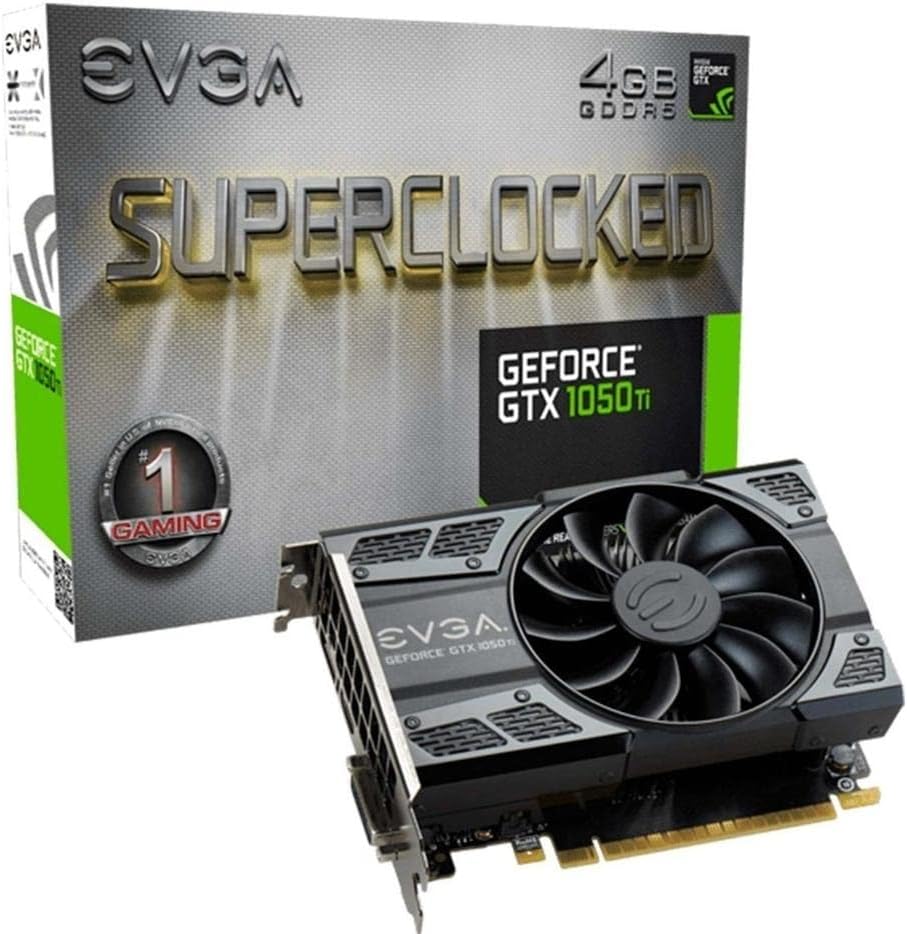
For this one model at this one size, yes. There are three things to know before relying on the EVGA GeForce GTX 1050 Ti FTW Gaming 4GB.
The CUDA toolkit has moved on. NVIDIA's CUDA 13.0 release notes list "Removed support for Maxwell, Pascal, and Volta GPUs, corresponding to compute capabilities earlier than Turing." The card still runs llama.cpp today. The 19.06 tok/s row in discussion #15013 is a June 2026 result. But prebuilt CUDA 13 binaries won't target it. You'll need a build against a CUDA 12.x toolkit, or llama.cpp's Vulkan backend, which doesn't depend on NVIDIA's compute-capability cut-offs.
There are no tensor cores. Compute capability 6.1 predates the low-precision matrix hardware that newer kernels are tuned for. The practical effect is prefill. The RTX 3060 in the same thread reaches 2,407.93 tok/s pp512 against the 1050 Ti's 266.70, a 9× gap on only a 3.2× bandwidth gap.
Power is its strength. The card is rated at 75 W (Wikipedia), so it draws everything through the PCIe slot and needs no auxiliary power connector. It drops into nearly any office tower.
What the Ryzen 5 5600G gives you that the card can't
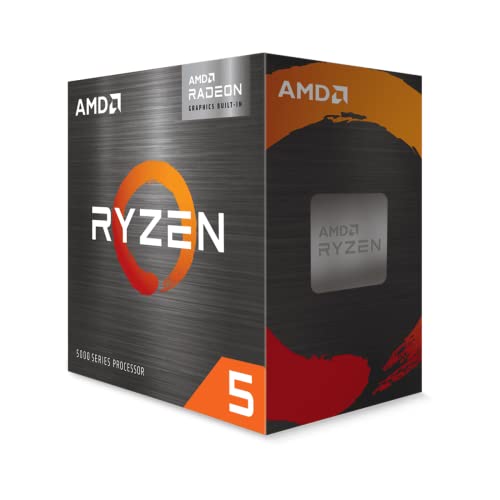
The AMD Ryzen 5 5600G puts six Zen 3 cores, twelve threads and a seven-CU Radeon iGPU in one 65 W package, per AMD. That setup has three advantages:
- Capacity. Any model that fits in RAM will run, and 8B, 14B and long-context 4B all fit in 32 GB.
- A free PCIe slot. Its x16 slot is empty, and a GPU can go in later without replacing anything. The 5600G's slot is PCIe 3.0 (AMD), which barely matters for inference. One RTX 3060 generated 55.02 tok/s on an x1 riser against 57.01 tok/s at x16 (gist).
- Display output. The APU drives the monitor itself, so a GPU added later keeps its full memory for models.
Compare the AMD Ryzen 5 2600. It's the AM4 chip many 1050 Ti owners are still running, and it has no integrated graphics at all (Wikipedia). On a 2600 box the discrete card is required, since the machine won't show a picture without it. That changes the whole question. If you own a 2600 and a 1050 Ti, you already have the faster option for Qwen3 4B, and swapping in a 5600G would buy capacity, not speed.
When to stop optimizing and buy 12 GB instead
The 4B tier has a hard ceiling. Once you want an 8B model, a long context, or both, neither part here is the answer. The next step is 12 GB of dedicated memory.
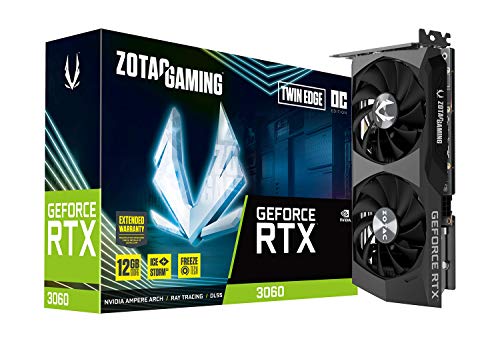
On an MSI Gaming GeForce RTX 3060 12GB or a ZOTAC Gaming RTX 3060 Twin Edge OC 12GB, Hardware Corner measures Qwen3 8B at 55.2 tok/s at 4k context and 31.9 tok/s at 32k. It measures Qwen3 14B at 31.2 tok/s at 4k. On the same 7B Q4_0 reference the 1050 Ti ran at 19.06 tok/s, the 3060 in discussion #15013 reaches 75.58 tok/s. Scaled the same way, that's about 116 tok/s on Qwen3 4B.
Buy the 12 GB variant specifically. NVIDIA also sold an 8 GB RTX 3060 on a 128-bit bus, per its family spec page, and it shares the name but not the capability. Look for "12G" or "12GB" in the listing title.
Perf-per-dollar and perf-per-watt
| Part | Est. Qwen3 4B gen | Rated power | tok/s per 100 W | Launch price | tok/s per $100 of launch price |
|---|---|---|---|---|---|
| GTX 1050 Ti 4GB | ~29 tok/s | 75 W | ~39 | $139 | ~21 |
| Ryzen 5 5600G | ~15 tok/s | 65 W TDP | ~23 | $259 | ~6 |
| RTX 3060 12GB | ~116 tok/s | 170 W | ~68 | $329 | ~35 |
Power ratings come from Wikipedia, AMD and NVIDIA. Launch prices come from Wikipedia and its Ryzen and RTX 30 lists.
The table has two caveats. First, both GPUs also need a host CPU drawing power, while the 5600G figure already includes one, so the card rows flatter the dGPUs slightly. Second, the 5600G's launch price buys a whole CPU, not an inference accelerator. If you'd buy an AM4 CPU anyway, choosing the 5600G adds nothing to the build cost.
Even allowing for both, the RTX 3060 is the most efficient of the three per watt, which isn't what its 170 W rating suggests. Efficiency is about finishing the work, not about drawing less power while doing it.
Common pitfalls
- Counting weights only. A 2.50 GB file on a 4.2 GB card doesn't leave 1.7 GB spare once the KV cache and runtime buffers load.
- Running the desktop on the 1050 Ti. A hardware-accelerated browser can hold hundreds of megabytes of VRAM. On a 2600 box you can't avoid this. On a 5600G box, plug the monitor into the motherboard.
- Single-channel RAM on the 5600G. One stick halves the 51.2 GB/s figure, and generation drops with it. Always install RAM in matched pairs.
- Assuming a clean load means a full fit. llama.cpp may quietly keep layers in system RAM. Check the reported offload count before trusting a speed number.
- Downloading a CUDA 13 build for the 1050 Ti. It won't target compute capability 6.1. Use a CUDA 12.x build or Vulkan.
When NOT to use either
If the job is summarizing long PDFs, running an agent with a large tool manifest, or anything needing 16k+ of context at interactive speed, neither part works. The 1050 Ti can't hold the context, and the 5600G holds it but prefills at tens of tokens per second. Skip both.
Verdict matrix
- Get (or keep) the GTX 1050 Ti if: you already own it, your prompts stay under about 4k tokens, and you want the fastest replies from Qwen3 4B at Q4_K_M. Expect about 29 tok/s and a few seconds to first token.
- Get the Ryzen 5 5600G if: you're building a new small AM4 box, want a silent always-on host with no discrete card, need long context more than speed, or plan to add a GPU later. Expect about 15 tok/s with no context ceiling in practice.
- Skip both and get a 12 GB card if: you want 8B-14B models, or 4B at 16k+ context at interactive speed. The RTX 3060 12GB runs Qwen3 8B at 55.2 tok/s (Hardware Corner).
The recommended pick
For a reader running Qwen3 4B as a chat assistant, the GTX 1050 Ti is the faster part: about twice the generation rate and roughly 8× the CPU prefill rate, as long as the conversation fits its 4 GB. What flips the verdict is context length. Once you routinely pass about 8k tokens, the card spills into system RAM and the 5600G's capacity matters more than the card's speed. If you own neither, don't buy the 1050 Ti in 2026. Buy the 5600G as the platform and add a 12 GB card when 4B stops being enough.
Bottom line
A 4B model is the one size where both of these cheap parts clear the bar. The 1050 Ti clears it faster, and the 5600G clears it with more room. Pick by the length of your prompts, not by spec sheet.
Related guides
- Best GPU for local LLMs under $400 (2026)
- Running local LLMs on the Ryzen 5 5600G iGPU
- Which LLMs fit an RTX 3060 12GB
- RTX 3060 12GB vs GTX 1050 Ti: what a 4GB card runs in 2026
- Qwen3 4B on a Raspberry Pi 4 8GB vs a Ryzen 5 5600G
- Dual-channel RAM and local LLM inference
Live price comparison
A GPU and an APU can't share a head-to-head comparison page, so here are the individual listings: the EVGA GTX 1050 Ti FTW 4GB, the AMD Ryzen 5 5600G and, for the upgrade path, the MSI RTX 3060 12GB. Hardware benchmark pages for the Ryzen 5 5600G and the RTX 3060 12GB collect the rest of the public numbers. Retailer prices were current at the last refresh and may vary, so confirm at checkout.
Citations and sources
- llama.cpp: Performance on NVIDIA CUDA, discussion #15013 (accessed 2026-09-18)
- Qwen: Qwen3-4B config.json (accessed 2026-09-18)
- Qwen: Qwen3-4B-GGUF (accessed 2026-09-18)
- Unsloth: Qwen3-4B-GGUF quant set (accessed 2026-09-18)
- Wikipedia: GeForce 10 series (accessed 2026-09-18)
- Wikipedia: GeForce 30 series (accessed 2026-09-18)
- Wikipedia: List of AMD Ryzen processors (accessed 2026-09-18)
- AMD: Ryzen 5 5600G specifications (accessed 2026-09-18)
- NVIDIA: GeForce RTX 3060 family specifications (accessed 2026-09-18)
- NVIDIA: CUDA Toolkit release notes (accessed 2026-09-18)
- TechHara: llama.cpp benchmark, CPU vs iGPU (accessed 2026-09-18)
- ROCm issue #2774: APU support for 5600G/5700G (accessed 2026-09-18)
- amd-vega-rocm-vulkan-llm-toolkit: Ryzen 7 5700G benchmarks (accessed 2026-09-18)
- Hardware Corner: RTX 3060 12GB LLM benchmarks (accessed 2026-09-18)
- the-crypt-keeper: RTX 3060 x1 vs x16 results (accessed 2026-09-18)
This piece is editorial synthesis based on publicly available information. No independent first-party benchmarking is reported.