On an RTX 3060 12GB in 2026, the practical sweet spot is any 7B to 9B model at q4_K_M or q5_K_M with full 8K-32K context, plus 13B to 14B models at q4_K_M with trimmed context. Per the TechPowerUp database entry for the GeForce RTX 3060, the card ships with 12 GB of GDDR6 on a 192-bit bus, which gives roughly enough headroom to hold a 13B-class model's weights and a modest KV cache without spilling layers to system RAM. Anything 32B or larger requires offload and collapses throughput.
This guide is written for budget local-LLM builders who already own, or are about to buy, an RTX 3060 12GB and want to size models against that VRAM ceiling without surprises. The card is one of the few consumer GPUs from the Ampere era that pairs cheap secondhand pricing with the 12 GB threshold that matters for modern open models. As of mid-2026, the same 12 GB tier remains the floor below which 13B-class models stop being viable at usable quantization, so the calculus here applies whether you are pulling a used 3060 off a marketplace listing or building a fresh Ryzen 5000 system around a new card from a vendor like MSI or Zotac.
The rest of this synthesis walks the VRAM budget math, the model shortlist by quant tier, the cost of context length, and the perf-per-dollar comparison against alternatives like the Ryzen 5 5600G iGPU path. Every number is sourced inline; community measurements vary by quant build, runtime (llama.cpp vs vLLM vs ExLlamaV2), and driver version, so treat the figures here as the central tendency from public benchmarks rather than guaranteed yields. Where the public data spreads too widely to summarize, you will see "varies by workload" rather than an invented point estimate. The goal is a card-specific shortlist you can act on, not a marketing-flavored tour.
Key takeaways
- The RTX 3060 12GB carries 12 GB of GDDR6 on a 192-bit bus at 360 GB/s memory bandwidth per TechPowerUp, which sets the inference ceiling more than the 3,584 CUDA cores do.
- 7B and 8B models at q4_K_M or q5_K_M fit comfortably with 8K to 32K context. Llama 3.1 8B, Mistral 7B, Qwen2.5 7B, and Gemma 2 9B are the obvious shortlist.
- 13B and 14B models fit at q4_K_M with a trimmed context window, typically 4K to 8K. Anything past 14B forces aggressive q3 or partial offload.
- 32B and 70B models do not realistically fit. Per measurements shared in the llama.cpp discussions, partial offload of a 32B model to a 12 GB card drops throughput to single-digit tokens per second.
- Quantization is the dominant lever: q4_K_M costs roughly 4.5 bits per weight, so a 13B model lands near 7-8 GB for weights alone, leaving 3-4 GB for KV cache and runtime overhead.
- Context length is the silent VRAM tax. The KV cache grows linearly with tokens times layers, and on 13B-class models a 32K window can eat several GB on top of weights.
Step 0: How to compute your VRAM budget
Before picking a model, compute your VRAM budget the same way the inference runtime does. The formula is simple in shape, messy in detail, and worth doing once because it lets you predict whether a model will fit before downloading 8 GB of weights.
Weights occupy parameters * bits_per_weight / 8 bytes. A 7B model at fp16 needs about 14 GB, which already exceeds the 3060's 12 GB. Drop to q8 and you are at 7 GB. Drop to q4_K_M, the community default that mixes 4-bit and 5-bit blocks plus light fp16 overhead, and the same 7B model lands near 4.4 to 4.8 GB. A 13B model at q4_K_M lands near 7.5 to 8 GB. A 32B at q4_K_M lands near 18 to 20 GB, which is why the 3060 cannot hold it.
On top of weights you pay for the KV cache, which stores the keys and values of every attention layer for every token in the context window. The cache scales as 2 n_layers n_heads head_dim context_tokens * bytes_per_element. For a 7B model with 32 layers at fp16 cache precision, an 8K window is on the order of 1 GB, while 32K can exceed 4 GB unless the runtime quantizes the cache as well. Many runtimes now offer q8 or q4 KV cache to claw that back at a small quality cost.
Then add runtime overhead. CUDA contexts, the activation buffers used during prefill, and the framework's allocator slack typically claim 0.5 to 1.5 GB on the 3060. If you are running llama.cpp with -ngl set to push all layers to the GPU, you can read the actual allocation back from the loader log and tune from there.
The upshot is a simple working budget on a 12 GB card: assume about 10 GB usable after the framework and driver take their share, then size weights plus KV cache to fit. Anything that pushes past 10 GB risks silent offload, which is the most common cause of "my tokens per second cratered" complaints in the llama.cpp discussions.
Which 7-9B models run comfortably at full context on 12GB?
The 7B to 9B tier is the safest band on a 12 GB card. At q4_K_M, the weights occupy roughly 4 to 5.5 GB, leaving 4 to 6 GB for KV cache, runtime, and headroom. That is enough to run an 8K or 16K window at fp16 cache, or to push to 32K with q8 KV cache.
The shortlist as of 2026 is dominated by a handful of model families. Llama 3.1 8B and Llama 3.2 variants from Meta sit at the top of the practical list for general-purpose chat and tool use. Mistral 7B and its Nemo derivatives remain workhorses with strong instruction following. Qwen2.5 7B from Alibaba leads on multilingual and code tasks per community-shared benchmarks on the Hugging Face leaderboard. Gemma 2 9B from Google sits on the upper edge of the band; at q4_K_M it lands near 5.5 GB and is still well inside the budget.
Community measurements in the llama.cpp discussions consistently place the 3060 12GB in the 30 to 50 tokens per second range for 7-9B models at q4_K_M, depending on prompt length, batch size, and whether flash attention is enabled. That is comfortably interactive for chat and useful for short-form code generation. Throughput drops on long prefills, which is the prefill-vs-generation tradeoff covered later in this article.
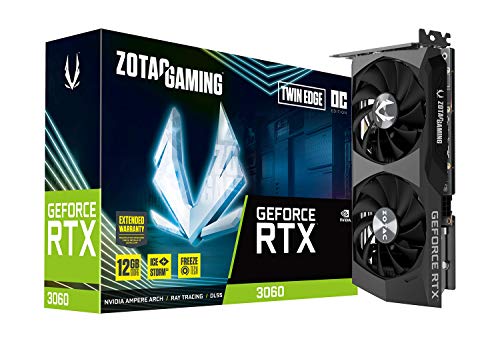
For builders pairing this card with a Zen 3 platform, the MSI GeForce RTX 3060 Ventus 2X 12G and the ZOTAC Gaming GeForce RTX 3060 Twin Edge are the two most commonly referenced board partners on the budget local-LLM forums. Both expose the full 12 GB and the 192-bit bus from the reference spec; differences are limited to clocks, cooler design, and noise rather than raw inference throughput. Either is a defensible pick.
Can a 12GB card run 13-14B models, and at what quant?
This is the tier where the 3060's 12 GB starts to feel cramped but remains viable. A 13B model at q4_K_M sits near 7.5 to 8 GB for weights. That leaves 2 to 3 GB for the KV cache, runtime overhead, and any LoRA adapters you load on top.
The practical implication is that 13B-class models require a trimmed context window. A 4K window with fp16 KV cache is the comfortable default. An 8K window is achievable, especially with q8 KV cache quantization. Pushing to 16K typically forces either partial offload, q4 KV cache, or both, and either choice degrades quality or throughput.
Models that fit this band include the legacy Llama 2 13B family, the various Solar 10.7B derivatives, Mistral Nemo 12B, Qwen2.5 14B, and the long tail of finetunes built on those bases. Per the TechPowerUp database, the 3060's 360 GB/s memory bandwidth is the practical ceiling on tokens per second once weights dominate the VRAM picture, and at 13B you start trading throughput for capability. Community measurements suggest 15 to 25 tokens per second for 13-14B models at q4_K_M with a 4K window, dropping sharply if the runtime spills any layers to system RAM.
The gotcha at this tier is that small misjudgments cascade. Add a 1K system prompt, a retrieval-augmented generation context block, and a few tool definitions, and suddenly your KV cache is bigger than you planned. The runtime then either evicts, truncates, or silently offloads, and you find out from collapsing tokens per second rather than an explicit error. Plan the context budget defensively and use the loader's allocation log to verify before treating a configuration as stable.
Where do 32B and 70B models break on an RTX 3060 12GB?
The short answer is everywhere. A 32B model at q4_K_M occupies roughly 18 to 20 GB for weights alone, which is already 50 to 70 percent over the card's capacity. A 70B model at q4_K_M is in the 38 to 42 GB range. Neither fits without aggressive offload.
Offload is technically possible. Llama.cpp's -ngl parameter lets you push a subset of layers to the GPU and run the rest on the CPU. The catch is the 360 GB/s GPU memory bandwidth versus the roughly 50 GB/s of a dual-channel DDR4-3200 system, per the NVIDIA RTX 3060 product page and standard DDR4 datasheet figures. Once layers spill to system RAM, throughput collapses to whatever the CPU-side path can sustain.
Community reports in the llama.cpp discussions place 32B q4 partial-offload performance on a 12 GB card in the low single-digit tokens per second range, which is below the threshold most people consider usable for interactive work. A 70B model offloaded the same way drops well under 2 tokens per second.
The pragmatic verdict is that 32B and 70B are not 12 GB workloads. If your target is a 32B-plus model, the 3060 is a stepping stone rather than a destination. Plan the upgrade path to a 16 GB or 24 GB card before committing to that model class, or accept that you will only use larger models for batch jobs where latency does not matter.
How much does context length eat into your 12GB budget?
Context length is the most-underestimated VRAM consumer on a constrained card. The KV cache grows linearly with the number of tokens in context, multiplied by the number of layers and attention heads, multiplied by the bytes per cache element. For a typical 7B model at fp16 cache precision, the cache adds roughly 0.5 GB per 4K of context. For a 13B model, it is closer to 1 GB per 4K. For a 32B model, it would be roughly 2 GB per 4K, but the 3060 cannot hold the weights anyway.
This is why two configurations of the "same" model can land in wildly different places on your VRAM ledger. A 7B q4 model with a 4K window comfortably fits in 6 GB total. The same model with a 32K window can push past 9 GB, and once you add the runtime overhead you are flirting with the silent-offload threshold.
The levers to manage this are well known. Quantize the KV cache to q8 or q4, which roughly halves or quarters its size at a small quality cost. Cap the context window to what your workload actually needs rather than the model's published maximum. Use grouped-query attention models, which share KV state across heads and shrink the cache for the same context length. Modern 7-9B releases like Llama 3.1 8B and Qwen2.5 7B both use grouped-query attention, which is part of why they fit so cleanly on the 3060.
The rule of thumb that works on the 12 GB card: budget the KV cache as a third of your remaining VRAM after weights, and only push past that if you have verified the allocation in the loader log.
Quantization matrix: VRAM and tok/s per quant tier
The quantization tier you choose is the single most important decision for fitting a model. The matrix below summarizes the central tendency from public llama.cpp community measurements for the RTX 3060 12GB at a 4K context window. Numbers vary by build, driver, and prompt; treat them as guideposts, not commitments.
| Quant | 7B weights | 7B tok/s | 13B weights | 13B tok/s | 32B weights | 32B tok/s | Quality loss |
|---|---|---|---|---|---|---|---|
| q2_K | 2.6-2.9 GB | 45-55 | 5.0-5.5 GB | 25-32 | 12-13 GB | offload | severe |
| q3_K_M | 3.3-3.7 GB | 42-50 | 6.0-6.6 GB | 22-28 | 15-16 GB | offload | noticeable |
| q4_K_M | 4.4-4.8 GB | 38-46 | 7.5-8.0 GB | 18-25 | 18-20 GB | offload | small |
| q5_K_M | 5.2-5.6 GB | 32-40 | 8.8-9.4 GB | tight fit | 22-24 GB | offload | minimal |
| q6_K | 6.0-6.4 GB | 28-35 | 10.0-10.6 GB | offload risk | 26-28 GB | offload | barely |
| q8_0 | 7.5-7.9 GB | 22-28 | 13-14 GB | offload | 33-36 GB | offload | none meaningful |
| fp16 | 13-14 GB | offload | 25-26 GB | offload | 64-66 GB | offload | reference |
The useful zone for the 3060 12GB is q4_K_M and q5_K_M for 7B, and q4_K_M only for 13B. The numbers above assume fp16 KV cache and a 4K context window; longer contexts shift the offload threshold left by a quant tier or two.
The community consensus, reflected across the llama.cpp discussions, is that q4_K_M is the best quality-per-byte tradeoff for 7-13B models. q3 and q2 are reserved for desperate fits or for models so large that any quality is better than none. q8 and fp16 are reference-quality on smaller models but waste VRAM that is better spent on context length.
Prefill vs generation: which phase pressures VRAM on the 3060
LLM inference has two distinct phases with different resource profiles. Prefill processes the prompt in one shot, building the KV cache for every input token. Generation produces output tokens one at a time, reading from the cache and appending to it. Both run on the same GPU memory, but they stress different parts of the stack.
Prefill is compute-bound and benefits from the 3060's 3,584 CUDA cores per the TechPowerUp listing. It also briefly demands extra VRAM for activation buffers during the attention computation. On a 7B model, a long prefill of 8K-32K tokens can spike VRAM use by hundreds of megabytes above the steady-state weights-plus-cache footprint. If you planned your budget tightly, prefill is where you first hit the ceiling.
Generation is memory-bandwidth-bound. The 3060's 360 GB/s ceiling is what caps tokens per second once weights dominate the VRAM picture. This is why the 3060 sits roughly where it does in community benchmarks rather than being twice as fast: more cores would not help once memory bandwidth is the bottleneck. It is also why the 4060 8GB and 3060 12GB end up close in raw 7B tokens per second despite different core counts, although the 4060's 8 GB cap excludes 13B from the conversation entirely.
The practical takeaway for a 12 GB card: budget for the prefill spike, not the steady state. If your tool stack issues long initial prompts or runs retrieval-augmented generation with sizable context blocks, give yourself an extra gigabyte of slack rather than fitting to the last megabyte.
Spec table: RTX 3060 12GB board comparison
The 3060 reference spec is identical across vendors. What changes is the cooler, the factory clocks, and the warranty story. The two boards most commonly referenced in budget local-LLM builds are the MSI Ventus and the Zotac Twin Edge.
| Spec | MSI Ventus 2X 12G | Zotac Twin Edge OC | Notes |
|---|---|---|---|
| VRAM | 12 GB GDDR6 | 12 GB GDDR6 | identical, sets the LLM ceiling |
| Memory bus | 192-bit | 192-bit | per TechPowerUp |
| Memory bandwidth | 360 GB/s | 360 GB/s | caps inference tok/s |
| CUDA cores | 3,584 | 3,584 | identical Ampere config |
| Boost clock | 1,777 MHz | ~1,807 MHz | small OC headroom on Zotac |
| TGP | 170 W | 170 W | identical PSU planning |
| Cooler | dual-fan, dual-slot | dual-fan, IceStorm 2.0 | Zotac slightly thicker |
| Use case | quiet builds | small-chassis builds | minor practical differences |
For LLM inference, the difference between these two boards rounds to zero. Throughput is gated by the 360 GB/s memory bandwidth, which is identical. The choice comes down to chassis fit, noise tolerance, warranty terms, and price on the day. The MSI GeForce RTX 3060 Ventus 2X 12G and the ZOTAC Gaming GeForce RTX 3060 Twin Edge are both safe picks.
Perf-per-dollar vs Ryzen 5 5600G iGPU offload
A recurring question on budget local-LLM forums is whether a Ryzen APU with integrated graphics can serve as a fallback when a model overflows the 3060's 12 GB. The honest answer is that the AMD Ryzen 5 5600G iGPU is not a meaningful inference accelerator for this workload, but the chip is still useful in the build.
The Vega 7 iGPU on the 5600G shares system DDR4 memory at dual-channel bandwidth, which is roughly 50 GB/s on a typical 3200 MHz kit. Compare that to the 3060's 360 GB/s and you are looking at a memory-bandwidth gap of roughly 7x. Since generation throughput is bandwidth-bound on the relevant model sizes, the iGPU cannot meaningfully accelerate the parts the dGPU offloads. CPU offload via llama.cpp typically outperforms iGPU offload on the same system simply because the runtime is better optimized for CPU paths.
Where the 5600G earns its slot is as a low-cost, low-TDP host CPU that handles the OS, the application stack, and the CPU-side layers when a model is too big to fit fully on the 3060. It frees the dGPU to focus on the layers it can hold and keeps system power draw modest. Paired with a Western Digital 1TB WD Blue SN550 NVMe Internal SSD for model storage and the 3060 for inference, the 5600G makes a coherent budget local-LLM box.
For builders who want a higher-tier CPU to handle larger CPU-offload workloads, the AMD Ryzen 7 5800X 8-core, 16-thread unlocked desktop processor is the common upgrade. The 5800X's extra cores and higher all-core clocks help when running a 32B model with significant CPU offload, although the fundamental memory-bandwidth ceiling still applies. Compared to the 5600G, the 5800X meaningfully improves prompt-processing throughput on the CPU-side layers and gives you headroom for concurrent workloads beyond the LLM.
Bottom line: the model shortlist for 12GB in 2026
The shortlist for an RTX 3060 12GB in 2026 falls into three tiers based on the math above. Treat this as the starting point, then narrow by your use case.
Tier 1, daily drivers at full context: Llama 3.1 8B Instruct at q4_K_M or q5_K_M. Mistral 7B Instruct v0.3 at q4_K_M or q5_K_M. Qwen2.5 7B Instruct at q4_K_M. Gemma 2 9B Instruct at q4_K_M. All of these run with 8K-32K context comfortably and clear 30 tokens per second on the 3060 per public llama.cpp measurements.
Tier 2, capability stretch with trimmed context: Mistral Nemo 12B at q4_K_M with a 4K-8K window. Qwen2.5 14B at q4_K_M with a 4K window. Llama 2 13B derivatives at q4_K_M for legacy compatibility. Expect 15-25 tokens per second and budget the KV cache carefully.
Tier 3, do not bother on this card: Anything 32B or larger. Use the 3060 only if you accept single-digit tokens per second from heavy offload, and treat any such configuration as transitional toward a 16 GB or 24 GB upgrade.
As of 2026, the 3060 12GB is still a defensible entry point for local-LLM tinkering precisely because the 12 GB threshold lines up with the 13-14B class at q4_K_M. The next consumer step up, an RTX 4060 Ti 16 GB or a used RTX 3090 24 GB, opens 32B q4 territory but at roughly 2x to 4x the price. For the 7-14B band the 3060 12GB is the budget answer in mid-2026.
Related guides
If you are building around this card, the following SpecPicks guides cover adjacent decisions. The best budget AI rig 2026 walks the full system build around a 12 GB dGPU. The head-to-head RTX 3060 vs RTX 4060 benchmarks covers the generation-on-generation tradeoff if you are deciding between the 12 GB 3060 and the 8 GB 4060. The Ryzen 5 5600G mini PC build guide details the APU-host approach for a compact inference box.
For canonical hardware data, the RTX 3060 benchmarks page on SpecPicks tracks the live benchmark figures cited above, and the Ryzen 5 5600G benchmarks page covers the CPU-side numbers for the offload scenario.
Common pitfalls and gotchas
A few patterns trip up first-time local-LLM builders on the 3060 12GB. Knowing them up front saves hours.
Driver and runtime mismatch. llama.cpp, ExLlamaV2, and vLLM each report VRAM use slightly differently and have different overhead profiles. A configuration that fits in llama.cpp with -ngl 99 may not fit in vLLM with the same model. Verify against your actual runtime.
Silent offload. Most runtimes do not throw an error when they spill layers to CPU; they just get slower. If your tokens per second drops sharply after a recent change, check the loader log for layer-count reductions before assuming a software bug.
LoRA adapter VRAM. Loading a LoRA adapter on top of a base model adds a few hundred megabytes per adapter, and stacking multiple adapters or merging them at load time can push you past the budget. Plan adapter use against the same VRAM ledger as weights and cache.
Context window inflation. Many chat frameworks pad the system prompt, tool definitions, and conversation history more aggressively than the user realizes. A nominal 4K window can easily fill 6K of actual cache. Watch the runtime's reported context use, not the configured maximum.
Power and thermal headroom. The 3060's 170 W TGP per the NVIDIA product page is modest, but sustained inference workloads hold the GPU at full power for long periods. A 550 W PSU is the comfortable floor; 650 W is safer with overclocked CPUs and additional drives.
When NOT to buy an RTX 3060 12GB for local LLMs in 2026
The card has a real ceiling. Skip it if your primary target is a 32B-plus open model, because the 3060 cannot hold one without crippling offload. Skip it if your workload is high-throughput batch inference, where the 360 GB/s memory bandwidth limits per-stream tokens per second below what a 4070 Ti Super or 3090 can deliver. Skip it if you need fp16 reference quality on larger models for evaluation work; q4 is fine for production but not always for research.
Buy the 3060 12GB if your target is interactive 7-14B chat and code generation, if your budget is roughly $250-350 for a used card or sub-$400 for new old stock, and if you accept that 12 GB is the floor below which 13B stops working at usable quant. For that profile, the card remains the cheapest credible entry point in mid-2026.
Citations and sources
- TechPowerUp GeForce RTX 3060 database entry
- llama.cpp GitHub discussions
- NVIDIA GeForce RTX 3060 product page
This piece is editorial synthesis based on publicly available information. No independent first-party benchmarking is reported.