When a household-name company discloses a breach, the instinct for anyone running a rack of used enterprise gear in a closet is to wonder: if a security team with a budget and a SOC couldn't stop it, what chance does my homelab have? The comparison feels ominous, but it's the wrong comparison. Enterprises and homelabs face different threat models, and most of what makes big breaches possible — internet-facing attack surface at scale, thousands of employee credentials, complex third-party supply chains — simply doesn't apply to a NAS and a couple of mini PCs behind a home router.
That doesn't mean homelabs are safe by default. It means the practical risks are narrower and, encouragingly, cheaper to close than most people assume.
Why Big-Company Breaches Don't Mean Your Homelab Is Doomed
Large organizations are attractive targets precisely because of scale: a single credential-stuffing success or a phishing email that lands can pivot into a network with thousands of endpoints and high-value data. Homelabs don't have that scale, and they don't have the same incentive structure for attackers — there's little payoff in breaching one hobbyist's Plex server compared to a company holding customer payment data.
What homelabs do have in common with enterprises is exposure to automated, opportunistic scanning. Security researchers who study internet-wide exposure — using tools like Shodan to index publicly reachable devices — routinely find home routers, NAS boxes, and IoT cameras answering on default ports with factory-default or weak credentials. That's the actual threat model for most homelabs: not a targeted enterprise-style intrusion, but an automated scanner finding a door left unlocked. CISA's home network security guidance is written for exactly this scenario, and its recommendations — unique credentials, current firmware, segmented networks — map directly onto homelab practice.
The reassuring part: closing that gap doesn't require an enterprise security budget. It requires the same handful of habits enterprise security teams already rely on, scaled down.
Homelab Threat Model vs Enterprise Threat Model
| Factor | Typical enterprise | Typical homelab |
|---|---|---|
| Primary attacker motivation | Data theft, ransomware payout, IP theft | Opportunistic — bot scans, botnet recruitment |
| Attack surface | Thousands of endpoints, third-party vendors, employee accounts | Handful of self-hosted services, one household |
| Common entry point | Phishing, stolen credentials, unpatched edge devices | Exposed admin panel, default password, port-forwarded service |
| Consequence of compromise | Regulatory, financial, reputational | Data loss, device hijack, lateral move to other home devices |
| Defensive budget | Dedicated security team, SOC, EDR licensing | A managed switch, a firewall rule, and discipline |
The takeaway isn't that homelabs are invulnerable — it's that the risk is proportional to what's actually exposed, and most of that exposure is self-inflicted and fixable.
5 Enterprise Practices Worth Stealing for Your Homelab
1. VLAN segmentation
Enterprise networks isolate systems by trust level so a compromise in one segment can't freely reach another. A managed or smart switch lets you replicate this at home: put IoT devices, guest Wi-Fi, and management interfaces (hypervisor, NAS admin, switch config) on separate VLANs from your general LAN. If a cheap smart plug gets compromised, it shouldn't have a network path to your NAS.
2. A real firewall with stateful inspection
Most consumer routers do basic NAT and call it a firewall. A dedicated firewall — whether a standalone appliance or a router running OPNsense/pfSense — gives you stateful inspection, per-VLAN rules, and visibility into what's actually trying to reach your network. SpecPicks' 2026 homelab stack guide covers a full OPNsense + Proxmox + TrueNAS build if you want the enterprise-adjacent version of this.
3. TPM 2.0 and secure boot
Every current Ryzen and Intel Core desktop platform includes a TPM 2.0 implementation, per the Trusted Computing Group's TPM overview — the same standard enterprise fleets use for hardware-backed disk encryption and boot integrity checks. Enabling BitLocker, LUKS with TPM unlock, or your OS's equivalent turns a stolen or discarded drive from a data-loss event into a non-event.
4. Patch management discipline
Enterprises run scheduled patch cycles because unpatched software is the single most exploited category of vulnerability. A homelab doesn't need a change-management board, but it does need a rule: internet-facing services (router firmware, NAS OS, reverse proxy) get patched within days of a release, not months.
5. Credential hygiene and MFA
Unique, generated passwords per service plus MFA on anything reachable from outside your LAN closes the majority of opportunistic attack paths. This is the cheapest control on the list and the one most homelabs skip.
AMD vs Intel: Baseline Security Features in Current Homelab Hardware
Most of the "hardware security" conversation for homelabs comes down to what ships in the platform by default, since few hobbyists are buying dedicated security appliances.
| Feature | AMD Ryzen (current desktop) | Intel Core (current desktop / vPro) |
|---|---|---|
| TPM 2.0 | Yes, via AMD's fTPM (firmware TPM) | Yes, via Intel PTT or discrete TPM |
| Secure boot | Supported via UEFI | Supported via UEFI |
| Remote attestation / out-of-band management | Not standard on consumer Ryzen | Available on Intel vPro, requires active management license |
| Typical homelab relevance | Covers disk encryption + boot integrity | Same baseline; vPro's fleet-management features mostly matter for multi-machine enterprise deployments |
For a single-node or few-node homelab, the practical difference between AMD and Intel security posture is small — both platforms cover the fundamentals via Intel vPro's overview and AMD's security technology overview. SpecPicks' Raspberry Pi 4 vs Ryzen 5 5600G homelab comparison and Raspberry Pi 4 vs a used mini PC breakdown both cover platform tradeoffs if the CPU choice itself is still open.
The Vulnerabilities That Actually Get Homelabs Popped
The realistic list is short, and none of it requires enterprise tooling to fix:
- Unpatched NAS and router firmware. Consumer NAS vendors ship security patches regularly; the exposure comes from devices left on old firmware for months or years, particularly ones reachable from the open internet.
- Default or reused credentials. Any admin panel, database, or dashboard left on its factory login is effectively public.
- Direct port-forwarding instead of a VPN. Forwarding a service's port straight to the internet puts its authentication layer in the line of fire. A WireGuard or Tailscale tunnel keeps that surface closed to everyone except your own devices.
- No network segmentation. Without VLANs, a single compromised IoT device or guest connection has a direct path to everything else on the LAN — NAS, hypervisor, backups included.
Security researchers scanning the open internet consistently find these same patterns on exposed consumer and prosumer devices — it's a known, documented category of risk, not a homelab-specific quirk, per the UK NCSC's device security guidance.
A Practical Starting Point
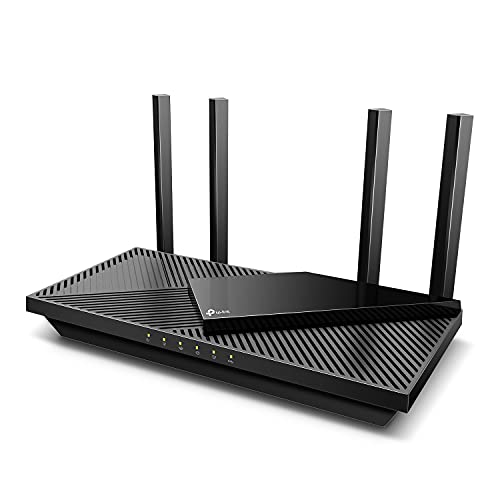
Before reaching for enterprise-grade appliances, the highest-leverage upgrade for most homelabs is simply moving off a stock ISP router onto something that supports VLANs, guest network isolation, and a real firewall ruleset. A dual-band Wi-Fi 6 router like the TP-Link Archer AX55 AX3000 ($74.99 at last check, price may vary) is a reasonable entry point for segmenting IoT and guest traffic away from lab gear without jumping straight to a full pfSense/OPNsense box — useful if you're not ready for the setup covered in the 2026 OPNsense + Proxmox + TrueNAS stack guide.
If you're mid-buildout and reconsidering what hardware is actually worth keeping, SpecPicks' homelab changes you wish you'd made sooner and what a downsized homelab is worth are useful companion reads — segmentation and patch discipline matter more than raw compute, and it's common to over-buy GPU or CPU horsepower before locking down the network layer. If a GPU is part of the plan (local AI inference, transcoding), the RTX 5090 vs RX 9070 XT and RTX 5090 vs RTX 3090 comparisons cover current options.
The Bottom Line
Big-company breaches are frightening because of scale, not because enterprise security is inherently weaker than what a homelab can achieve on the fundamentals. A homelab with VLAN segmentation, a real firewall, TPM-backed disk encryption, current firmware, and unique credentials with MFA is already ahead of the vast majority of internet-exposed consumer devices — which is where most opportunistic attacks actually originate. The gap isn't budget. It's whether those basics are actually turned on.
Citations and sources
- CISA — Home Network Security
- IBM — Cost of a Data Breach Report
- Trusted Computing Group — TPM Summary
- Intel vPro Platform Overview
- AMD Security Technologies Overview
- Shodan — Internet-connected device search
- UK National Cyber Security Centre — Device Security Guidance
This piece is editorial synthesis based on publicly available information. No independent first-party benchmarking is reported.