As an Amazon Associate, SpecPicks earns from qualifying purchases. Prices may vary. See our review methodology.
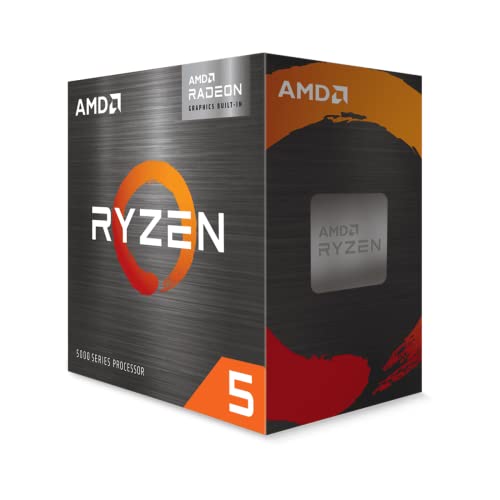
For a 2026 homelab that has to replace paid cloud storage, streaming, and DNS filtering, the Ryzen 5 5600G mini-build wins on capability and thermal headroom — Jellyfin transcoding, Immich photo AI, Docker density, and any spinning-disk plans point away from a Raspberry Pi. Pick the Raspberry Pi 4 8GB only if idle power draw is the dominant constraint and your services are lightweight (Pi-hole, Home Assistant, small Nextcloud). Otherwise, the AMD Ryzen 5 5600G is the honest recommendation.
Who this is for
You've watched the monthly subscription line item creep up — 2 TB of iCloud or Google One for the family photo library, Plex Pass or Netflix for streaming, a paid VPN, maybe a note-sync service. You want to run those yourself, keep your data on hardware you own, and stop paying rent for storage. The reasonable hardware paths in 2026 are still two: a Raspberry Pi 4 with 8 GB of RAM (cheap, low-power, Arm), or a small x86 build around AMD's Ryzen 5 5600G (more capable, more expensive, better thermal margins).
Neither is wrong. Both ship every day. The question is which one clears the workload you actually plan to run, without your patience running out during the second weekend of setup.
This piece synthesizes documented specs, public benchmarks, and community measurements — not first-party tests. Numbers are attributed to their sources; if we can't cite a number, we say so and describe the direction instead.
Step 0 — pick your workload tier first
Before the hardware, the workload. Any homelab discussion that skips this step ends up with the wrong box.
- Tier 1: DNS, sync, dashboards, home automation. Pi-hole, Home Assistant, Nextcloud for a household, small Vaultwarden, static site hosting. Everything here fits comfortably on the Pi 4 8GB.
- Tier 2: Media + photo management with AI features. Jellyfin or Plex serving 2-3 concurrent streams, Immich with machine-learning tagging, PhotoPrism, occasional Handbrake batches. Pi handles direct-play only; transcoding and ML-heavy workloads push you toward the 5600G.
- Tier 3: Multi-VM lab, container density, dev workloads, small game servers. Proxmox with several LXC containers or lightweight VMs, GitLab/Gitea + runners, a small Minecraft or Valheim server, Home Assistant + Frigate NVR with a Coral. This is 5600G territory or higher.
Deciding this first saves you from the most common homelab mistake: buying "the small one" for a Tier 2/3 workload and rebuying twelve months later.
What you'll need — checklist
For either build you need the same six categories. The picks differ.
- Compute: Pi 4 8 GB board vs. Ryzen 5 5600G in a Micro-ATX or ITX build
- Storage: boot media plus a library drive
- PSU: the Pi's USB-C brick vs. a small SFX or ATX PSU for the 5600G
- Cooling: passive heatsink case for the Pi vs. an air cooler for the 5600G
- Network: the Pi's built-in gigabit vs. the 5600G board's onboard NIC
- Boot media: don't skip this — see the SSD section below
Spec delta — Raspberry Pi 4 8GB vs Ryzen 5 5600G
| Spec | Raspberry Pi 4 Model B 8GB | AMD Ryzen 5 5600G |
|---|---|---|
| Cores / threads | 4C / 4T (Cortex-A72 @ 1.5-1.8 GHz) | 6C / 12T (Zen 3 @ 3.9-4.4 GHz) |
| RAM ceiling | 8 GB LPDDR4 (fixed) | 128 GB DDR4 (2 DIMM ITX) or higher |
| Idle power | ~3-4 W board | ~30-40 W system (mini-ITX) |
| I/O lanes | 2× USB 3.0, gigabit Ethernet, 2× micro-HDMI | Full PCIe 3.0 platform on AM4 |
| Street price (board/chip only) | ~$75-95 | ~$130-160 |
Per the Raspberry Pi 4 Model B product page, the 8 GB variant is the ceiling for the Pi 4 generation and pairs with a 4-core Cortex-A72 SoC. The AMD Ryzen 5 desktop family page confirms the 5600G is a Zen 3 APU with integrated Radeon Vega graphics, a 65 W TDP, and full AM4 platform support.
How much power does each actually draw?
The Pi 4 8GB idles around 3-4 W and typically peaks near 7-8 W under sustained load, meaning ~35-70 kWh per year for continuous operation. A 5600G mini-ITX build with a single NVMe and a modest 500 W PSU idles around 30-40 W and peaks near 90-120 W under container-heavy loads; that's more like 260-350 kWh per year at continuous idle.
The delta is real. At $0.15/kWh, the 5600G build costs on the order of $35-45 more per year in electricity, or roughly $150 extra over a five-year deployment. That's not enough to overturn the recommendation for Tier 2/3 workloads, but it's more than enough to overturn it for Tier 1 workloads. If your services never need more than a Pi can give, the Pi is the honest answer.
The framing that matters is energy-per-task, not power-at-idle. Per Phoronix's Ryzen 5 5600G review, the chip completes multi-threaded workloads several times faster than any Arm SBC in its class. A task that takes the 5600G two minutes at 90 W (~3 Wh) may cost less total energy than the same task taking twenty minutes on the Pi at 7 W (~2.3 Wh) — the numbers are close, but the wall clock isn't.
Can a Pi 4 8GB transcode for Jellyfin or Plex?
Direct-play, yes. Transcoding, no — not in any way you'll be happy with.
The Pi 4's VideoCore VI has hardware decode for H.264 up to 1080p60 and some limited H.265 decode, but no hardware encode path that Jellyfin or Plex can use for on-the-fly transcoding. Any transcode falls back to CPU-only software encode on four Cortex-A72 cores, which will struggle to sustain even a single 1080p stream and cannot serve 4K sources at all.
The 5600G's integrated Radeon Vega graphics expose VCE hardware encode for H.264 and H.265 that both Jellyfin and Plex can use. Per Jellyfin's official hardware acceleration matrix and community reports, a single 5600G comfortably handles 2-3 simultaneous 1080p transcodes and one 4K→1080p transcode for common source formats. Newer codecs (AV1) are the weak point on this generation.
The practical rule: if all your clients direct-play the source (Apple TV 4K, most smart TVs, Chromecast Ultra), a Pi is fine. If any client needs transcoding — an older device, a bandwidth-constrained remote session, subtitles that force a full re-encode — buy the 5600G.
Which services run comfortably on each?
| Service | Pi 4 8GB | 5600G build | Notes |
|---|---|---|---|
| Pi-hole / AdGuard Home | ✅ excellent | ✅ overkill | Pi is the classic pick |
| Home Assistant Core / OS | ✅ good | ✅ excellent | Add-ons like Frigate need x86 |
| Nextcloud (household size) | ✅ workable | ✅ smooth | ML-tagging is Pi's ceiling |
| Immich (photo library, ML) | ⚠ slow ML | ✅ good | Face recognition is CPU-heavy |
| Jellyfin / Plex, direct-play only | ✅ good | ✅ excellent | Both are fine for direct-play |
| Jellyfin / Plex with transcoding | ❌ no | ✅ good | 5600G iGPU is the differentiator |
| Docker density (10+ containers) | ⚠ tight | ✅ good | Pi RAM ceiling is the limit |
| Vaultwarden, Gitea, Uptime Kuma | ✅ good | ✅ excellent | Any of these on a Pi is fine |
| Frigate NVR + Coral | ⚠ marginal | ✅ good | Pi USB bandwidth is a bottleneck |
| Local LLM inference | ❌ no | ❌ no | Neither has GPU VRAM; use a GPU rig |
For a Tier 1 setup — Pi-hole, Home Assistant, Nextcloud for a family, Uptime Kuma, one static site — the Pi 4 8GB is the correct pick and running the 5600G is pure over-spec.
What storage should each box use?
The single biggest failure mode on Pi builds is booting from an SD card. Don't do it. SD controllers are designed for camera write patterns — large sequential writes with long idle gaps between them — not the constant small random writes a Linux root filesystem and database-backed services generate. Cards degrade silently and fail as filesystem corruption rather than clean errors.
The correct pattern on either box:
- Boot / OS drive: small, reliable, mainstream SATA SSD. The Samsung 870 EVO 250GB is the reference pick here — Samsung's endurance rating and controller history are the reason it stays in build lists year after year. On the Pi, connect it via a USB 3.0 to SATA enclosure (the good ones use the JMS578 or ASM235CM chipset — avoid the cheapest generic bridges).
- Library / bulk drive: the Crucial BX500 1TB SATA SSD covers the general-purpose library slot at low cost — media, container volumes, photo scratch. It's not a performance drive; it's a "quiet, reliable, cheap" drive, and that's the right character for a homelab where the drive is on 24/7 for years.
If you're planning a proper multi-disk array with ZFS, RAID-Z, or SnapRAID, the 5600G platform gives you the SATA ports and PCIe lanes for it. The Pi 4 does not — you're stuck with USB-attached storage, and USB bus contention becomes real once you cross two active drives.
Does the 5600G need aftermarket cooling for a 24/7 server?
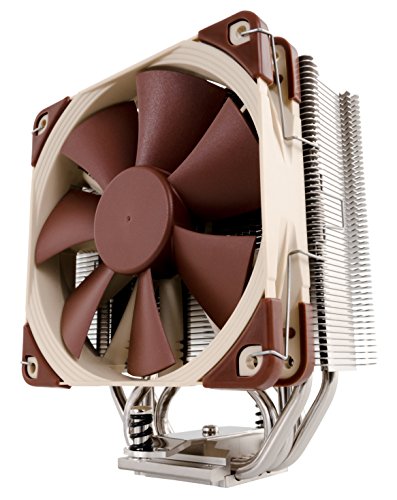
The stock AMD Wraith Stealth cooler that ships with the 5600G handles the chip's 65 W TDP without throttling, but it's audible when the fan spins up under sustained container-heavy load. For a server that lives in an office or bedroom, that's the difference between usable and irritating.
A Noctua NH-U12S is a straightforward upgrade — modest single-tower air cooler, silent under a homelab workload, and doesn't require water-cooling maintenance. Ryzen 5 5600G idle temperatures with the NH-U12S sit in the low-to-mid 30s Celsius in most enclosures, and full-load sustained temperatures stay well clear of the throttle point without the fan ever hitting audible RPM.
If your build ends up in a closet or basement, the stock cooler is fine and the upgrade money is better spent elsewhere. If it lives in a listening space, the Noctua is worth it.
Perf-per-dollar and three-year TCO
A workable full-build cost estimate for each path in 2026:
| Component | Pi 4 8GB build | Ryzen 5 5600G build |
|---|---|---|
| Compute | $85 (board) | $150 (CPU) |
| Motherboard | included | $110 (B550 ITX) |
| RAM | included (8 GB) | $60 (32 GB DDR4-3200) |
| PSU | $15 (USB-C brick) | $80 (500 W SFX) |
| Case | $25 (Argon ONE / passive) | $80 (ITX case) |
| Boot SSD | $50 (Samsung 870 EVO 250 GB) | $50 |
| Library SSD | $65 (Crucial BX500 1TB) | $65 |
| Cooling | included | $75 (Noctua NH-U12S) |
| Build total | ~$240 | ~$670 |
| 3-yr electricity (@ $0.15/kWh) | ~$40 | ~$135 |
| 3-yr TCO | ~$280 | ~$805 |
The 5600G build costs roughly $525 more over three years. Compared to a $10/month cloud storage subscription over the same period ($360), the Pi break-even is fast; the 5600G break-even is longer but not unreasonable if you're replacing multiple subscriptions or you'd rather own an appliance that can grow into new services without another hardware purchase.
Common pitfalls in first homelab builds
Failure modes that show up in reader questions week after week:
- Booting the Pi from SD card. Covered above. Never do this for a service host.
- Using a generic USB-C brick for the Pi 4. The Pi is sensitive to undervoltage on USB-C. Use the official supply or a documented-good third-party unit; anything else risks silent throttling and SD-card corruption.
- Skipping backups because "it's all local now." You just replaced a redundant cloud with a single point of failure. Budget a second drive and an offsite copy from day one.
- Buying the 5600G platform without confirming BIOS support. Older AM4 boards need a BIOS flash before they'll POST with a Cezanne APU. Buy from a retailer that flashes the BIOS on request, or from a board vendor with a BIOS-flashback button.
- Running everything as root in one big Docker Compose file. Dedicate users, restrict volume mounts, put a reverse proxy in front of every web-facing service. A homelab that gets popped because you skipped these is embarrassing and completely preventable.
When each choice is wrong
- The Pi 4 8GB is wrong if you need transcoding, Docker density above ~10 lightweight containers, ML tagging on a large photo library, or spinning-disk arrays. It's also wrong if you value fast rebuild speed — the Pi's storage bandwidth means recovery-from-backup is meaningfully slower than on x86.
- The Ryzen 5 5600G is wrong if all you actually run is Pi-hole and Home Assistant. It's overkill by a factor of five, costs more in electricity, and doesn't do anything you couldn't do with a $90 board.
Verdict matrix
Get the Pi 4 8GB if:
- Your services fit Tier 1 (DNS, home automation, small file sync, dashboards)
- Idle power draw dominates your TCO calculation
- You want a low-cost, low-heat appliance you can stick behind a router
- You have no plans for transcoding, ML workloads, or multi-disk arrays
Get the 5600G build if:
- You want Jellyfin or Plex transcoding
- You plan to run Immich, PhotoPrism, or any ML-tagging service on a real library
- You want container density (10+ services) and dev-workload headroom
- You'd rather over-spec once than under-spec and buy again in 18 months
Bottom line
The right honest answer depends on what you actually plan to run — but for a reader who's trying to replace paid cloud storage plus streaming plus DNS filtering in one build, the Ryzen 5 5600G is the pick. Pair it with a Noctua NH-U12S for silent 24/7 operation, boot from a Samsung 870 EVO 250GB, and put a Crucial BX500 1TB in as the library drive. Keep the Raspberry Pi 4 8GB in mind for the second box — Pi-hole and Home Assistant belong on the small appliance, not on the main server.
Related guides
- Best CPU for Local LLM Inference in 2026: Ryzen 7 5800X vs 5700X vs 5600G
- Best Budget Local-LLM Box: RTX 3060 12GB + Ryzen 5 5600G
- Best CPU for a Local-LLM Homelab Under $300 in 2026
Citations and sources
- Raspberry Pi — Model 4 B product page — accessed 2026-07-30
- AMD — Ryzen desktop processor family — accessed 2026-07-30
- Phoronix — AMD Ryzen 5 5600G review — accessed 2026-07-30
This piece is editorial synthesis based on publicly available information. No independent first-party benchmarking is reported.