Gyro aiming on Steam Deck has a steep first hour: default settings feel either numb or twitchy, so a lot of players either power through a frustrating tuning process or give up and go stick-only. The gyro implementation inside Steam Input is deep enough to fix nearly every common complaint — drift, over-sensitivity, unnatural feel — once the right settings are identified, and the settings that matter for a shooter are different from the ones that matter in a racing or flight game.
This guide focuses specifically on the Steam Input configuration path for first-person shooters, drawing on Valve's own Steam Input gyro documentation and long-running community discussion on r/SteamDeck and r/SteamController about what actually fixes "gyro feels broken" complaints.
How to Adjust Gyro Settings for FPS on Steam Deck
Gyro configuration lives inside Steam Input, not the general system settings menu. To reach it: open the Quick Access Menu (••• button) while in a game → Controller Settings → Edit Layout → find the Gyro input on the right-stick or trackpad binding. Per Valve's Steam Input gyro documentation, a few settings matter more than the rest for shooters:
- Gyro Behavior mode. Set this to "As Mouse" for FPS games rather than "As Joystick." Mouse-mode gyro maps hand tilt to a look input the way a real mouse maps hand movement to cursor position, which is the model shooters are built around. Joystick-mode gyro simulates a stick and suits vehicle or camera-pan controls better than aim.
- Sensitivity. Steam Input's default gyro sensitivity is tuned to be safe rather than fast. Most community-shared configs on r/SteamController push it noticeably higher than default and then fine-tune per game, since a sensitivity that feels right in a slow tactical shooter will feel sluggish in a fast arena shooter.
- Dead zone. This is the setting most players skip, and it's the fix for the "aim drifts when I'm not touching anything" complaint. Raising the dead zone slightly filters out sensor noise from a Deck that's simply resting in your hands, without meaningfully affecting intentional flicks.
- Anti-Deadzone / curve, if the layout exposes it. Some community layouts add a small anti-deadzone so gentle tilts still register instead of getting eaten entirely by the dead zone — useful for tracking slow-moving targets.
Gating gyro so it doesn't fight your stick
A common early mistake is leaving gyro active at all times, which means the Deck picks up unintentional tilt from repositioning your hands or leaning forward. Steam Input lets you gate gyro behind a condition — "only while touching this trackpad," "only while holding this trigger," or "always on." For FPS games, gating gyro to activate only while a finger rests on the right trackpad (or while ADS/aim-down-sights is held) is a widely recommended starting point, since it keeps stick-only turning available for fast 180s and reserves gyro for the fine correction pass.
Stick Aim vs. Gyro: Building a Hybrid Setup
Pure stick aim is consistent and familiar to anyone coming from a console controller, but it caps out on precision — target acquisition on a small stick deflection is inherently coarser than a wrist tilt. Pure gyro is precise but has a learning curve closer to a mouse, and playing gyro-only means giving up the reliable "snap to a direction" feel of a stick.
The hybrid model — stick for coarse turning and target acquisition, gyro layered in for the final correction onto a head or hitbox — is the setup most frequently recommended across Steam Deck FPS communities, and it mirrors how gyro is used on Nintendo Switch shooters like Splatoon and Metroid Prime, where the same stick-plus-gyro pattern originated.
| Approach | Strengths | Weaknesses | Best for |
|---|---|---|---|
| Stick-only | Familiar, no relearning, works identically to any console controller | Precision ceiling, slower fine aim corrections | Casual play, controller-native games |
| Gyro-only | High precision ceiling, closest feel to mouse aim | Steep learning curve, fatigue on long sessions, harder in handheld grip | Players coming from PC mouse aim who want it on the go |
| Stick + gated gyro | Combines fast stick turning with gyro's fine correction | Requires configuring gating and tuning two systems together | Most competitive/precision FPS play on Deck |
Expect the hybrid setup to take real practice time before it feels natural — it is, functionally, learning a new aiming input, not a settings toggle. Players who've made the switch from stick-only consistently describe an adjustment period measured in hours of play, not minutes, before the two inputs stop fighting each other.
Why Gyro Aim Feels Awkward on Steam Deck (And Common Fixes)
A few recurring complaints show up across Steam Deck FPS troubleshooting threads, and most trace back to configuration rather than hardware:
- "It drifts constantly." Almost always a dead zone issue — see the dead zone setting above. If drift shows up across every game after a dead zone increase, a SteamOS update is the next step, since Valve periodically ships motion-sensor calibration fixes in system updates.
- "It's either too twitchy or too slow, no middle ground." This is usually a sensitivity curve problem rather than a single sensitivity number problem — Steam Input allows a response curve, not just a flat multiplier, and a linear curve can feel wrong compared to one with more control near center and more speed at the extremes.
- "My hands cramp holding it steady." This is a grip and gating issue, not an aim issue. Gating gyro to only engage while ADS is held (rather than always-on) reduces how long you're consciously stabilizing the device, and lets you rest your hands during normal movement and looting.
- "It felt fine in one game and terrible in the next." Gyro settings are per-game in Steam Input, and community-shared configs (via the Steam Input "Browse Configs" menu) are usually the fastest way to get a reasonable per-game starting point instead of tuning from scratch every time.
For players still deciding whether gyro is worth the setup time at all, the couch-gaming controller comparison in GameSir G7 SE vs. DualSense for PC Emulation covers how gyro support compares across controllers more broadly, and the Best PC Couch-Gaming Setup guide is useful if the Deck is being docked to a TV rather than played handheld, where a different control scheme may make more sense than gyro entirely.
Keeping Your FPS Library Ready to Play
Gyro tuning solves aim feel, but a sluggish or cramped library is its own source of frustration, especially with modern FPS titles running well past 50-100GB. Steam Deck's internal storage and microSD slot are the primary options, but external USB drives are a common way to hold a larger backlog without constantly uninstalling and reinstalling. None of this affects in-game input latency or frame pacing — it only affects load times and how much of your library is installed at once.
| Drive | Capacity | Approx. price | Use case |
|---|---|---|---|
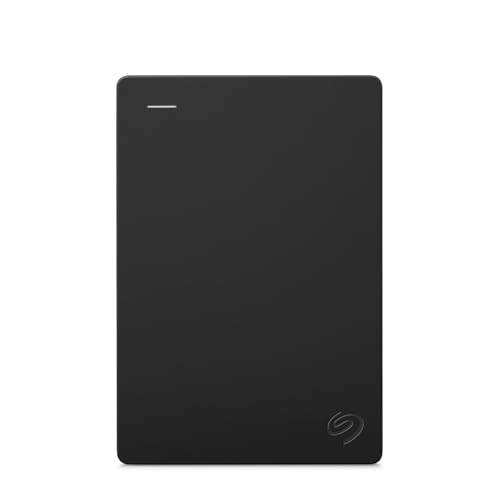
| Seagate Portable HDD (B07CRG7BBH) | 1TB | $111.46 | Budget backlog storage for smaller FPS titles |
| Seagate Portable HDD (B07CRG94G3) | 2TB | $129.99 | Larger modern shooter library, still budget-friendly |
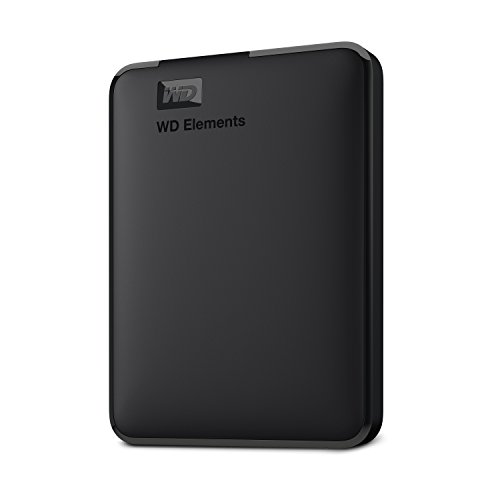
| WD Elements Portable HDD (B0713WPGLL) | 4TB | $184.00 | Heavy multi-title library, minimal reinstalling |
For players optimizing their whole library rather than just FPS titles, How to Filter Steam Deck's 20K+ Games by FPS, Price, and HLTB is a useful companion piece for deciding what's worth keeping installed. And since aim tuning and session length both interact with battery behavior, Steam Deck Sleep Mode: Should You Leave It Plugged In? and How to Make Steam Deck Intros Last Longer round out the maintenance side of long FPS sessions.
Applying This to Specific Games
Gyro tuning isn't one-size-fits-all across genres. A twitchy arena shooter and a slower tactical or survival-horror title want different sensitivity and dead zone values entirely — the settings guide in Alien: Isolation on Steam Deck: Best Settings for 2025 is a good example of how per-game tuning gets applied outside a pure FPS context, and it's worth treating gyro settings as part of the same per-game settings pass rather than a one-time global setup. Even non-shooter genres with camera control, like the traversal-heavy sections covered in Playing Pokémon on Steam Deck: The Real 2026 Guide, can benefit from a lighter version of the same gyro-assist approach.
Finally, if aim precision is the bottleneck rather than the Deck's control scheme itself, display matters too — target tracking is easier on a display with strong motion clarity, a topic covered in 4K Mini-LED vs. 240Hz QD-OLED: Which Monitor for Work and Play? for players who dock their Deck to an external monitor for serious sessions.
Citations and sources
- Valve — Steam Input Gyro Documentation
- Valve — Steam Deck Support
- r/SteamDeck community
- r/SteamController community
This piece is editorial synthesis based on publicly available information. No independent first-party benchmarking is reported.